
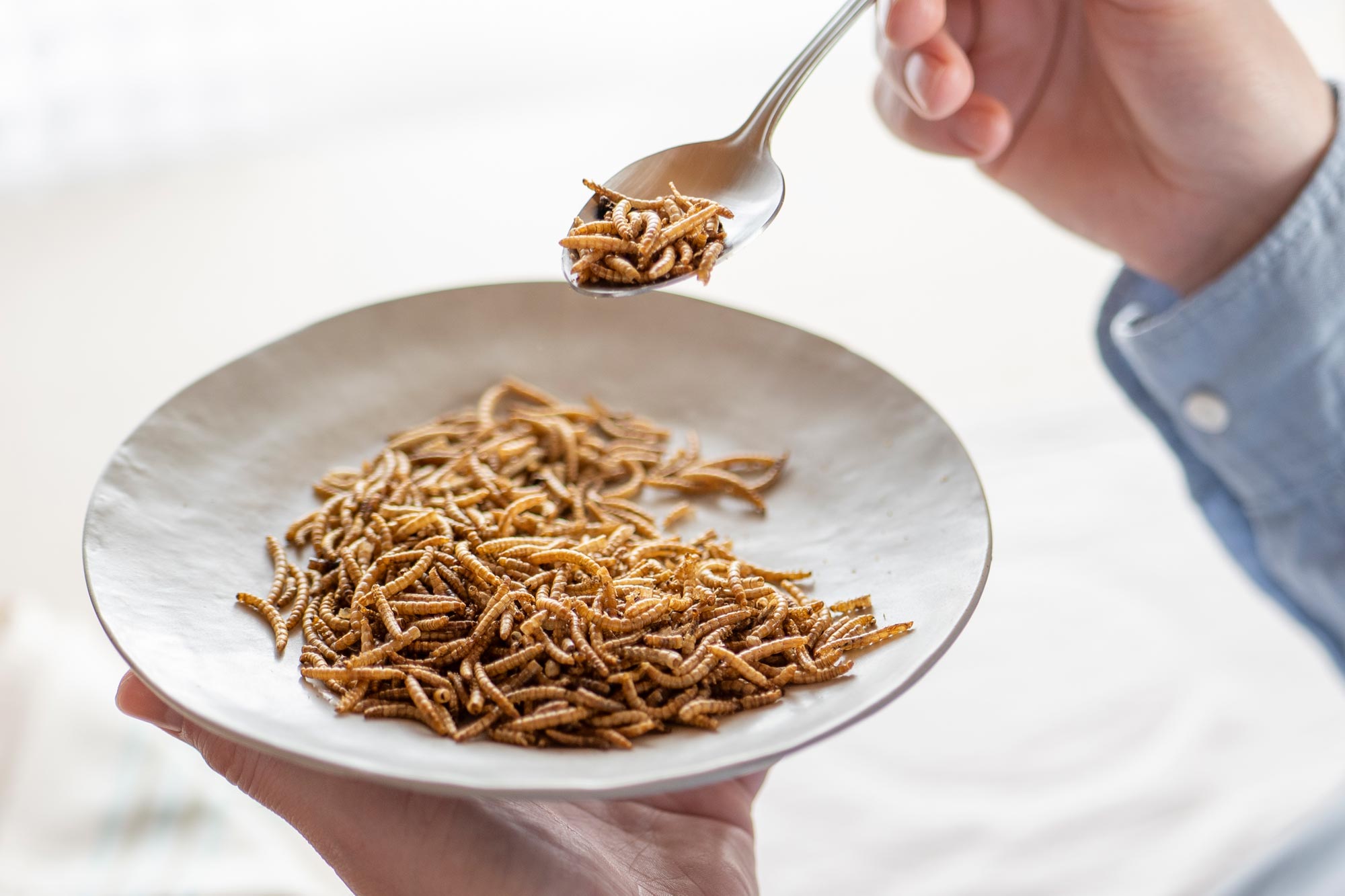
Ancient DNA indicates that humans’ ability and willingness to eat insects may have depended strongly on geography.
Eating insects is normal in many parts of the world, but in much of Europe and North America, the idea still triggers disgust. That reaction is often treated as purely cultural, yet a new study suggests the story may go deeper, reaching back through ecology, genetics, and ancient diets.
As population growth, climate change, environmental strain, and current food production systems push scientists to look for alternative sources of nutrition, insects have drawn increasing attention. There are 1,611 insect species listed as edible, and organizations such as the Food and Agriculture Organization of the United Nations (FAO) have promoted insects as a sustainable food source. Hundreds of millions of people already eat them. Still, Western societies remain broadly resistant to entomophagy, the practice of eating insects.
To investigate where that resistance may come from, researchers at the Institute of Evolutionary Biology (IBE), a joint center of the Spanish National Research Council (CSIC) and Pompeu Fabra University (UPF), used genomic analyses to trace insect consumption across thousands of years. The study, published in Science Advances, suggests that insect eating was rare and mostly accidental in Europe, Central Asia, and East Asia, while it was probably more common in tropical regions and among Neanderthals. The results connect modern food preferences with a much longer history of human evolution and ecology.
Genomic analysis reconstructs the history of entomophagy in Eurasia
The IBE team searched for signs of insect consumption in 745 samples of dental calculus (tartar) from anatomically modern humans, with some samples dating back as far as 33,000 years. Dental calculus can preserve DNA traces from species that were regularly part of a person’s diet, making it a useful archive of ancient eating habits.
The analysis suggested that modern humans in northern Eurasia did not regularly eat insects. The researchers also examined human genes involved in digesting chitin, the tough material that forms part of an insect’s exoskeleton. In North Eurasian populations, chitinase genes carry mutations linked to a reduced ability to digest insect exoskeletons. That trait has persisted for about 9,000 years, since the beginning of agriculture.
“The scarce presence of insects in the diet of northern Eurasians suggests that the absence of entomophagy is not solely due to recent cultural factors, but also to a long ecological and evolutionary history,” says Pablo Librado, principal investigator at the IBE who led the study.
Neanderthals may have consumed insects more frequently
Neanderthals appear to tell a different story. Although they lived in some of the same environments as anatomically modern humans, their dental calculus contained more insect DNA. The levels were similar to those found in western chimpanzees, which use insect-eating to supplement their diets on the savanna, especially during drought.
The most common insect DNA found in Neanderthal tartar came from Diptera, the insect group that includes flies and mosquitoes. Mosquito DNA was especially prominent. The findings support a recent hypothesis that Neanderthals may have regularly eaten animal carcasses infested with fly larvae. The mosquito remains add another clue, suggesting that prey carcasses may have been stored in ponds or marshy areas where mosquitoes lay eggs.
The study also found that Neanderthal chitinase genes would have supported better insect digestion. A similar pattern was seen in the only Denisovan specimen analyzed.
The genetic imprint of entomophagy persists in tropical populations
The researchers also studied genes involved in breaking down chitin from insect exoskeletons. These genes are active in the stomach and encode the enzymes chitinase acid (CHIA) and chitobiase (CTBS). In both ancient and modern samples, the team identified genetic variants associated with greater expression of these enzymes in populations living near the tropics.
“Large quantities of insects need to be ingested to compensate for the high caloric expenditure involved in their collection. In the tropics, there is a greater availability of social insects, such as termites and locusts: their biomass and diversity allow for sustainable exploitation throughout the year, which even contributes to pest control”, explains Manuel Piñero, a predoctoral researcher at the IBE and first author of the study.
Expression of these enzymes declined gradually in populations living at higher latitudes. That geographic genetic pattern has been maintained for at least 9,000 years and reflects the decline of entomophagy in European populations.
The future of entomophagy in Europe
“Beyond cultural or religious factors, our results suggest that the reduced availability of insects in non-tropical areas may have been a key factor in the abandonment of entomophagy, leading to a reduced capacity to digest insect exoskeletons”, Librado comments.
Modern processing could change that equation. Industrial methods can make it possible to use insects as food while reducing the need to digest chitin directly. They also allow edible insects to be produced at scale on farms.
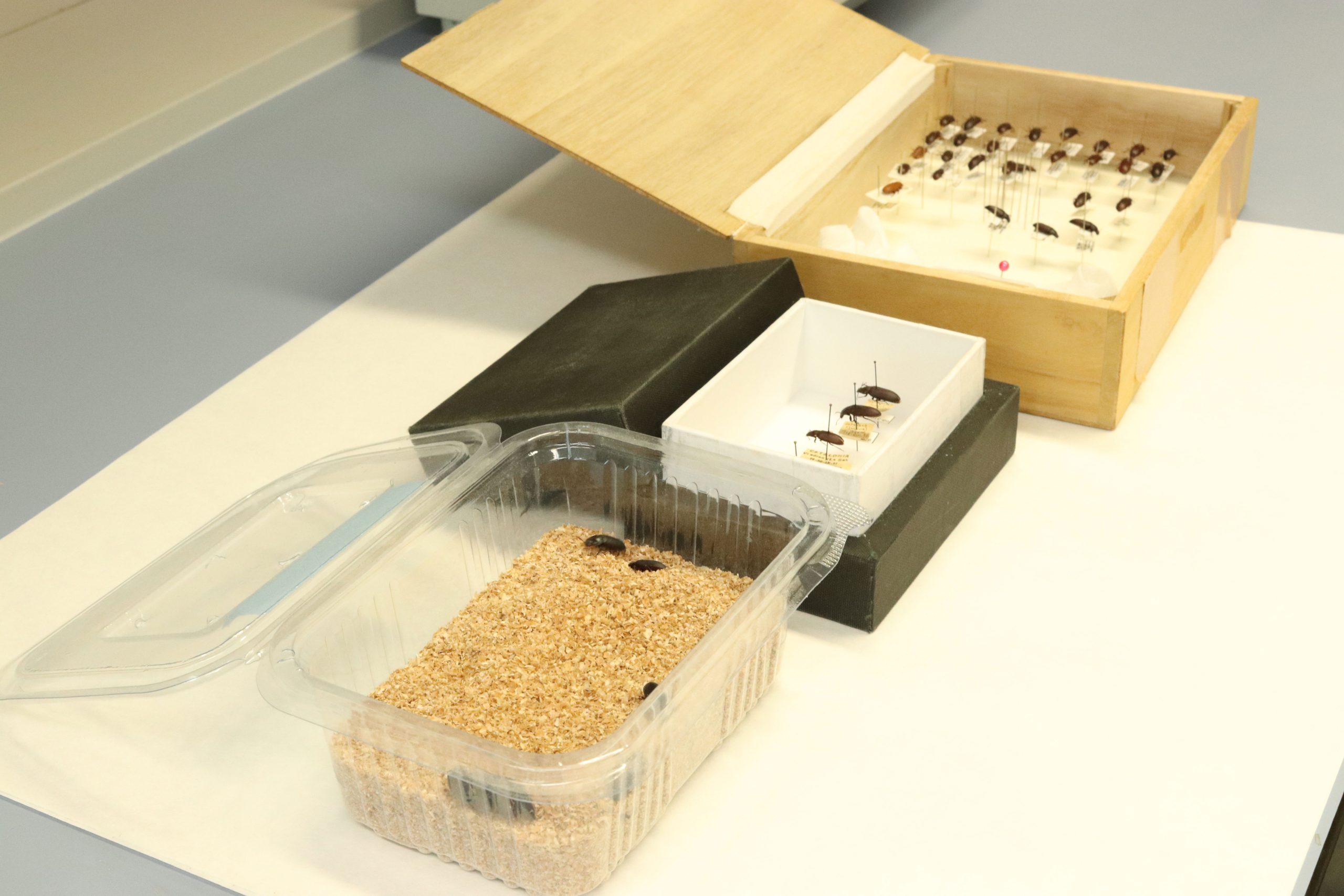
The Ancient Population Genomics research group led by Pablo Librado at the IBE is now studying domestication using insect species recently approved for human consumption as a model. The group is comparing the genomes of farmed insects with genomes from before domestication, using specimens extracted from entomological collections.
“We investigate the evolution of domestication in animals, which also gives us information to improve the exploitation of insects for consumption, both as animal feed and for human consumption,” Librado concludes.
Reference: “Genomic evidence for limited entomophagy in ancient Europeans” by Manuel Piñero and Pablo Librado, 5 June 2026, Science Advances.
DOI: 10.1126/sciadv.aec6939
This work was supported by the grant PID2022-142607NA-I00 funded by MICIU/AEI/10.13039/501100011033 and ERDF/UE (for M.P. and P.L.) and by the Department of Research and Universities of the Government of Catalonia (exp 2021 SGR 00420).
Never miss a breakthrough: Join the SciTechDaily newsletter.
Follow us on Google and Google News.
1 Comment
I am of English descent. When I was 3 or 4 years old I ate almost a whole bowl of shredded wheat (with sugar and milk) that had a lot of mealworms in it. I only balked at eating a beetle that was in the bowl. As I recall the mealworms tasted just fine, but my mother was upset with me for eating the mealworms.