
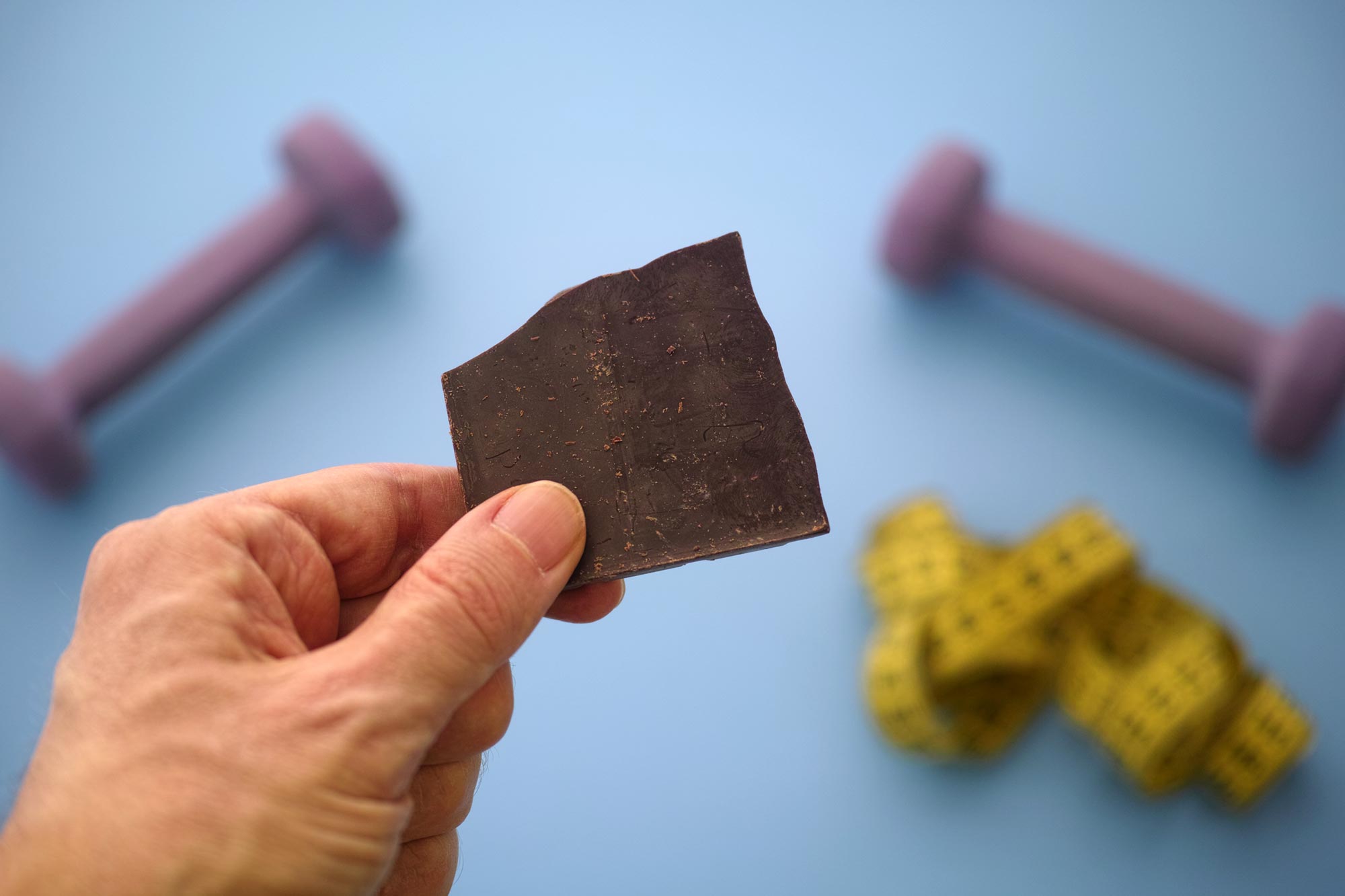
Researchers found that smelling chocolate before and during resistance exercise may subtly change how the brain responds to effort and appetite.
Halfway through a difficult leg workout, most people would not expect the smell of chocolate to help them complete more repetitions. Yet a study published in Frontiers in Physiology suggests that exposure to dark or milk chocolate odors may increase resistance exercise volume without making the effort feel harder.
“Exposing moderately trained men to chocolate odors right before and between sets of resistance exercise significantly increased their overall training volume without increasing their perceived exertion,” said senior author Dr. Mohamed Nashrudin bin Naharudin, an assistant professor at the Faculty of Sports and Exercise Science at the University of Malaya. “Seeing a substantial increase in repetitions without the athletes feeling like they were exerting themselves any harder is a fascinating psychobiological outcome.”
Chocolate scents face a workout test
The study included 23 healthy men in their early to mid-20s with moderate resistance training experience. Researchers divided them into three groups and exposed each group to one of three samples: liquefied dark chocolate containing 90% cocoa, liquefied milk chocolate containing 60% cocoa, or odorless water as a control.
“We know olfaction is powerfully wired into the brain’s appetite and emotion networks, but surprisingly, no study has systematically looked at the three-way interaction between smell, appetite, and actual resistance exercise capacity,” said Nashrudin Naharudin.
To make hunger and food-related responses easier to detect, the participants fasted for at least 10 hours before completing leg extensions. This exercise involves sitting and straightening the lower legs to lift a weighted resistance.
Researchers measured leg extension performance before and during the workout. Before exercising, participants reported their hunger, fullness, desire to eat, and intention to eat soon. During the sets, they rated only hunger and desire to eat after smelling their assigned sample for 30 seconds.
Dark chocolate curbed hunger most
The two chocolate odors affected appetite differently. Compared with both milk chocolate and water, dark chocolate consistently reduced reported hunger, desire to eat, and plans to eat, while increasing feelings of fullness before exercise.
The milk chocolate odor produced a different response. Participants rated it as more pleasant than the dark chocolate and water samples, but it did not significantly change hunger or appetite.
Both scents increased exercise volume
“Sniffing a 90% dark chocolate odor added about 18 more repetitions to participants’ leg extensions, while a 60% milk chocolate odor added about nine repetitions compared to the water control,” said Nashrudin Naharudin.
The researchers propose that learned associations with food smells may help explain the results. Familiar odors can create expectations based on previous eating experiences, shifting how hungry or satisfied a person feels even before any food is consumed.
“The dark chocolate scent serves as a learned cue for a rich, bitter, and highly satiating food, which essentially tricks the system into an anticipatory state of fullness,” said Nashrudin Naharudin. “Conversely, the sweeter milk chocolate scent acts more like a hedonic reward cue, enhancing training volume by creating a highly pleasant sensory environment rather than by shifting basic metabolic hunger signals.”
The findings suggest that anticipating food may produce some responses resembling those triggered by eating, particularly after fasting. Food odors could begin digestive preparation or cause psychological and physical changes associated with an expected meal.
The mechanism remains unconfirmed
The proposed explanation remains uncertain because the researchers did not measure blood hormones or brain pathways. Differences in odor strength between the chocolate samples may also have affected the results, while the odorless water could have revealed to some participants that they belonged to the control group.
The small sample included only moderately trained young men, so larger studies involving more diverse participants are needed before the findings can be applied more broadly.
The results also leave open whether chocolate is unusual or whether other familiar food odors could influence appetite and exercise in similar ways.
“We don’t think chocolate is entirely unique, though it is a food cue with incredibly strong, universally recognized reward associations,” Nashrudin Naharudin concluded. Although this hasn’t been tested yet, other foods strongly linked to satiety could show similar effects. “A person likely needs to find the odor familiar and appealing – or at least not repulsive – to trigger the psychological shift in appetite that’s needed to see a performance boost.”
Reference: “Chocolate odor enhances resistance exercise performance through appetite suppression in the fasted state: an exploratory study” by Xiaohan Fan, Hengzhi Deng, Jia Yang Ng, Ahmad Amirul Hazim bin Ab Aziz and Mohamed Nashrudin bin Naharudin, 08 July 2026, Frontiers in Physiology.
DOI: 10.3389/fphys.2026.1834757
Never miss a breakthrough: Join the SciTechDaily newsletter.
Follow us on Google and Google News.
1 Comment
In 1949 the Buffalo Bulldogs professional football team had summer practice in Hershy Pennsylvania. The chocolate oder from the Hershey chocolate factory used to waft over the fields. The players were better, they thought it was because it smelled great and made them hungry. You might have come up with with another reason.
They only played for a few years but I’m sure other baseball and football teams used the fields and some still do. Hopefully you can get more info from real athletes and not those who think moviing iron in 2 dimensions is exercising.