
Thousands of native milkweeds are transforming North Florida roadsides into experimental pollinator corridors.
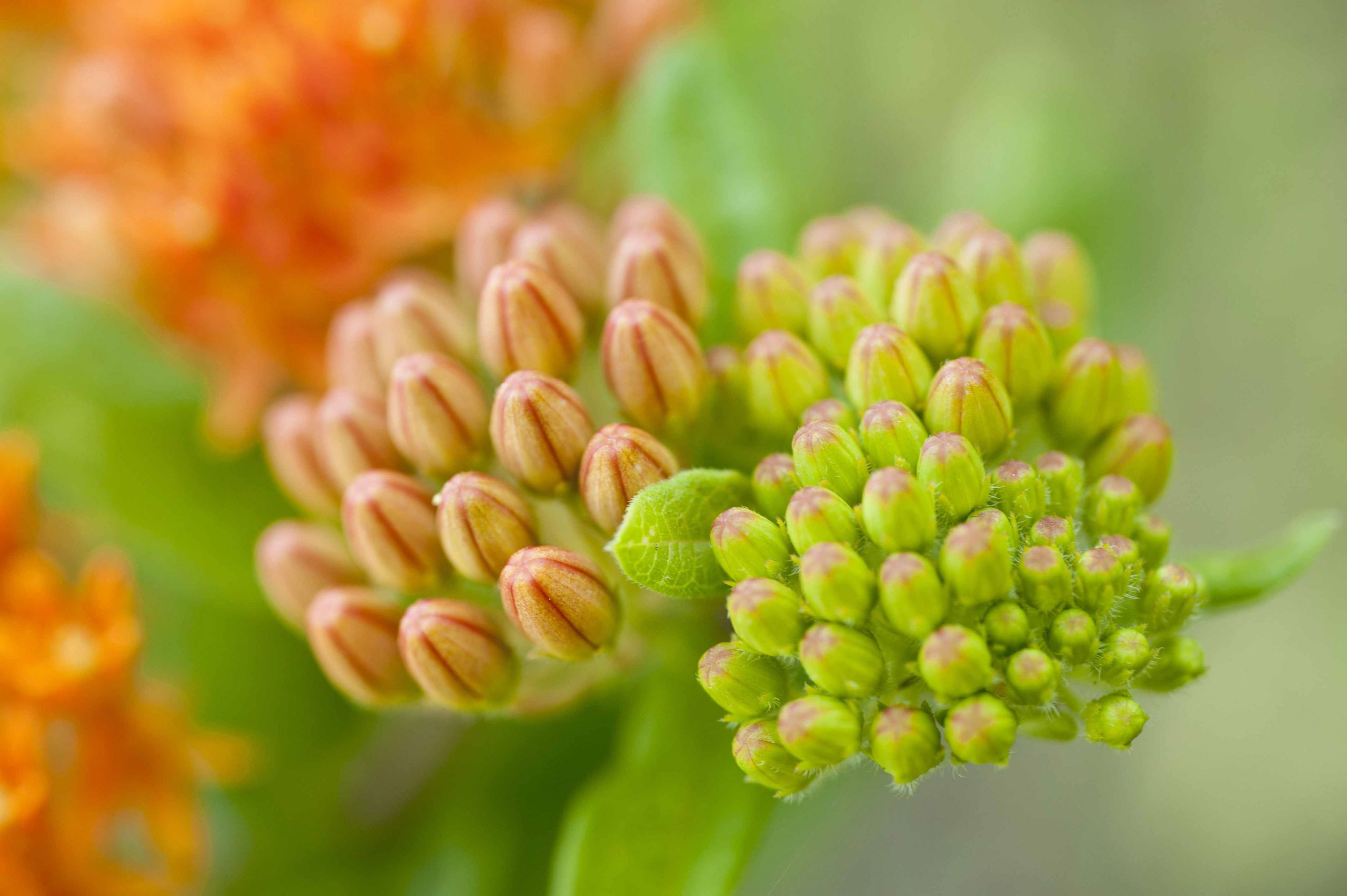
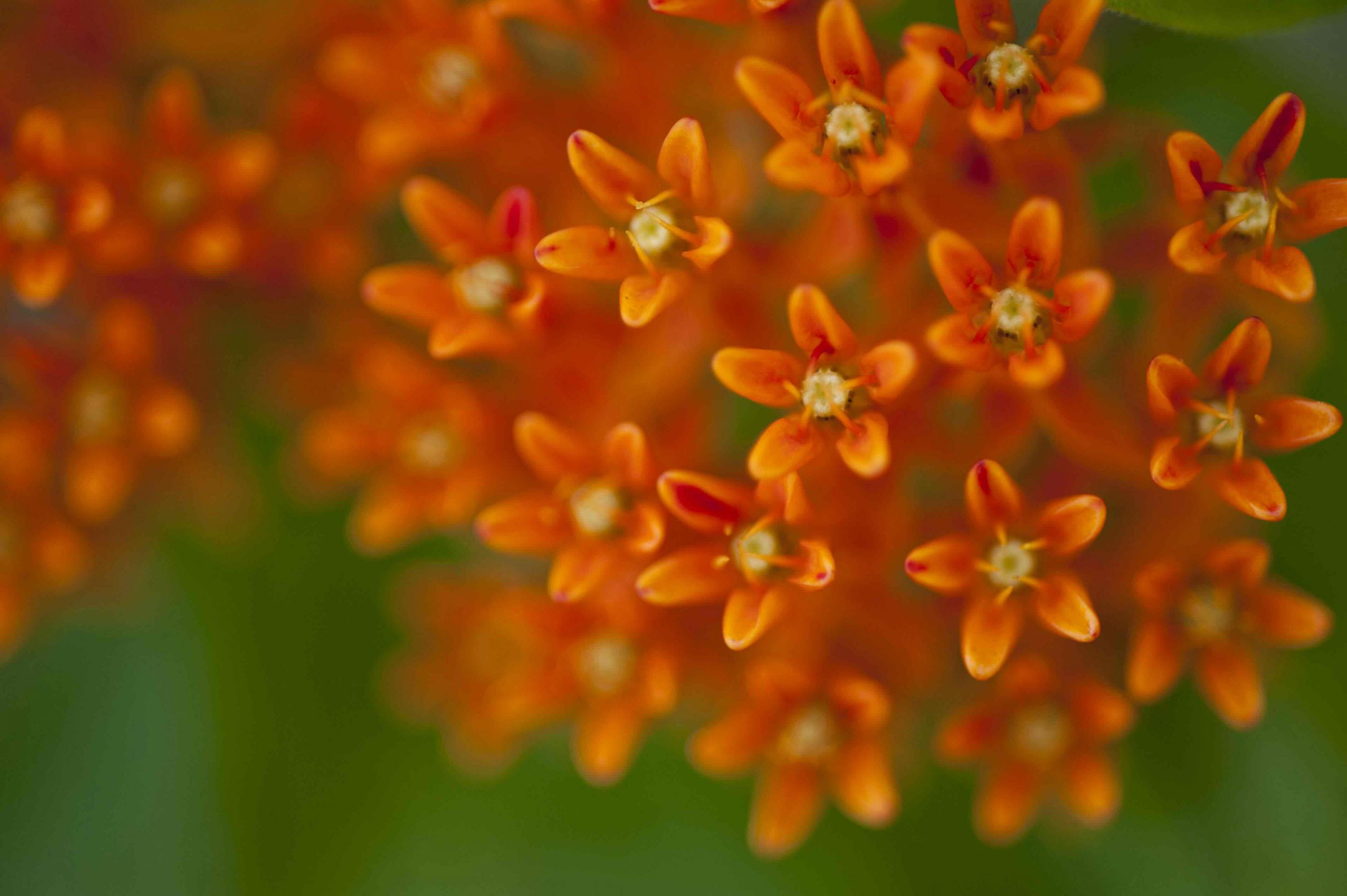
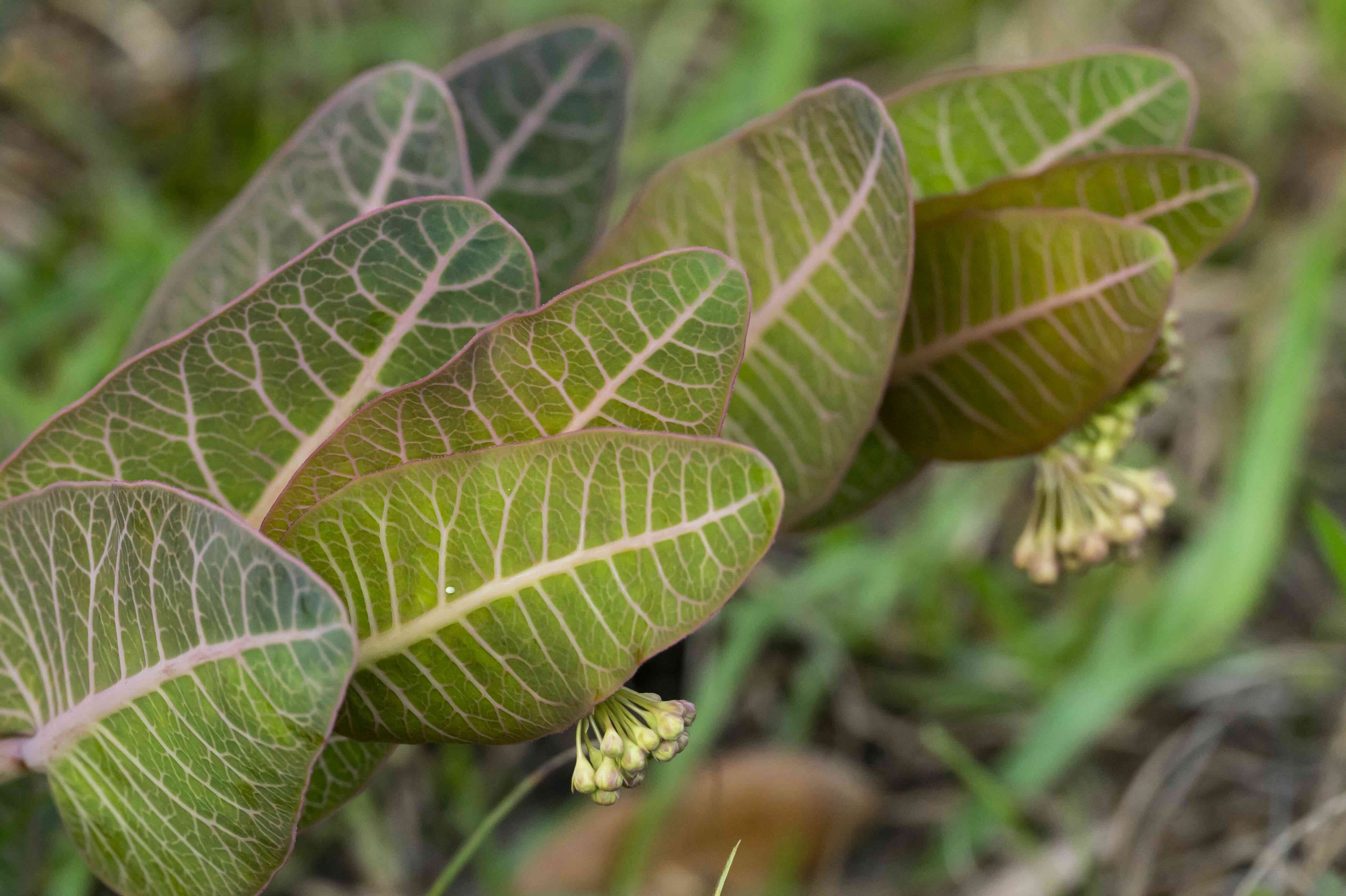
Along rural two-lane highways in North Florida, newly installed signs now identify grassy roadside slopes as wildflower areas. At this time of year, the labels may seem unnecessary. Thousands of milkweed plants are already producing dense clusters of five-sided buds and open blooms. Their vivid orange flowers, along with the monarch butterflies gathering around them, echo the safety vests worn by the crews who planted each milkweed by hand months earlier.
“It’s been a lot of work but also really exciting to see,” said Jaret Daniels, curator of Lepidoptera at the Florida Museum of Natural History. “We’ve had good success with plant establishment, and we’ve seen monarchs using the plants already in the field.”
The plantings are part of a University of Illinois Chicago initiative that aims to convert unused rights-of-way beside roads, powerlines, and railways into connected habitat for monarchs and other pollinating insects. The Florida Department of Transportation joined the voluntary program, formally called the candidate conservation agreement with assurances for the monarch butterfly, in 2024. Under the agreement, FDOT committed to managing 10,200 acres of roadside land for conservation, partly by creating strategically placed stops where pollinators can feed and reproduce.
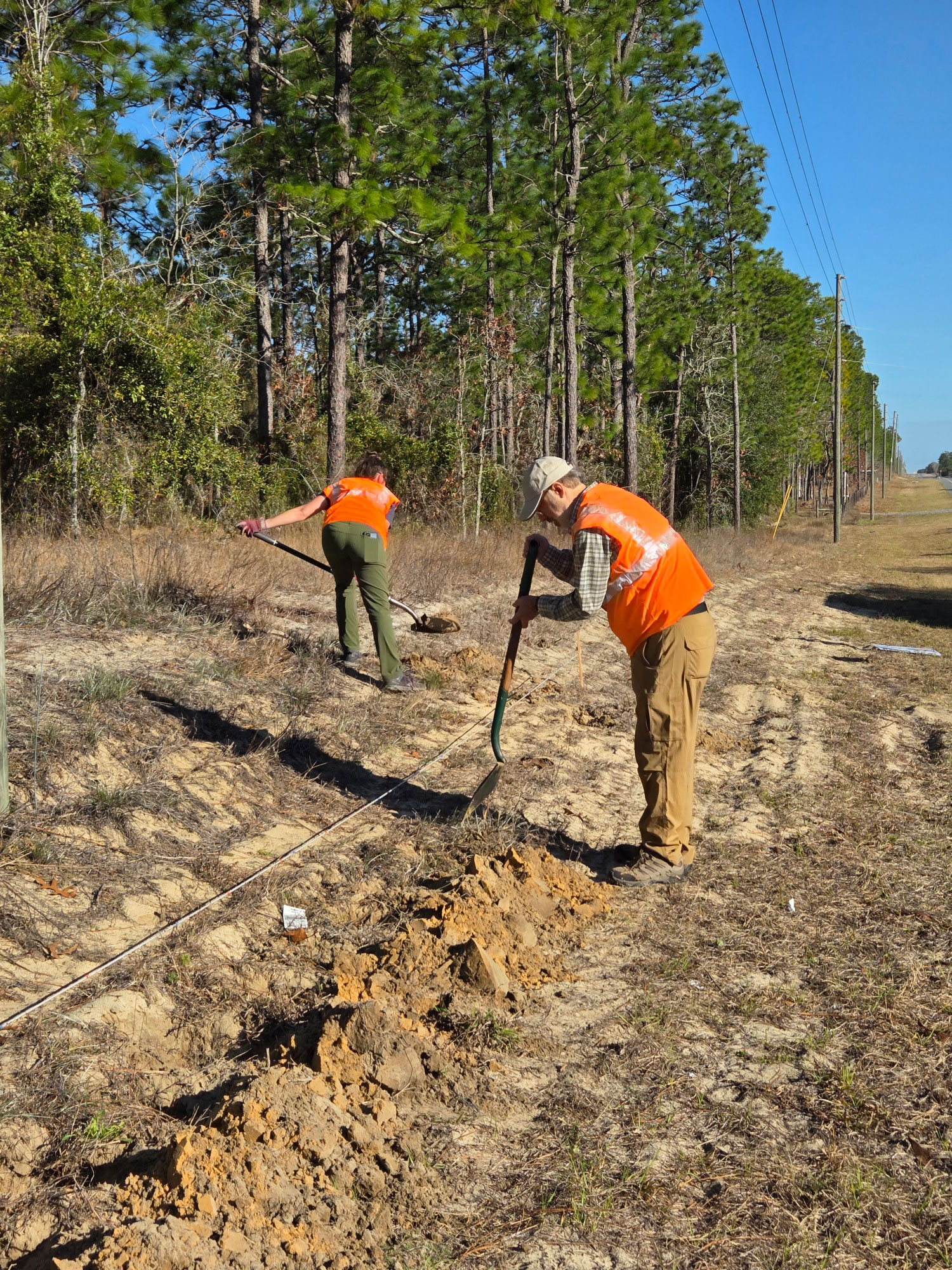
In 2023, FDOT awarded Daniels’ laboratory a $150,000 grant to select, grow, install and track 9,000 milkweed plants along Florida roads over three years. The goal was to determine which planting methods give milkweeds the best chance of becoming established. The project has since been extended through 2029, with plans to plant another 6,000 milkweeds.
“It’s a no-brainer,” Daniels said. “We don’t have enough conservation lands to maintain pollinator populations through time in many areas, so we have to look to environments that we, as humans, manage every day. Roadsides are managed regardless, so why not do so in a way that confers greater benefits?”
Roadside land becomes pollinator habitat
The advantages for pollinators are easy to see. Familiar insects such as bees, moths, and butterflies, along with less appreciated but equally important wasps, flies, mosquitoes, and ants, rely partly or entirely on nectar. A rural highway bordered by wildflowers can provide a long feeding route, and milkweed offers nectar to insects across all of these groups.
Milkweeds belong to the dogbane family, Apocynaceae. Several members of this appropriately named plant family produce toxic glycosides and alkaloids that discourage animals from eating them. Evolution, however, has repeatedly produced animals with physiological adaptations that allow them to tolerate or even use these poisons.
In 2011, scientists reported that the world’s only poisonous rodent collects its toxin from a species of East African milkweed. It applies the poison to long, specialized hairs along its back, which resemble porcupine quills and expose predators to the toxin when they attack.
Monarchs evolved a comparable strategy. Changes in their bodies prevent milkweed glycosides from binding normally to cellular receptors. Instead of eliminating the chemicals, monarchs retain them in their tissues as protection against predators. Their larvae have become so specialized that they can no longer feed on plants other than milkweed. Wherever milkweed grows, there is also potential habitat for developing monarch caterpillars.
Roadside milkweed corridors are equally valuable for adult monarchs, which travel extraordinary distances. A butterfly can cover more than 100 miles in one day. Such journeys require regular refueling, and monarchs obtain that energy by stopping for nectar in home gardens, natural habitats, and overgrown vacant properties.
Strategic planting spreads wider benefits
Wildflower corridors can also support organisms beyond the insects that visit them. Birds and other predators gain access to more prey, while nearby properties can benefit as pollinators move beyond the roadside. Researchers evaluated possible planting locations years before the current project began, using a separately funded effort to identify sites where these ecological gains would be greatest.
“We had done a one-year project where we mapped native milkweed populations along roadsides, so we had that as a starting point,” Daniels said. “By partnering with FDOT, we’re trying to fill in gaps where we know appropriate habitat occurs, but there are limited or no milkweeds that grow there.”
Many selected areas border protected lands, where additional pollinators could strengthen existing biodiversity. Other sites sit near farms growing crops such as blueberries and watermelons, which can benefit from pollination by wild insects. The resulting patchwork of flowering roadside habitat also makes the landscape more visually appealing.
The project tests what survives
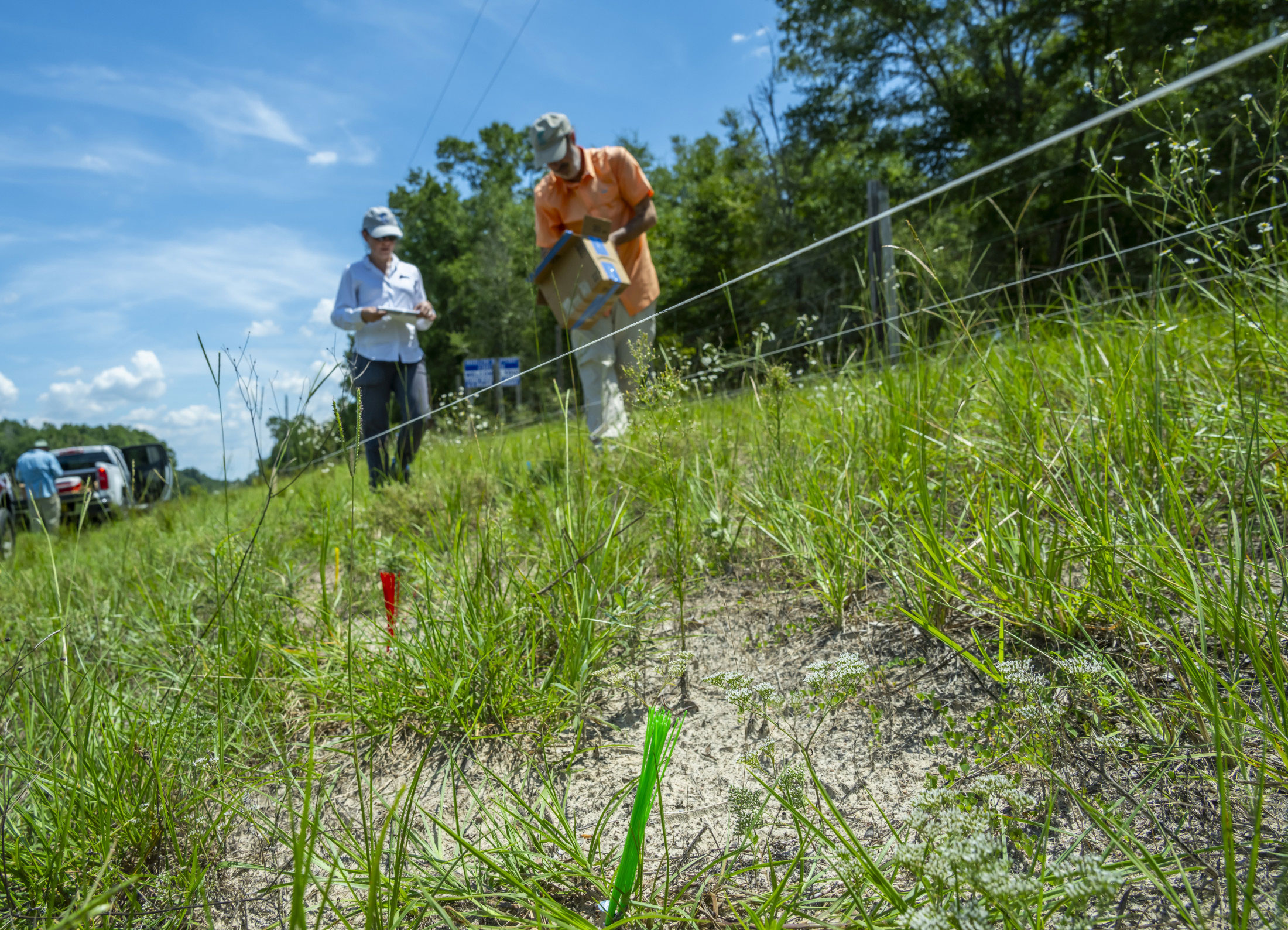
The six-year effort is designed as an experiment as much as a conservation program. Daniels and his colleagues are planting and monitoring milkweeds in Alachua County and five other North Florida counties. The results will guide any future expansion into additional counties and other states.
Before that can happen, the researchers must evaluate several factors, including which milkweed species are best suited to roadside conditions. After beginning with six native candidates, Daniels narrowed the project’s focus to pinewoods milkweed (Asclepius humistrata) and butterfly weed (Asclepius tuberosa). Both species are known to support monarchs and tolerate environments where many plants struggle to survive.
“Both are upland, sand-loving species that would normally be found in pinelands and sandhills,” Daniels said.
Their ability to grow in dry, nutrient-poor soil gives them an advantage on exposed roadside slopes, but it complicates efforts to produce them in large numbers.
Butterfly weed is commercially available, while pinewoods milkweed develops a long taproot and must be raised in unusually deep containers. Its preference for poor soil, which differs from the rich growing conditions favored in most gardens, has also kept it out of the mainstream nursery trade.
A custom supply chain fills roadsides
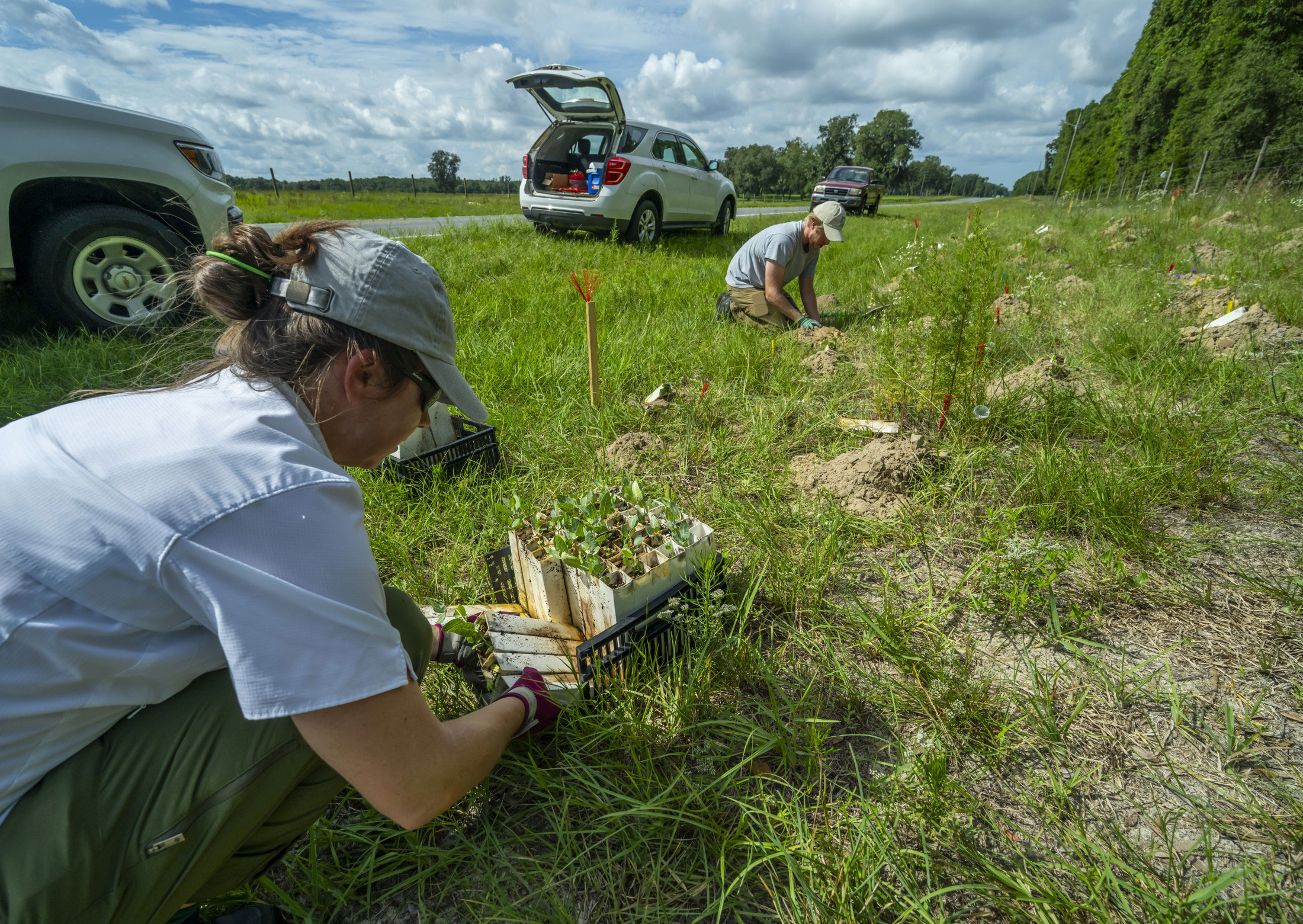
To secure enough pinewoods milkweed, Daniels’ group built its own production system. Researchers collect seeds from several locations where the plant grows naturally. During the flowering season, they return to those sites several times each month and fasten small bags around maturing seed pods. The bags catch the seeds before their silky cellulose fibers unfold and carry them away on the wind.
The collected seeds are then delivered to the University of Florida Native Plant Nursery. There, employees and volunteers manage the difficult process of taking a demanding plant from dormant seed to reproductive maturity.
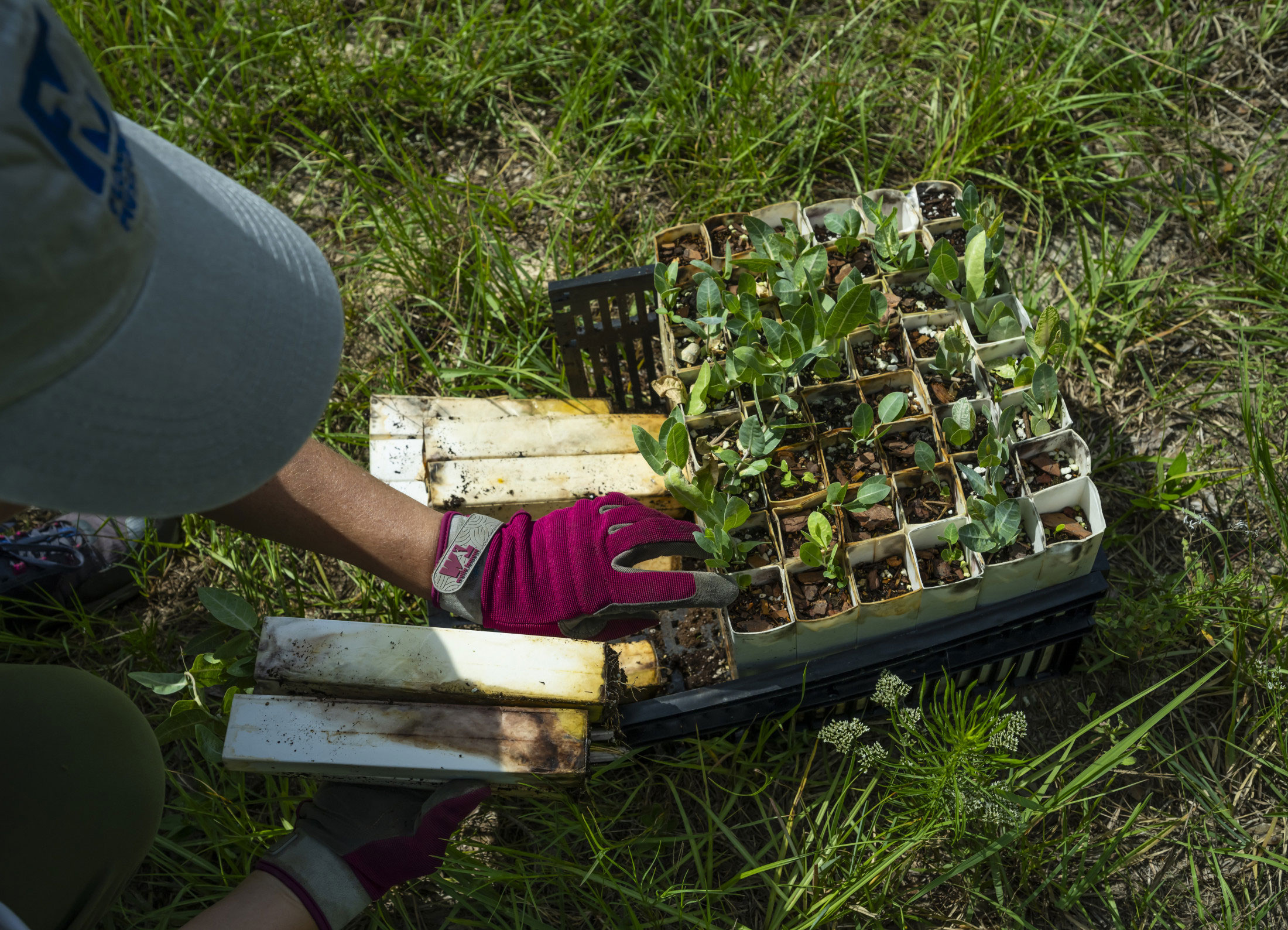
“The last batch of seed we gave them had about a 98% germination rate, and we’ve seen really good establishment of these plants in the field,” Daniels said. “The Native Plant Nursery has been an invaluable partner in this project.”
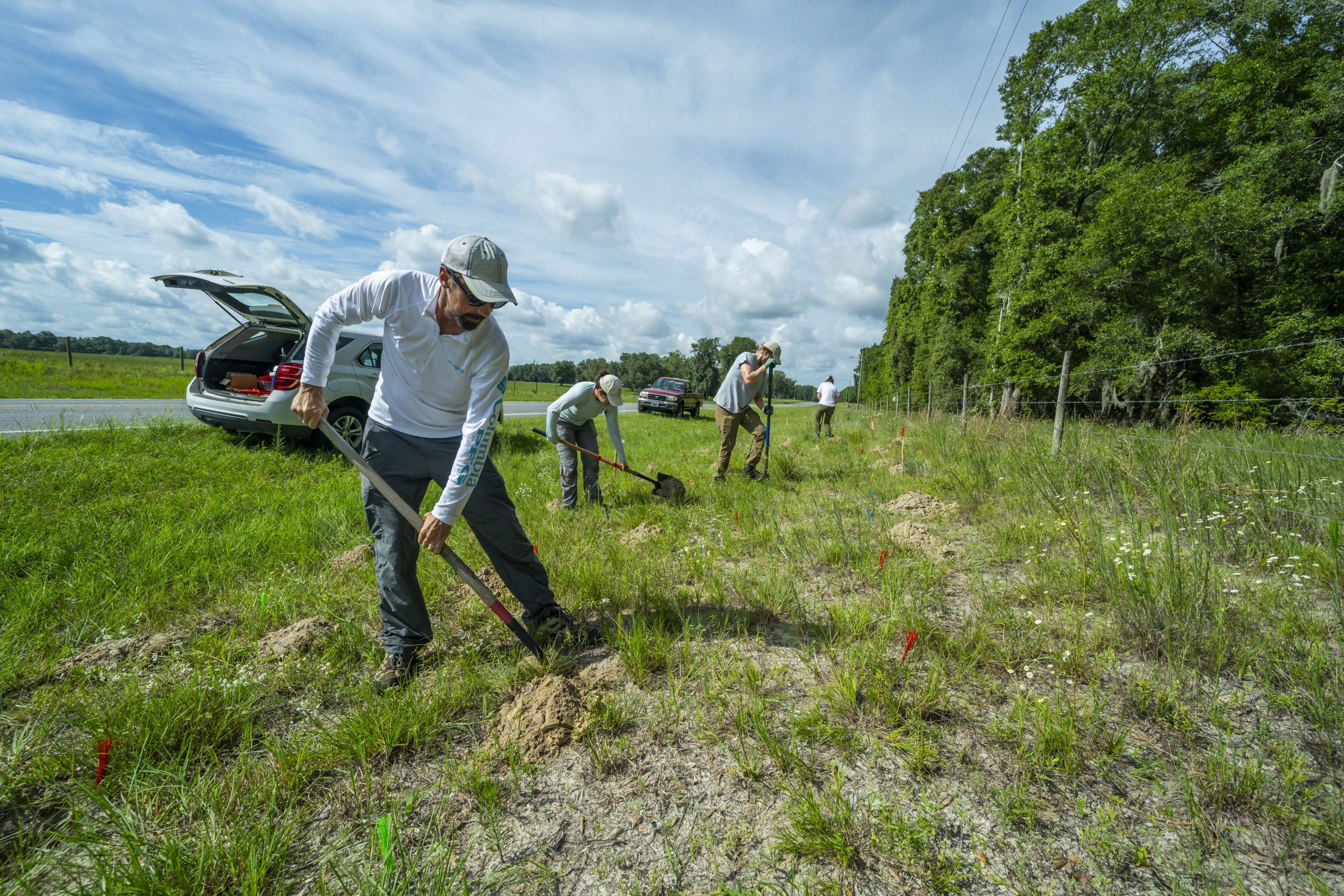
The project purchases butterfly weed from Green Isle Gardens in Groveland, Florida. Once both species are available, crews begin the labor-intensive work of planting them along the roads.
“We plant them when they’re dormant during the winter months, which is great for us and the young plants, because neither of us has to deal with the extreme heat of summer.”
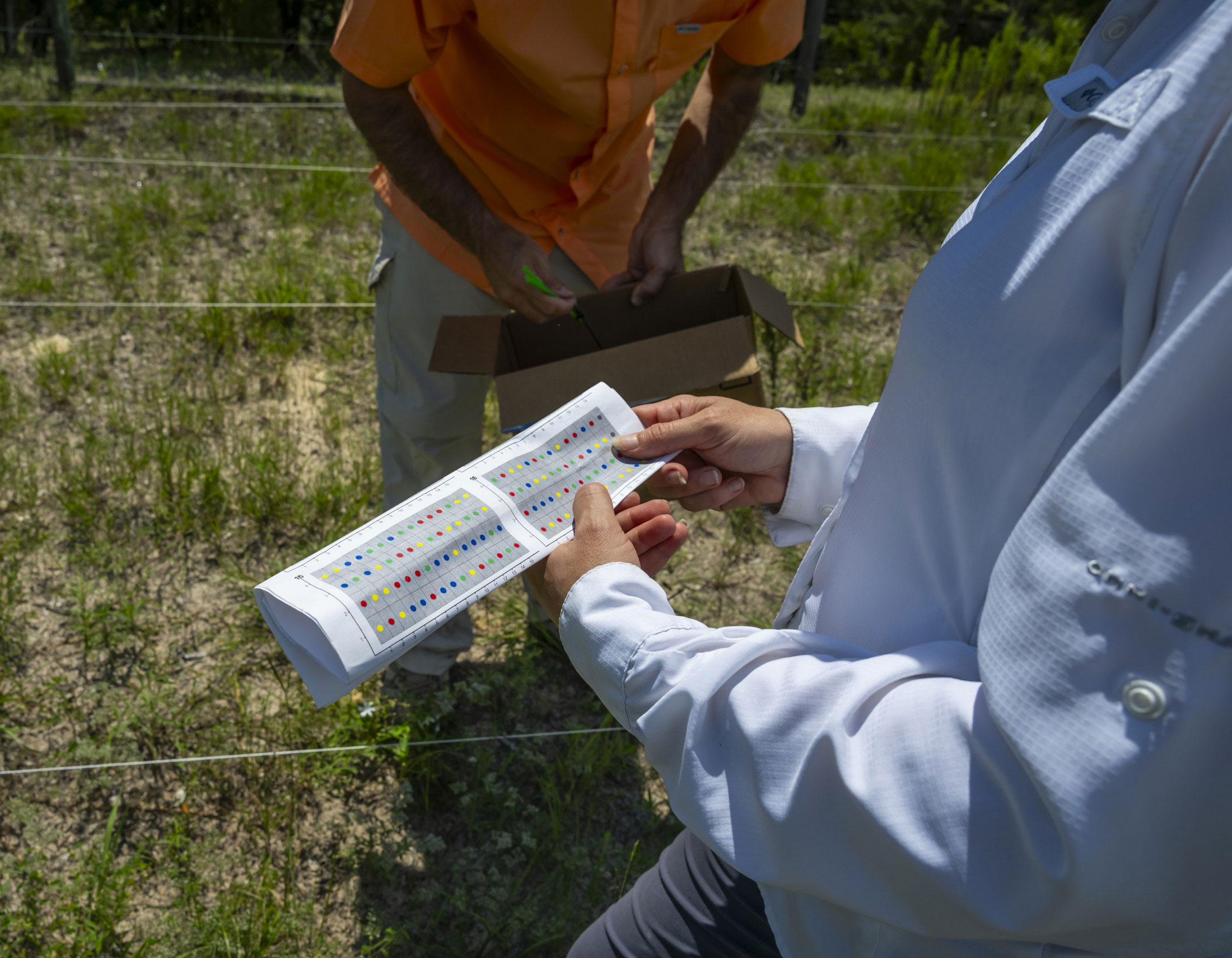
The researchers then return regularly to track the plants and analyze the resulting data. Those measurements will eventually show whether the strategy is effective enough to reproduce on a larger scale. A final judgment is still several years away, but drivers can already see the early results when they pass through one of Florida’s designated milkweed areas.
Funding: Florida Department of Transportation
Never miss a breakthrough: Join the SciTechDaily newsletter.
Follow us on Google and Google News.