
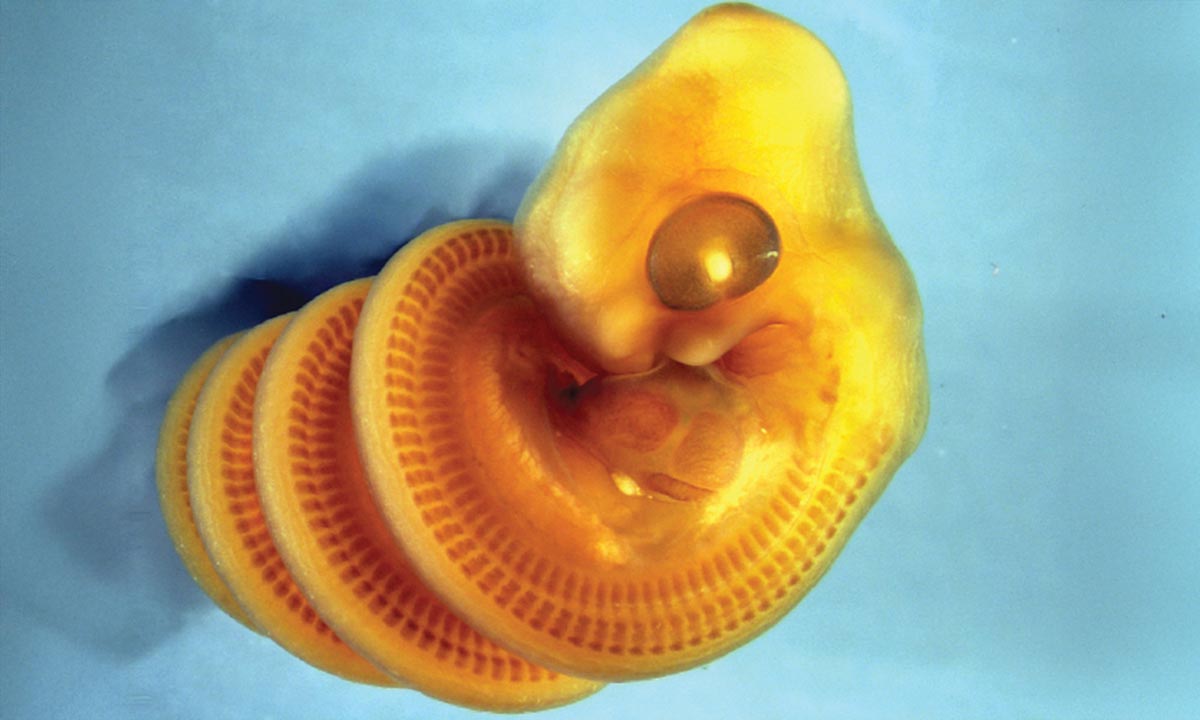
A mismatch in growth between a snake embryo’s body and gut may explain why its first coils consistently turn to the right.
As a snake embryo grows inside its egg, its increasingly long body curls into a spiral before it has muscles to move. New research suggests that the gut helps shape those first coils by holding back a body that is growing faster than the gut itself.
An international team led by Canadian researchers found evidence that this mismatch in growth makes the embryo buckle and twist into a right-handed spiral. Their study, published August 31, 2026, in Current Biology, links this coiling ability to how snakes develop the longest bodies of any vertebrate animals before hatching.
A growing body tethered by its gut
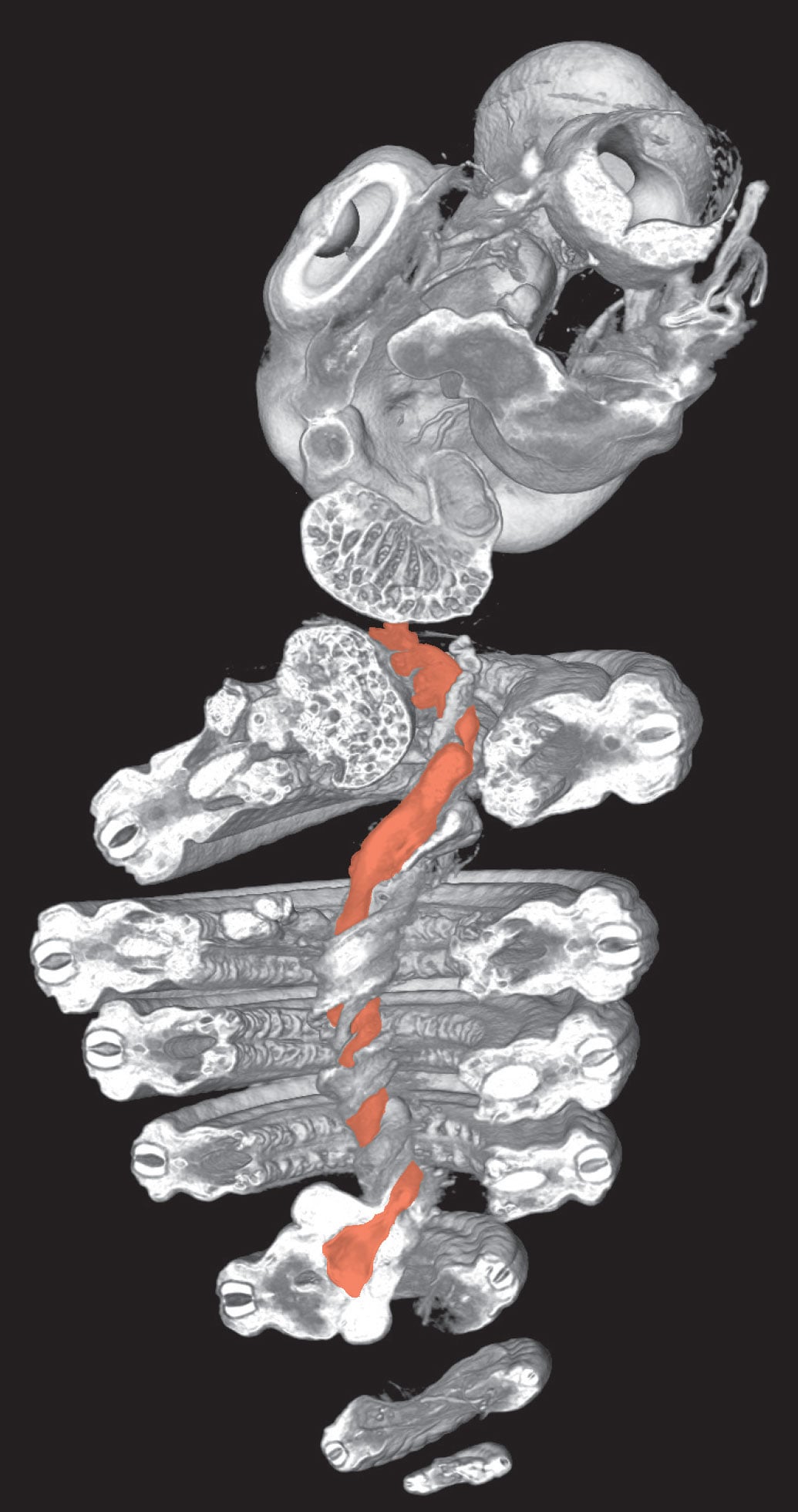
The researchers traced the mechanism to an unusual arrangement inside the embryo, revealed by a CT scan performed by collaborator Dr. Raul Diaz at California State University Los Angeles. CT scans use X-rays to show internal structures.
“Raul’s CT scan of a snake embryo revealed a structure we had never seen before ¾ it was a pillar of gut stretching through the spiral of the coiling body,” says senior author and team leader Dr. Tetsuto Miyashita, an evolutionary biologist at the Canadian Museum of Nature. “There’s an intestine detached from the rest of the body, surrounded by tendrils of blood vessels from the yolk.”
As the embryo rapidly lengthens, its intestine cannot keep pace.
“So they detach the slow-growing gut, which is now tethering the lengthening body. The body buckles and twists into coiling,” Miyashita explains. “This coiling force is directed so the embryos grow to the opposite side of the yolk. And the yolk is always to the left side of the embryo, hence the embryo will always start coiling right-handed.”
“It’s like when you adjust the length of a strap and the longer, buckling side of the loop twists,” he says.
Snake embryos can switch coiling directions
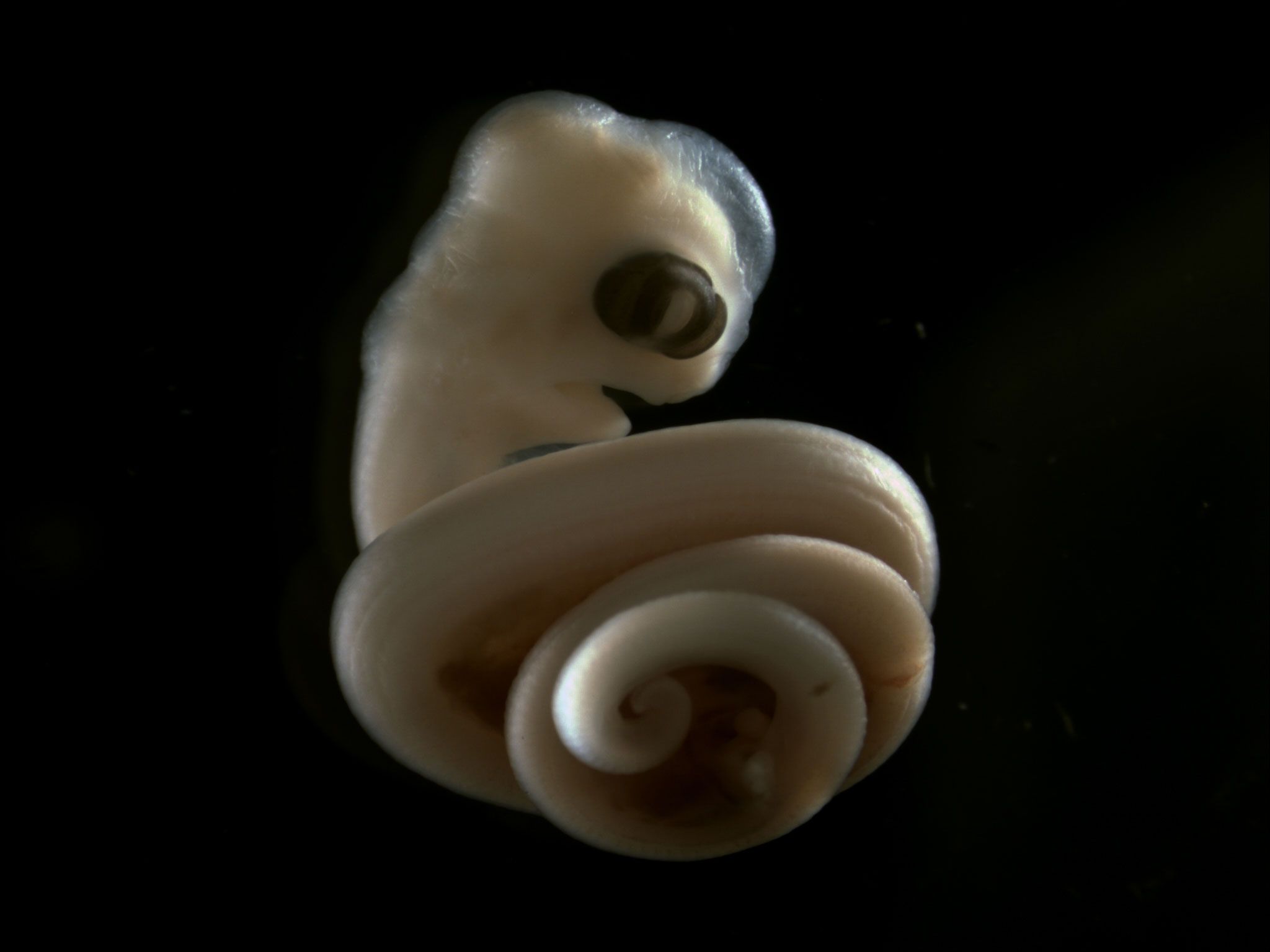
The team’s search for a physical explanation began with observations that, during the first few weeks after eggs were laid, snake embryos appeared to coil only right-handed, or dextrally, from head to tail.
“At these stages, the embryos don’t have muscles to move with, so different forces are making them coil right-handed,” says lead author Alexandra Weber, now a graduate student in zoology at the University of British Columbia. “But we didn’t know what’s making them do that.”
As development continues, the growing embryos reposition themselves while the yolk shrinks. Their muscles mature, allowing them to wiggle and change the direction of their coils.
“Some remain in right-handed coils, but some recoil to the left side,” Weber says. “So half of these near-hatching embryos are right-handed and the other half left-handed.”
Searching embryo photos for signs of handedness
The image collection that revealed this pattern grew out of the COVID lockdown in 2020, when Miyashita was working in his home office and trying to devise a research project students could pursue without access to a lab or museum.
“Then the lightbulb turned on. I had inherited from my PhD advisor this fascination with asymmetries in animal forms. So every time I saw images of snake embryos in papers, I wondered whether they are right- or left-handed in their coiling.”
At his direction, Weber, then at Carleton University, and two other undergraduate students at the University of Ottawa requested images by email and searched scientific literature and museum collection databases.
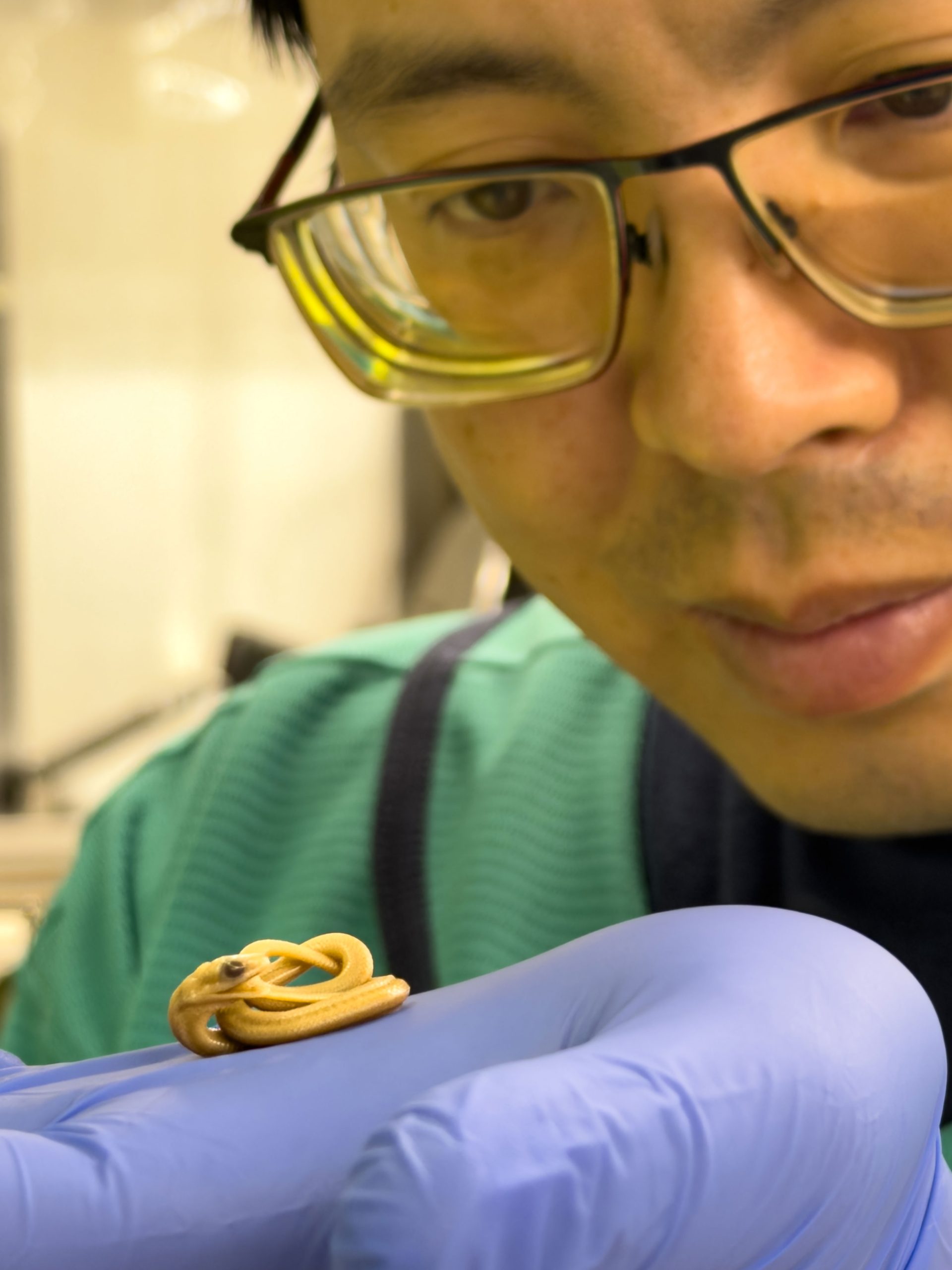
“We obtained pictures for more than 900 embryos from 39 snake and other limbless squamate species. That’s a statistically robust sample,” Miyashita says. Squamates are the reptile group that includes snakes and lizards.
“Scientists have long been fascinated with how and why snakes evolved their strange body form. To answer that question, they tended to take a deep dive into sophisticated genetic research, looking at Hox genes, enhancers, and so on,” he says. “These are key discoveries. But here, out of the COVID lockdown, we uncovered a snake’s secret with a startlingly simple approach—just scroll through an album of snake embryos and record which way they are coiled, and take a good look at their anatomy.”
Weber says, “This all started out with a curiosity to see if snakes are ‘handed’. It was exciting to follow it to deep insights about their evolution.”
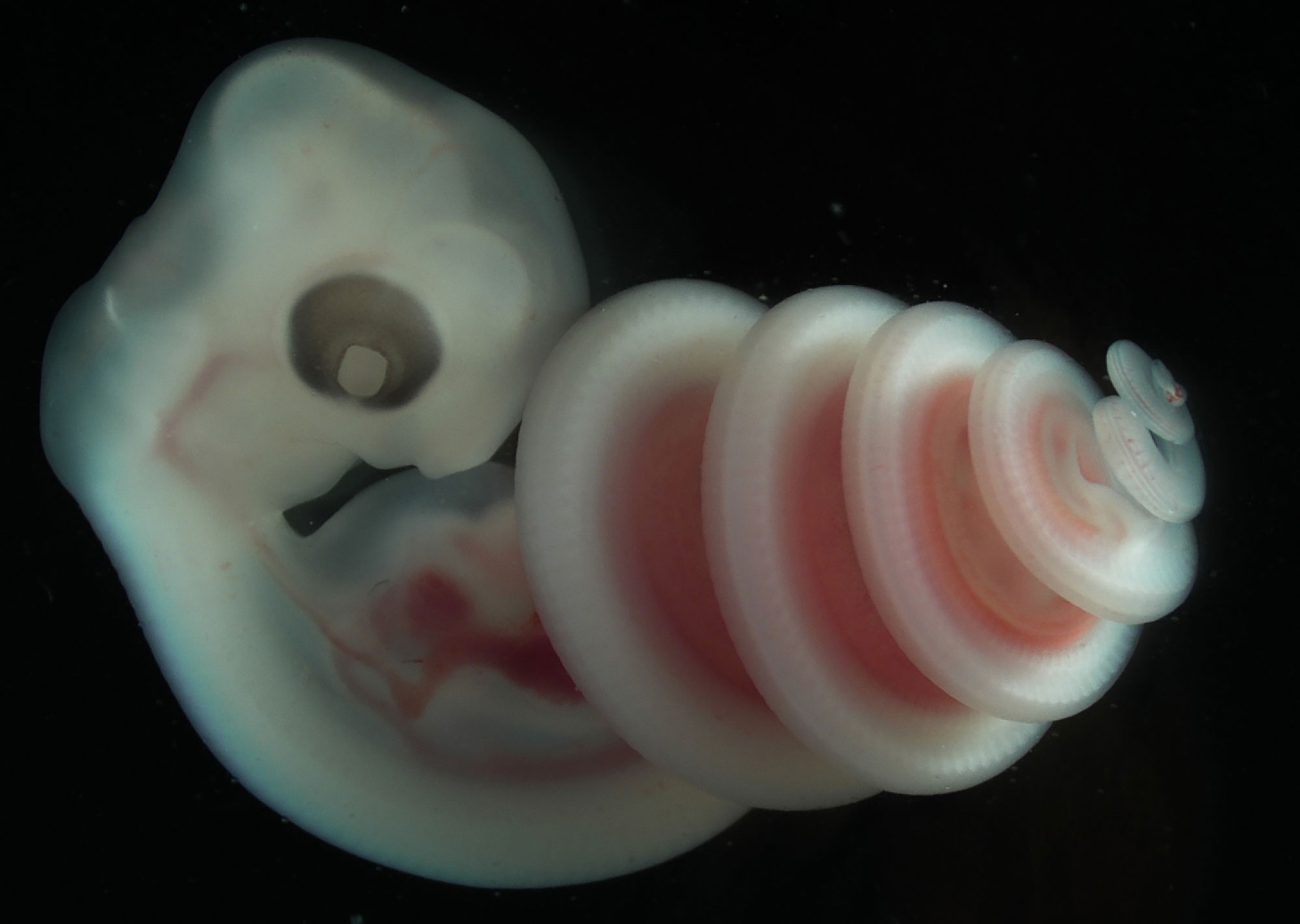
Could growth explain other animal spirals?
The researchers now hope to explore whether their model can help explain how other spirals develop in animals.
“There is a touch of mystery to spirals and we are only beginning to understand how these shapes are produced in animals, such as our looping intestine, snail shells, and now these beautifully coiled snake embryos,” Weber says.
“These puzzles beckon our curiosity. After all, spiral forms in nature have inspired human creations ranging from rotini pasta, to a barber’s pole or even portrayals of the biblical ‘Tower of Babel’,” Miyashita says.
“We are now opening the possibility to develop this model further to explain other spiral forms in nature,” he adds.
Reference: “How snake embryos coil” by Alexandra Weber, Gillian Watson, Alexis Arvanitis-Vigneault, Kaitlyn Mesa, Charnesha E. Williams, Nicolas Di-Poï, Raul E. Diaz and Tetsuto Miyashita, 31 August 2026, Current Biology.
DOI: 10.1016/j.cub.2026.07.078
Never miss a breakthrough: Join the SciTechDaily newsletter.
Follow us on Google and Google News.