
Close Menu
    Facebook X (Twitter) Instagram
    SciTechDaily
    • Biology
    • Chemistry
    • Earth
    • Health
    • Physics
    • Science
    • Space
    • Technology
    Facebook X (Twitter) Pinterest YouTube RSS
    SciTechDaily
    Home»Biology»Like Humans, Chimpanzees Can Suffer for Life if They Lose Their Mother Before Adulthood
    Biology

    Like Humans, Chimpanzees Can Suffer for Life if They Lose Their Mother Before Adulthood

    By Max Planck Institute for Evolutionary AnthropologySeptember 26, 2020No Comments3 Mins Read
    Facebook Twitter Pinterest Telegram LinkedIn WhatsApp Email Reddit
    Share
    Facebook Twitter LinkedIn Pinterest Telegram Email Reddit
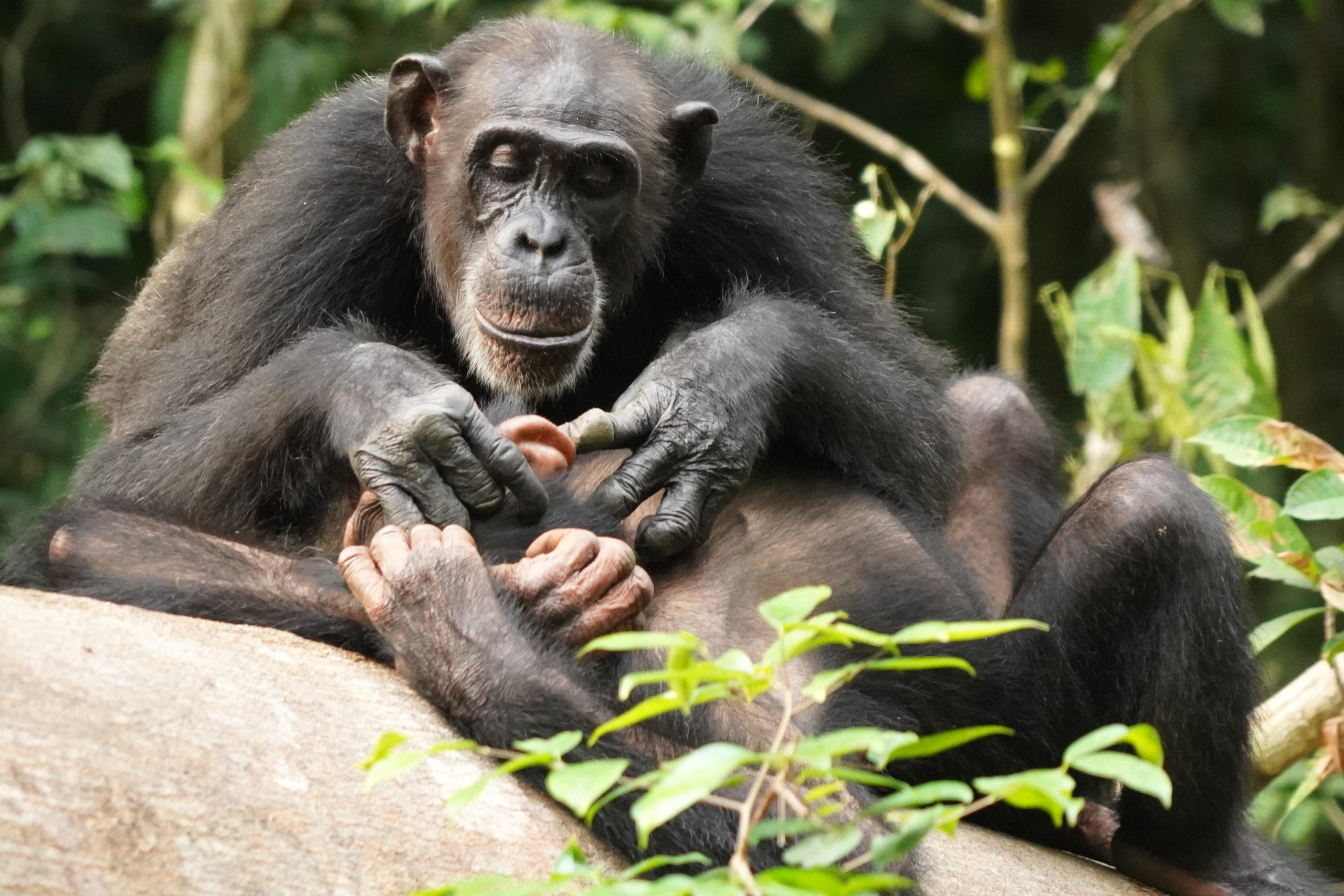
    Chimpanzee Mother with Offspring
    A chimpanzee mother’s presence and support throughout the prolonged childhood years allow their offspring time to learn the skills they need to survive in adulthood. Credit: Liran Samuni, Tai Chimpanzee Project

    Male chimpanzees who lose their mother early in life are less competitive and have fewer offspring than sons who continue to live with their mothers.

    Researchers observed three chimpanzee communities in the Tai National Park. They kept full demographic records and collected fecal samples to conduct paternity tests on all new community members, for up to 30 years. Catherine Crockford, the lead author, says: “When we study our closest living relatives, like chimpanzees, we can learn about the ancient environmental factors that made us human. Our study shows that a mother’s presence and support throughout the prolonged childhood years was also likely a trait in the last common ancestor that humans shared with chimpanzees six to eight million years ago. This trait is likely to have been fundamental in shaping both chimpanzee and human evolution.”

    Major theories in human evolution argue that parents continuing to provide food to their offspring until they have grown up has enabled our species to have the largest brains of any species on the planet relative to our body size. Brains are expensive tissue and grow slowly leading to long childhoods. Ongoing parental care through long childhoods allows children time to learn the skills they need to survive in adulthood. Such long childhoods are rare across animals, equaled only by other great apes, like chimpanzees.

    Chimpanzees may have long childhoods, but mothers rarely directly provide them with food after ages four to five years when they are weaned. Mostly mothers let their offspring forage for themselves. So then what do chimpanzee mothers provide their sons that gives them a competitive edge over orphaned sons? We do not yet know the answer but scientists do have some ideas.

    “One idea is that mothers know where to find the best food and how to use tools to extract hidden and very nutritious foods, like insects, honey, and nuts,” Crockford points out. “Offspring gradually learn these skills through their infant and juvenile years. We can speculate that one reason offspring continue to travel and feed close to their mothers every day until they are teenagers is that watching their mothers helps them to learn.” Acquiring skills which enable them to eat more nutritious foods may be why great apes can afford much bigger brains relative to their body size than other primates.

    “Another idea is that mothers pass on social skills,” Roman Wittig, last author on the study and director of the Tai Chimpanzee Project, adds. “Again a bit like humans, chimpanzees live in a complex social world of alliances and competition. It might be that they learn through watching their mothers when to build alliances and when to fight.”

    Reference: “Postweaning maternal care increases male chimpanzee reproductive success” by Catherine Crockford, Liran Samuni, Linda Vigilant and Roman M. Wittig, 18 September 2020, Science Advances.
    DOI: 10.1126/sciadv.aaz5746

    Never miss a breakthrough: Join the SciTechDaily newsletter.
    Follow us on Google and Google News.

    Chimpanzee Developmental Biology Evolution Max Planck Institute Zoology
    Share. Facebook Twitter Pinterest LinkedIn Email Reddit

    Related Articles

    A Fair Society Evolves From “Veil of Ignorance” – Mongooses Solve Inequality Problem

    Chest-Beating Gorillas Don’t Bluff: Honest Signal of True Body Size

    Chimpanzees Without Borders: Researchers Uncover Recent Genetic Connectivity Between Chimpanzee Subspecies

    For Narwhals – The ‘Unicorns of the Sea’ – Size Matters for Sexual Selection

    Temperature Variability Across the World Alters the Ecological Impacts of Seasons

    A Natural Example of a Functioning Gear Mechanism Discovered in an Insect

    Hybridization Leads to New Pathogen Species

    Marine Worm Thrives on Steady Diet of Deadly Poisons

    Human Y-Chromosome Has Enough Genes to Stay for Millions of Years

    Leave A Reply Cancel Reply

    • Facebook
    • Twitter
    • Pinterest
    • YouTube

    Don't Miss a Discovery

    Subscribe for the Latest in Science & Tech!

    Trending News

    Popular Sugar-Free Sweetener Linked to Liver Disease, Study Warns

    What Is Hantavirus? The Deadly Disease Raising Alarm Worldwide

    Scientists Just Discovered How the Universe Builds Monster Black Holes

    Scientists Unveil New Treatment Strategy That Could Outsmart Cancer

    A Simple Vitamin May Hold the Key to Treating Rare Genetic Diseases

    Scientists Think the Real Fountain of Youth May Be Hiding in Your Gut

    Ravens Don’t Follow Wolves, They Predict Them

    This Common Knee Surgery May Be Doing More Harm Than Good

    Follow SciTechDaily
    • Facebook
    • Twitter
    • YouTube
    • Pinterest
    • Newsletter
    • RSS
    SciTech News
    • Biology News
    • Chemistry News
    • Earth News
    • Health News
    • Physics News
    • Science News
    • Space News
    • Technology News
    Recent Posts
    • Scientists Identify Simple Supplement That Greatly Reduces Alzheimer’s Damage
    • You May Have a Dangerous Type of Cholesterol Even if Your Tests Look Normal
    • Study Reveals Dangerous Flaw in AI Symptom Checkers
    • New MRI Breakthrough Captures Stunningly Clear Images of the Eye and Brain
    • Scientists Warn Sitting Too Much Can Harm Your Body in Surprising Ways
    Copyright © 1998 - 2026 SciTechDaily. All Rights Reserved.
    • Science News
    • About
    • Contact
    • Editorial Board
    • Privacy Policy
    • Terms of Use

    Type above and press Enter to search. Press Esc to cancel.