
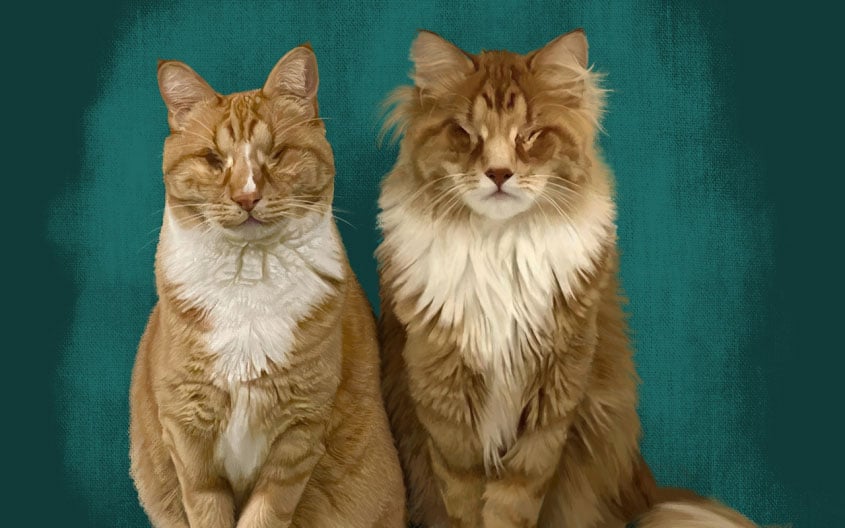
The first documented feline cases of Marfan syndrome offer clues to how an altered gene allowed two affected cats to survive into adulthood.
Gary and Shaggy, two feline brothers, reached adulthood with Marfan syndrome, a rare inherited disorder that weakens the body’s connective tissues. Both cats carried two altered copies of FBN1, a gene involved in building those tissues, even though a single altered copy can cause the condition in humans.
Researchers at Cornell University found that the cats’ altered gene still allowed some normal function, helping explain their survival. Their study, published in Scientific Reports, provides the first molecular characterization of Marfan syndrome in domestic cats and describes the first known documented feline cases.
Structural clues point to a rare connective tissue disorder
Marfan syndrome is recognized mostly in humans, affecting about 1 in 4,000 people. The FBN1 gene supplies instructions for making fibrillin-1, a protein that serves as a building block for connective tissues in blood vessels, bones, ligaments, skin, and eyes. Inheriting two altered copies is extremely rare in people and can interfere with the production of normal fibrillin-1.
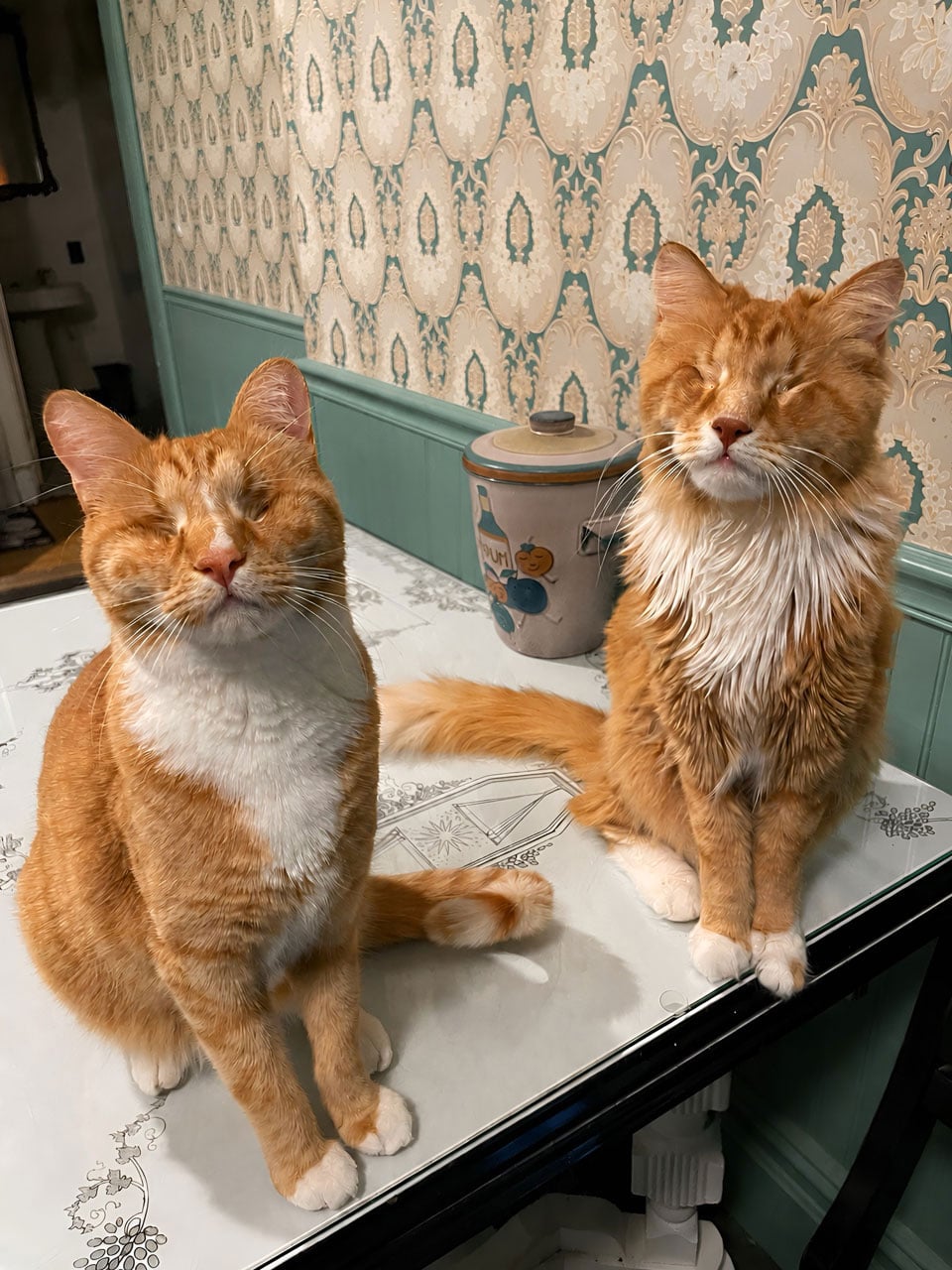
For Gary and Shaggy, signs of the disorder appeared in several parts of the body. Their limbs were noticeably long when they were kittens. Later examinations revealed structural problems in their eyes and enlargement of the aorta, the main artery carrying blood from the heart. Together, these findings pointed veterinarians toward Marfan syndrome.
Partial gene function explains the cats’ survival
A multidisciplinary team combined detailed clinical evaluations with genetic sequencing, which confirmed that each brother had inherited an altered copy of FBN1 from each parent. Further investigation showed that their particular genetic change disrupted only part of the process by which the gene’s instructions are prepared for use. Rather than shutting the gene down completely, it left some normal function intact. That remaining function helps explain why carrying two altered copies did not cause the more severe disease that might otherwise have occurred.
“The findings provide a foundation for improved veterinary diagnostics,” said senior author Dr. Jacquelyn Evans, an assistant professor in Cornell’s College of Veterinary Medicine and at the Baker Institute for Animal Health. “It can help veterinarians recognize similar cases in the future and may help develop genetic tests.”
Reference: “A homozygous hypomorphic FBN1 splice region variant in domestic cats with Marfan syndrome” by Shawna R. Cook, Jessica J. Hayward, Soon Hon Cheong, Linda Impe, Ian R. Porter, Brian Lamendola, Gavin R. Hitchener, Urs Giger, Philip R. Fox, Jacquelyn M. Evans and Bart J. G. Broeckx, 19 September 2026, Scientific Reports.
DOI: 10.1038/s41598-026-70702-3
This work was supported in part by The Hartwell Foundation (SRC).
Never miss a breakthrough: Join the SciTechDaily newsletter.
Follow us on Google and Google News.