
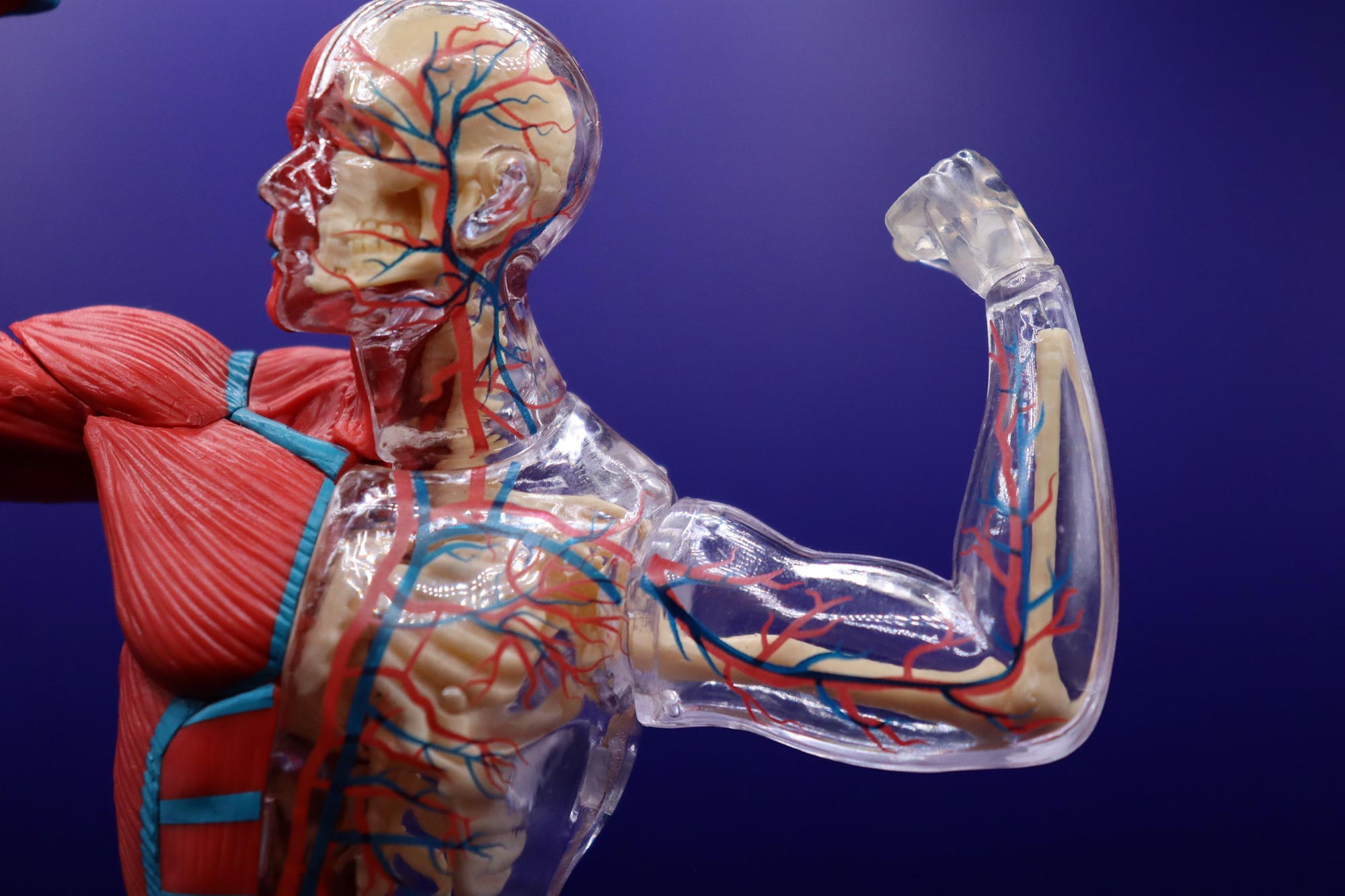
The strongest link to dementia risk may be hidden in declining muscle, rather than rising weight.
A review of more than 80 studies by researchers at Curtin University examined how body weight, body fat, and muscle health relate to dementia risk. People with sarcopenia had a 42 percent higher risk of dementia, the strongest association reported in the review. Sarcopenia involves a substantial loss of muscle mass, strength, and physical function, often with age.
Obesity showed a different pattern across age groups. Before age 65, it was linked to a nine percent higher risk of dementia. Among people aged 65 and older, it was linked to a 17 percent lower risk.
Why Muscle Health Matters
Lead researcher Dr. Uraiporn Booranasuksakul of Burapha University said the results show why weight cannot be the only measure considered. “It’s not just about how much you weigh—maintaining muscle strength and function also appears to be important as we age,” she said. “Our findings suggest losing muscle could be an important warning sign for dementia risk.”
“Maintaining muscle is an important part of healthy aging, and regular physical activity and good nutrition can help support muscle strength and function,” Dr. Booranasuksakul said.
Corresponding author Professor Mario Siervo of Curtin’s School of Population Health urged caution in interpreting the obesity findings. “We found that obesity in middle age was linked to a higher risk of dementia, but this relationship changed in later life,” he said. “This does not mean people should gain weight as they get older. Rather, it shows us that the relationship between body weight, aging, and dementia is complex.”
What Remains Unclear
The researchers also investigated sarcopenic obesity, in which low muscle mass or function occurs alongside excess body fat. Only four studies met the criteria for this part of the review, and their combined results showed no statistically significant link with dementia.
“There is still a lot we don’t know about how changes in muscle and body fat interact over time,” Professor Siervo said. “More long-term research is needed to understand whether having both low muscle mass and excess body fat increases dementia risk.”
Taken together, the findings support a lifelong approach to body composition: avoiding unhealthy weight gain in middle age and preserving muscle strength and function as people get older.
Exercise Beyond Dementia Risk
Professor Warren Harding AM, Chairman and Head of Research and Partnerships at Alzheimer’s WA, welcomed the findings and praised Curtin’s investment in dementia research.
“Dementia is a $2.8 trillion global challenge, and the findings from the World Health Organization and the Lancet Commission on the 14 lifestyle risk factors are powerful reminders of the importance of early detection and good eating, exercise, weight, hearing, vision, and brain training,” Professor Harding said.
“The Curtin findings around muscle mass and strength also reinforce the importance of exercise and underline the importance of good mobility and stability to reduce falls as people age.”
Reference: “Sarcopenia, obesity, sarcopenic obesity and dementia risk: a systematic review and meta-analysis of cohort studies” by Uraiporn Booranasuksakul, Zhongyang Guan, Leticia Radin Pereira, Kostas Tsintzas, Ian Macdonald, Ellise Stirling, Sana Farzam, Lorenzo M. Donini, Alexandra M. Johnstone, Marc Sim, Blossom Stephan and Mario Siervo, 31 August 2026, International Journal of Food Sciences and Nutrition.
DOI: 10.1080/09637486.2026.2722926
Never miss a breakthrough: Join the SciTechDaily newsletter.
Follow us on Google and Google News.