

A large study of older women suggests that muscle strength may play a critical role in longevity, independent of how much aerobic activity a person gets.
After 60, the most revealing fitness question may not be how far you can walk or how long you can stay on a treadmill. It may be whether your body is strong enough to do something far simpler: squeeze, stand, and rise again. In a large study of older women, two quick strength checks, including a basic handgrip test, were strongly linked to how long participants lived.
A University at Buffalo-led team followed more than 5,000 women ages 63 to 99, reporting the findings in JAMA Network Open. Researchers focused on grip strength and a second task that looks almost too ordinary to matter: completing five unassisted sit-to-stand chair rises as quickly as possible. Women with stronger grips and faster chair-rise times had a significantly lower risk of death during an eight-year follow-up.
The strength link held up even after the researchers accounted for how active the women were and how much time they spent sitting, based on accelerometer data. They also adjusted for gait speed (an indicator of cardiovascular fitness) and for C-reactive protein, a blood biomarker of inflammation believed to contribute to both declining muscle function and premature death. Even with those major risk factors considered, strength still stood out.
Stronger Muscles, Lower Mortality Risk
For every 7 kilograms of additional grip strength, participants showed, on average, a 12% lower mortality rate. Seven kilograms is about 15.4 pounds. Chair-rise performance also tracked with outcomes. Moving from slower to faster times in 6-second steps was associated with a 4% lower mortality rate.
Grip strength and chair stands are two tests commonly used in clinics to gauge strength in older adults because they are quick, low-cost, and closely tied to everyday function. A firm grip can reflect broader muscle capacity, while standing repeatedly from a chair taps leg strength, coordination, and the ability to generate force against gravity, skills that affect independence and fall risk.
“If you don’t have enough muscle strength to get up, it is going to be hard to do aerobic activities, such as walking, which is the most commonly reported recreational activity in U.S. adults ages 65 and older,” says study lead author Michael LaMonte, PhD, research professor of epidemiology and environmental health in UB’s School of Public Health and Health Professions.
“Muscular strength, in many ways, enables one to move their body from one point to another, particularly when moving against gravity,” LaMonte adds. “Healthy aging probably is best pursued through adequate amounts of both aerobic and muscle-strengthening physical activities. When we no longer can get out of the chair and move around, we are in trouble.”
Isolating the Role of Strength
According to LaMonte, this is the largest study so far to examine how muscle strength relates to longevity in women over 60. He notes that many earlier large epidemiologic studies did not include detailed measures of physical activity, inflammation, and cardiovascular fitness, all of which were incorporated here.
By accounting for these factors at the same time, the researchers were better able to separate the specific relationship between muscular strength and survival.
“We also showed that differences in body size did not explain the muscular strength relationship with death,” he says. “When we scaled the strength measures to body weight and even to lean body mass, there remained significantly lower mortality.”
Even women who fell short of current physical activity guidelines for adults, defined as 150 minutes of moderate-intensity aerobic activity, benefited if they had greater muscle strength. LaMonte calls this finding “a major advancement” in the evidence supporting the inclusion of muscle strength in public health messaging about physical activity, particularly for older adults, an especially important population group.
“Because women ages 80 and older are the fastest growing U.S. age group, the importance of monitoring and maintaining muscular strength will have huge public health implications in the coming decades,” he says.
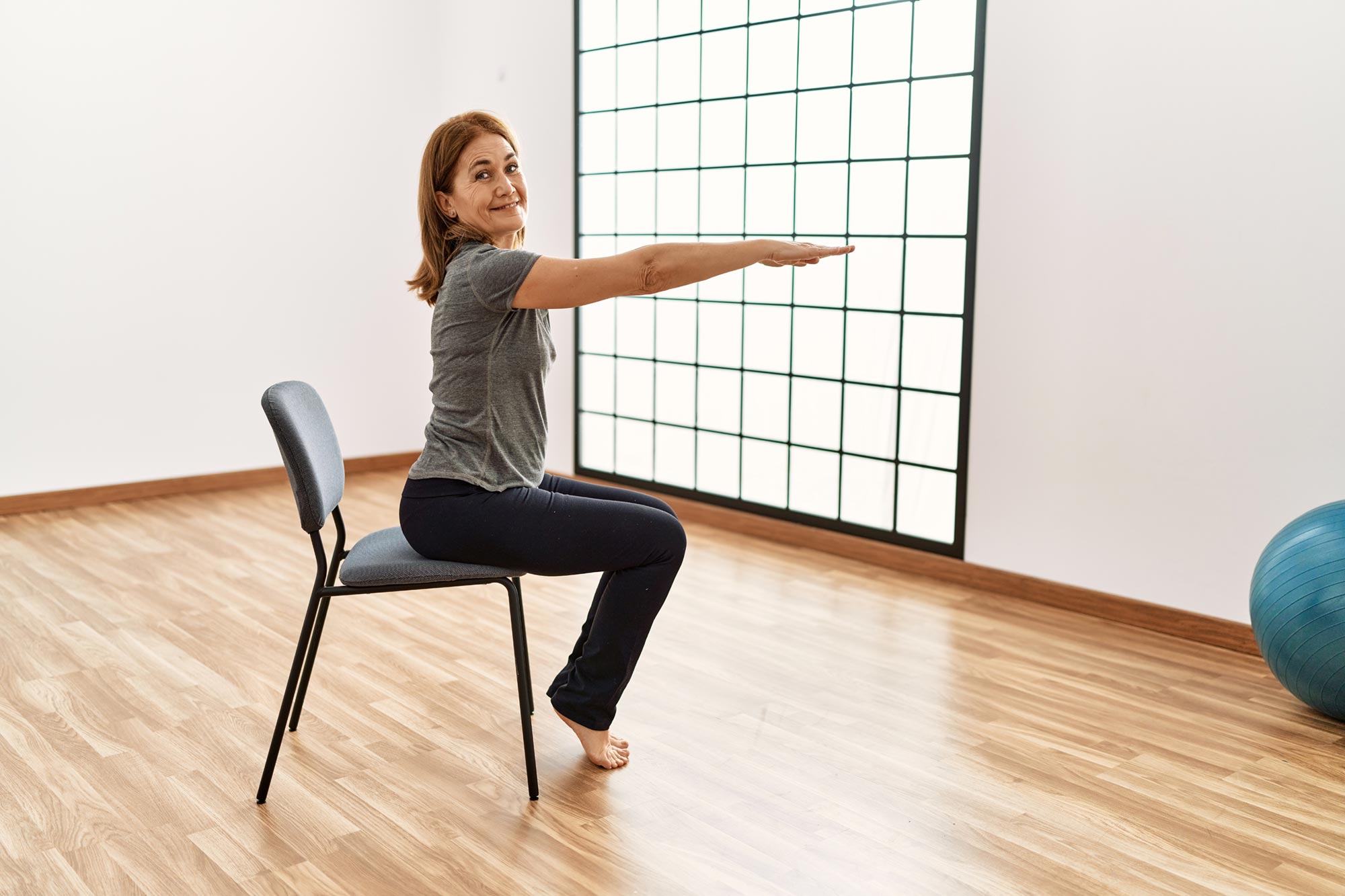
There are many ways to increase muscle strength. Options include traditional free weights, dumbbells, weight machines, and bodyweight exercises such as modified push-ups, wall presses, and knee bends.
Building and Maintaining Muscle Strength
LaMonte adds that a trip to the gym may not even be necessary. “Even using soup cans or books as a form of resistance provides stimulus to skeletal muscles and could be used by individuals for whom other options are not feasible.”
As always, safety comes first, especially for older adults with pain, balance issues, or chronic conditions. LaMonte advises checking with a health care provider before beginning muscle strengthening exercises. For anyone unfamiliar with strength work, a physical therapist or exercise specialist can help tailor movements, improve form, and set realistic goals that support stability and confidence rather than risking injury.
Reference: “Muscular Strength and Mortality in Women Aged 63 to 99 Years” by Michael J. LaMonte, Eric T. Hyde, Steve Nguyen, Esmeralda Castro, Rebecca A. Seguin-Fowler, Charles B. Eaton, Connor R. Miller, Chongzhi Di, Marcia L. Stefanick and Andrea Z. LaCroix, 13 February 2026, JAMA Network Open.
DOI: 10.1001/jamanetworkopen.2025.59367
Never miss a breakthrough: Join the SciTechDaily newsletter.
Follow us on Google and Google News.