
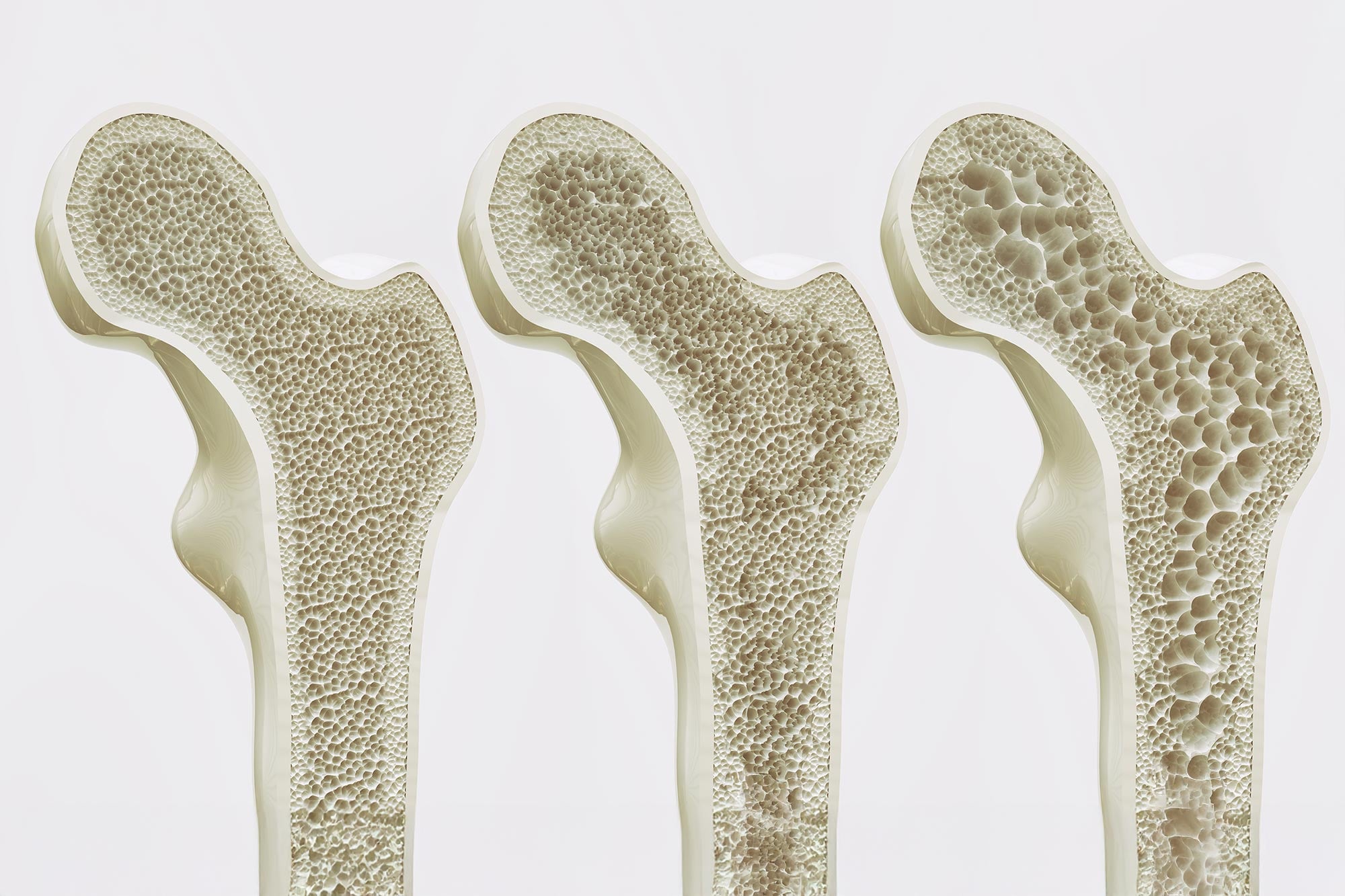
Scientists uncovered how the protein Piezo1 translates physical activity into stronger bones, offering a path to exercise-mimicking therapies.
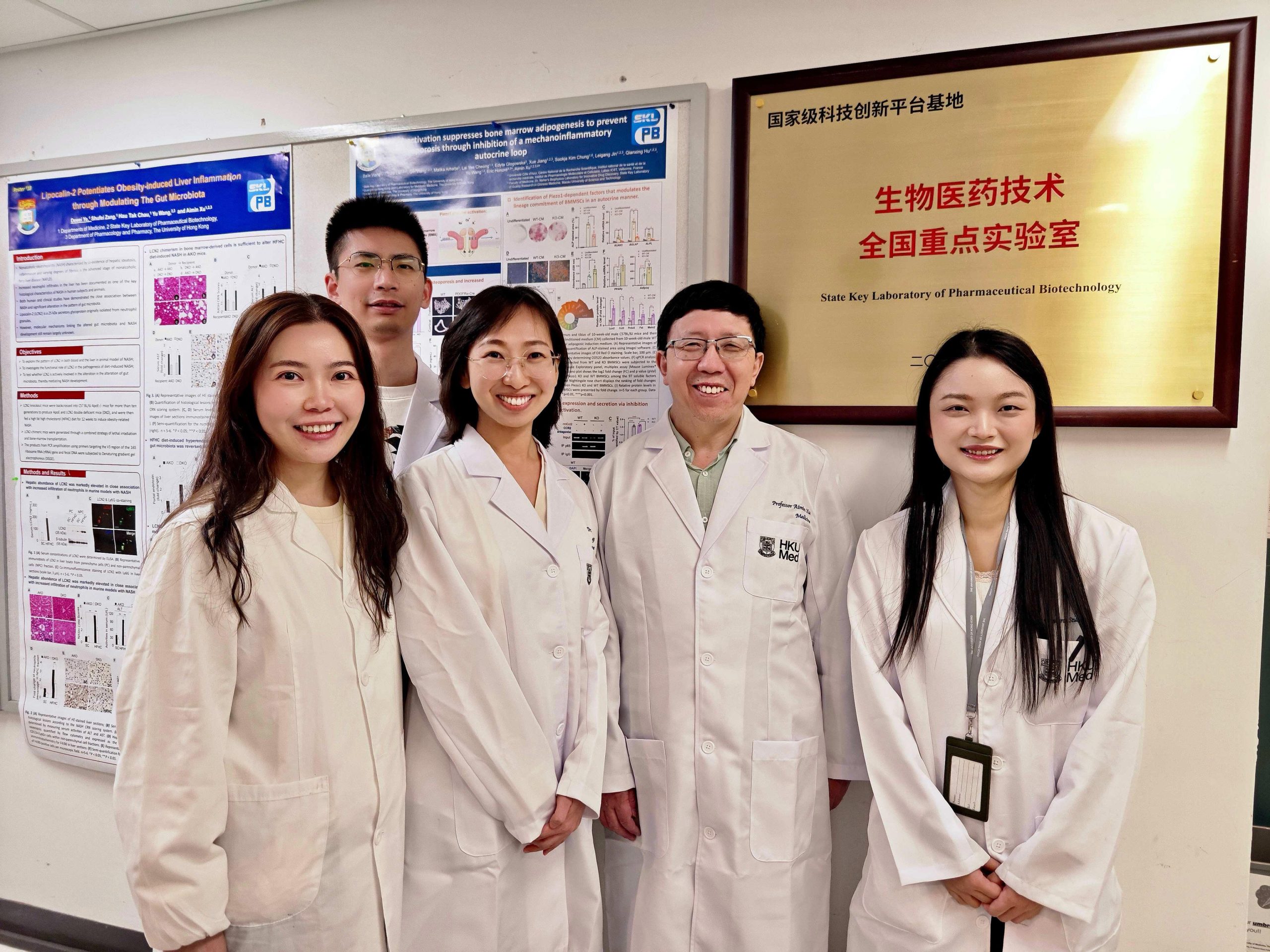
Scientists from the Department of Medicine, School of Clinical Medicine, LKS Faculty of Medicine at the University of Hong Kong (HKUMed) have identified a biological process that explains how exercise helps keep bones strong. The discovery could lead to new treatments for osteoporosis and bone loss in people who are unable to be physically active.
The researchers found a protein that functions as the body’s ‘exercise sensor’, translating physical movement into signals that protect bone health. This insight points to the possibility of developing drugs that reproduce the effects of exercise, which could benefit older adults, bedridden patients, and people with chronic illnesses who face an elevated risk of fractures. The findings were published in the journal Signal Transduction and Targeted Therapy.
“Osteoporosis and age-related bone loss affect millions worldwide, often leaving elderly and bedridden patients vulnerable to fractures and loss of independence,” said Professor Xu Aimin, Director of the State Key Laboratory of Pharmaceutical Biotechnology and Chair Professor in the Department of Medicine, School of Clinical Medicine, HKUMed, who led the study.
“Current treatments rely heavily on physical activity, which many patients simply cannot perform. We need to understand how our bones get stronger when we move or exercise before we can find a way to replicate the benefits of exercise at the molecular level. This study is a critical step towards that goal.”
Activating the bone’s ‘exercise sensor’ to reduce fat and build new bone
The World Health Organization estimates that about 1 in 3 women and 1 in 5 men over the age of 50 experience a fracture caused by weakened bones. The issue is particularly serious in Hong Kong as the population grows older, with osteoporosis affecting 45% of women and 13% of men aged 65 and above. Fractures linked to osteoporosis often result in lasting pain and disability, reducing independence and quality of life while also placing substantial strain on healthcare systems and the broader economy.
As people age, bones naturally lose strength, becoming thinner and more porous over time. Within the bone marrow, mesenchymal stem cells can develop into either bone-forming cells or fat cells. These stem cells respond strongly to external influences such as physical activity and mechanical pressure. With aging, however, they are more likely to become fat cells. As fat builds up in the bone marrow, it crowds out healthy bone tissue, weakens the skeleton further, and creates a downward cycle of bone loss that current treatments struggle to reverse.
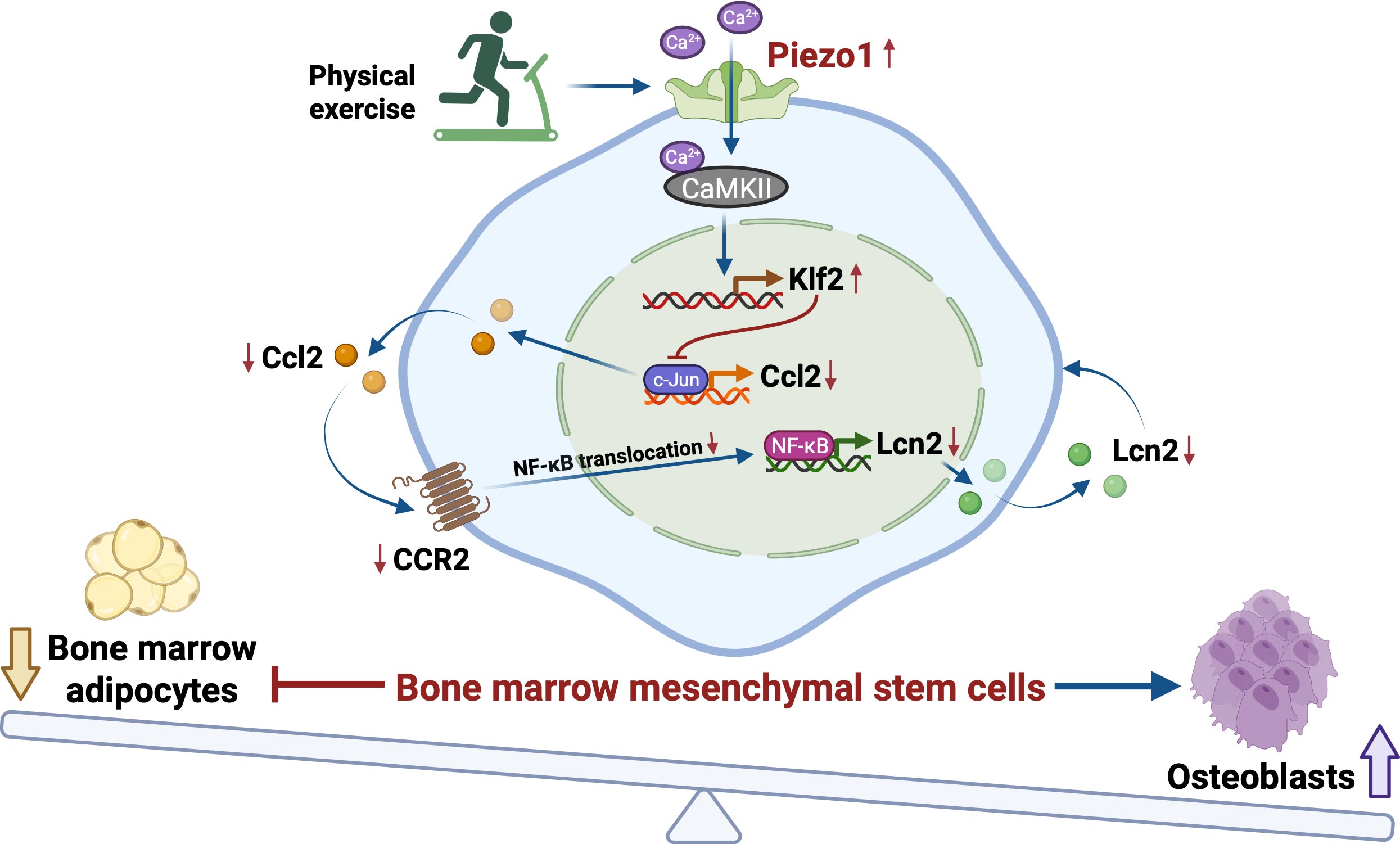
By studying mouse models alongside human stem cells, the researchers identified a key ‘switch’ known as Piezo1, a protein located on the surface of mesenchymal stem cells in the bone marrow. Piezo1 functions as an exercise sensor, detecting mechanical signals generated by movement that help maintain bone strength and reduce age-related frailty. In mice, activating Piezo1 through physical activity limited fat buildup in the bone marrow and promoted the creation of new bone.
When the protein was absent, the opposite occurred, with stem cells shifting toward fat accumulation and accelerating bone loss. The lack of Piezo1 also increased the release of specific pro-inflammatory signals (Ccl2 and lipocalin-2), which further pushed stem cells toward becoming fat cells and interfered with bone formation. The researchers found that blocking these signals could help restore healthier bone development.
Mimicking exercise for individuals with limited mobility
“We have essentially decoded how the body converts movement into stronger bones,” said Professor Xu Aimin. “We have identified the molecular exercise sensor, Piezo1, and the signalling pathways it controls. This gives us a clear target for intervention. By activating the Piezo1 pathway, we can mimic the benefits of exercise, effectively tricking the body into thinking it is exercising, even in the absence of movement.”
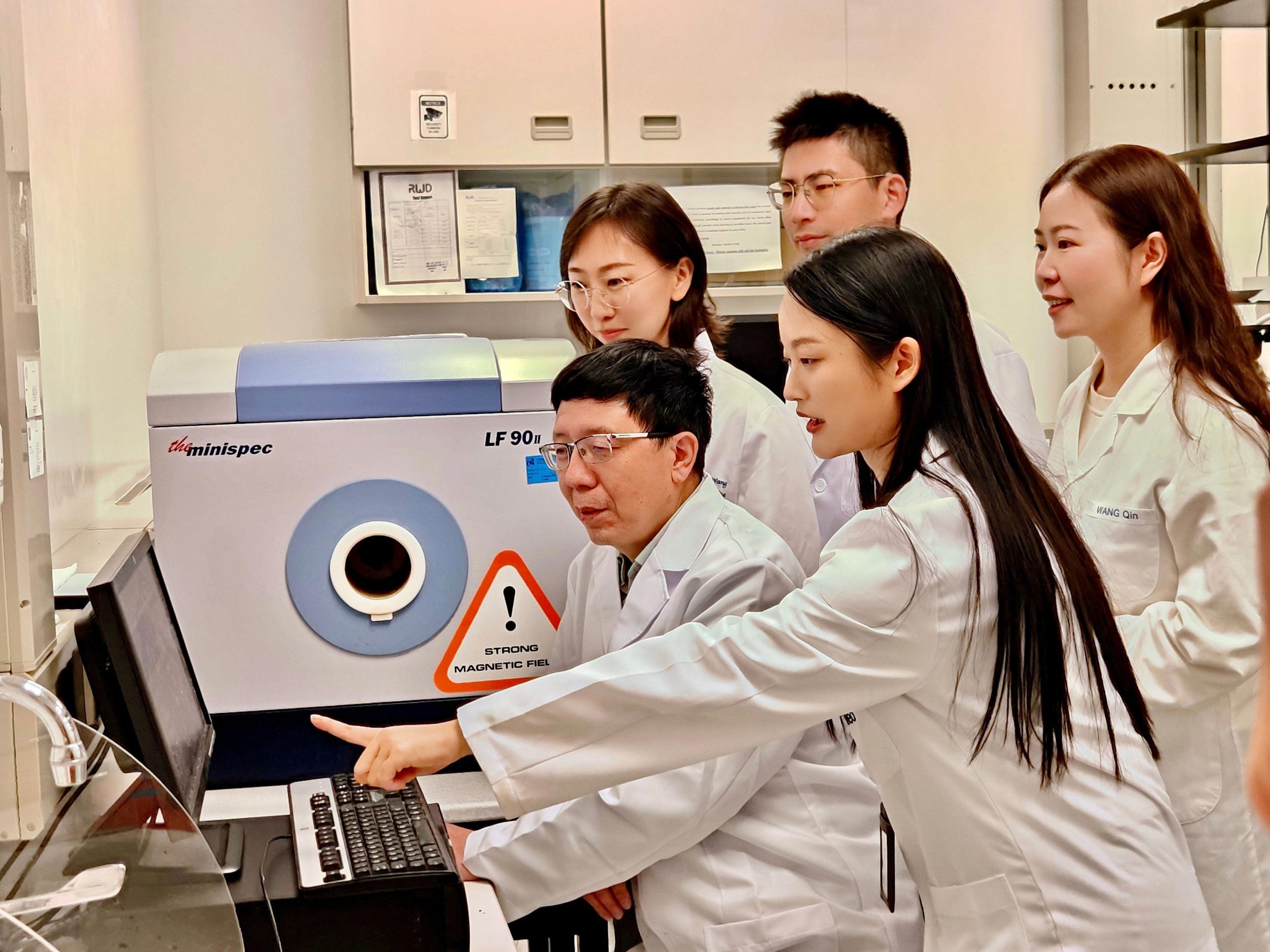
Dr Wang Baile, Research Assistant Professor from the same department, who co-led the research, added, “This discovery is especially meaningful for older individuals and patients who cannot exercise due to frailty, injury, or chronic illness. Our findings open the door to developing ‘exercise mimetics’ — drugs that chemically activate the Piezo1 pathway to help maintain bone mass and support independence.”
“This offers a promising strategy beyond traditional physical therapy,” remarked Professor Eric Honoré, Team Leader at the Institute of Molecular and Cellular Pharmacology, French National Centre for Scientific Research, who co-led the research. “In the future, we could potentially provide the biological benefits of exercise through targeted treatments, thereby slowing bone loss in vulnerable groups such as the bedridden patients or those with limited mobility, and substantially reducing their risk of fractures.”
The research team is now working to translate these findings into clinical applications, with the goal of developing new treatments to preserve bone health and improve the quality of life for an aging population and those confined to bed.
Reference: “Piezo1 activation suppresses bone marrow adipogenesis to prevent osteoporosis by inhibiting a mechanoinflammatory autocrine loop” by Baile Wang, Jie Liu, Qin Wang, Malika Arhatte, Lai Yee Cheong, Edyta Glogowska, Xue Jiang, Sookja Kim Chung, Leigang Jin, Qianxing Hu, Yu Wang, Eric Honoré and Aimin Xu, 28 October 2025, Signal Transduction and Targeted Therapy.
DOI: 10.1038/s41392-025-02455-w
This research was supported by the Areas of Excellence Scheme, and the General Research Fund of the Research Grants Council; the Health and Medical Research Fund under the Health Bureau, the Government of the Hong Kong Special Administrative Region of the People’s Republic of China; National Key R&D Program of China; the National Natural Science Foundation of China; the Human Frontier Science Program; the French National Research Agency; Fondation de France; Fondation pour la Recherche Médicale; and the Macau Science and Technology Development Fund.
Never miss a breakthrough: Join the SciTechDaily newsletter.
Follow us on Google and Google News.
16 Comments
Interested
Lisa, I’m sorry to hear this. I know how much pain you must be suffering from. I also understand any fears you may have regarding anymore spinal fractures that might lead to paralysis.
Please continue to be brave, please continue to cope with your pain, a solution for you might be near, so hang around and stay you.
Is it possible this could be used for Multiple myeloma!
I read that this study is also undertaken by the Max Planck Institute in Leipzig
I have Osteoporosis. I’m happy to about this new medicine for the Osteoporosis. I’m from surrey BC. THANKYOU
Great News on exercise limited people. Protein pill. Bone Health.
Just been diagnosed with oestoporis on abaloparatide injections for 18 months that would be amazing to help people with oestoporis
Thank God for smart people 🙏 maybe it will help me and all the others who suffer from this.
What effect would this have on osteo arthritis where bones overgrow and produce bone spurs? If it strengthens and hardens bone formation in osteoporosis, leading to less bone fractures, then would it also accelerate bone spur formations in osteoporosis arthritis sufferers, as that would cause more excessive bone spur formation leading to deformity and also bone breaking through fragile skin in the elderly, which would result in open wounds that would have to be treated to avoid infection and also muscle tissue damage that would also lead to a cascade of inflammation, damage to internal soft tissues and would result in more pain and suffering.
there’s no any new medicine. but seniors and most people shouldn’t ever vote because of low or declining intelligence. this failed metabolic pathway is hinted by gabriela from canada and many others
If you don’t allow seniors, and most other people to vote, because some idiot presumes that certain swathes of human population groupings that are classified as old or have presumed declining intelligence, then you will no longer have Democracy.
That would be bad, very bad, for every one, including the entitled, narcissistic, idiot who said that…seniors and most people shouldn’t ever vote because of low or declining intelligence…
That point of idiotic view would also wipe out the prospect of any President over the age of 35 years old.
But hey, at least now we know how low the intelligence is of the person who says that seniors and most people shouldn’t ever vote because of low or declining intelligence, so that means, from their own argument, that that idiot shouldn’t ever vote.
FFS.
I blame their parents for enabling and the education system for not teaching or correcting and healthcare, for not treating mental illnes in a strategic and timely manner.
Seriously, get an education and get an I.Q. before you communicate to the world again and prove that you are lacking.
Lisa
Anything to help with my osteoporosis is good news to me!
Are they ready to start human trials? If any going to happen in Ontario Canada as a person with osteoporosis , I’ll volunteer.
Yes I would be willing to do the trial as I am 55 and have multiple fractures from cervical to lumber from osteoporosis
Lisa, I’m sorry to hear this. I know how much pain you must be suffering from. I also understand any fears you may have regarding anymore spinal fractures that might lead to paralysis.
Please continue to be brave, please continue to cope with your pain, a solution for you might be near, so hang around and stay you.
Great news.
Can’t wait to see it in use.
Sign me up.