
These findings suggest that increasing leisure-time physical activity and reducing sedentary behavior may benefit epigenetic aging.
A research team led by Takuji Kawamura of Tohoku University has published a new perspective in the journal Aging, examining how regular exercise, physical activity, and overall fitness may affect the body’s biological aging process.
The review draws on findings from multiple scientific studies suggesting that these lifestyle factors could slow, or even reverse, epigenetic aging. According to the authors, this approach may offer a promising strategy for extending healthspan and supporting long-term well-being.
Epigenetic aging describes molecular changes within DNA that indicate the pace of aging inside the body. Scientists measure it using epigenetic clocks, which track patterns of DNA methylation, a chemical change that can influence gene activity. Unlike chronological age, which simply measures the number of years someone has lived, epigenetic age provides a more precise picture of cellular and tissue function. This measure is shaped by many influences, including lifestyle habits, and is now considered a valuable tool for understanding and studying the aging process.
The Role of Exercise and Physical Fitness
This perspective highlights that while general physical activity, such as walking or doing household tasks, offers health benefits, structured exercise routines that are planned, repetitive, and goal-directed appear to have stronger effects on slowing epigenetic aging. Physical fitness, especially high cardiorespiratory capacity, is also closely associated with slower epigenetic aging.
The authors also discuss key findings from both human and animal studies. In mice, structured endurance and resistance training reduced age-related molecular changes in muscle tissue. In humans, multi-week exercise interventions demonstrated reductions in biological age markers in blood and skeletal muscle. One study found that sedentary middle-aged women reduced their epigenetic age by two years after just eight weeks of combined aerobic and strength training. Another study showed that older men with higher oxygen uptake levels, a key measure of cardiovascular fitness, had significantly slower epigenetic aging.
“These findings suggest that maintaining physical fitness delays epigenetic aging in multiple organs and supports the notion that exercise as a geroprotector confers benefits to various organs.”
Exercise Benefits Beyond Muscle
The research also examines which organs benefit most from exercise. While skeletal muscle has been a central focus, new evidence shows that regular physical training may also slow aging in the heart, liver, fat tissue, and even the gut. In addition, Olympic athletes were found to have slower epigenetic aging than non-athletes, suggesting that long-term, intensive physical activity may have lasting anti-aging effects.
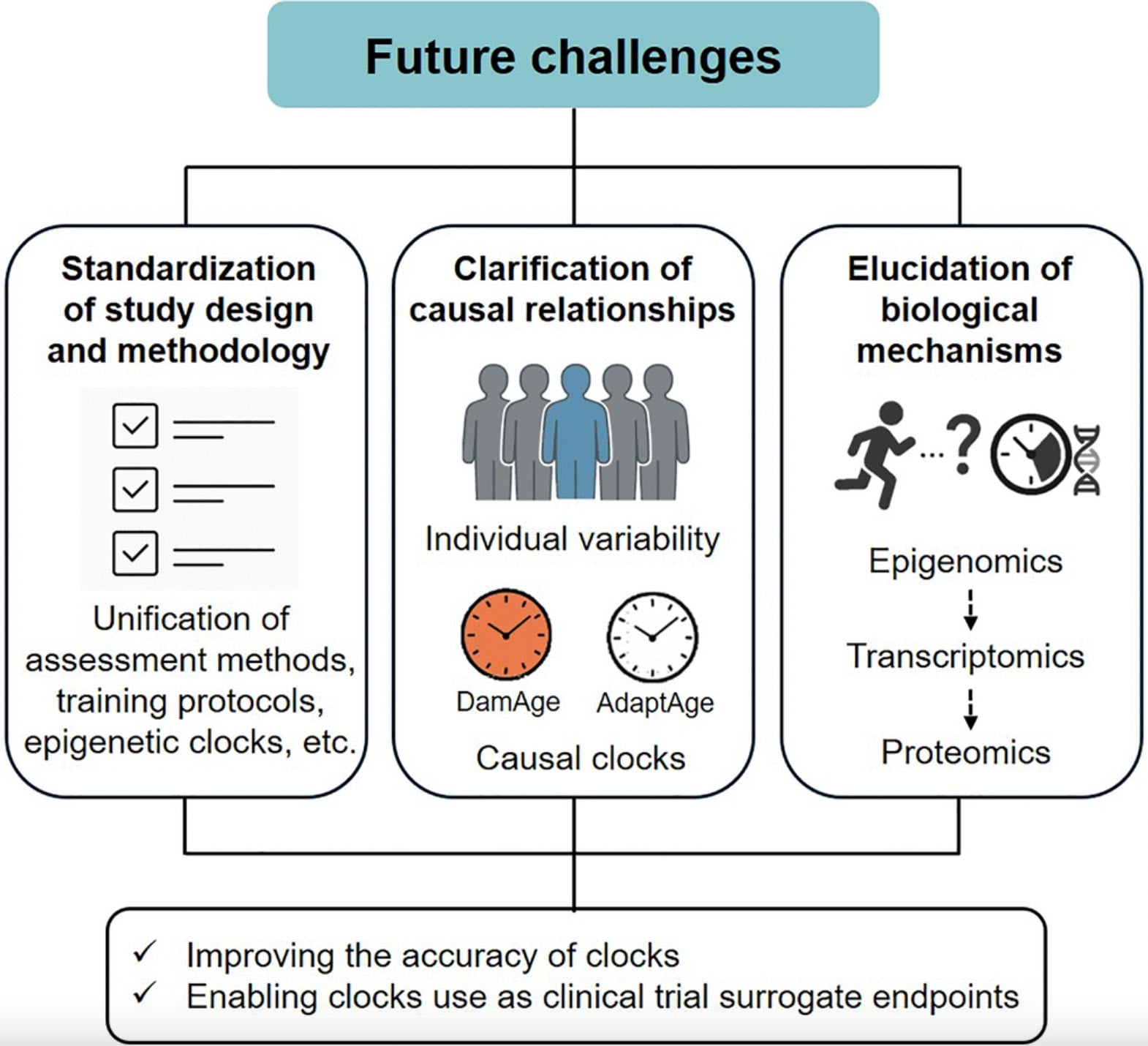
The authors call for further research to understand why some individuals respond more strongly to exercise than others and how different types of training influence aging in various organs. They also point out the importance of developing personalized exercise programs to maximize anti-aging benefits. Overall, the findings support the growing recognition that maintaining physical fitness is not only essential for daily health but may also serve as one of the most effective tools for slowing the body’s internal aging process.
Reference: “Exercise as a geroprotector: focusing on epigenetic aging” by Takuji Kawamura, Mitsuru Higuchi, Zsolt Radak and Yasuyuki Taki, 8 July 2025, Aging.
DOI: 10.18632/aging.206278
Never miss a breakthrough: Join the SciTechDaily newsletter.
Follow us on Google and Google News.
3 Comments
Not a surprise whatsoever. We’ve known for decades that exercise and activity help you age more gracefully and prolong quality life. The only questions were the mechanisms
Weight training is key. It fights and reverses sarcopenia and osteoporosis, boosts metabolism and has mental health benefits. Its basically the fountain of youth.
You can’t beat a couple of hours digging at the allotment.