
A decades-long Swedish study finds that physical decline starts around age 35, but exercise at any age still meaningfully preserves fitness.
A Swedish research project spanning 47 years from Karolinska Institutet has tracked how aerobic fitness, muscular strength, and endurance shift across adult life. The findings show that physical performance can begin to decline around age 35, yet the benefits of exercise remain available even when people start later.
As part of the Swedish Physical Activity and Fitness study (SPAF), scientists followed several hundred randomly selected women and men between the ages of 16 and 63. Published in the scientific journal Journal of Cachexia, Sarcopenia and Muscle, the work offers a detailed picture of how physical capacity develops and changes over decades.
Much of what was previously known about aging and fitness came from cross-sectional research that compared different age groups at a single point in time. In contrast, the SPAF study stands out for repeatedly measuring fitness and strength in the same randomly selected participants across Sweden for almost 50 years.
Exercise always pays off
The data show that declines in fitness and strength begin as early as the mid-30s, regardless of how much people train. From that point on, physical capacity continues to decrease, with the pace of decline increasing later in life. At the same time, the researchers found encouraging evidence that adults who became physically active improved their performance by 5–10 percent, demonstrating that meaningful gains are still possible well into adulthood.
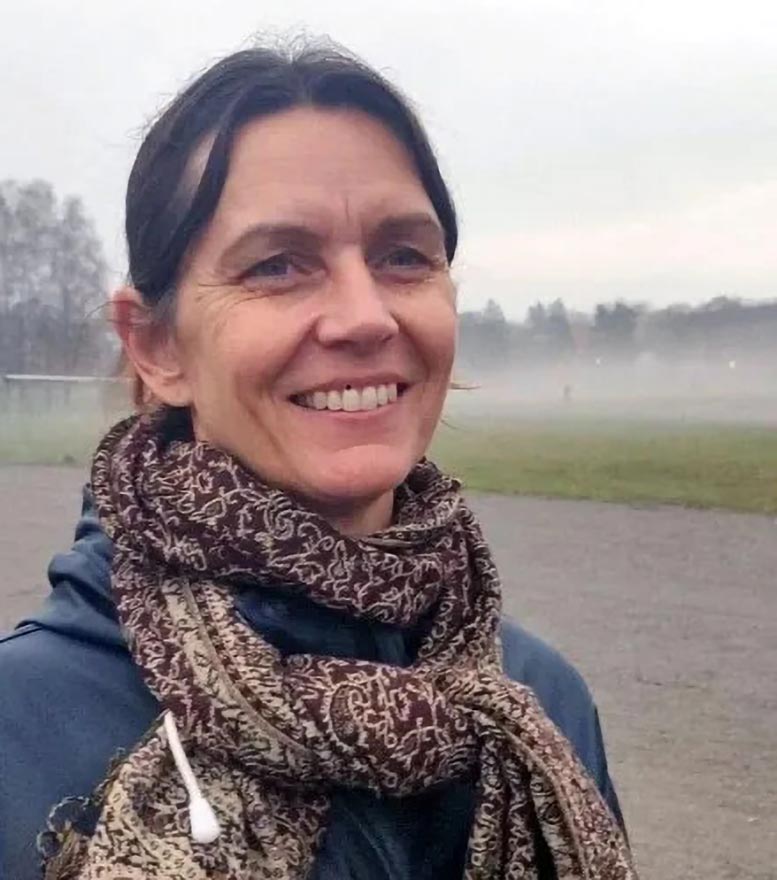
“It is never too late to start moving. Our study shows that physical activity can slow the decline in performance, even if it cannot completely stop it. Now we will look for the mechanisms behind why everyone reaches their peak performance at age 35 and why physical activity can slow performance loss but not completely halt it,” says Maria Westerståhl, lecturer at the Department of Laboratory Medicine and lead author of the study.
The study continues, and next year the participants, who will then be 68 years old, will be examined again. The researchers hope to link changes in physical capacity to lifestyle, health, and biological mechanisms.
Reference: “Rise and Fall of Physical Capacity in a General Population: A 47–Year Longitudinal Study” by Maria Westerståhl, Gustav Jörnåker, Eva Jansson, Ulrika Aasa, Michael Ingre, Kaveh Pourhamidi, Brun Ulfhake, and Thomas Gustafsson, December 2025, Journal of Cachexia, Sarcopenia and Muscle.
DOI: 10.1002/jcsm.70134
Funding: Swedish Research Council, Swedish Research Council for Sport Science, Tornspiran Foundation and Lindhé’s Law Firm
Never miss a breakthrough: Join the SciTechDaily newsletter.
Follow us on Google and Google News.
3 Comments
“Now we will look for the mechanisms behind why everyone reaches their peak performance at age 35 …”
The article basically establishes the expectation that it is all ‘down hill’ after age 35. Surely there are variations in the rate of change as with other human characteristics, such as the typical age at which people reach their expiration date! That is why there is a universal concept of ‘early- and late-bloomers.’
This expectation comes from the bad science-reporting habit of only reporting one number, such as an average, without stating the standard deviation, which tells the reader how wide the variation is for a given average. That is, the ‘peak’ should be reported as a single number with the 95% probability of it being later or earlier in life, such as 35 +/-2 sigma. In some ways, the variation with age is of more interest than the supposed turning point. It can provide more information on how quickly people come off the theoretical ‘peak,’ and how exercise can stall that decline, which this article only hints at.
The study is interesting. However, the reporting, at least, is incomplete.
Thank you so much,for writing and sharing this great educational post, you or right, at 35 we start noticing more in our life, and we get tired faster.
This athletic biochemist wishes to
learn more about!
Thank YOU. 😊