
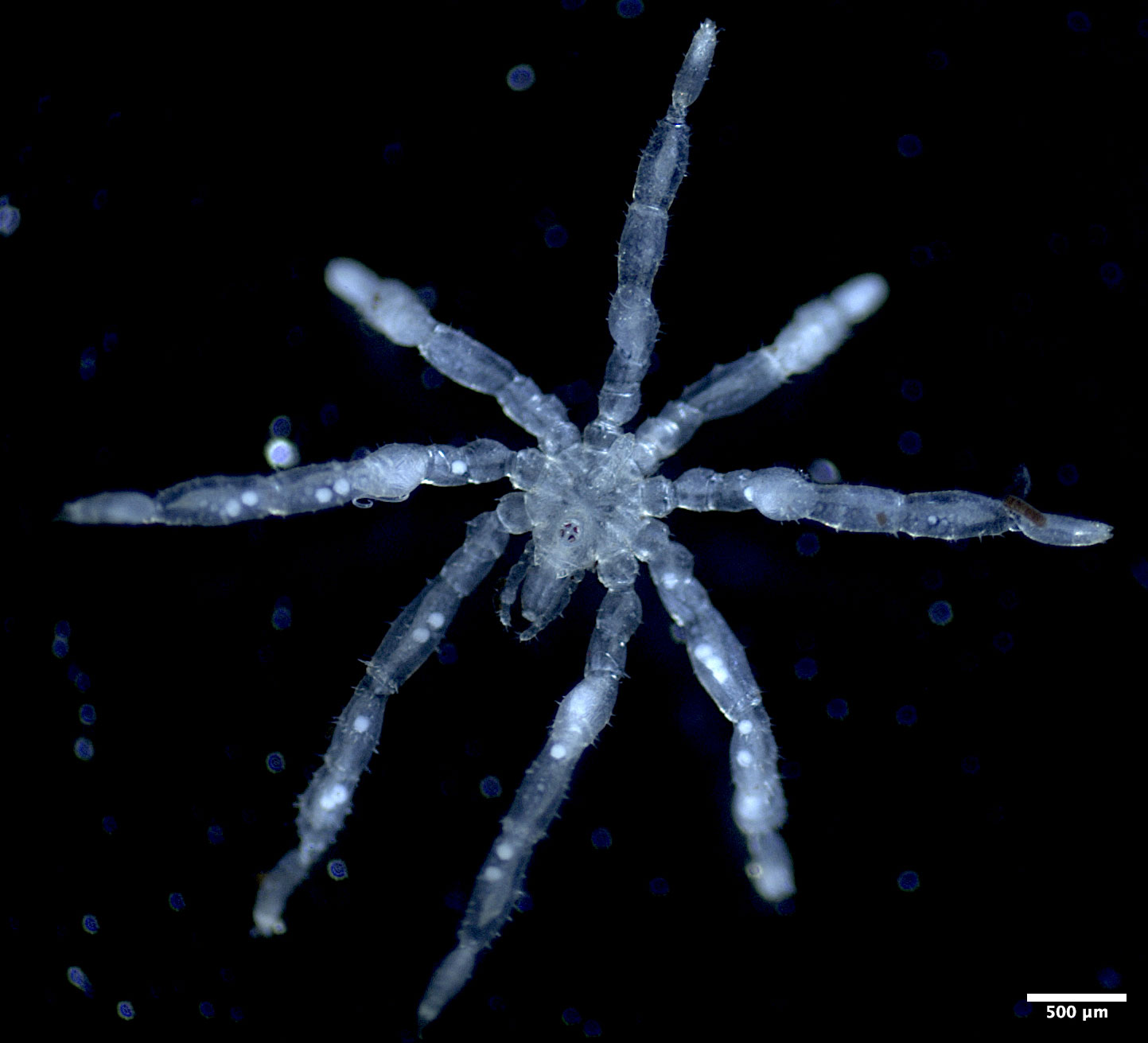
Two newly described Salish Sea spiders reveal bizarre grooming and parasite-filled lifestyles while helping close a nearly century-long gap in regional marine biodiversity.
Imagine diving into the cold waters off the Pacific Northwest coast and bumping into a tiny creature with bright red eyes, hairy feet, and a three-lipped mouth that resembles a miniature Sarlacc pit. While it sounds like a creature featured in a horror movie, this hairy-legged sea spider represents something much more concerning for marine scientists: a century-long blind spot in our understanding of local ocean life.
Marine invertebrates in the Salish Sea are particularly vulnerable to climate change and human activity, but efforts to protect them face a fundamental barrier. Researchers simply do not know enough about what lives in these waters.
“In order to understand how marine invertebrates are being impacted by things like climate change and how we can better protect these key elements of the ecosystem, we have to be able to identify them,” said Cormac Toler-Scott, who led a new study as part of his master’s degree in zoology at the University of British Columbia.
When Toler-Scott tried to find out how sea spiders in the region were responding to changing conditions, he ran almost immediately into that lack of basic information. “I was interested in how sea spiders are impacted by climate change and human disturbance, because marine invertebrates in the Salish Sea are particularly at-risk, and I couldn’t find anything,” he said. “That’s largely because people don’t know much about what species exist here and what their lifestyle is.”
To start filling that gap, Toler-Scott and his colleagues spent a field season collecting sea spiders between September 2023 and August 2024, diving as deep as 18 meters, or about 59 feet, through marine habitats around Quadra Island, Vancouver, Bamfield, and Victoria. Their survey ultimately uncovered two previously undescribed species, the first new sea spiders described from the Salish Sea in almost a century, with the results published recently in Organisms Diversity & Evolution.
Ancient spiders that never left the sea
The animals belong to an ancient lineage of marine arthropods that evolved around 500 million years ago and are related to spiders, scorpions, and horseshoe crabs, although sea spiders never made the evolutionary move onto land. Instead, they remained in the ocean and developed a body plan that can look vaguely spider-like until the details become decidedly stranger, with some species carrying as many as 12 legs and feeding through a sucking appendage called a proboscis.
Depending on the species, those bodies can be almost ridiculously different in scale, ranging from less than a centimeter across to more than 70 centimeters, or about 28 inches, in Antarctica. Many shallow-water species occupy the smaller end of that spectrum, where their size allows some of them to make a living as parasites attached to larger organisms rather than prowling the seafloor for a conventional meal.
“They’ve retained some weird traits,” said Toler-Scott. “A lot of the shallow water species are quite small, and so they’ll live as parasites on larger organisms, and they use this weird apparatus called a proboscis to suck the juices out of their host.”
Egg-carrying limbs double as combs
As if feeding by sucking fluids from a host were not enough to earn sea spiders their horror credentials, their internal anatomy and reproductive habits are equally unconventional. They breathe directly through their skin, females have ovaries extending throughout their limbs, and their eggs eventually “pop out” through dedicated pores before the males take over the parenting duties.
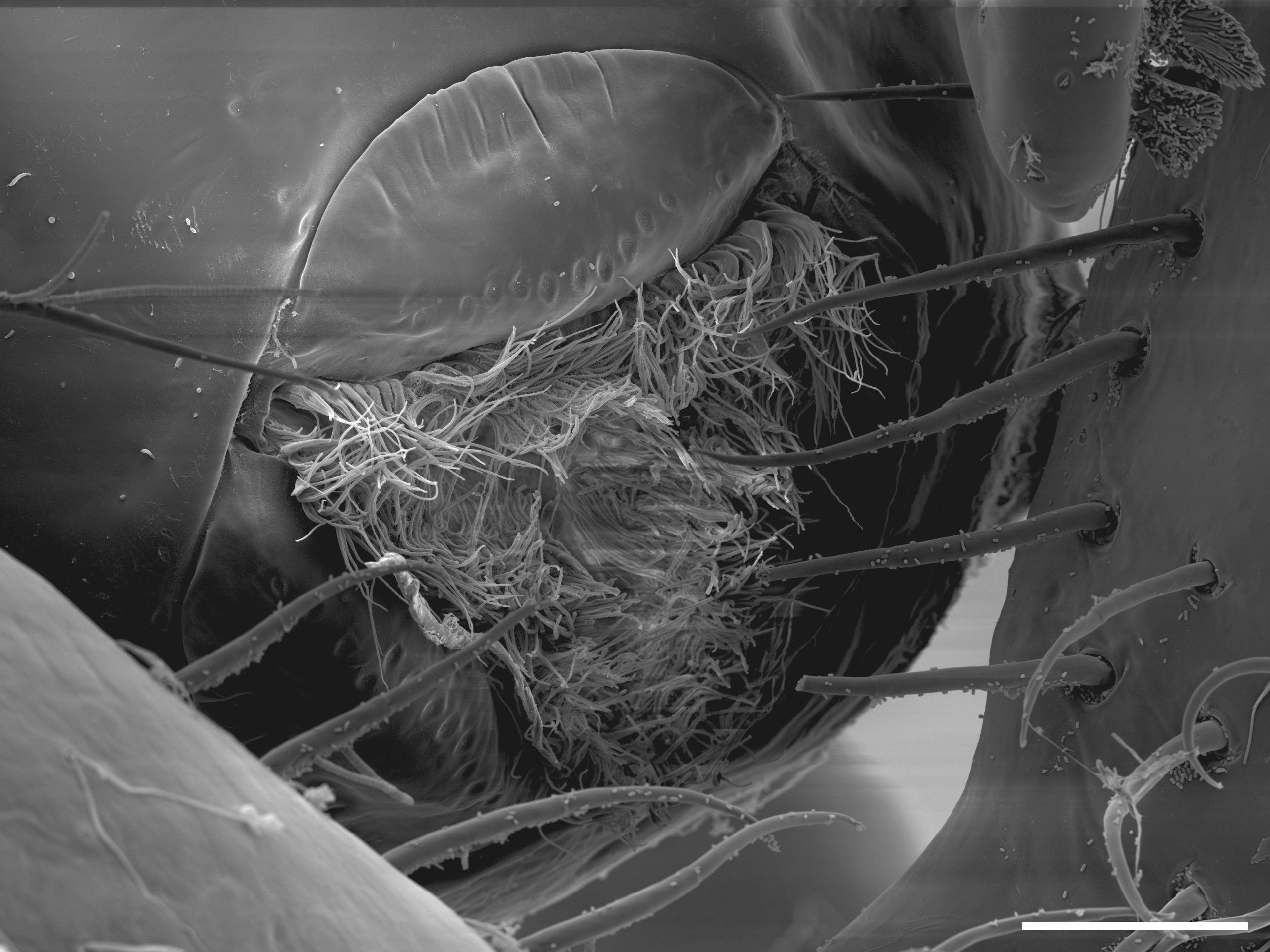
Male sea spiders collect those eggs using specialized appendages called ovigers located at the base of the head, dab them with glue secreted from their legs, and attach clusters of egg sacs to their own bodies for rearing. In one of the newly discovered Salish Sea species, however, those same egg-carrying limbs turned out to have a surprisingly practical second use.
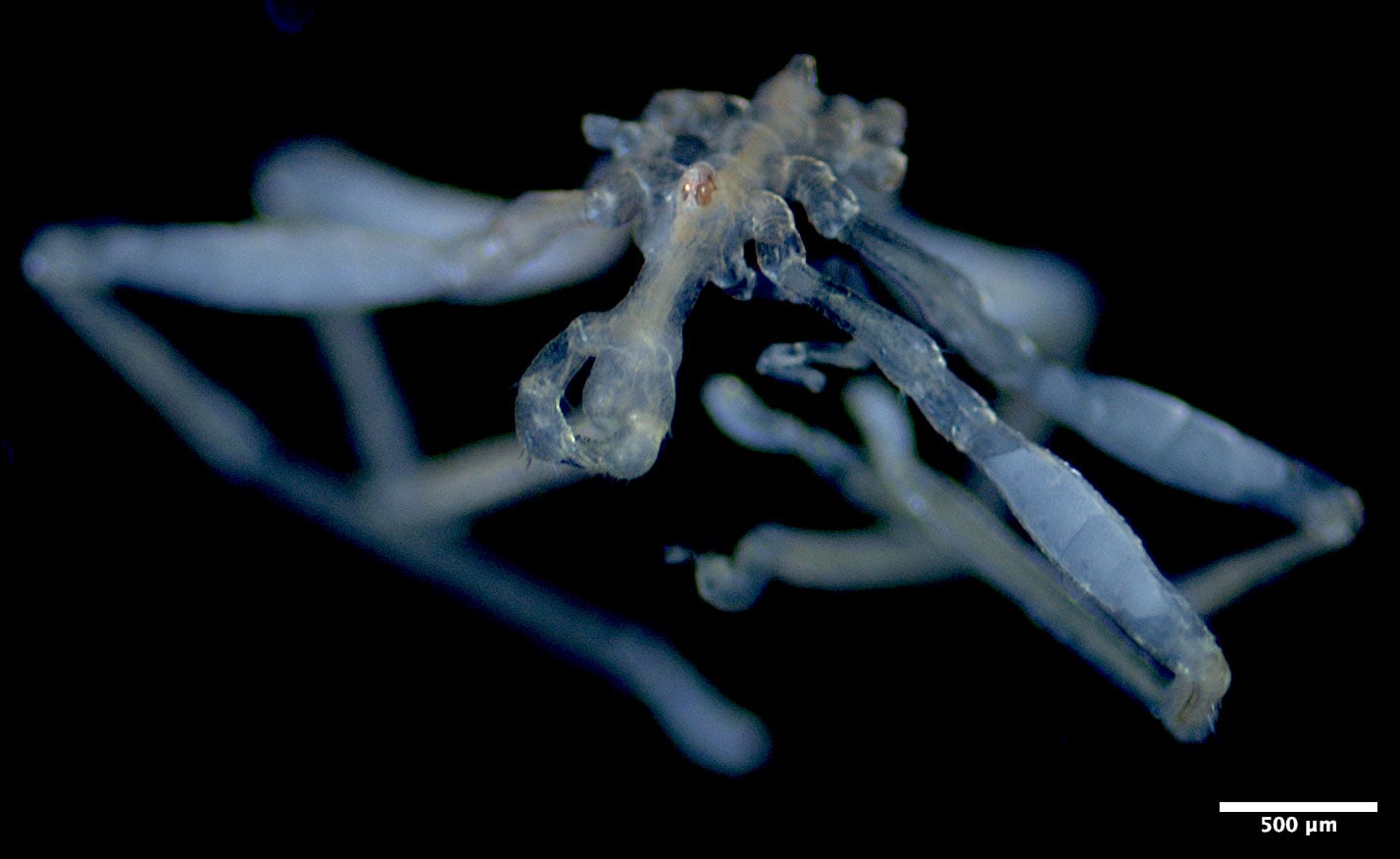
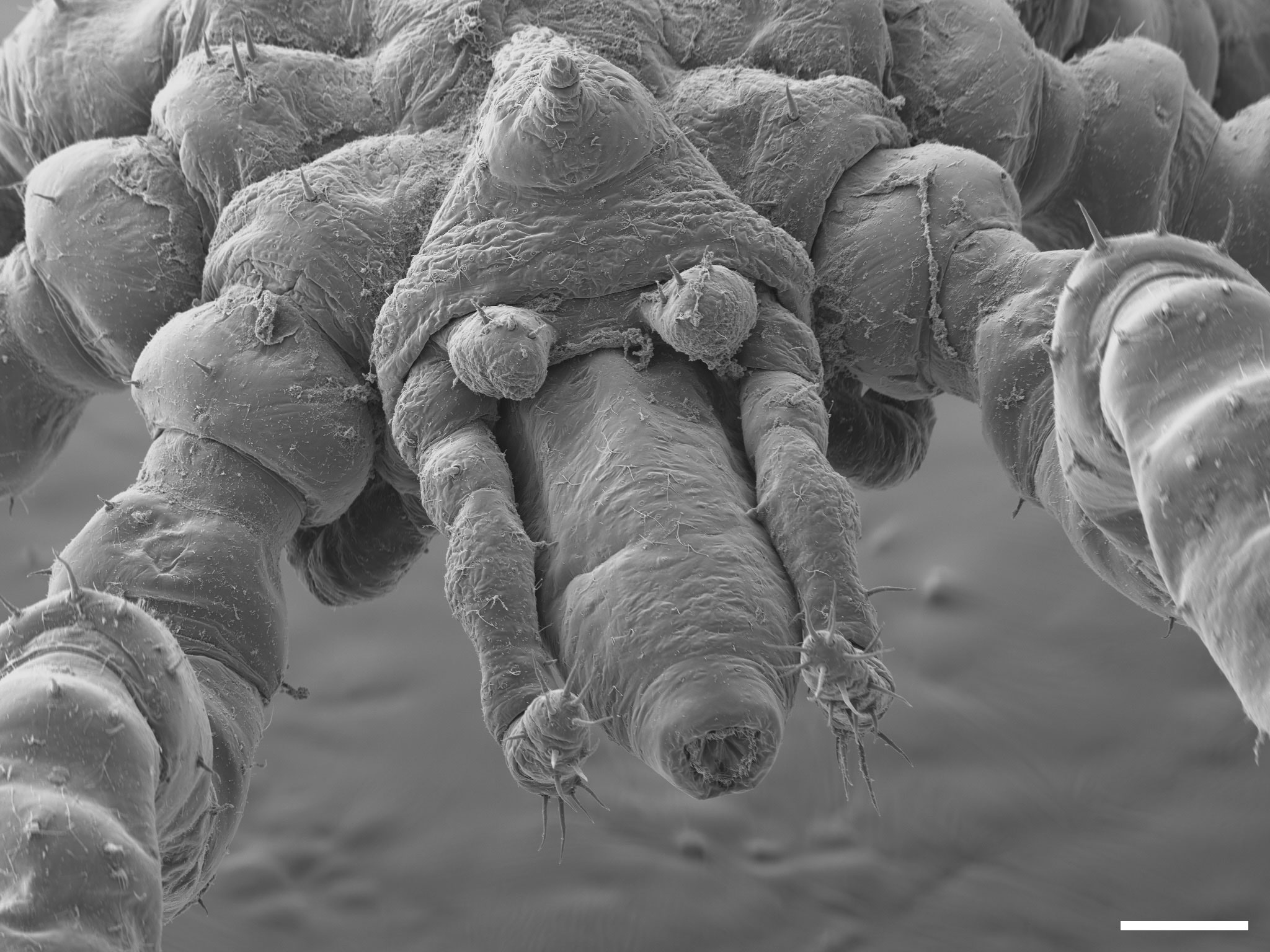
Named Callipallene pilosuspedes, with pilosuspedes playing on the Latin for “hairy feet,” the species is covered with long, curved spines along its lower legs and sports bright red eyes that do little to soften its appearance. At the front of its body sits a short proboscis equipped with claws for grasping food before biting, followed by a triangular, three-lipped mouth covered in sensory tendrils that bears an unfortunate resemblance to a miniature Sarlacc pit.
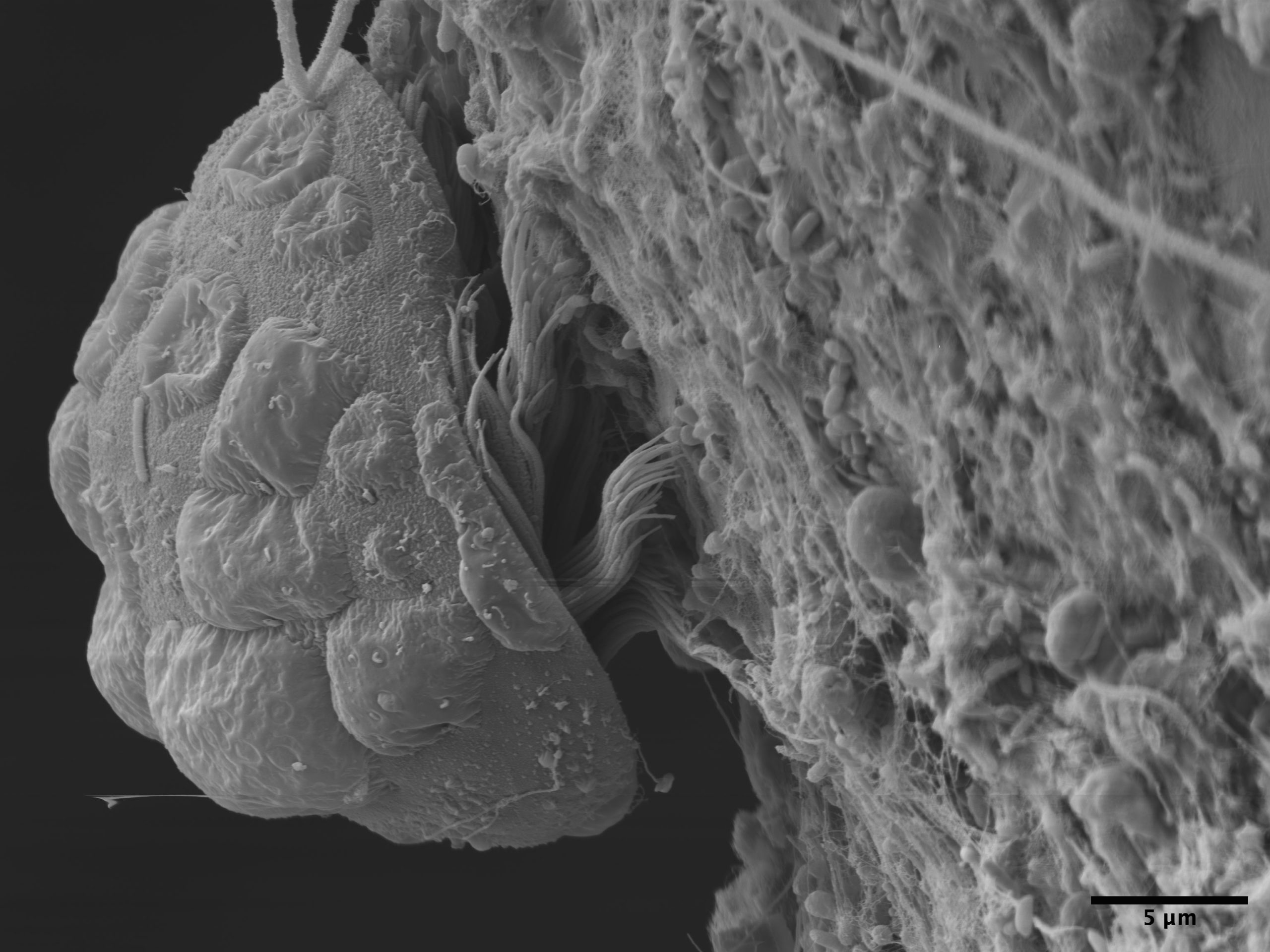
Under a microscope, researchers discovered that C. pilosuspedes is at least a very tidy nightmare. Its highly dexterous ovigers could curl around its own legs while comb-like spines attached to the appendages swept across them, allowing the animal to groom itself with a precision that would become especially interesting once the researchers examined its considerably messier relative. Only one specimen of C. pilosuspedes was collected during the study, which may offer some reassurance to anyone suddenly reconsidering a nighttime swim in the Salish Sea.
A messy cousin carries parasites
The second species, Tanystylum kiixin, was named after an ancient Indigenous village site near the location where specimens were first collected. Pronounced “kee-hin,” the word comes from the sound of waves crashing at the base of the village site, giving the animal a name tied directly to the waters where researchers found it.
Unlike its hairy-footed cousin, T. kiixin has much smaller and less dexterous egg-carrying limbs, leaving it poorly equipped for the sort of microscopic grooming researchers observed in C. pilosuspedes. Dirt and debris accumulated on the animals as a result, but they were not the only passengers along for the ride because researchers also repeatedly found tiny parasites living on the sea spiders themselves, producing what Toler-Scott described as “an ecosystem within an ecosystem within an ecosystem.”
More diversity remains undocumented
Finding two new species was only part of what the fieldwork accomplished. By combining detailed imaging with DNA analysis, the researchers carried out the first comprehensive study of Salish Sea sea spiders using both approaches, generated genetic data for several species that had never previously been sequenced, and created an identification guide that can help researchers recognize the animals living throughout the region.
Both newly described species have now been registered in a global database, but one field season was enough to suggest that the Salish Sea has not surrendered all of its strange inhabitants just yet. “I only had one field season but there’s definitely more diversity out there that we haven’t documented.”
Reference: “Sea spiders of the Salish Sea: Comparative morphology and molecular phylogenetic analysis of seven coastal species (Arthropoda, Pycnogonida)” by Cormac Toler-Scott, Eunji Park, Heather Gordon and Brian S. Leander, 26 August 2026, Organisms Diversity & Evolution.
DOI: 10.1007/s13127-026-00707-3
This research was funded by National Sciences and Engineering Research Council of Canada.
Never miss a breakthrough: Join the SciTechDaily newsletter.
Follow us on Google and Google News.