
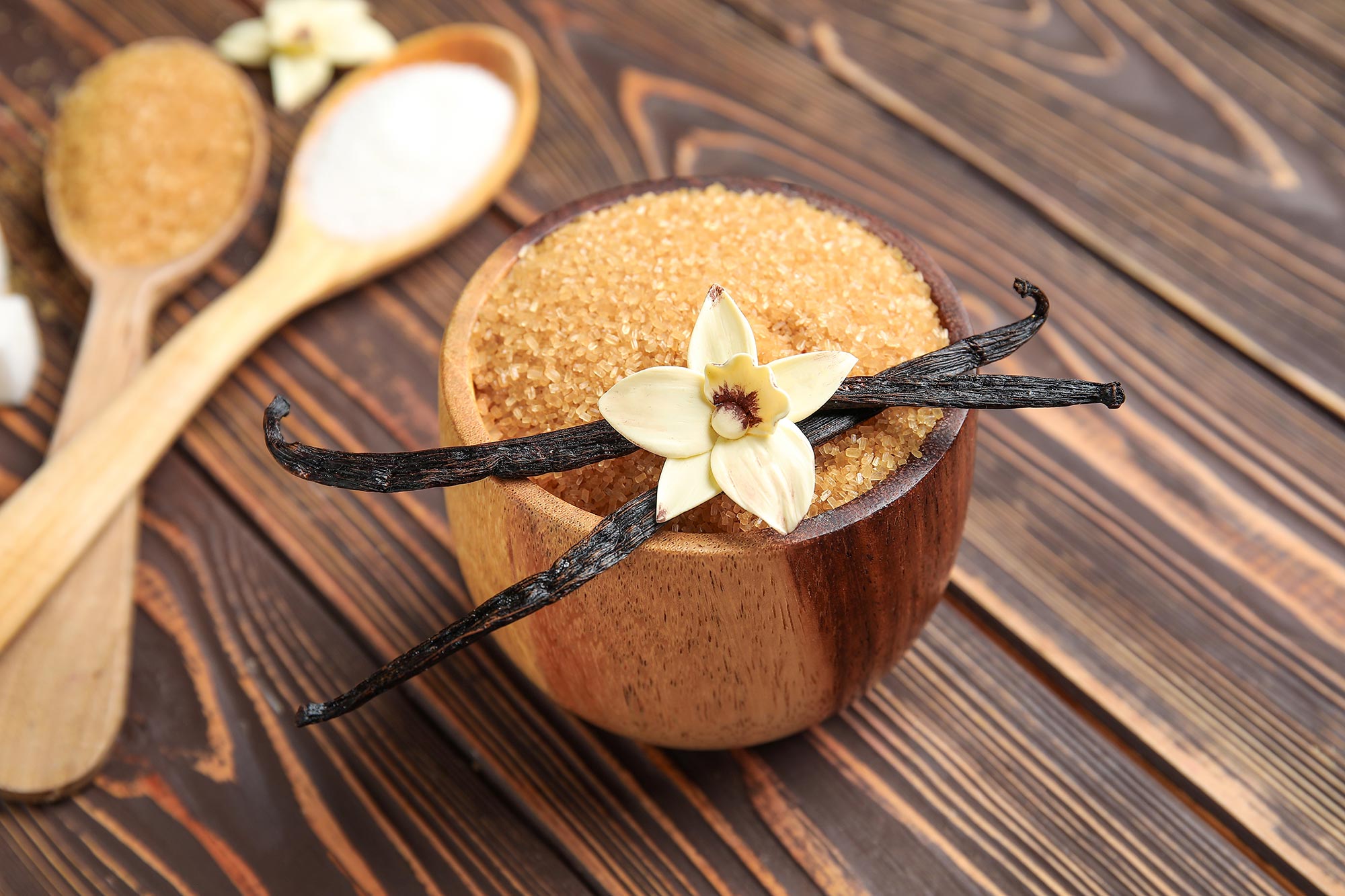
Vanillin could help form wound-care materials while supplying antibacterial activity, a combination made more practical by its low-cost and abundant supply.
The compound behind vanilla’s sweet aroma could become an ingredient in wound-care materials. A team from Flinders University’s Biomedical Nanoengineering Laboratory has found that vanillin has pronounced antioxidant, anti-inflammatory, and antibacterial properties, making it a candidate for formulations designed to help wounds heal.
Vanillin could help deliver hard-to-dissolve drugs
The researchers examined vanillin through a food-to-function framework, connecting its chemistry with its biological activity and potential biomedical uses. Those possibilities include incorporating it into materials and using it to help deliver drugs.
Professor Krasimir Vasilev, Professor of Biomedical Nanotechnology at Flinders University and Director of Flinders’ Biomedical Nanoengineering Laboratory, says, “Because vanillin’s synthetic form is abundant and cost-effective, we believe vanillin-based formulations may offer safe and multifunctional solutions for ulcer treatment and targeted drug delivery, especially of hydrophobic compounds.
“Owing to its amphiphilic molecular structure, vanillin can interact with reactive oxygen species, cellular membranes, and polymeric matrices, providing a basis for its incorporation into functional formulations.”
Amphiphilic molecules contain both water-attracting and water-repelling regions, while hydrophobic compounds do not dissolve readily in water. In material design, vanillin can also serve as a dynamic crosslinker, helping form reversible connections between the long molecular chains that make up polymers. It can therefore contribute to a material’s structure as well as its biological activity.
Low-cost vanillin offers a manufacturing advantage
Vanillin is the primary chemical component extracted from natural vanilla pods, but it can also be produced synthetically from clove oil or rice. Its widespread use in foods gives researchers a familiar starting point for exploring other applications.
“Vanillin is among the most widely used flavor compounds in the global food system, valued for its sensory attributes, chemical stability, and long history of safety—and that can be transferred to other areas, such as medical uses,” says Vasilev.
The researchers see practical advantages in vanillin’s availability as a low-cost small molecule suitable for good manufacturing practices. These characteristics could support industrial-scale production, consistent formulations, and reliable supply chains.
Peppermint leaves inspired a protective coating
The laboratory’s interest in food-derived medical materials grew partly from Vasilev’s experience of eating peppermint leaves from a drink and noticing significant relief from a sore throat. That observation prompted him to investigate whether peppermint’s biological activity could be incorporated into a durable coating through plasma technology, a field he has researched for more than two decades.
In work published in the journal Small in February 2026, the Flinders team created a nanoscale coating derived from peppermint oil. The coating protects against infection, inflammation, and oxidative stress while remaining compatible with human tissue and suitable for use on medical materials. The vanillin research continues this exploration of food compounds as potential ingredients in medical technologies.
“With coordinated engagement between academia, clinicians, and industry, vanillin has the potential to progress from an underutilized bioactive to a clinically deployable component of next-generation wound care and regenerative therapeutics,” says Vasilev.
Reference: “Vanillin as a bioactive component in biomedical formulations for chronic wound healing and tissue regeneration” by Borislav Stoilov, Vi Khanh Truong, Christopher Delaney and Krasimir Vasilev, 2 August 2026, International Journal of Pharmaceutics.
DOI: 10.1016/j.ijpharm.2026.127263
K.V. thanks NHMRC, Australia for Fellowship GNT1194466. V.K.T. thanks the support from Australian Research Council, Australia for FT240100067 and Channel 7 Children’s Research Foundation.
Never miss a breakthrough: Join the SciTechDaily newsletter.
Follow us on Google and Google News.