
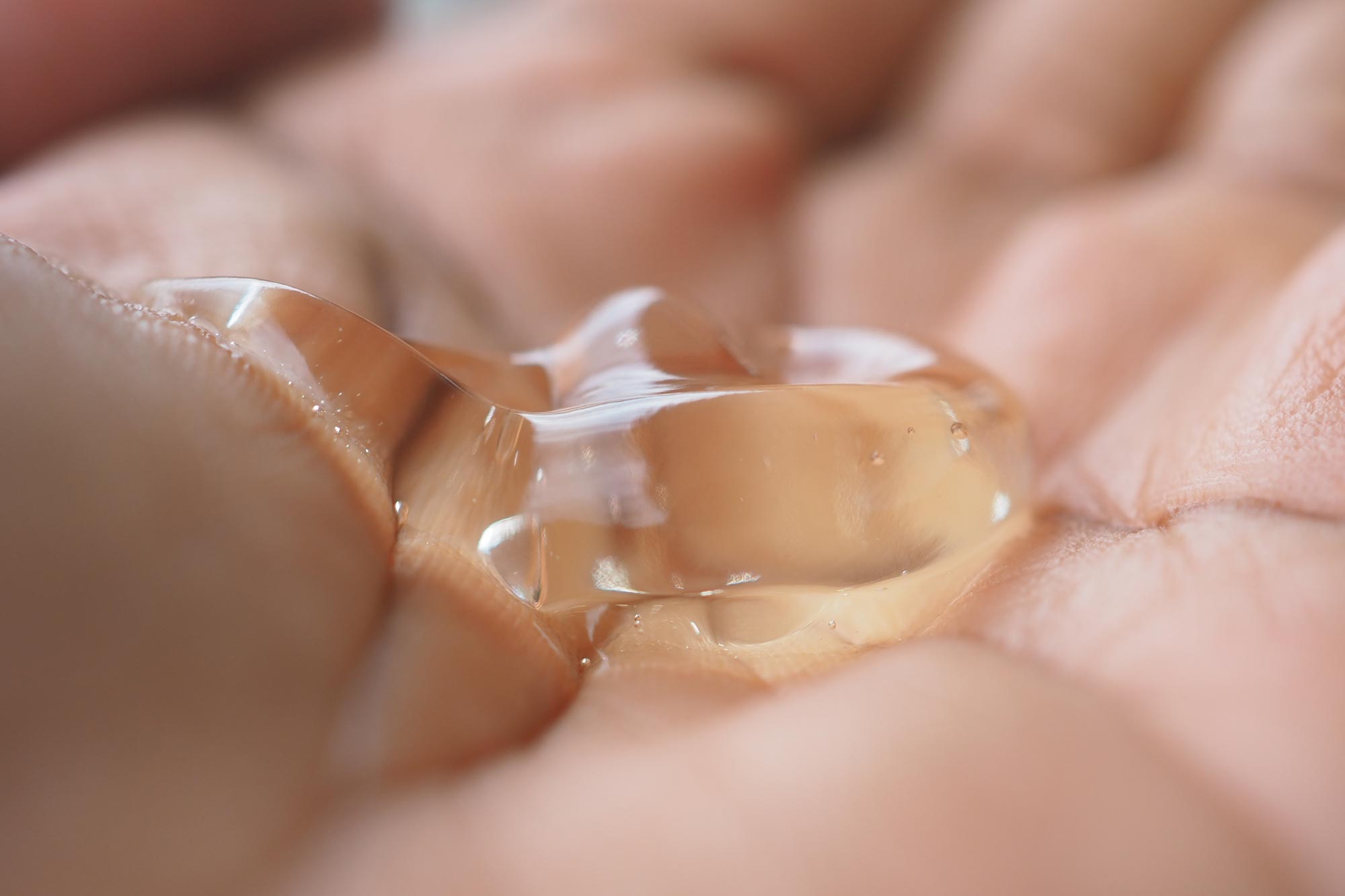
An oxygen-delivering gel may transform chronic wound treatment by targeting hypoxia and enabling sustained healing.
As populations age and diabetes becomes more common, chronic wounds are increasing, putting more patients at risk of amputation. Researchers at UC Riverside have created a new oxygen-delivering gel designed to help these injuries heal before they progress to limb loss.
Injuries that remain unhealed for more than a month are classified as chronic wounds. Globally, about 12 million people are affected each year, including roughly 4.5 million in the United States. Among these patients, approximately one in five eventually undergoes amputation, highlighting the seriousness of the condition.
Understanding Chronic Wounds and Oxygen Deprivation
The newly developed gel, tested in animal models, focuses on what is believed to be a central cause of chronic wounds: insufficient oxygen deep within damaged tissue. When oxygen levels are too low, wounds can remain stuck in an inflammatory state, creating an environment where bacteria thrive, and tissue breaks down instead of repairing itself.
“Chronic wounds don’t heal by themselves,” said Iman Noshadi, UCR associate professor of bioengineering who led the research team.
“There are four stages to healing chronic wounds: inflammation, vascularization, where tissue starts making blood vessels, remodeling, and regeneration or healing. In any of these stages, lack of a stable, consistent oxygen supply is a big problem,” he said.
If oxygen from the air or bloodstream cannot reach deeper layers of injured tissue, a condition known as hypoxia develops, disrupting the normal healing process. The team’s strategy to counter hypoxia using a gel is described in a paper published in Nature Communications Materials.
Oxygen gel delivers sustained deep tissue repair
The material itself is soft and adaptable, composed of water and a choline-based liquid that is antibacterial, nontoxic, and biocompatible. When connected to a small battery similar to those found in hearing aids, the gel acts as a miniature electrochemical system that splits water molecules to steadily release oxygen.
Unlike treatments that supply oxygen only at the surface, this gel adjusts to the exact shape of the wound, reaching into small gaps where oxygen is typically lowest, and infection risk is highest. Before it solidifies, it molds closely to the contours of the injured tissue.
A key advantage is the continuous delivery of oxygen. Since the formation of new blood vessels can take weeks, short bursts of oxygen are not sufficient. This system can maintain oxygen supply for up to a month, helping convert a chronic wound into one that heals more like a typical injury.
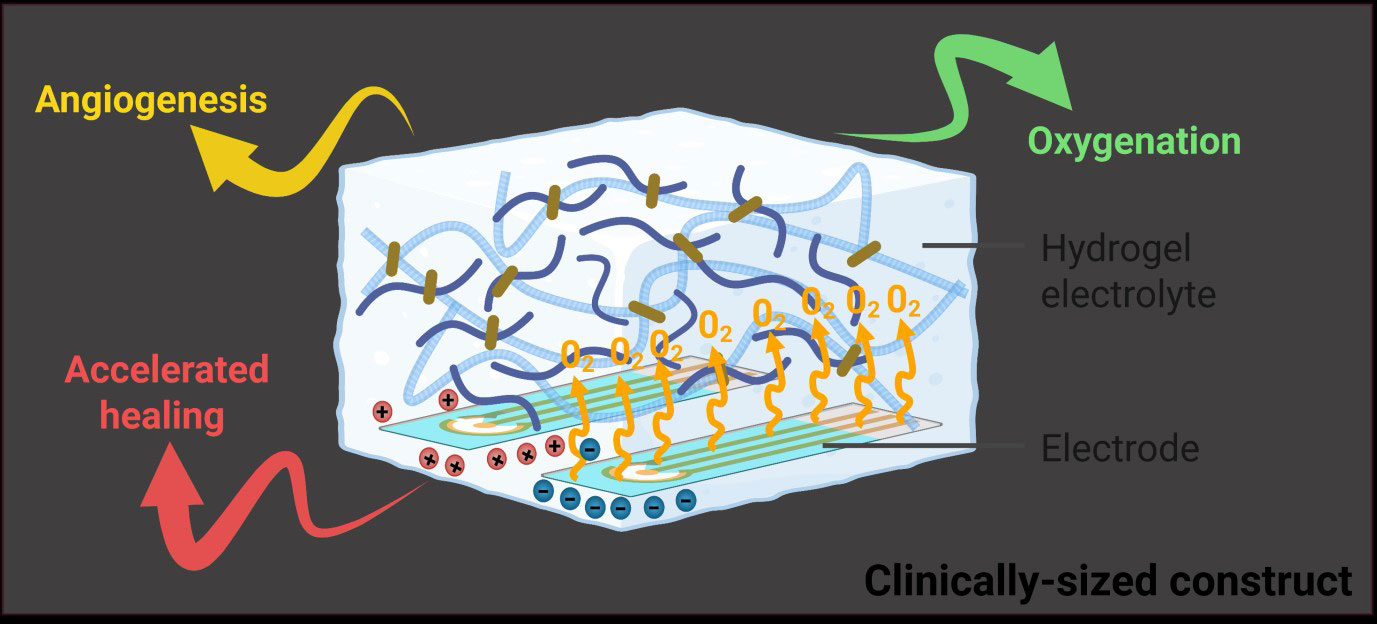
Experiments using diabetic and older mice, which develop wounds similar to those seen in older adults, showed striking results. Untreated wounds often failed to heal and could be fatal. When the oxygen-producing patch was applied and replaced weekly, wounds closed in about 23 days, and the animals survived.
“We could make this patch as a product where the gel may need to be renewed periodically,” said Prince David Okoro, UCR bioengineering doctoral candidate in Noshadi’s lab and paper co-author.
Dual action targets inflammation and healing
Beyond oxygen delivery, the gel also influences inflammation. Choline, one of its main components, helps regulate immune responses and reduce excessive inflammation. Chronic wounds are often dominated by reactive oxygen species, unstable molecules that damage cells and prolong inflammation. By supplying stable oxygen while reducing this harmful activity, the gel helps restore a more balanced healing environment.
“There are bandages that absorb fluid, and some that release antimicrobial agents,” said Okoro. “But none of them really address hypoxia, which is the fundamental problem. We’re tackling that directly.”
Broader implications for regenerative medicine
The potential applications extend beyond treating wounds. Limited oxygen and nutrient supply is a major obstacle in efforts to grow replacement tissues or organs, which is a key focus of the Noshadi laboratory.
“When the thickness of a tissue increases, it’s hard to diffuse that tissue with what it needs, so cells start dying,” Noshadi said. “This project can be seen as a bridge to creating and sustaining larger organs for people in need of them.”
At the same time, not all causes of chronic wounds can be addressed with a material alone. Rising diabetes rates and aging populations are major drivers, but lifestyle factors also play a role.
“Our sedentary lifestyles are causing our immune responses to decrease,” she said. “It’s hard to get to societal roots of our problems. But this innovation represents a chance to reduce amputations, improve quality of life, and give the body what it needs to heal itself.”
Reference: “A smart self-oxygenating system for localized and sustained oxygen delivery in bioengineered tissue constructs” by Vaishali Krishnadoss, Baishali Kanjilal, Aihik Banerjee, Prince David Okoro, Mohammad Khavani, Proma Basu, Nourouddin Sharifi, Johnson V. John, Manuela Martins-Green, Amos Mugweru, Mohammad R. K. Mofrad, Arameh Masoumi and Iman Noshadi, 5 January 2026, Communications Materials.
DOI: 10.1038/s43246-025-00947-4
Never miss a breakthrough: Join the SciTechDaily newsletter.
Follow us on Google and Google News.
12 Comments
My mother has a wound on her heel for a few months I would like to know if this gel is available now
When and where can I get this gel? I have a wound on my big toe and the doctor is saying I have to have it amputated! Please help! I would really like to try this!
I am 63 years old and Diabetic since 15 years, till now I have not had any wound on my body. But I am suffering from knee pain, neck pain, muscle pain. Will applying this gel help in relieving pain?
thanks for this
My husbans has chronic wounds on both lower legs. This would be great for him. What is the name of this gel and where can it be purchased?
I have a dry gangrene on 2 toes which I have been treating with betadine according to standard of care instructions from my podiatrist. The end result is auto or surgical amputation. I would like to try your gel even if it is only in the trial stage. I have been using Manuka honey and chinese dragon blood oil to soften the eschàr for debridement with li.ited success.
I have been thinking of potential innovations such as this product. Similarly, I came across Ozone treatment years ago and I believe it should be used in other applications for certain conditions.. oxygen does more than replenish dying tissue and feed the blood and brain, it cleans out by supper oxygenating.. should be a trial for it against herpes simplex virus…just a thought. ~D.S
I have a wound at the ankle,
Where can I get this gel.
Thanks
Where can I get this treatment/gel for my husband? He has chronic lymphedema wounds. One leg a large area below the knee is greatly affected and just one much smaller one on his other leg. We have and are trying everything and for close to two years! Please advise. Thank you!
I need this meds how to get it
Portland ,Oregon should buy buckets of thi stuff. I just watched a video about drug adducts using a traquiliser that is rotting their flesh. Tbey walk around with huge open wounds on their arms and legs.
This will be great for those with blood supply issues to extremities as aell.
Name of the gel ?