
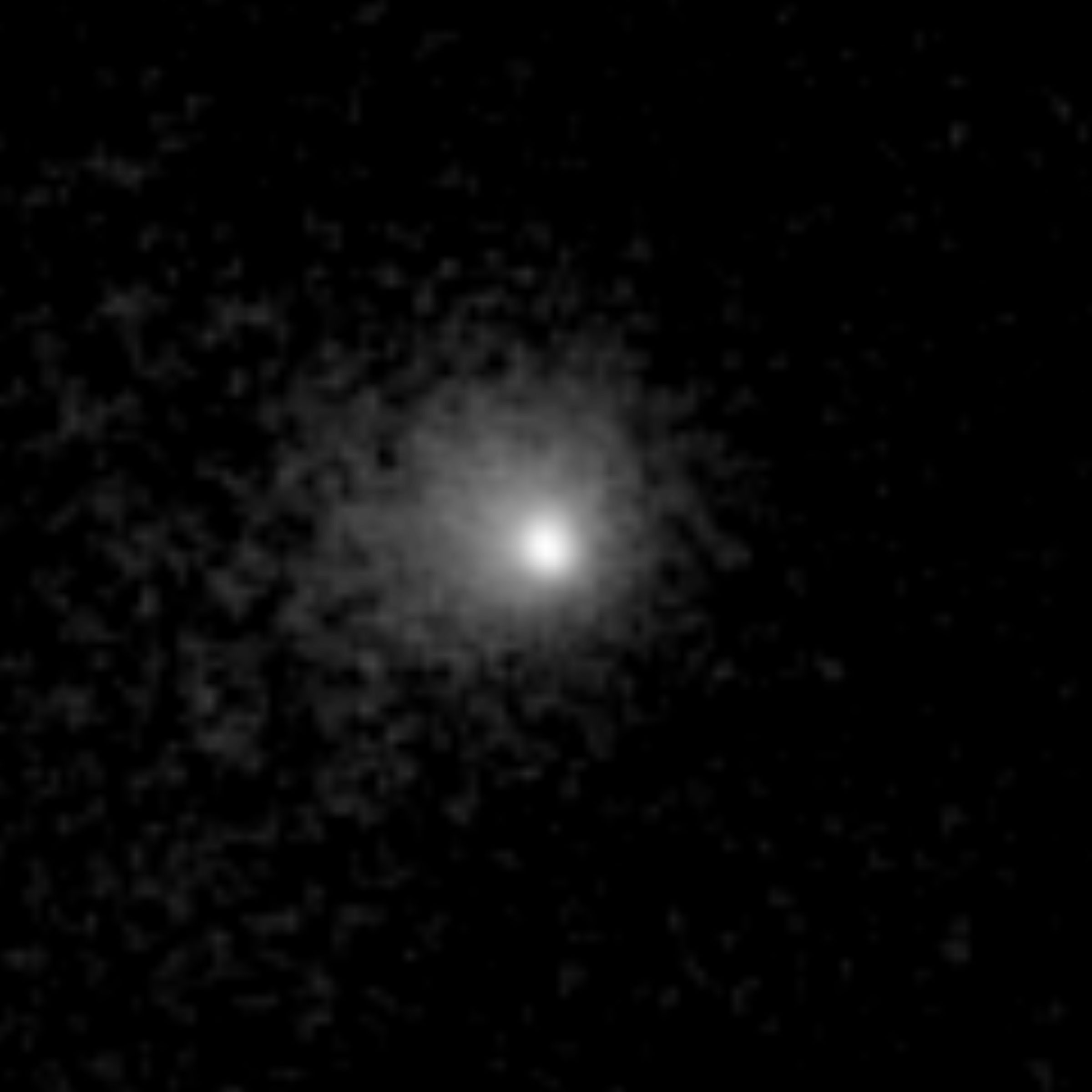
A distant comet following a millennia-long orbit could provide valuable insights into how future space missions identify and study these elusive objects.
A space telescope built to study distant galaxies has discovered a previously unknown comet approximately 1.3 billion kilometers (808 million miles) from Earth. The European Space Agency’s Euclid telescope captured the object in images taken between September 16 and 24, 2026, marking its first discovery of a new comet.
Now designated C/2026 S1 (Euclid), the comet follows an orbit that takes thousands of years to complete. Rather than traveling close to the plane where the planets orbit the Sun, it is currently positioned far above that plane, as viewed from the Sun. Its distance from Earth is comparable to the distance from the Sun to a point between Jupiter and Saturn.
An Unexpected Discovery in Euclid’s Galaxy Survey
Euclid was designed to map distant galaxies, not track comets and asteroids. Its observing strategy deliberately avoids the dust-rich band of sky along the Solar System’s plane, where scattered sunlight could interfere with sensitive measurements. The telescope also uses a “step-and-stare” approach that generally images each region only once, limiting opportunities to track moving objects over time.
Despite these obstacles, University of Helsinki researcher Mikko Pöntinen detected the comet using software he developed to identify moving Solar System objects in Euclid’s images. Working with the Euclid Consortium’s Solar System Objects Science Working Group, he found evidence of the object in five separate image sets.
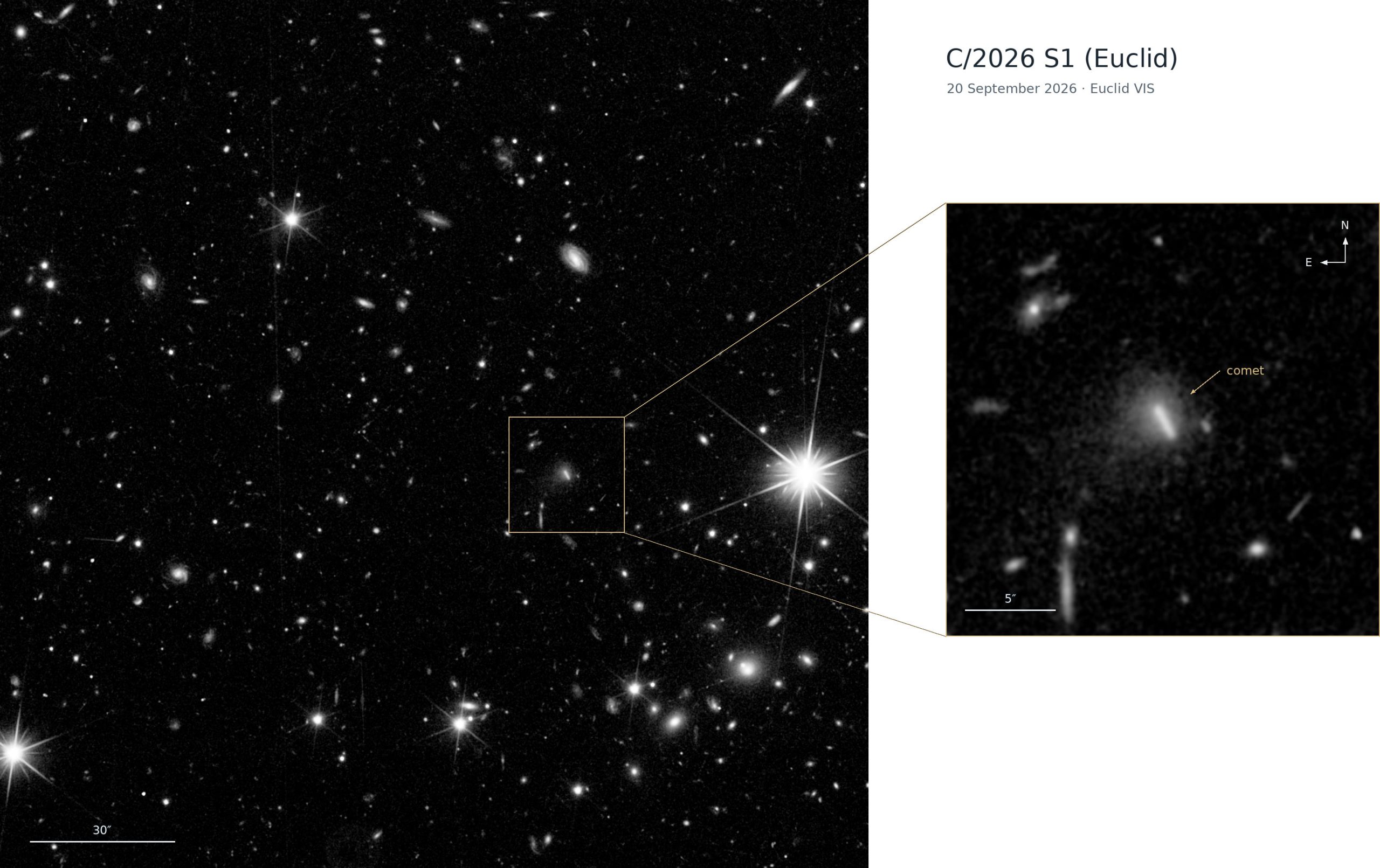
“I was excited to see my software flag a ‘streak’ smeared across several images – the result of a fast-moving object. By predicting its position, I could identify it in other images, in total finding it in five image sets [4]. Further inspection revealed that it had a fuzzy cloud around it, indicative of an active object like a comet that is shedding dust and gas.”
How Astronomers Confirmed the New Comet
The fuzzy cloud surrounding the object was a sign of cometary activity. As ice in a comet warms and releases gas, it can carry dust into space, forming a diffuse envelope known as a coma. This distinguishes active comets from most asteroids, which typically lack such visible clouds.
After finding no matching object in existing comet and asteroid catalogs, Pöntinen reported the observations to the International Astronomical Union’s Minor Planet Center (MPC). The report prompted follow-up observations by ground-based astronomers, and the MPC officially confirmed the discovery on October 8, 2026.
“Very few comets are expected to be discovered by Euclid so it was a happy coincidence that the combination of the comet’s orbit and Euclid’s scanning over those days captured the object in multiple images,” said Bruno Altieri, Euclid Archive Scientist and a member of the discovery team.
A Potential New Way to Find Distant Comets
Identifying moving objects is necessary for Euclid’s primary science mission because comet trails and other unwanted light can interfere with precise measurements of distant galaxies. The same detection techniques could also help astronomers discover comets while they are still relatively far from the Sun.
The rapid identification and confirmation of C/2026 S1 (Euclid) provides a practical test of how such discoveries could support ESA’s future Comet Interceptor mission. Although this particular comet is not a suitable target, the process demonstrates how Euclid’s observations could help scientists identify and assess other candidates.
“While this particular comet is not a suitable candidate for Comet Interceptor, the process of discovery and alert gives us a real test case for how our two mission teams will coordinate in the future. And we are, of course, happy to have discovered a previously unknown comet for the Solar System community to follow-up on,” said Valeria Pettorino, Euclid Project Scientist.
Never miss a breakthrough: Join the SciTechDaily newsletter.
Follow us on Google and Google News.