
A molecule released during exercise could help muscles fight the weakness and fatigue that make staying active so difficult for many people with type 2 diabetes.
Exercise does more than burn calories and build strength. It triggers a complex series of chemical signals that help muscles become stronger, more efficient, and more resistant to fatigue. But for people with type 2 diabetes, muscle weakness and declining endurance can make it difficult to stay active, creating a cycle that may worsen their condition.
Researchers at the University of Leeds have identified a molecule that could help break that cycle. Known as L-β-aminoisobutyric acid (L-BAIBA), this naturally occurring compound acts as a key signal that helps muscles respond to exercise.
The researchers found that it plays an important role in reshaping muscle fibers, improving metabolism, and enhancing strength and endurance. It also helps protect muscles against damage and weakness associated with type 2 diabetes, raising the possibility of future treatments that preserve muscle function and make physical activity more manageable.
Published in Nature Communications, the research was led by Professor Lee Roberts and funded by Diabetes UK and the Biotechnology and Biological Sciences Research Council (BBRSC).
The Chemical Signal Behind Stronger Muscles
Exercise prompts muscles to adapt so they can better handle future demands. Scientists are still investigating how the body coordinates these adaptations, and Roberts’ team wanted to understand whether those processes could inform treatments for chronic disease.
L-BAIBA was already known for its effects on metabolism. In research published in 2014, Roberts helped show that BAIBA could boost the fat-burning effects of exercise. L-BAIBA is now sold as a nutritional supplement, although the new findings concern its biological role and potential as a future treatment.
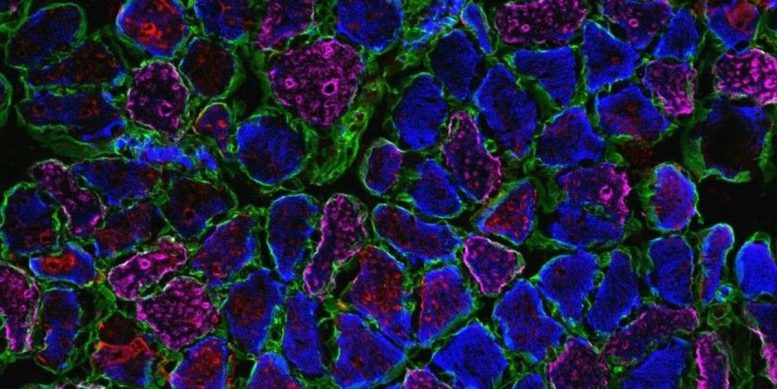
The latest study extends that earlier work by identifying L-BAIBA as a regulator of muscle remodeling. Roberts, Professor of Molecular Physiology and Metabolism at the University of Leeds, said, “Our research identifies L-BAIBA as an exercise-induced signal that helps muscles adapt, improve their metabolic capacity and ability to contract, and ultimately enhances physical performance.
“This gives us exciting new insight into how exercise benefits the body and highlights a promising target for future therapies aimed at preserving muscle function in chronic conditions such as diabetes.”
Why Muscle Health Matters In Diabetes
L-BAIBA’s protective effects could be particularly valuable for people with type 2 diabetes, who can experience muscle loss, declining strength, and impaired metabolism. Weakness and fatigue can make exercise harder, creating a barrier to an activity that helps manage the condition. Future treatments targeting L-BAIBA could help people stay active by improving their muscles’ resistance to fatigue.
The need for better ways to manage type 2 diabetes is growing as the condition becomes more common among younger adults. Cases among people under 40 are now increasing faster than those among people over 40. The condition can lead to serious complications, including heart attacks and strokes, and develops through a complex mix of factors, with risk influenced by age, ethnicity, genetics, and living with overweight or obesity.
Anna Morris, Assistant Director of Research Strategy and Partnership at Diabetes UK, said: “Exercise plays an important role in managing type 2 diabetes, but for many people muscle weakness and fatigue can make staying active a real challenge. This research helps us better understand how muscles adapt to exercise and identifies a potential new target for improving muscle health. While these findings are still at an early stage, they could help shape future approaches that support people with type 2 diabetes to remain active and live healthier, longer lives.”
Reference: “The metabokine β-aminoisobutyric acid mediates exercise performance and skeletal muscle adaptation through a PGC1α-BAIBA-PPARδ axis” by Helene N. Daou, Nicole T. Watt, Shaimaa A. Gad, Amanda DV MacCannell, Aysha Ali, Chew Cheng, Raquel L. Fernando, T. Simon Futers, Sumeet A. Khetarpal, Harrison Gallagher, Luis D. Chinait, Anselmo S. Moriscot, Pim Knuiman, Koen Manusama, Marco Mensink, Irvin Teh, Jurgen E. Schneider, Richard Cubbon, Guy S. Taylor, Daniel J. West, David J. Beech, T. Scott Bowen and Lee D. Roberts, 18 August 2026, Nature Communications.
DOI: 10.1038/s41467-026-76307-8
Never miss a breakthrough: Join the SciTechDaily newsletter.
Follow us on Google and Google News.