
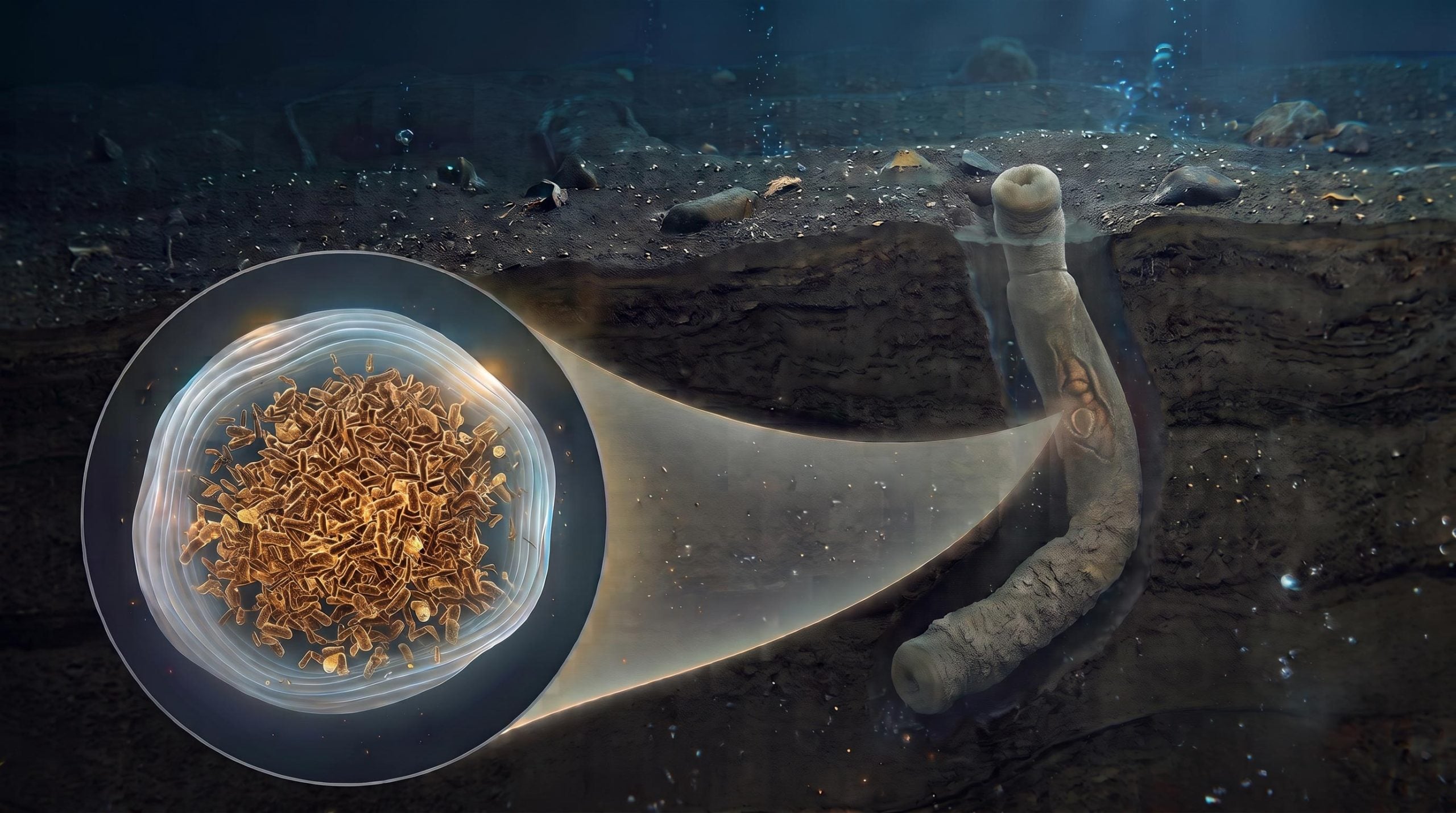
An unusual sea creature survives with much of its digestive system missing, thanks to a remarkable partnership with bacteria that could offer new clues about how life evolves.
Deep beneath the seafloor, where sunlight never reaches and oxygen is almost nonexistent, scientists have discovered an unusual relationship that may help explain how marine life survives in some of Earth’s most extreme environments. A deep-sea mollusk living in the South China Sea contains a previously unknown cellular structure packed with bacteria, offering new clues about how animals adapt to conditions that would be inhospitable to most other species.
The discovery adds to a growing understanding of cold seep ecosystems, where life depends on chemical energy rather than sunlight. These environments contain abundant methane and hydrogen sulfide, which certain bacteria can use to support their metabolism. Animals such as deep-sea mussels, clams, and tubeworms have evolved close relationships with these microbes, providing them with shelter inside their cells in exchange for nutrients.
Until now, however, scientists had found no clear evidence that animals could develop specialized organelles dedicated to maintaining these bacterial partnerships.
A digestive system dominated by bacteria
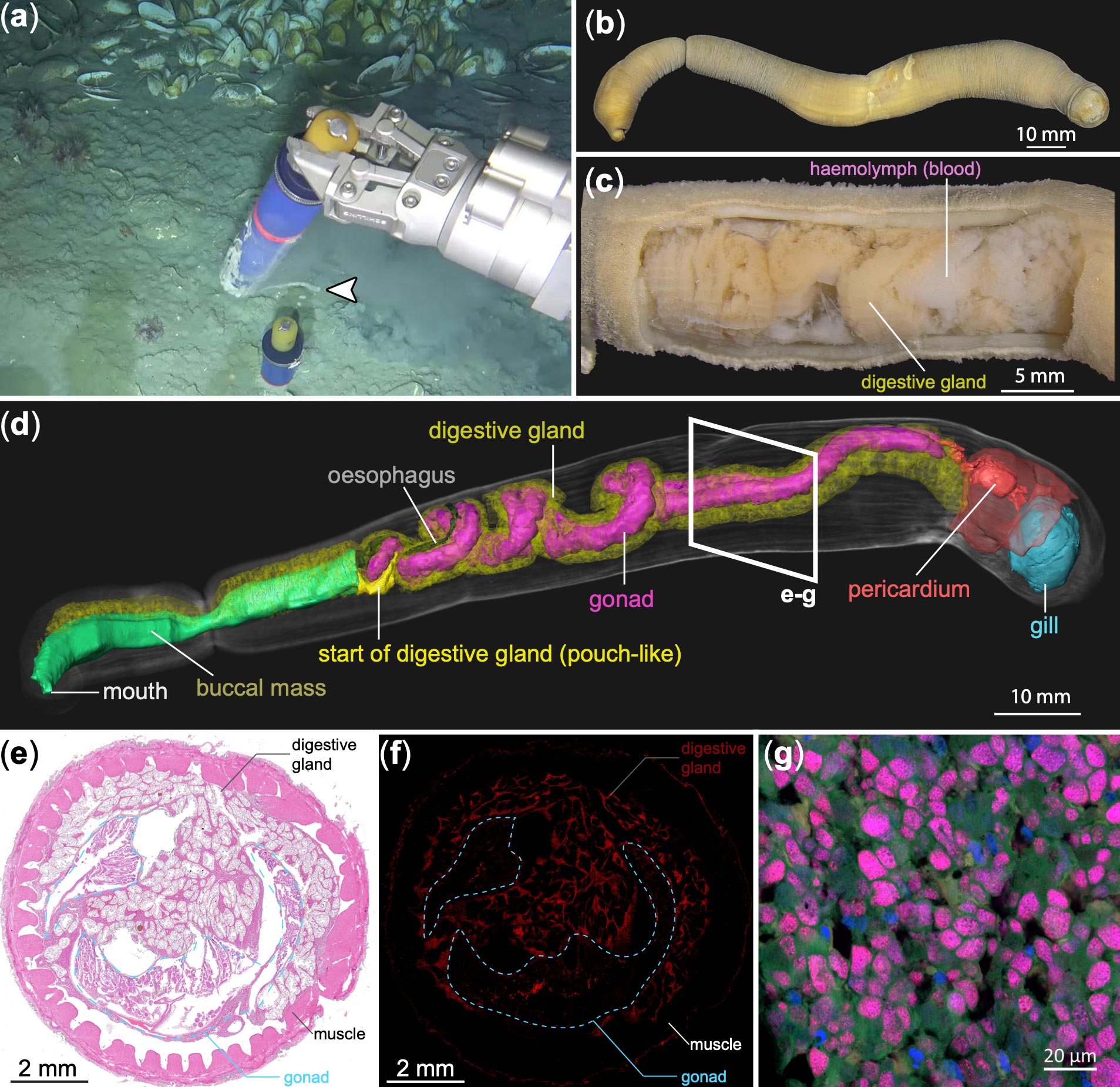
The new research centers on Chaetoderma shenloong, also known as the Divine Dragon Glistenworm. This unusual mollusk belongs to the aplacophoran class Caudofoveata and can grow to more than 150 millimeters (nearly 6 inches) long, far larger than most of its relatives. Its distinctive characteristics earned it recognition as one of the “Top-Ten Marine Species of 2024.”
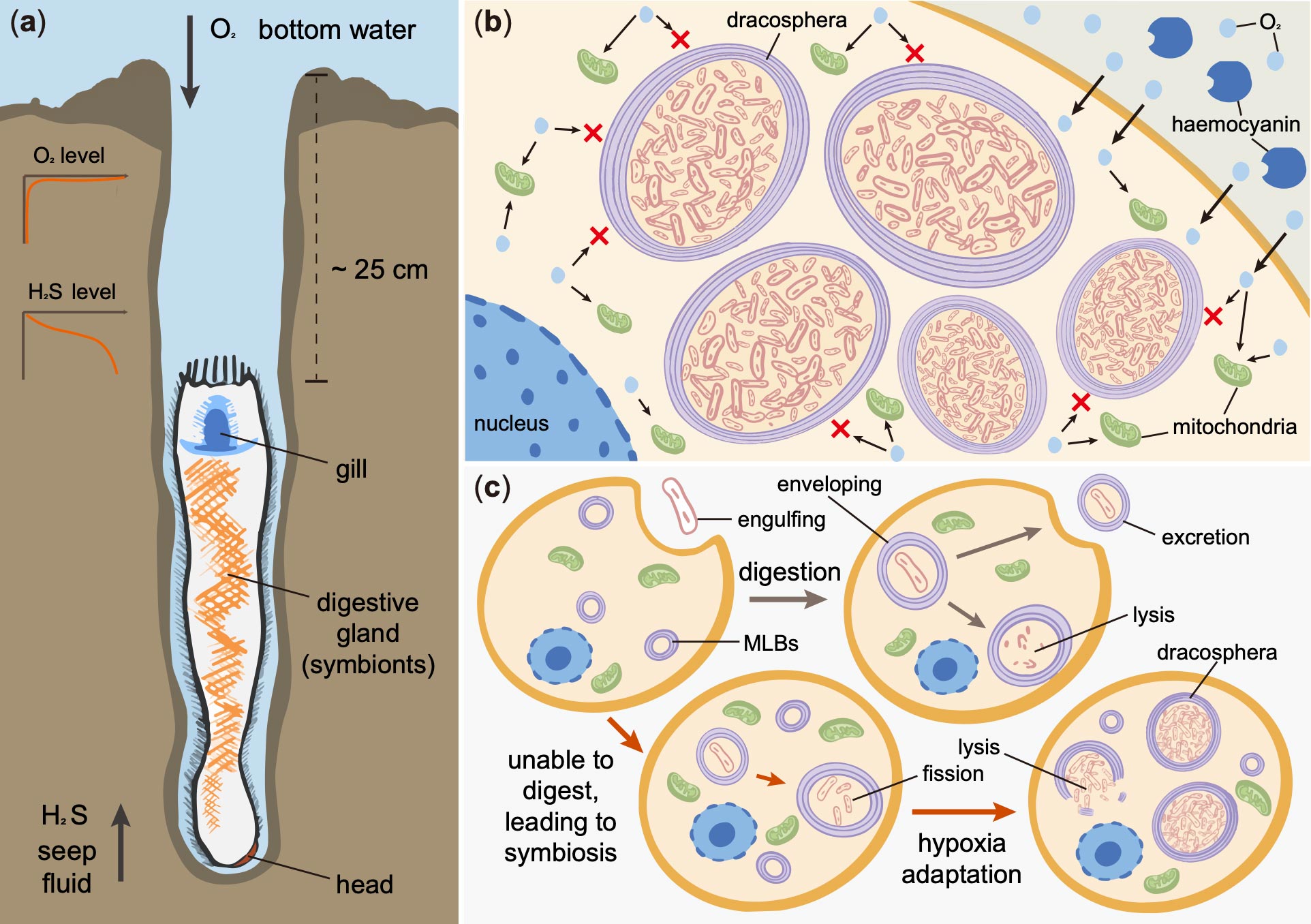
Researchers found that the animal spends much of its life buried tens of centimeters beneath the seafloor, in sediment rich in hydrogen sulfide and containing almost no oxygen. Understanding how it survives there led the team to examine an unexpected feature of its anatomy.
Most of its digestive tract has disappeared
Using anatomical analysis, micro-computed tomography, and three-dimensional imaging, the scientists discovered that Chaetoderma shenloong has a digestive system unlike those of most mollusks. Its radula, a feeding structure commonly used by mollusks, is heavily reduced, while its midgut, hindgut, and anus have almost completely disappeared.
Instead, an extensive system of digestive glands occupies most of its body cavity. These glands contain enormous numbers of symbiotic bacteria that serve as the animal’s primary source of nutrients and energy.
A tiny chamber holds thousands of bacteria
Closer examination revealed something even more unusual inside the glands.
The bacteria were concentrated within spherical structures measuring approximately 10 to 15 micrometers across. Each structure was enclosed by more than 20 layers of membrane and contained hundreds to thousands of sulfur-oxidizing bacteria. The researchers named this structure the dracosphera, Latin for “dragon ball,” because of its beadlike shape and surrounding layers.
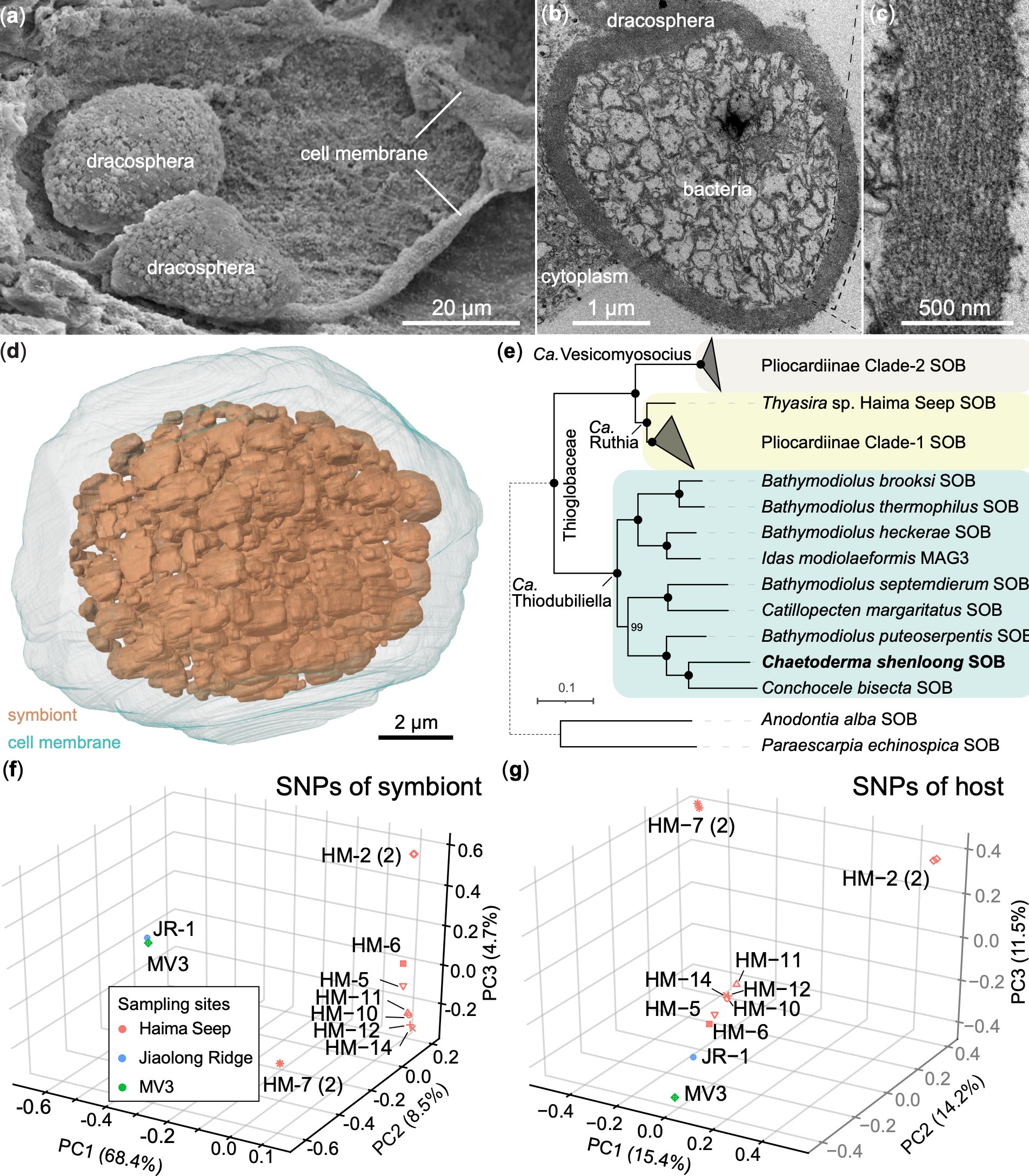
A single host cell accommodated more than 1,600 bacterial symbionts on average. The dracosphera also lacked familiar cellular components, including host nuclei and lysosomes, distinguishing it from an ordinary cell or a typical digestive compartment.
This arrangement suggests that the mollusk may have developed a specialized structure for housing and maintaining its bacterial partners, potentially representing a previously unrecognized form of cooperation between animals and microorganisms.
Membranes may help ration scarce oxygen
The scientists then investigated how this relationship might function in an environment where oxygen is so scarce.
Genomic analyses of Chaetoderma shenloong and its symbiotic bacteria revealed that the microbes possess adaptations allowing them to maintain their metabolism with very little oxygen. The mollusk, meanwhile, lives deep in the sediment to obtain chemicals such as hydrogen sulfide that its bacterial partners can use.
That creates a difficult balance. The animal and its microbes must obtain the chemicals needed to sustain their partnership while coping with the severe shortage of oxygen in the surrounding mud.
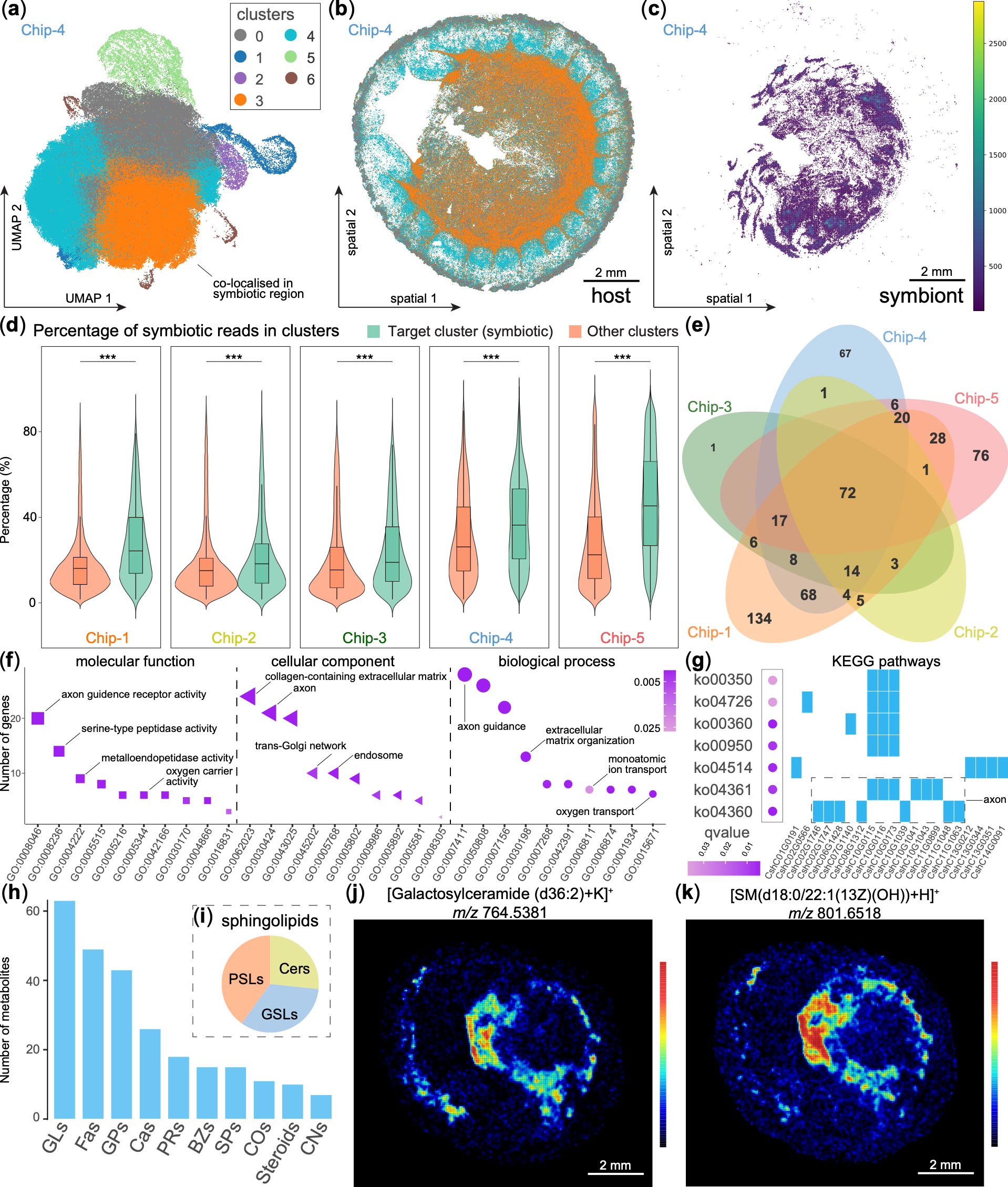
One possibility is that the dracosphera’s many membrane layers help manage how oxygen moves through the animal’s body. The researchers propose that these layers could slow oxygen diffusion, allowing limited supplies to be directed preferentially toward the mollusk’s own cells while still supporting its bacterial partners.
For now, this explanation remains a hypothesis that requires further testing.
The team also found evidence suggesting that the dracosphera participates in nutrient exchange. Digestion-related cellular structures and signs of enzyme activity were abundant around the regions containing symbiotic bacteria. These observations suggest that the mollusk may obtain essential nutrients it cannot produce itself by breaking down some of its bacterial partners.
A possible clue to organelle evolution
Beyond explaining how one unusual animal survives, the findings may offer insight into a much older biological process.
Scientists believe that mitochondria, which occur in animal and plant cells, and chloroplasts, found in plant cells, originated through ancient relationships between microorganisms and their hosts. Over evolutionary time, these partnerships gave rise to structures that became essential components of complex cells.
The dracosphera does not establish that a similar evolutionary transition is occurring in Chaetoderma shenloong. However, its distinctive organization provides researchers with another example of how intimately animals and bacteria can cooperate, potentially helping scientists investigate how specialized organelles and new cellular functions evolve.
The discovery could also have implications for understanding the broader deep-sea ecosystem.
Researchers identified traces of Chaetoderma shenloong at the mud volcano cold seep off Kyushu, Japan, and the Site F cold seep in the northern South China Sea. Together with previous records of large, closely related species in the Gulf of Mexico, these observations raise the possibility that animals with similar bacterial partnerships are more widely distributed across deep-sea cold seeps than currently recognized.
Such organisms may participate in the movement and transformation of methane, sulfur, and carbon within these ecosystems. Establishing their distribution and ecological contributions could help scientists better understand how life operates in parts of the ocean that remain poorly explored.
Reference: “A multilamellar organelle for chemosymbiosis in an aplacophoran mollusc adapted to anoxic cold seep sediment” by Yunlong Li, Chong Chen, Xu Liu, Menggong Li, Guoyong Yan, Haiyun Zhou, Hui Wang, Xiaoshan Zheng, Xing He, Shanshan Liu, Jian-Wen Qiu, Pei-Yuan Qian and Jin Sun, 30 October 2026, Nature Communications.
DOI: 10.1038/s41467-026-78965-0
The work also received support from the National Key Research and Development Program of China, the Laoshan Laboratory, the Natural Science Foundation of Shandong Province, the Guangzhou Laboratory and research funds from the HKSAR Government, among other sources.
Never miss a breakthrough: Join the SciTechDaily newsletter.
Follow us on Google and Google News.