
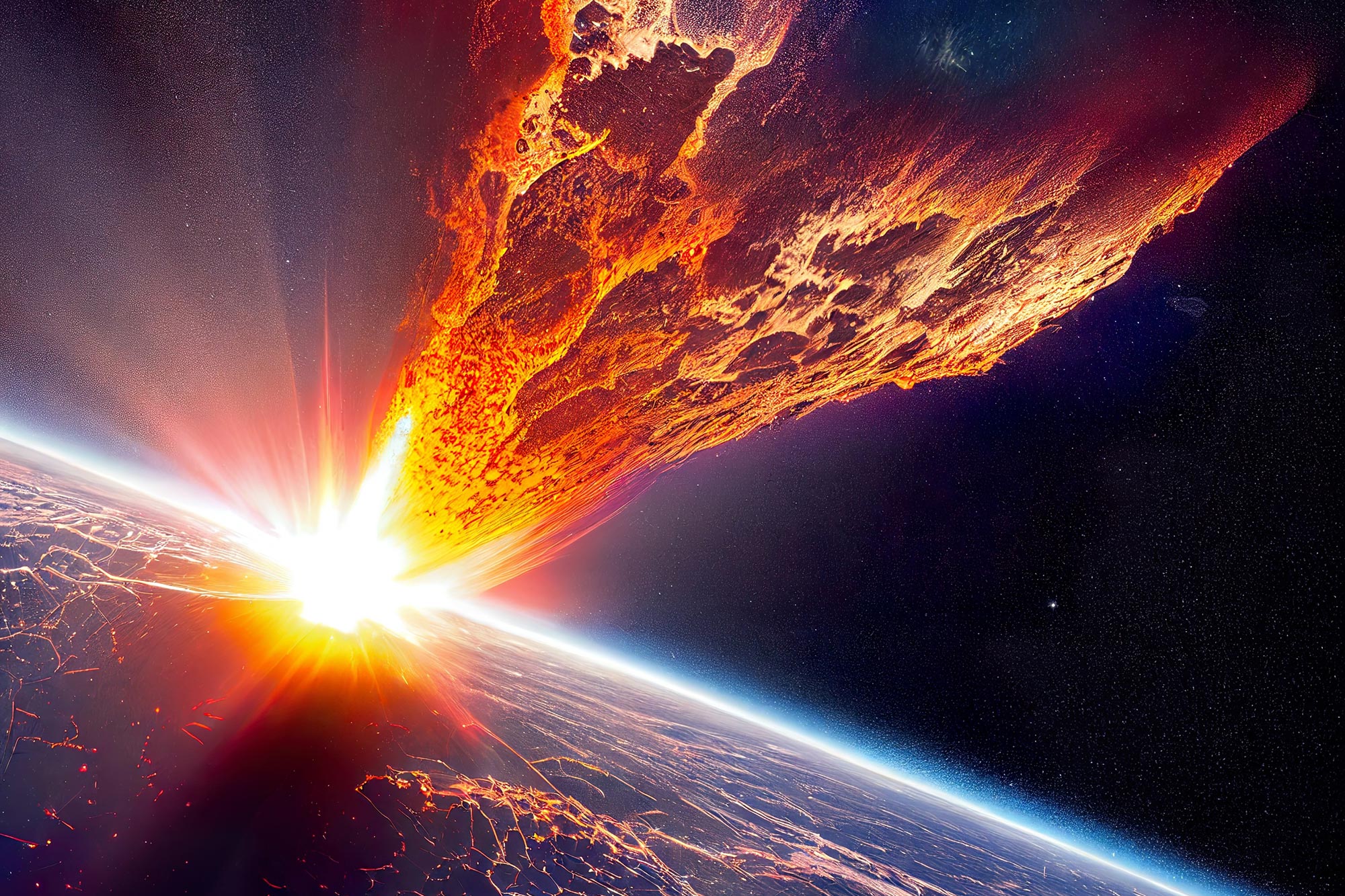
Ancient meteorites may hold the key to understanding when and how Earth acquired one of life’s most essential elements.
Carbon erupting from Hawaiian volcanoes may have originated deep within Earth’s metallic core, carrying a chemical fingerprint that dates back to the planet’s formation. A new study suggests that carbon-rich meteorites delivered a substantial amount of Earth’s carbon during its early history, potentially helping supply the element that would eventually become essential to life.
Researchers analyzing volcanic rocks from Hawaii identified an unusual carbon isotope signature that may trace back to Earth’s core. “We think that we found evidence of carbon from Earth’s core leaking into the core-mantle boundaries and traveling all the way to the surface,” says lead author Yves Moussallam, an associate professor at Columbia University’s Department of Earth and Environmental Sciences and Lamont-Doherty Earth Observatory. The findings were published in the Proceedings of the National Academy of Sciences.
An Unusual Carbon Signature Beneath Hawaii
The researchers examined volcanic rocks from Kīlauea and the Tantalus Rift, two Hawaiian volcanic systems that draw magma from different regions of the mantle. Samples from the Tantalus Rift contained carbon isotope signatures of approximately -5 to -7 per mil, consistent with typical mantle carbon. Kīlauea’s samples, however, had a much heavier signature of approximately -1 per mil, a value rarely observed in previous measurements.
“This signature is very, very distinct from the normal mantle,” says Moussallam. “This means it must have been contaminated by another carbon source and that source is probably carbon from the core.” Although the team considers the core the most likely source, the isotope measurements do not establish that origin conclusively.
How Carbon Could Escape Earth’s Core
Earth’s mantle extends roughly 1,800 miles beneath the crust, separating the surface from the planet’s metallic core. Scientists believe much of Earth’s carbon resides in the core, which cannot be directly sampled. However, research suggests that some materials from the liquid outer core may cross into the mantle and eventually reach the surface through mantle plumes. These rising columns of hot rock can partially melt as they approach the crust, supplying magma to volcanoes. Kīlauea is thought to receive magma from near the center of a plume that originates close to the core-mantle boundary, while the Tantalus Rift samples appear to represent the plume’s outer regions.
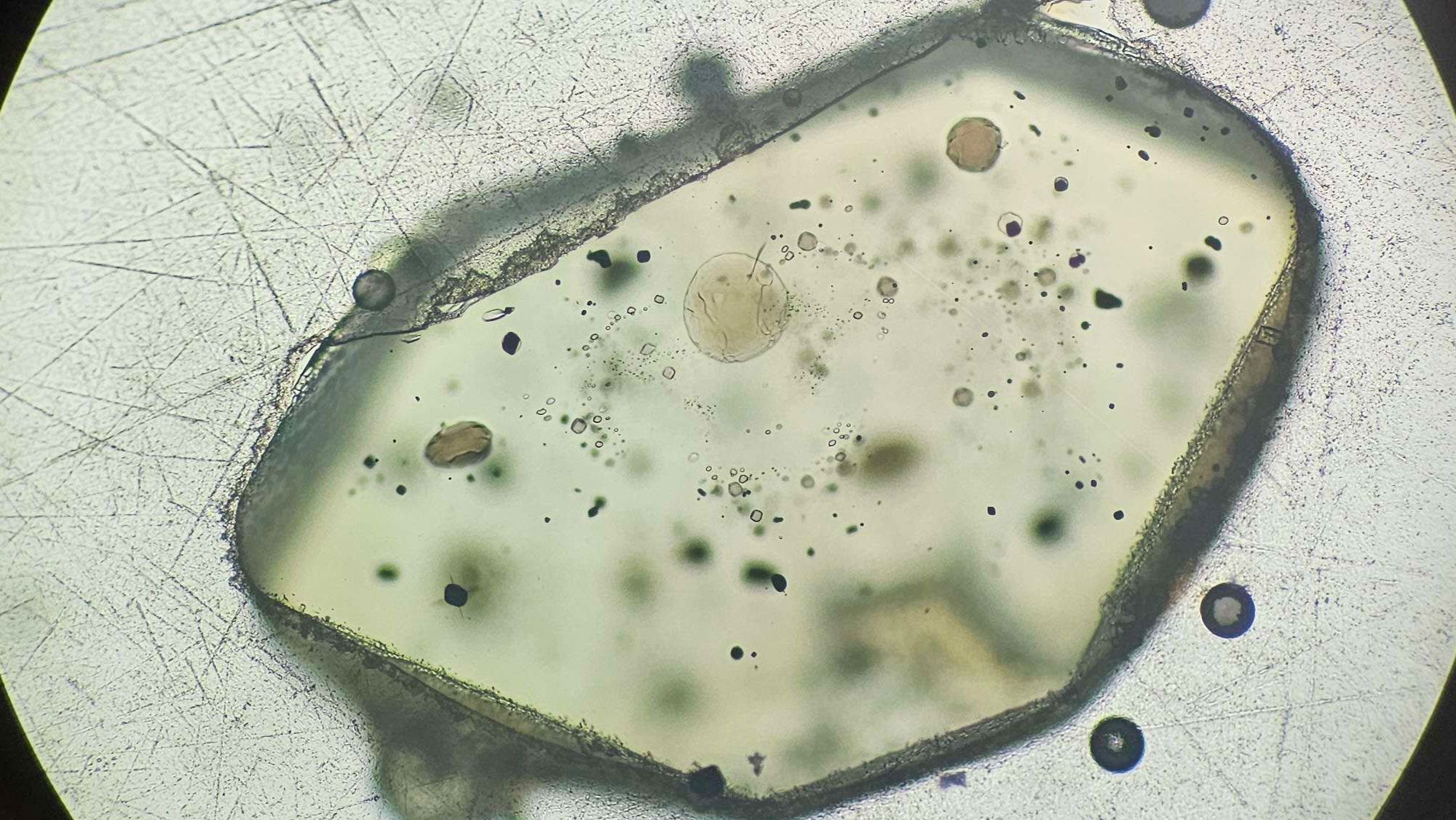
To investigate the carbon carried by these magmas, Moussallam’s team used a recently developed technique to measure carbon isotopes inside tiny pockets of trapped melt. As magma cools, growing crystals can enclose droplets of molten rock before dissolved gases escape. These sealed pockets, called undegassed melt inclusions, preserve carbon dioxide from the original magma. “These melts are fossils of the magma,” Moussallam says.
Ancient Meteorites May Explain Earth’s Carbon
The researchers then compared Kīlauea’s unusual carbon signature with measurements from ancient meteorites. Moussallam argues that carbon preserved in Earth’s core should reflect “the signature of the building blocks of Earth when it was created.” The closest similarities appeared in carbonaceous chondrites, a carbon-rich class of meteorites associated with the outer regions of the early solar system.
Chondrites contain some of the solar system’s oldest surviving material, dating back more than 4.5 billion years. “All of Earth is made of chondrites,” Moussallam explains. “They’re the building blocks of all the terrestrial planets.” Scientists distinguish between noncarbonaceous chondrites, associated with the inner solar system, and carbonaceous chondrites, which formed farther from the Sun. How much each group contributed to Earth’s formation remains debated.
A Possible Source of the Carbon That Supports Life
The researchers propose that carbonaceous chondrites struck Earth relatively late in its formation, when the growing planet was better able to retain carbon delivered by incoming material. Some of that carbon may have entered the core before eventually moving into the mantle and reaching the surface through volcanic activity. The isotope similarities support this possibility, but confirming that the carbon actually originated in the core will require additional evidence. “We don’t really know. We need more measurements,” cautions Moussallam.
The proposed journey would connect carbon delivered by ancient meteorites, stored deep inside Earth, and eventually released into the environment where living organisms could incorporate it. “It’s fun to think about. We’re made of carbon, right? To think that some of this carbon might at some point have been linked to iron in the planet’s core, made it all the way to the surface from out of a volcano, and is now part of the biosphere, is very interesting.”
Reference: “Isotopically heavy carbon in the core” by Yves Moussallam, Damanveer S. Grewal, Guillaume Georgeais, HyunJoo Lee, Estelle F. Rose-Koga, Allan Lerner, Bridgett Holman, Paul J. Wallace, Natália Gauer Pasqualon, Olivia E. Anderson and Matthew G. Jackson, 9 November 2026, Proceedings of the National Academy of Sciences.
DOI: 10.1073/pnas.2610912123
Never miss a breakthrough: Join the SciTechDaily newsletter.
Follow us on Google and Google News.
1 Comment
Истина – на МД АФС!