
Close Menu
    Facebook X (Twitter) Instagram
    SciTechDaily
    • Biology
    • Chemistry
    • Earth
    • Health
    • Physics
    • Science
    • Space
    • Technology
    Facebook X (Twitter) Pinterest YouTube RSS
    SciTechDaily
    Home»Science»New Discovery Suggests Humans Left Africa Earlier Than Previously Thought
    Science

    New Discovery Suggests Humans Left Africa Earlier Than Previously Thought

    By Duncan Sandes, University Of ExeterJuly 12, 2018No Comments3 Mins Read
    Facebook Twitter Pinterest Telegram LinkedIn WhatsApp Email Reddit
    Share
    Facebook Twitter LinkedIn Pinterest Telegram Email Reddit
    Discovery Suggests Humans Left Africa Earlier Than Previously Thought
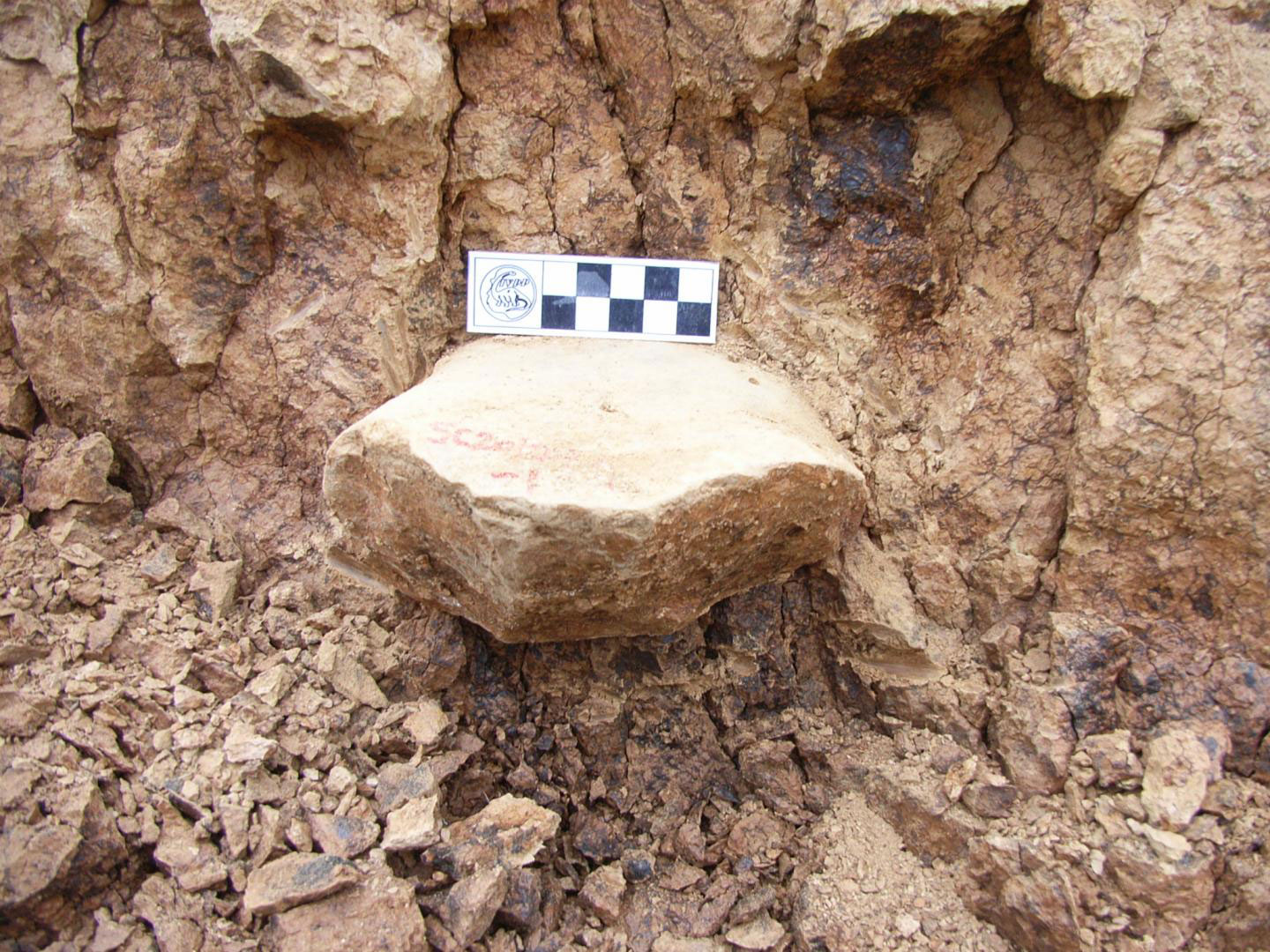
    Picture taken at the site of the discovery of ancient tools in China. Credit: Prof. Zhaoyu Zhu

    Ancient tools and bones discovered in China by archaeologists suggest early humans left Africa and arrived in Asia earlier than previously thought.

    The artifacts show that our earliest human ancestors colonized East Asia over two million years ago. They were found by a Chinese team that was led by Professor Zhaoyu Zhu of the Chinese Academy of Sciences, and included Professor Robin Dennell of Exeter University. The tools were discovered at a locality called Shangchen in the southern Chinese Loess Plateau. The oldest are ca. 2.12 million years old, and are c. 270,000 years older than the 1.85 million-year-old skeletal remains and stone tools from Dmanisi, Georgia, which were previously the earliest evidence of humanity outside Africa.

    The artifacts include a notch, scrapers, cobble, hammer stones, and pointed pieces. All show signs of use — the stone had been intentionally flaked. Most were made of quartzite and quartz that probably came from the foothills of the Qinling Mountains 5 to 10 km (3 to 6 m) to the south of the site, and the streams flowing from them. Fragments of animal bones 2.12 million years old were also found.

    The Chinese Loess Plateau covers about 270,000 square kilometers (104,000 square miles) and during the past 2.6m years between 100 to 300m (300 to 900ft) of wind-blown dust — known as loess — has been deposited in the area.

    The 80 stone artifacts were found predominantly in 11 different layers of fossil soils which developed in a warm and wet climate. A further 16 items were found in six layers of loess that developed under colder and drier conditions. These 17 different layers of loess and fossil soils were formed during a period spanning almost a million years. This shows that early types of humans occupied the Chinese Loess Plateau under different climatic conditions between 1.2 and 2.12 million years ago.

    The layers containing these stone tools were dated by linking the magnetic properties of the layers to known and dated changes in the earth’s magnetic field.

    Professor Dennell said: “Our discovery means it is necessary now to reconsider the timing of when early humans left Africa.”

    Reference: “Hominin occupation of the Chinese Loess Plateau since about 2.1 million years ago” by Zhaoyu Zhu, Robin Dennell, Weiwen Huang, Yi Wu, Shifan Qiu, Shixia Yang, Zhiguo Rao, Yamei Hou, Jiubing Xie, Jiangwei Han and Tingping Ouyang, 11 July 2018, Nature.
    DOI: 10.1038/s41586-018-0299-4

    Never miss a breakthrough: Join the SciTechDaily newsletter.
    Follow us on Google and Google News.

    Archaeology Fossils Hominin University of Exeter
    Share. Facebook Twitter Pinterest LinkedIn Email Reddit

    Related Articles

    Rewriting Prehistory: Enigmatic Human Relative Discovered in Taiwan

    Mystery Fossil From Taiwan Identified As Denisovan – A Game-Changer for Human Evolution

    400,000 Year Old Fossil Helps Shed New Light on Human Evolution

    Exceptionally Preserved Brain Discovered Inside Waterlogged Pit

    Jaw Structures of Fossils Seems to Suggest That Three Homo Species Roamed Africa Concurrently

    Ash Preserved Fossils of Rangeomorphs Discovered in Newfoundland

    27-Foot Long Crocodylus Thorbjarnarsoni Roamed Kenya

    Million-Year-Old Ash in South African Cave Yields Evidence of Cooking

    Burtele Foot Points to Other Past Hominins

    Leave A Reply Cancel Reply

    • Facebook
    • Twitter
    • Pinterest
    • YouTube

    Don't Miss a Discovery

    Subscribe for the Latest in Science & Tech!

    Trending News

    Scientists May Have Discovered How To Heal Damaged Kidneys

    Interstellar Visitor 3I/ATLAS Is Bursting With an Unexpected Chemical

    Scientists Just Found All 5 Genetic “Letters” of DNA and RNA on an Asteroid

    The 4,000-Year-Old City That Defied History’s Rules on Wealth and Power

    The World’s Biggest Population Fear Has Flipped – and It Could Change Everything

    This “Fake” Pill Improved Memory and Physical Performance in Just 3 Weeks

    Scientists Say Frequent Ejaculation May Improve Sperm Quality and Fertility

    Scientists Have Found “The Heaven Sword” After Years of Looking

    Follow SciTechDaily
    • Facebook
    • Twitter
    • YouTube
    • Pinterest
    • Newsletter
    • RSS
    SciTech News
    • Biology News
    • Chemistry News
    • Earth News
    • Health News
    • Physics News
    • Science News
    • Space News
    • Technology News
    Recent Posts
    • Watch What Happened When a Lost Elephant Calf Returned to Her Family
    • 17,000 Brain Scans Reveal Surprising Ethnic Differences in Alzheimer’s Biology
    • New Autism Treatment Strategy Restores Key Brain Receptor Function
    • Younger Generations Are Aging Faster – and It May Be Fueling a Surge in Cancer
    • Scientists Turn Ordinary Sunlight Into UV Light in Major Energy Breakthrough
    Copyright © 1998 - 2026 SciTechDaily. All Rights Reserved.
    • Science News
    • About
    • Contact
    • Editorial Board
    • Privacy Policy
    • Terms of Use

    Type above and press Enter to search. Press Esc to cancel.