
Close Menu
    Facebook X (Twitter) Instagram
    SciTechDaily
    • Biology
    • Chemistry
    • Earth
    • Health
    • Physics
    • Science
    • Space
    • Technology
    Facebook X (Twitter) Pinterest YouTube RSS
    SciTechDaily
    Home»Space»MMS Spacecraft Provide First-Ever Views of Elusive Energy Explosion
    Space

    MMS Spacecraft Provide First-Ever Views of Elusive Energy Explosion

    By Robbin Ray, University of New HampshireNovember 17, 20181 Comment5 Mins Read
    Facebook Twitter Pinterest Telegram LinkedIn WhatsApp Email Reddit
    Share
    Facebook Twitter LinkedIn Pinterest Telegram Email Reddit
    Scientists Provide First Ever Views of Elusive Energy Explosion
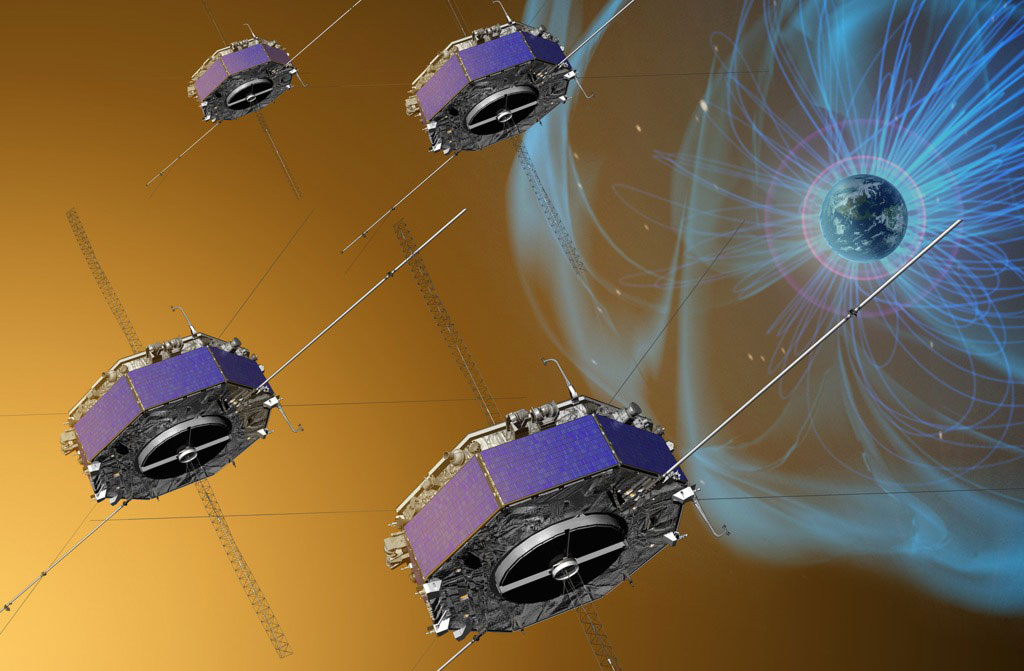
    Artist depiction of the MMS spacecraft that provided the first view of magnetic reconnection. Credit: NASA/GSFC

    Researchers at the University of New Hampshire have captured a difficult-to-view singular event involving “magnetic reconnection”—the process by which sparse particles and energy around Earth collide producing a quick but mighty explosion—in the Earth’s magnetotail, the magnetic environment that trails behind the planet.

    Magnetic reconnection has remained a bit of a mystery to scientists. They know it exists and have documented the effects that the energy explosions can have—sparking auroras and possibly wreaking havoc on power grids in the case of extremely large events—but they haven’t completely understood the details. In a study published in the journal Science, the scientists outline the first views of the critical details of how this energy conversion process works in the Earth’s magnetotail.
    First Ever Views of Elusive Energy Explosion
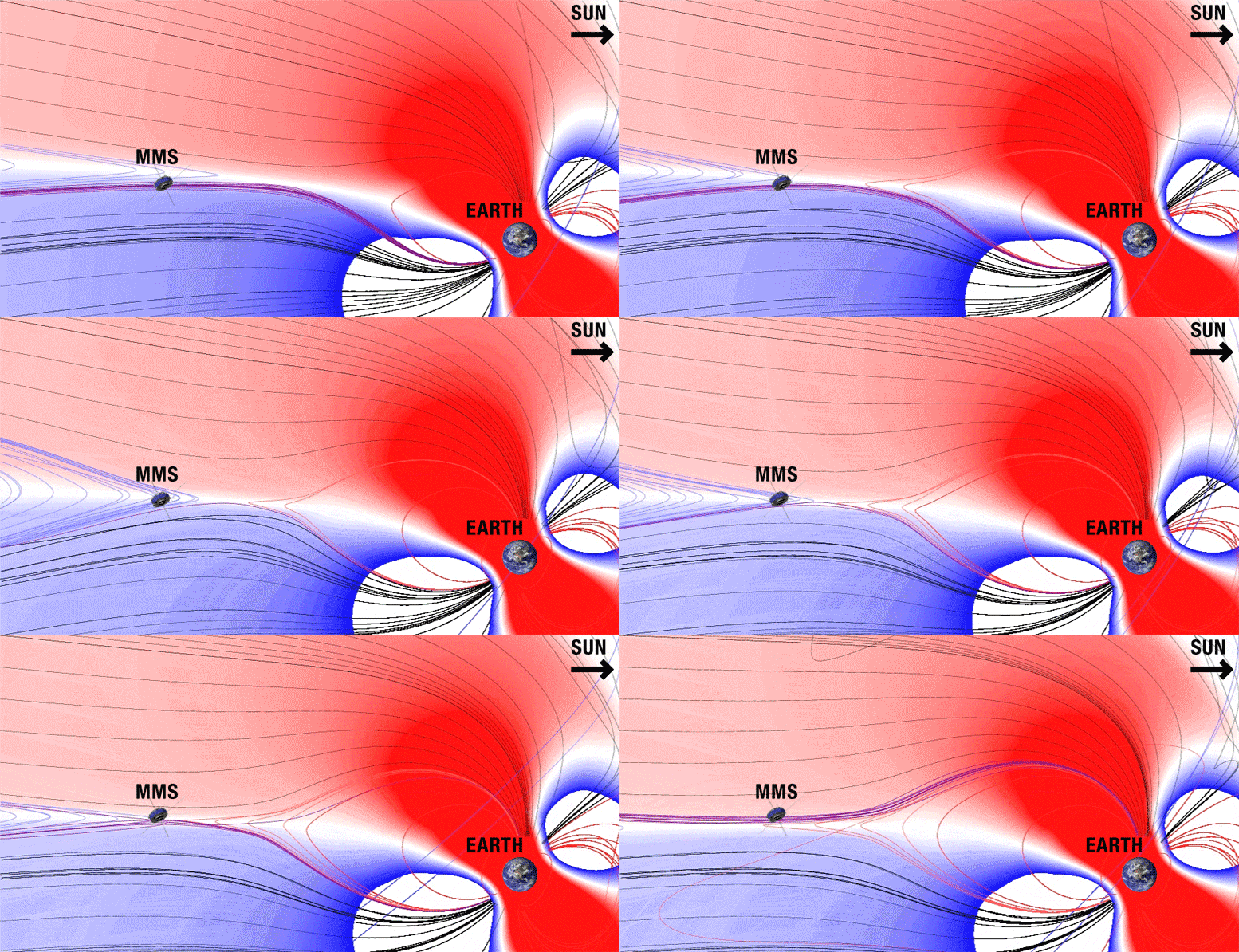
    In its second phase, NASA’s Magnetospheric Multiscale Mission (MMS) is watching magnetic reconnection in action behind the Earth, as shown here by the tangled blue and red magnetic field lines. Credit: Patricia Reiff/NASA Goddard/Joy Ng
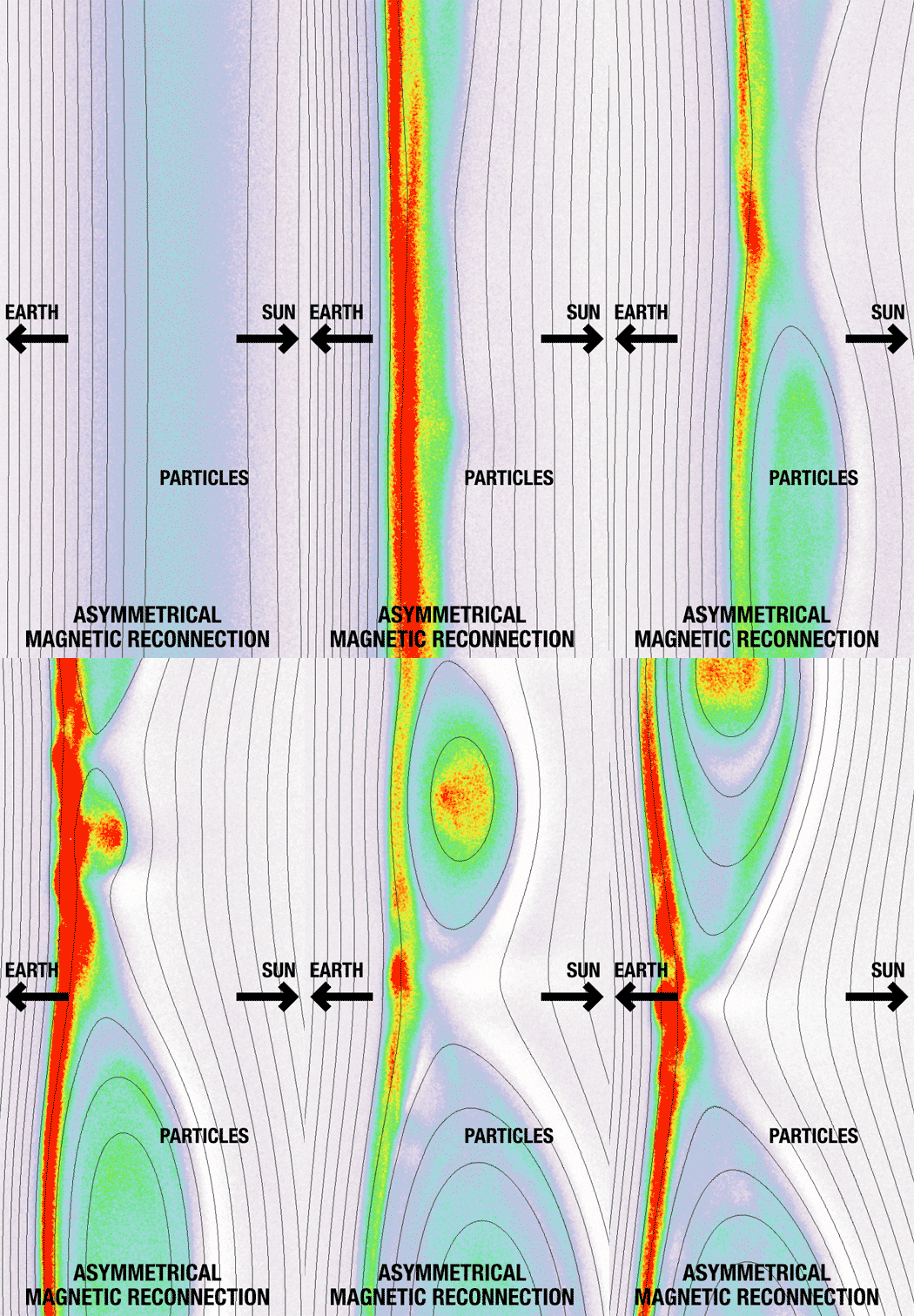
    Assymetrical Reconnection
    On Earth’s dayside, magnetic reconnection is asymmetric — meaning it flings particles, like ions and electrons, unequally in different directions. In this simulation, particles are seen primarily moving upwards away from the site of reconnection along the black magnetic field lines. Credit: Paul Cassak/NASA Goddard/Joy Ng

    “This was a remarkable event,” said Roy Torbert of the Space Science Center at UNH and deputy principal investigator for NASA’s Magnetospheric Multiscale mission, or MMS. “We have long known that it occurs in two types of regimes: asymmetric and symmetric but this is the first time we have seen a symmetric process.”

    Magnetic reconnection occurs around Earth every day due to magnetic field lines twisting and reconnecting. It happens in different ways in different places, with different effects. Particles in highly ionized gases, called plasmas, can be converted and cause a single powerful explosion, just a fraction of a second long, that can lead to strong streams of electrons flying away at supersonic speeds. The view, which was detected as part of the scientists’ work on the MMS mission, had enough resolution to reveal its differences from other reconnection regimes around the planet like the asymmetric process found in the magnetopause around Earth which is closer to the sun.

    “This is important because the more we know and understand about these reconnections,” said Torbert, “the more we can prepare for extreme events that are possible from reconnections around the Earth or anywhere in the universe.”

    Magnetic reconnection also happens on the sun and across the universe—in all cases forcefully shooting out particles and driving much of the change we see in dynamic space environments—so learning about it around Earth also helps us understand reconnection in other places in the universe which cannot be reached by spacecraft. The more we understand about different types of magnetic reconnection, the more we can piece together what such explosions might look like elsewhere.
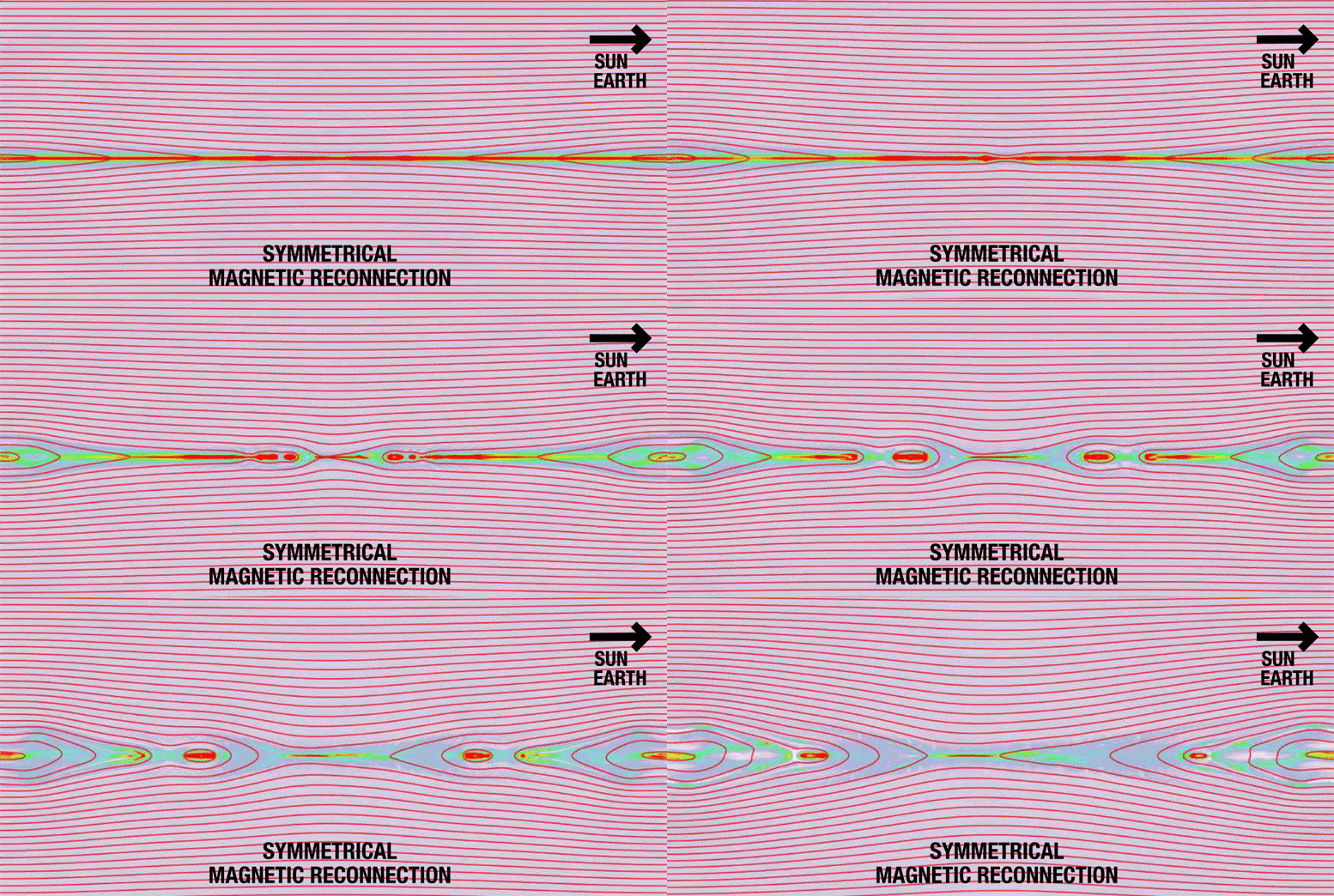
    Symmetrical Reconnection
    Behind Earth, away from the Moon, magnetic reconnection occurs symmetrically. This simulation shows particles traveling away from the site of reconnection equally in both directions, confined by the red magnetic field lines. Credit: Michael Hesse/NASA Goddard/Joy Ng

    For the first reported asymmetrical event on October 16, 2015, and now this symmetrical event on July 11, 2017, NASA’s MMS mission made history by flying through magnetic reconnection events near the Earth. The four MMS spacecrafts launched from a single rocket were only inside the events for a few seconds, but the instruments which UNH researchers helped to develop were able to gather data at an unprecedented speed of one hundred times faster than ever before. As a result, for the first time, scientists could track the way the magnetic fields changed, new electric fields presented, as well as the speeds and direction of the various charged particles.

    This work was funded by the National Aeronautics and Space Administration, or NASA.

    Reference: “Electron-scale dynamics of the diffusion region during symmetric magnetic reconnection in space” by R. B. Torbert, J. L. Burch, T. D. Phan, M. Hesse, M. R. Argall, J. Shuster, R. E. Ergun, L. Alm, R. Nakamura, K. J. Genestreti, D. J. Gershman, W. R. Paterson, D. L. Turner, I. Cohen, B. L. Giles, C. J. Pollock, S. Wang, L.-J. Chen, J. E. Stawarz, J. P. Eastwood, K. J. Hwang, C. Farrugia, I. Dors, H. Vaith, C. Mouikis, A. Ardakani, B. H. Mauk, S. A. Fuselier, C. T. Russell, R. J. Strangeway, T. E. Moore, J. F. Drake, M. A. Shay, Yuri V. Khotyaintsev, P.-A. Lindqvist, W. Baumjohann, F. D. Wilder, N. Ahmadi, J. C. Dorelli, L. A. Avanov, M. Oka, D. N. Baker, J. F. Fennell, J. B. Blake, A. N. Jaynes, O. Le Contel, S. M. Petrinec, B. Lavraud and Y. Saito, 15 November 2018, Science.
    DOI: 10.1126/science.aat2998

    Never miss a breakthrough: Join the SciTechDaily newsletter.
    Follow us on Google and Google News.

    Astrophysics Earth Science Magnetospheric Multiscale Mission Magnetotail University of New Hampshire
    Share. Facebook Twitter Pinterest LinkedIn Email Reddit

    Related Articles

    “Finding Life in Outer Space” – Travel Across Time and Space Exploring Why Life Exists

    Scientists Reveal How Much Dimmer the Sun Will Be By Mid-Century

    Magnetospheric Multiscale Mission Explores the Microphysics of Magnetic Reconnection

    NASA’s MMS Uncovers New Type of Motion Exhibited by Electrons in Space

    New Study Proposes Dense Dark Matter “Hairs” Spreading Out from Earth and Other Compact Bodies

    NASA’s Voyager 1 Continues to Help Solve the Interstellar Medium Mystery

    Magnetospheric Multiscale Mission Set to Study Magnetic Reconnection Near Earth

    NASA Probes Reveal Source of Particle Acceleration in Van Allen Radiation Belts

    NASA’s Magnetospheric Multiscale Mission to Study Portals in Earth’s Magnetic Field

    1 Comment

    1. katesisco on November 17, 2018 4:44 pm

      I so much prefer D Scott’s description referencing K Birkeland’s research into why power lines overloaded and blew out. NASA’s ICON page is much more helpful in describing the surprising magnetic spirals as a product of the disruption of the electrical current. One hopes to eventually hear how the plasma clouds in the ionosphere can massive collect.

      Reply
    Leave A Reply Cancel Reply

    • Facebook
    • Twitter
    • Pinterest
    • YouTube

    Don't Miss a Discovery

    Subscribe for the Latest in Science & Tech!

    Trending News

    Millions Take These IBS Drugs, But a New Study Finds Serious Risks

    Scientists Unlock Hidden Secrets of 2,300-Year-Old Mummies Using Cutting-Edge CT Scanner

    Bread Might Be Making You Gain Weight Even Without Eating More Calories

    Scientists Discover Massive Magma Reservoir Beneath Tuscany

    Europe’s Most Active Volcano Just Got Stranger – Here’s Why Scientists Are Rethinking It

    Alzheimer’s Symptoms May Start Outside the Brain, Study Finds

    Millions Take This Popular Supplement – Scientists Discover a Concerning Link to Heart Failure

    The Universe Is Expanding Too Fast and Scientists Can’t Explain Why

    Follow SciTechDaily
    • Facebook
    • Twitter
    • YouTube
    • Pinterest
    • Newsletter
    • RSS
    SciTech News
    • Biology News
    • Chemistry News
    • Earth News
    • Health News
    • Physics News
    • Science News
    • Space News
    • Technology News
    Recent Posts
    • Simple Blood Test May Predict Alzheimer’s Years Before Brain Scans Show Signs
    • Scientists Say Adding This Unusual Seafood to Your Diet Could Reverse Signs of Aging
    • U.S. Waste Holds $5.7 Billion Worth of Crop Nutrients
    • Scientists Say a Hidden Structure May Exist Inside Earth’s Core
    • Doctors Surprised by the Power of a Simple Drug Against Colon Cancer
    Copyright © 1998 - 2026 SciTechDaily. All Rights Reserved.
    • Science News
    • About
    • Contact
    • Editorial Board
    • Privacy Policy
    • Terms of Use

    Type above and press Enter to search. Press Esc to cancel.