
Close Menu
    Facebook X (Twitter) Instagram
    SciTechDaily
    • Biology
    • Chemistry
    • Earth
    • Health
    • Physics
    • Science
    • Space
    • Technology
    Facebook X (Twitter) Pinterest YouTube RSS
    SciTechDaily
    Home»Biology»Sirtuin Protein SIRT6 Linked to Longevity in Mammals
    Biology

    Sirtuin Protein SIRT6 Linked to Longevity in Mammals

    By SciTechDailyFebruary 27, 2012No Comments2 Mins Read
    Facebook Twitter Pinterest Telegram LinkedIn WhatsApp Email Reddit
    Share
    Facebook Twitter LinkedIn Pinterest Telegram Email Reddit
    lab-mouse
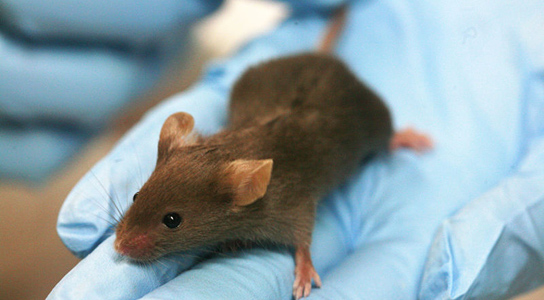
    Higher SIRT6 levels can lengthen lifespan in male mice by up to 15.8%. However, as the mouse strain used in the lab experiments is prone to tumors, the longevity boost might be due to SIRT6’s anti-cancer effects rather than its direct impact on aging.

    A member of the sirtuin family of proteins, SIRT6, has been shown to extend lifespans in mammals. Researchers studying the aging process have long been intrigued by the sirtuin genes and their associated proteins. Recent results published in the journal Nature suggest that the overexpression of this one gene can lengthen lifespan in male mice by up to 15.8%.

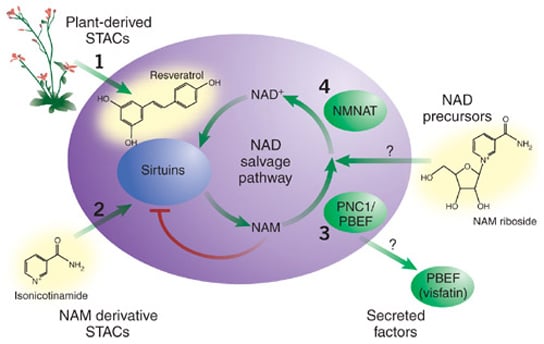
    SIRT1 has been in the spotlight for years, since it was also closely related to the longevity-linked yeast gene. Some researchers speculated that SIRT1 could boost lifespan in mammals, and that it was the target of resveratrol, a compound found in red wine that’s been linked to a variety of health benefits.
    sirtuin-infographic

    Until now, SIRT1 has not affected longevity in mammals, although its expression is associated with a healthier metabolism in mice fed a high-fat diet. Haim Cohen, a molecular biologist at Bar-Ilan University in Ramat-Gan, Israel, studied the SIRT6 gene.

    In 2006, it was reported that mice missing the SIRT6 gene seemed to age more quickly. When mice had higher levels of SIRT6, longevity in females was unaffected, but the median lifespan of male mice rose by 14.5%. The maximum lifespan rose by 15.8%.

    The strain of mice used in the lab experiments are particularly prone to tumors, especially in males. The longer lifespan could be a result of an anti-cancer effect of SIRT6 rather than a direct effect on aging.

    It is not yet known why sirtuin levels affect males and females differently.

    Reference: “Sirtuin protein linked to longevity in mammals” by Heidi Ledford, 22 February 2012, Nature.
    DOI: 10.1038/nature.2012.10074

    Never miss a breakthrough: Join the SciTechDaily newsletter.
    Follow us on Google and Google News.

    Longevity Mammals Molecular Biology Protein Resveratrol SIRT1
    Share. Facebook Twitter Pinterest LinkedIn Email Reddit

    Related Articles

    New Analysis of Longevity Protein Yields Important Therapeutic Insights

    Yale Researchers Create a 21st Amino Acid

    New Analysis on Iceman Ötzi Opens Up New Research Possibilities for Mummies

    A Closer Look at the Antifreeze Protein That Allows Siberian Beetles to Survive

    Enzyme’s Essential Role in Long-Term Memory Refuted

    SSRL Validates Anti-Flu Protein Design

    “Arsenic-Life” Bacterium Prefers Phosphate Over Arsenate

    New Design Makes Previously Inaccessible Proteins Vulnerable to Drugs

    Resveratrol Interacts With SIRT1 Gene for Health Benefits

    Leave A Reply Cancel Reply

    • Facebook
    • Twitter
    • Pinterest
    • YouTube

    Don't Miss a Discovery

    Subscribe for the Latest in Science & Tech!

    Trending News

    JWST Finds a “Star” 100 Billion Times Brighter Than Any Star Should Be

    Scientists Find a Hidden Biological Link Across Different Forms of Autism

    Astronomers Discover a Ghostly River of Stars That Could Reveal Dark Matter

    Why Is Colorectal Cancer Rising in People Under 50? New Clues Point to the Environment

    Quantum Fluctuations Break a Crystal’s Symmetry Rules

    Why Does an Irregular Heartbeat Strike 40 Years Early in Some People?

    Scientists Reveal How ADHD Could Fuel Creative Thinking

    Scientists Find Just 3 Minutes of Sprinting Can Transform Blood Chemistry

    Follow SciTechDaily
    • Facebook
    • Twitter
    • YouTube
    • Pinterest
    • Newsletter
    • RSS
    SciTech News
    • Biology News
    • Chemistry News
    • Earth News
    • Health News
    • Physics News
    • Science News
    • Space News
    • Technology News
    Recent Posts
    • A 35,000-Year-Old Neanderthal Pelvis May Explain Why Men and Women Walk Differently
    • Hidden Brain Wiring May Help Preserve Thinking As Gray Matter Shrinks
    • Dual Stem Cell Treatment Restores Vision in First Human Trial
    • Your Waist Size May Reveal More About Your Health Than You Think
    • AI Decodes a Hidden DNA Signal Linked to Disease-Causing Mutations
    Copyright © 1998 - 2026 SciTechDaily. All Rights Reserved.
    • Science News
    • About
    • Contact
    • Editorial Board
    • Privacy Policy
    • Terms of Use

    Type above and press Enter to search. Press Esc to cancel.