
Close Menu
    Facebook X (Twitter) Instagram
    SciTechDaily
    • Biology
    • Chemistry
    • Earth
    • Health
    • Physics
    • Science
    • Space
    • Technology
    Facebook X (Twitter) Pinterest YouTube RSS
    SciTechDaily
    Home»Health»Vaccination Rates in Infants Improved by Paid Family Leave
    Health

    Vaccination Rates in Infants Improved by Paid Family Leave

    By John Brhel, Binghamton UniversitySeptember 9, 2019No Comments3 Mins Read
    Facebook Twitter Pinterest Telegram LinkedIn WhatsApp Email Reddit
    Share
    Facebook Twitter LinkedIn Pinterest Telegram Email Reddit

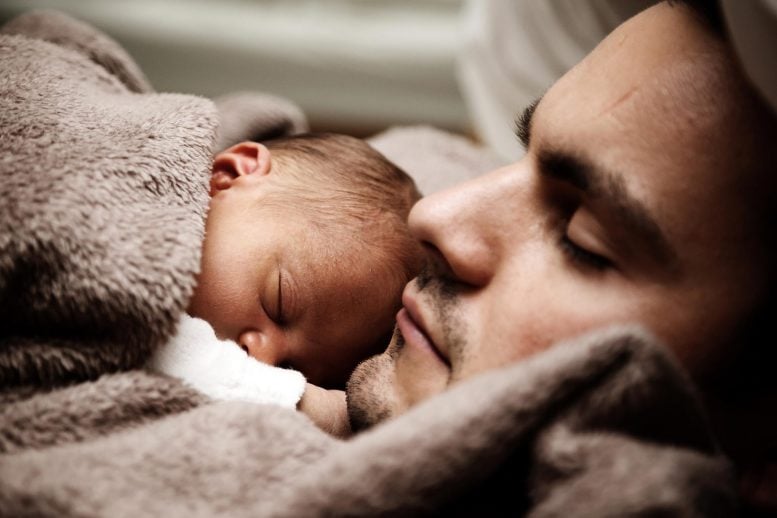
    Father and Infant

    Parents who take paid family leave after the birth of a newborn are more likely to have their child vaccinated on time compared to those who do not, according to new research from Binghamton University, State University of New York. The effect is stronger on families living below the poverty line.

    “Currently, many people do not vaccinate their child within the recommended schedule and are late,” said Solomon Polachek, professor of economics at Binghamton University. “Often this might be due to parental time constraints. When an infant is really young, these immunizations are critical, since infants are at a higher risk of infection and illness if not vaccinated properly.”

    In 2004, California was the first state to implement a Paid Family Leave (PFL) policy, allowing private-sector employees up to six weeks of leave with partial wage replacement to care for a newborn baby. This time not only helps parents settle into their new caregiving roles, but also allows them time to make vital parental decisions, such as ensuring their child is vaccinated on time.

    Binghamton University Ph.D. student Agnitra Roy Choudhury, who conducted this study under Polachek’s direction, looked at the National Immunization Survey to collect data regarding child vaccination rates between 19-35 months old. Specifically, the researchers looked at children born before and after the PFL policy was implemented in California and whether children received vaccinations on time compared to children in other states during the same time period. Vaccinations studied include Hepatitis-B (HepB), Diphtheria Tetanus Pertussis (DTP), and Haemophilus Influenzae Type B (HIB).

    They found that the PFL policy in California granting six weeks of family leave with partial wage replacement reduced late vaccination rates in infants.

    “The research finds that paid family leave (at least in California) increases the chance an infant will be inoculated for the second HepB injection by over 5 percent relative to states not implementing paid family leave, and for the DTP injection by about 1.5 percent,” said Polachek. “The effects are bigger for poorer families, who are less likely to have access to paid family leave from their jobs alone.”

    According to Polachek, vaccinating infants on time is vital to their future health and well-being, since vaccines can ward off diseases that can impact future attendance at school. Not only do these outcomes lead to less learning for children, but also they can lead to lower earnings power.

    “Poor school attendance and less early childhood learning can have consequences regarding the widening earnings distribution,” said Polachek. “Paid family leave might be a viable national policy if it mitigates these detrimental effects.”

    Future research will focus on using more precise survey data and analyzing other states, such as New York, that have recently implemented PFL policies.

    Reference: “The Impact of Paid Family Leave on the Timing of Infant Vaccinations,” by Roy Choudhury and Solomon W.Polachek, July 2019, IZA Institute of Labor Economics.

    Never miss a breakthrough: Join the SciTechDaily newsletter.
    Follow us on Google and Google News.

    Binghamton University Vaccination
    Share. Facebook Twitter Pinterest LinkedIn Email Reddit

    Related Articles

    College Students Beware: Taking “Study Drugs” Can Have Serious Consequences

    Does COVID Vaccination Increase Your Risk of Miscarriage? New Research Says No

    Does COVID-19 Vaccination Worsen Migraines?

    Triple Threat – Single Vaccine Protects Against Three Deadly Strains of Coronavirus

    New Research Finds That Extroverts Are More Likely To Resist Vaccines

    New Research Sheds Light on Side Effects of COVID-19 Vaccination

    Myocarditis and COVID Vaccination: Yale Researchers Reveal New Insights

    Does COVID-19 Vaccination Cause Menstrual Changes? New Research Says No

    Does COVID-19 Vaccination Cause Changes to Women’s Periods?

    Leave A Reply Cancel Reply

    • Facebook
    • Twitter
    • Pinterest
    • YouTube

    Don't Miss a Discovery

    Subscribe for the Latest in Science & Tech!

    Trending News

    AI Could Detect Early Signs of Alzheimer’s in Under a Minute – Far Before Traditional Tests

    What if Dark Matter Has Two Forms? Bold New Hypothesis Could Explain a Cosmic Mystery

    This Metal Melts in Your Hand – and Scientists Just Discovered Something Strange

    Beef vs. Chicken: Surprising Results From New Prediabetes Study

    Alzheimer’s Breakthrough: Scientists Discover Key Protein May Prevent Toxic Protein Clumps in the Brain

    Quantum Reality Gets Stranger: Physicists Put a Lump of Metal in Two Places at Once

    Scientists May Have Found the Key to Jupiter and Saturn’s Moon Mystery

    Scientists Uncover Brain Changes That Link Pain to Depression

    Follow SciTechDaily
    • Facebook
    • Twitter
    • YouTube
    • Pinterest
    • Newsletter
    • RSS
    SciTech News
    • Biology News
    • Chemistry News
    • Earth News
    • Health News
    • Physics News
    • Science News
    • Space News
    • Technology News
    Recent Posts
    • Students Found an Ancient Star That Shouldn’t Be in the Milky Way
    • Astronomers Solve 50-Year Mystery and Reveal Hidden Culprit Behind Strange X-Ray Emissions
    • One of the Universe’s Largest Stars May Be Getting Ready To Explode
    • Scientists Discover Enzyme That Could Supercharge Ozempic-Like Weight Loss Drugs
    • Asthma and Depression Don’t Mix the Way Scientists Expected
    Copyright © 1998 - 2026 SciTechDaily. All Rights Reserved.
    • Science News
    • About
    • Contact
    • Editorial Board
    • Privacy Policy
    • Terms of Use

    Type above and press Enter to search. Press Esc to cancel.