
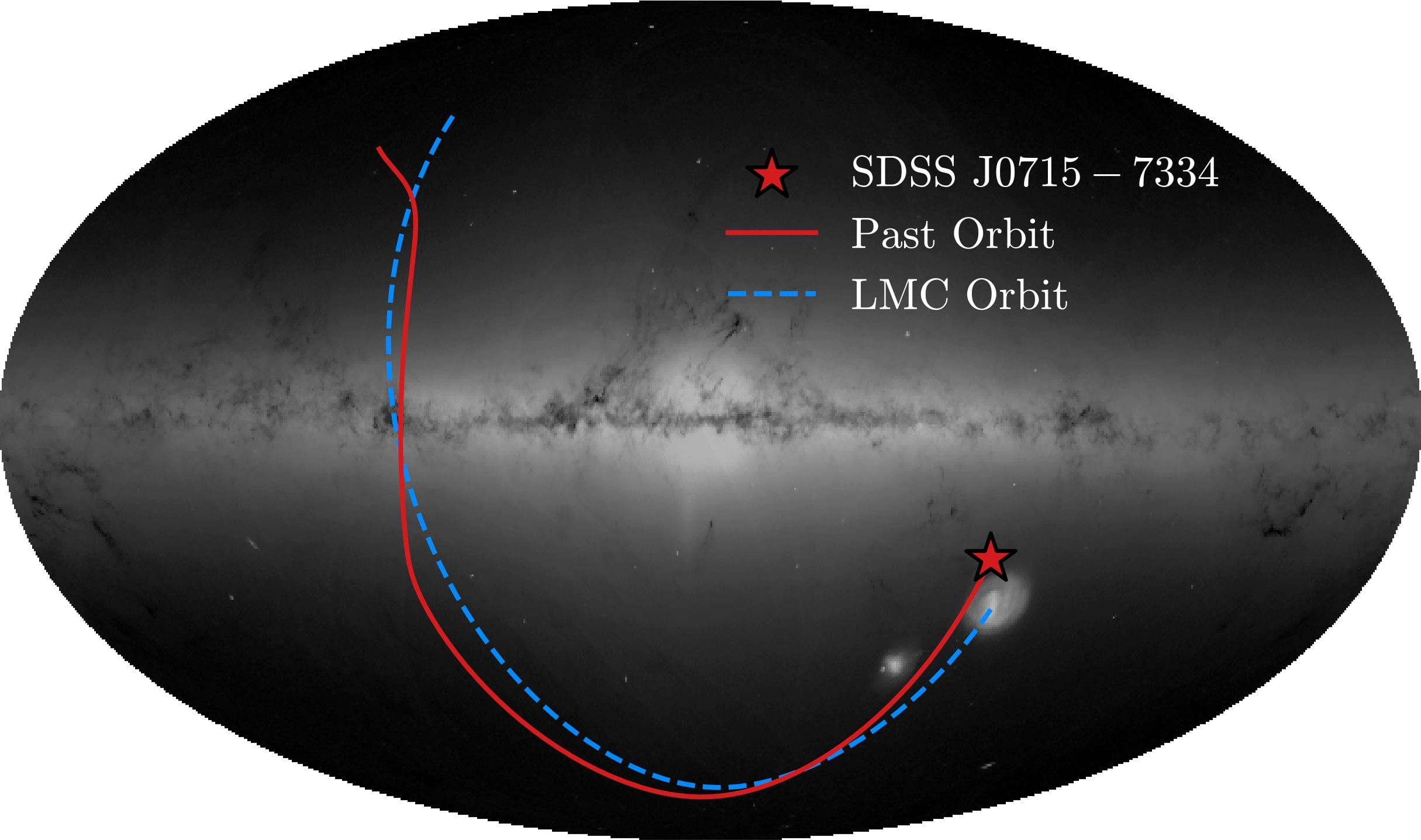
Students discovered an ultra-ancient star with almost no heavy elements, making it one of the most pristine ever found. Surprisingly, it appears to have formed in another galaxy before drifting into the Milky Way.
A team of undergraduate students at the University of Chicago has identified one of the oldest known stars in the universe using data from the Sloan Digital Sky Survey (SDSS). The star is especially unusual because it did not originate in the Milky Way. Instead, it formed in a nearby companion galaxy and later moved into our own.
The discovery was made by ten students in the university’s “Field Course in Astrophysics,” led by Professor Alex Ji, the deputy Project Scientist for SDSS-V, along with graduate teaching assistants Hillary Andales and Pierre Thibodeaux.
Using SDSS Data to Search for Ancient Stars
SDSS is a long-running international collaboration involving more than 75 institutions. For 25 years, it has focused on collecting and sharing large volumes of astronomical data with the public. In its current phase, robotic systems gather spectra from millions of celestial objects, helping scientists study how stars, black holes, and galaxies evolve over time.
As part of their coursework, the students worked directly with SDSS data. Over several weeks, they reviewed thousands of stars from the latest dataset, looking for unusual candidates. From this initial search, they selected 77 stars for detailed follow-up observations during a trip to Las Campanas Observatory.
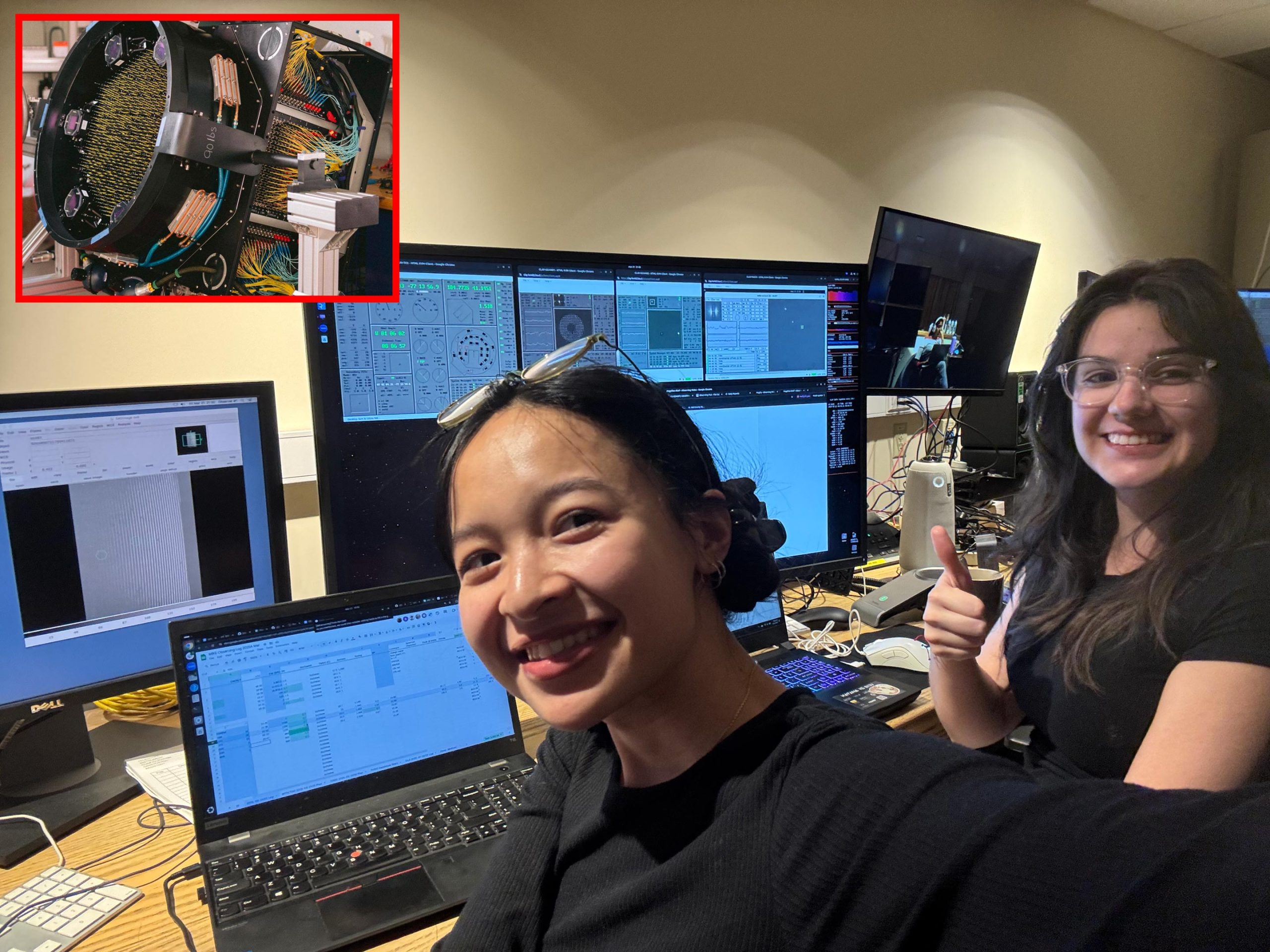
Inset: The Irenee duPont telescope is the site of SDSS-V’s Southern sky component, which is rapidly surveying the cosmos. This telescope was reinvigorated with a new instrument suite and a new robotic focal plane to enable SDSS-V (left hand photo). Credit: Main image: Ha Do (University of Chicago); Inset: SDSS Collaboration
A Breakthrough During Telescope Observations
The students traveled to Carnegie Science’s Las Campanas Observatory in Chile during Spring Break, where they used the Magellan Inamori Kyocera Echelle (MIKE) instrument on the Magellan telescopes. On their first night, March 21st, 2025, they began observing their selected targets. The second star they examined, known as SDSSJ0715-7334, quickly stood out.
“We found it the first night, and it completely changed our plans for the course,” Ji said.
Initially, each star was scheduled for a 10-minute observation. However, after recognizing the importance of this object, the team devoted three hours to studying it the following night.
“I was looking at that camera the whole night to make sure it was working,” said Natalie Orrantia, one of the students involved in the discovery.
An “Ancient Immigrant” From Another Galaxy
The star’s composition revealed just how extraordinary it is. It consists almost entirely of hydrogen and helium, indicating it formed very early in cosmic history. This makes it one of the most pristine and oldest stars ever observed.
Further analysis of its orbit showed that it originated in the Large Magellanic Cloud, the Milky Way’s largest companion galaxy, and later migrated into our galaxy billions of years ago. Because of this journey and its age, Ji referred to it as an “ancient immigrant.”
“This ancient immigrant gives us an unprecedented look at conditions in the early universe,” said Ji. “Big data projects like SDSS make it possible for students to get directly involved in these important discoveries.”
Record-Low Metallicity and What It Means
In astronomy, elements heavier than hydrogen and helium are called “metals,” and the amount present in a star is known as its “metallicity.” SDSSJ0715-7334 contains just 0.005 percent of the metals found in the Sun, making it the most metal-poor star ever observed, more than twice as metal-poor as the previous record holder.
“We analyzed the star for a large swath of elements, and the abundances are quite low for all of them,” said Ha Do, another student on the team.
This extremely low metallicity is a sign of great age. Heavier elements are created in supernova explosions, so a star lacking these elements must have formed before most of those explosions occurred. That places it among the earliest generations of stars in the universe.
Tracing the Star’s Origin and Motion
To better understand the star’s history, the team used data from the European Space Agency’s Gaia mission. This allowed them to measure its distance and track its movement through the Milky Way.
By tracing its motion backward over billions of years, they confirmed that the star originated in the Large Magellanic Cloud before eventually entering our galaxy.
A Rare Chemical Signature With Almost No Carbon
Further analysis revealed another surprising detail. Ji divided the class into groups to study different properties of the star. Orrantia and Do led the effort to measure its carbon content, which turned out to be so low that it could not be detected.
“The star has so little carbon that it suggests an early sprinkling of cosmic dust is responsible for making it,” said Ji. “This formation pathway has only been seen once before.”
A Discovery That Inspires Future Astronomers
Taking part in such a significant discovery early in their careers has influenced the students’ future plans. Orrantia and Do both intend to continue into graduate studies in astronomy.
“To be able to actually contribute to something like this, it’s very exciting,” Do said.
“These students have discovered more than just the most pristine star,” said Juna Kollmeier, the Director of SDSS-V. “They have discovered their inalienable right to physics. Surveys like SDSS and Gaia make that possible for students of all ages everywhere on Earth and this example shows that there is still plenty of room for discovery.”
Reference: “A nearly pristine star from the Large Magellanic Cloud” by Alexander P. Ji, Vedant Chandra, Selenna Mejias-Torres, Zhongyuan Zhang, Philipp Eitner, Kevin C. Schlaufman, Hillary Diane Andales, Ha Do, Natalie M. Orrantia, Rithika Tudmilla, Pierre N. Thibodeaux, Keivan G. Stassun, Madeline Howell, Jamie Tayar, Maria Bergemann, Andrew R. Casey, Jennifer A. Johnson, Joleen K. Carlberg, William Cerny, José G. Fernández-Trincado, Keith Hawkins, Juna A. Kollmeier, Chervin F. P. Laporte, Guilherme Limberg, Tadafumi Matsuno, Szabolcs Mészáros, Sean Morrison, David L. Nidever, Guy S. Stringfellow, Donald P. Schneider and Riley Thai, 3 April 2026, Nature Astronomy.
DOI: 10.1038/s41550-026-02816-7
Never miss a breakthrough: Join the SciTechDaily newsletter.
Follow us on Google and Google News.
3 Comments
Every year the last few years where have been reports of first generation (“population III”) stars. But IMO the best candidate so far is the early universe object named Hebe C1 (from the moniker HElium Balmer Emitter and the Greek goddess of youth), a roughly 10^5 solar mass object that is seen near one of the remotest galaxes GN-z11 when the universe was 4000 million years old. It was found by looking where others have not, assuming these objects would be rare and faint. But it seems to consist of a dense aggregation of hundreds or thousands of 10-250 solar mass stars with intense helium ionization (hence the Balmer series emission) and no detectable metals at all, which was caught in a 1 million years window before the stars would go supernova.
“In this Letter, we use a locally calibrated model to robustly confirm the PopIII nature of Hebe and explore its implications by combining near- and far-field approaches. For both the C1 and C2 components in Hebe, models with < 50% PopIII stellar mass fail to reproduce the observations. We find that C1 is fully consistent with a pure PopIII system, composed exclusively of PopIII stars and surrounded by either pristine gas or gas selfenriched by PopIII supernovae (see Sec. 2)." [From the second of two papers in the Phys.org article "Astronomers find the strongest evidence yet for the universe's first stars".]
Sorry for the repeat comment, I had posting trouble. The age should be 400 million years.
Every year the last few years where have been reports of first generation (“population III”) stars. But IMO the best candidate so far is the early universe object named Hebe C1 (from the moniker HElium Balmer Emitter and the Greek goddess of youth), a roughly 10^5 solar mass object that is seen near one of the remotest galaxes GN-z11 when the universe was 400 million years old. It was found by looking where others have not, assuming these objects would be rare and faint. But it seems to consist of a dense aggregation of hundreds or thousands of 10-250 solar mass stars with intense helium ionization (hence the Balmer series emission) and no detectable metals at all, which was caught in a 1 million years window before the stars would go supernova.
“In this Letter, we use a locally calibrated model to robustly confirm the PopIII nature of Hebe and explore its implications by combining near- and far-field approaches. For both the C1 and C2 components in Hebe, models with < 50% PopIII stellar mass fail to reproduce the observations. We find that C1 is fully consistent with a pure PopIII system, composed exclusively of PopIII stars and surrounded by either pristine gas or gas selfenriched by PopIII supernovae (see Sec. 2)." [From the second of two papers in the Phys.org article "Astronomers find the strongest evidence yet for the universe's first stars".]