

Close Menu
    Facebook X (Twitter) Instagram
    SciTechDaily
    • Biology
    • Chemistry
    • Earth
    • Health
    • Physics
    • Science
    • Space
    • Technology
    Facebook X (Twitter) Pinterest YouTube RSS
    SciTechDaily
    Home»Health»Inherited Bleeding Disorder Hemophilia 3x More Prevalent Than Thought
    Health

    Inherited Bleeding Disorder Hemophilia 3x More Prevalent Than Thought

    By McMaster UniversitySeptember 9, 2019No Comments4 Mins Read
    Facebook Twitter Pinterest Telegram LinkedIn WhatsApp Email Reddit
    Share
    Facebook Twitter LinkedIn Pinterest Telegram Email Reddit
    Alfonso Iorio, McMaster University
    Dr. Alfonso Iorio (right), lead author of the paper, professor health research methods, evidence, and impact at McMaster University and director of the Hamilton-Niagara hemophilia program at Hamilton Health Sciences. Credit: McMaster University

    More than 1,125,000 men around the world have the inherited bleeding disorder.

    More than 1,125,000 men around the world have the inherited bleeding disorder of hemophilia, and 418,000 of those have a severe version of the mostly undiagnosed disease, says a new study led by McMaster University researchers.

    This is three times what was previously known. Only 400,000 people globally were estimated to have the disorder which is caused by a defect in the F8 or F9 gene which encodes instructions for making the factor proteins that help blood clot. For those with hemophilia, lack of treatment leads to chronic and disabling joint disease, while bleeding into organs and brain hemorrhages can lead to disability and death.

    Hemophilia, which is found almost only in men, is currently treated with infusions of factor concentrates to prevent or stop debilitating bleeds, but treatment is expensive and scarce in many countries.

    The international research team was also able to calculate, for the first time, the prevalence of hemophilia among babies at birth, which enabled them to estimate that the life expectancy of those with hemophilia is significantly less than other people, particularly in lower-income countries where there is lack of treatment.

    There are two main types of hemophilia: Hemophilia A has the factor 8 (F8) gene defect, and hemophilia B has a factor 9 (F9) gene defect.

    They found that, per 100,000 males, 21 will have hemophilia A or B, seven of whom severely; among newborns, per 100,000 males, 29 will have hemophilia A or B, of whom 12 will have the severe form of the disease.

    Putting the numbers together, the ‘life expectancy disadvantage’ associated with hemophilia may be estimated and varies depending on the availability of care. For those born with hemophilia, the chances of living a life of normal duration and quality will be reduced by 64% in upper-middle income countries, 77% in middle-income, and up to 93% in low-income countries.

    The study will be published in the Annals of Internal Medicine on September 10.
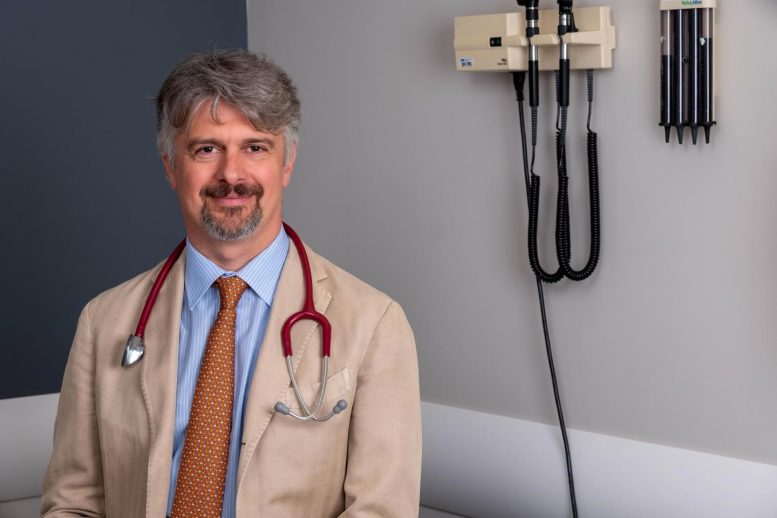
    Dr Alfonso Iorio McMaster University
    Dr. Alfonso Iorio, lead author of the paper, professor health research methods, evidence, and impact at McMaster University and director of the Hamilton-Niagara hemophilia program at Hamilton Health Sciences. Credit: McMaster University

    “This paper is a milestone in our journey to providing care for hemophilia patients worldwide,” said Dr. Alfonso Iorio, lead author of the paper, professor of health research methods, evidence, and impact at McMaster University and director of the Hamilton-Niagara hemophilia program at Hamilton Health Sciences.

    “Knowing how many patients are expected in each country given its population is an important measure of the efficiency of the health care system. Knowing how many patients should be there, and how many less instead are reported to national and international registries is a measure of the work left to be done,” he said.

    “Knowing how many patients are out there will enable health care systems to estimate the resources needed to treat the disease, and enable drug manufacturers to increase the investment in research to match the demand of a patient population three times larger than we previously thought.”

    For the World Federation of Hemophilia, Iorio assembled an international team of researchers from France, U.S., and U.K. to perform a meta-analysis of the registry data in countries with the most comprehensive registries of hemophilia, which were Australia, Canada, France, Italy, New Zealand, and the U.K.

    “This work is also proof of the value of long-term studies in the field of rare diseases,” said Iorio.

    A related editorial published in the journal said the magnitude of the global gaps in care for people with hemophilia is daunting.

    Never miss a breakthrough: Join the SciTechDaily newsletter.
    Follow us on Google and Google News.

    McMaster University
    Share. Facebook Twitter Pinterest LinkedIn Email Reddit

    Related Articles

    3 Simple Changes That Could Help Kids Beat Obesity, Starting at Birth

    Brain Cancer Breakthrough: New Therapy Destroys Glioblastoma in Recently Unveiled Pathway

    How a Common Antacid Is Saving Lives in the ICU

    Fiber’s Surprising Role in Brain, Immune System, and Overall Health

    The Ketone Paradox: Supplements That May Backfire on Endurance Athletes

    Researchers Reveal Six Essential Foods to Combat Cardiovascular Disease Risk

    Researchers Discover the Best Treatment for Excessive Daytime Sleepiness

    Weight Loss’ Secret Weapon: GDF15 Powers Calorie Burn During Dieting

    Where You Live – A Surprising Factor That Could Be Making You Age Faster

    Leave A Reply Cancel Reply

    • Facebook
    • Twitter
    • Pinterest
    • YouTube

    Don't Miss a Discovery

    Subscribe for the Latest in Science & Tech!

    Trending News

    The Secret to Healthy Aging May Be More Protein and More Exercise

    These 567-Million-Year-Old Fossils Are Rewriting the Story of Life on Earth

    The Spider-Like Creatures Helping Scientists Decode the Origins of Fatherhood

    Scientists Baffled by a Sudden Reversal Deep Inside Earth’s Core

    This Strange Sea Creature Can Survive Five Years Without Food – Scientists Finally Know Why

    New Quantum Sensor Opens a Window Into the Invisible Universe

    Stanford Scientists Reverse Age-Related Memory Loss by Targeting the Gut

    James Webb Uncovers the Atmosphere of a Hellish Lava World 41 Light-Years Away

    Follow SciTechDaily
    • Facebook
    • Twitter
    • YouTube
    • Pinterest
    • Newsletter
    • RSS
    SciTech News
    • Biology News
    • Chemistry News
    • Earth News
    • Health News
    • Physics News
    • Science News
    • Space News
    • Technology News
    Recent Posts
    • New Research Could Help Break China’s Rare Earth Magnet Monopoly
    • The Milky Way’s Black Hole Isn’t Tearing Everything Apart – New Observations Reveal a Surprise
    • Black Hole Shredded a Massive Star in the Most Powerful Stellar Explosion Ever Seen
    • Building the Brain Requires Millions of Dangerous DNA Breaks
    • The Future of Obesity Care Goes Far Beyond Ozempic, Wegovy, and Zepbound
    Copyright © 1998 - 2026 SciTechDaily. All Rights Reserved.
    • Science News
    • About
    • Contact
    • Editorial Board
    • Privacy Policy
    • Terms of Use

    Type above and press Enter to search. Press Esc to cancel.