
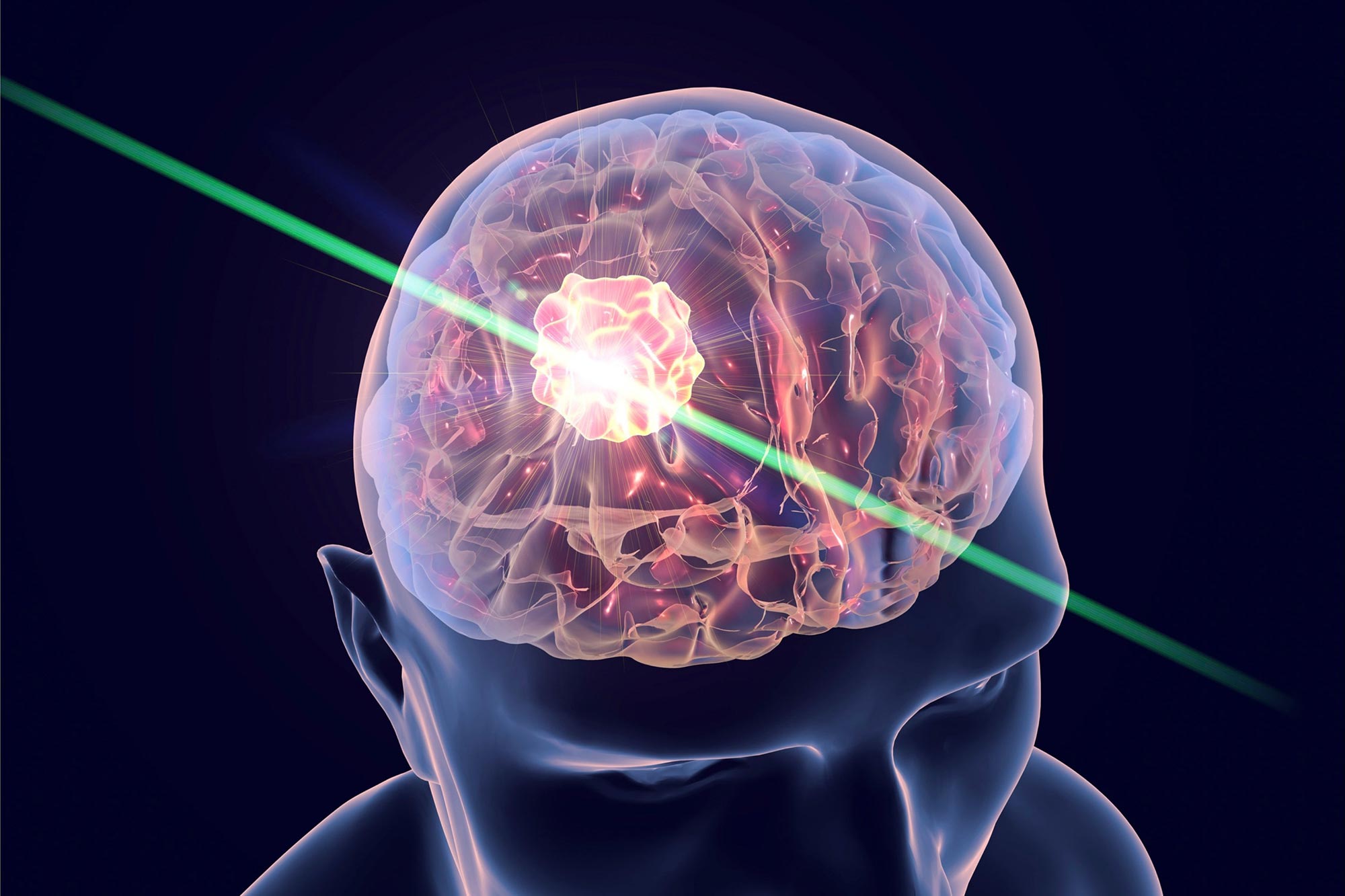
Researchers have discovered a new pathway used by cancer cells to infiltrate the brain and developed a promising therapy that targets this pathway with CAR T cells.
Their study showed significant preclinical success in increasing survival and eradicating tumors in animal models of glioblastoma and other brain cancers.
A team of Canadian and American research groups led by the Singh Lab at McMaster University have discovered a new pathway that is used by cancer cells to infiltrate the brain. The research also reveals a new therapy that shows promise in blocking and killing these tumors.
The research, published today (August 2) in Nature Medicine, offers new hope and potential treatments for glioblastoma, the most aggressive form of brain cancer. With existing treatments like surgery, radiation therapy, and chemotherapy, the tumors often return, and patient survival is limited to only a few months. With this new treatment, the returning cancer cells were destroyed at least 50 percent of the time in two of the three diseases tested in preclinical animal models.
New Findings in Glioblastoma Research
To discover the pathway cancer cells use to infiltrate the brain, researchers used large-scale gene editing technology to compare gene dependencies in glioblastoma when it was initially diagnosed and after it returned following standard treatments. By doing this, researchers discovered a new pathway used for axonal guidance – a signaling axis that helps establish normal brain architecture – that can become overrun by cancer cells.
“In glioblastoma, we believe that the tumor hijacks this signaling pathway and uses it to invade and infiltrate the brain,” says co-senior author Sheila Singh, professor with McMaster’s Department of Surgery and director of the Centre for Discovery in Cancer Research. The research was also co-led by Jason Moffat, head of the Genetics and Genome Biology program at The Hospital for Sick Children (SickKids).
“If we can block this pathway, the hope is that we can block the invasive spread of glioblastoma and kill tumor cells that cannot be removed surgically,” says Singh.
Promising New Therapeutic Approaches
To stop the invasion of cancer cells, researchers targeted the hijacked signaling pathway using different strategies including a drug developed in John Lazo’s group at the University of Virginia, and also by developing a new therapy with help from Kevin Henry and Martin Rossotti at the National Research Council Canada using CAR T cells to target the pathway in the brain. They honed in on a protein called Roundabout Guidance Receptor 1 (ROBO1) that helps guide certain cells, similar to a GPS.
“We created a type of cell therapy where cells are taken from a patient, edited, and then put back in with a new function. In this case, the CAR T cells were genetically edited to have the knowledge and ability to go and find ROBO1 on tumor cells in animal models,” says lead author Chirayu Chokshi, a former PhD student who worked alongside Singh at McMaster University.
Implications for Future Cancer Treatment
Singh and Chokshi say the treatment can also apply to other invasive brain cancers. In the study, researchers examined models for three different types of cancer including adult glioblastoma, adult lung-to-brain metastasis, and pediatric medulloblastoma. In all three models, treatment led to a doubling of survival time. In two of the three diseases, it led to tumor eradication in at least 50 percent of the mice.
“In this study, we present a new CAR T therapy that is showing very promising preclinical results in multiple malignant brain cancer models, including recurrent glioblastoma. We believe our new CAR T therapy is poised for further development and clinical trials,” Singh says.
Reference: “Targeting axonal guidance dependencies in glioblastoma with ROBO1 CAR T cells” by Chirayu R. Chokshi, Muhammad Vaseem Shaikh, Benjamin Brakel, Martin A. Rossotti, David Tieu, William Maich, Alisha Anand, Shawn C. Chafe, Kui Zhai, Yujin Suk, Agata M. Kieliszek, Petar Miletic, Nicholas Mikolajewicz, David Chen, Jamie D. McNicol, Katherine Chan, Amy H. Y. Tong, Laura Kuhlmann, Lina Liu, Zahra Alizada, Daniel Mobilio, Nazanin Tatari, Neil Savage, Nikoo Aghaei, Shan Grewal, Anish Puri, Minomi Subapanditha, Dillon McKenna, Vladimir Ignatchenko, Joseph M. Salamoun, Jacek M. Kwiecien, Peter Wipf, Elizabeth R. Sharlow, John P. Provias, Jian-Qiang Lu, John S. Lazo, Thomas Kislinger, Yu Lu, Kevin R. Brown, Chitra Venugopal, Kevin A. Henry, Jason Moffat and Sheila K. Singh, 2 August 2024, Nature Medicine.
DOI: 10.1038/s41591-024-03138-9
Work on the study was performed with samples derived from patients treated by neurosurgeons with Hamilton Health Sciences. Proteomics discovery which helped to elucidate the new glioblastoma targets was done in collaboration with Thomas Kilinger at Princess Margaret Cancer Centre and University of Toronto. The research was made possible through collaborations the National Research Council Canada, University of Virginia, University of Pittsburgh and the Princess Margaret Cancer Centre.
The study received funding from Brain Cancer Canada, the Brain Tumour Foundation of Canada, the Canadian Institutes of Health Research, the Foundation for the National Institutes of Health, the U.S. National Institutes of Health Mitacs, and the Terry Fox Research Institute.
Never miss a breakthrough: Join the SciTechDaily newsletter.
Follow us on Google and Google News.