
Close Menu
    Facebook X (Twitter) Instagram
    SciTechDaily
    • Biology
    • Chemistry
    • Earth
    • Health
    • Physics
    • Science
    • Space
    • Technology
    Facebook X (Twitter) Pinterest YouTube RSS
    SciTechDaily
    Home»Health»After 7 Years of Research, Scientists Have Discovered a New Treatment for Devastating Brain Tumors
    Health

    After 7 Years of Research, Scientists Have Discovered a New Treatment for Devastating Brain Tumors

    By University of SurreyMay 29, 2022No Comments3 Mins Read
    Facebook Twitter Pinterest Telegram LinkedIn WhatsApp Email Reddit
    Share
    Facebook Twitter LinkedIn Pinterest Telegram Email Reddit
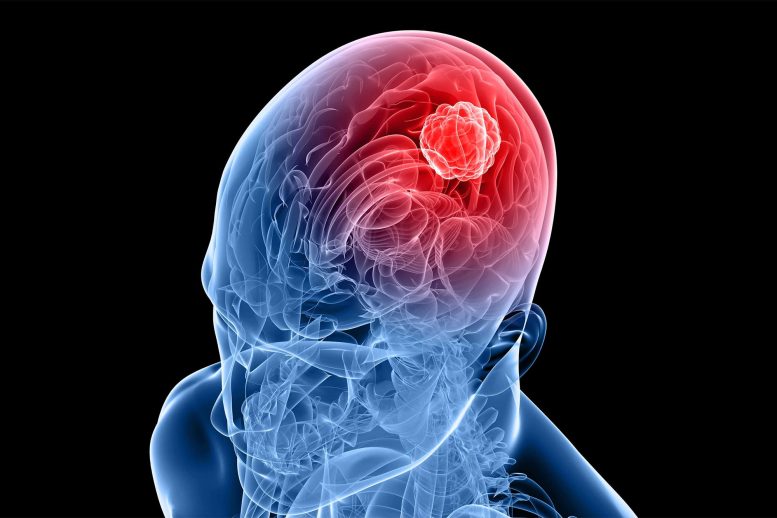
    Brain Cancer Tumor Illustration
    Scientists from the University of Surrey have shown that a short chain of amino acids, known as the HTL-001 peptide, effectively targets and inhibits the function of Hox genes, which are responsible for the growth of Glioblastoma Multiforme (GBM).

    Findings from a seven-year research project suggests that there could be a new approach to treating one of the most common and devasting forms of brain cancer in adults — Glioblastoma Multiforme (GBM).

    In a peer-reviewed study published in BMC Cancer, scientists from the University of Surrey demonstrate that a short chain of amino acids (the HTL-001 peptide) is effective in targeting and inhibiting the function of a family of genes responsible for Glioblastoma Multiforme (GBM) growth – Hox genes. The research was carried out in cell and animal models.

    The HTL-001 peptide tested in the study has completed safety testing and is ready for patient trials. These trials are now being considered in GBM and other cancers.

    Hox Gene Dysregulation and Cancer Growth

    According to Hardev Pandha, project lead and Professor of Medical Oncology at the University of Surrey, “People who suffer from Glioblastoma Multiforme have a five percent survival rate over a five-year period – a figure that has not improved in decades. While we are still early in the process, our seven-year project offers a glimmer of hope for finding a solution to Hox gene dysregulation, which is associated with the growth of GBM and other cancers, and which has proven to be elusive as a target for so many years.”

    Ironically, Hox genes are responsible for the healthy growth of brain tissue but are ordinarily silenced at birth after vigorous activity in the growing embryo. However, if they are inappropriately ‘switched on’ again, their activity can lead to the progression of cancer. Hox gene dysregulation has long been recognized in GBM.

    The project was carried out in collaboration with the universities of Surrey, Leeds and Texas, and HOX Therapeutics, a University of Surrey start-up company based on the University’s Surrey Research Park.

    Professor Susan Short, co-author of the study from the University of Leeds, said “We desperately need new treatment avenues for these aggressive brain tumors. Targeting developmental genes like the HOX genes that are abnormally switched on in the tumor cells could be a novel and effective way to stop glioblastomas growing and becoming life-threatening.”

    James Culverwell, CEO of HOX Therapeutics, stated “HOX Therapeutics is excited to be associated with this project and we hope that with our continuing support, this research will eventually lead to novel and effective treatments for both brain and other cancers where HOX gene over-expression is a clear therapeutic target.”

    Reference: “HOX and PBX gene dysregulation as a therapeutic target in glioblastoma multiforme” by Einthavy Arunachalam, William Rogers, Guy R. Simpson, Carla Möller-Levet, Gemma Bolton, Mohammed Ismael, Christopher Smith, Karl Keegen, Izhar Bagwan, Tim Brend, Susan C. Short, Bangxing Hong, Yoshihiro Otani, Balveen Kaur, Nicola Annels, Richard Morgan and Hardev Pandha, 13 April 2022, BMC Cancer. 
    DOI: 10.1186/s12885-022-09466-8

    Never miss a breakthrough: Join the SciTechDaily newsletter.
    Follow us on Google and Google News.

    Brain Tumor Cancer Glioblastoma University of Surrey
    Share. Facebook Twitter Pinterest LinkedIn Email Reddit

    Related Articles

    New “Brain Surveillance Camera” Tracks Cancer’s Deadliest Invaders in Real Time

    Brain Cancer Breakthrough: New Therapy Destroys Glioblastoma in Recently Unveiled Pathway

    Breaking Brain Cancer Barriers: New Gene Therapy Effectively Targets Glioblastoma

    Scientists Discover Hidden Weakness of Deadly Brain Cancer

    Stanford Scientists Identify Genes Linked to Familial Brain Cancer

    Brain Cancer Breakthrough: Glioblastoma Therapy Doubles Down on Tumor Destruction

    Cancer Breakthrough: Chemotherapy Drug Reaches Human Brain for the First Time

    Johns Hopkins’ Revolutionary New Gel Cured 100% of Mice With Aggressive Brain Cancer

    Biomarker Discovery May Lead to Blood Test for Brain Cancer

    Leave A Reply Cancel Reply

    • Facebook
    • Twitter
    • Pinterest
    • YouTube

    Don't Miss a Discovery

    Subscribe for the Latest in Science & Tech!

    Trending News

    Millions Take These IBS Drugs, But a New Study Finds Serious Risks

    Scientists Unlock Hidden Secrets of 2,300-Year-Old Mummies Using Cutting-Edge CT Scanner

    Bread Might Be Making You Gain Weight Even Without Eating More Calories

    Scientists Discover Massive Magma Reservoir Beneath Tuscany

    Europe’s Most Active Volcano Just Got Stranger – Here’s Why Scientists Are Rethinking It

    Alzheimer’s Symptoms May Start Outside the Brain, Study Finds

    Millions Take This Popular Supplement – Scientists Discover a Concerning Link to Heart Failure

    The Universe Is Expanding Too Fast and Scientists Can’t Explain Why

    Follow SciTechDaily
    • Facebook
    • Twitter
    • YouTube
    • Pinterest
    • Newsletter
    • RSS
    SciTech News
    • Biology News
    • Chemistry News
    • Earth News
    • Health News
    • Physics News
    • Science News
    • Space News
    • Technology News
    Recent Posts
    • Doctors Surprised by the Power of a Simple Drug Against Colon Cancer
    • Why Popular Diabetes Drugs Like Ozempic Don’t Work for Everyone: The “Genetic Glitch”
    • Scientists Create Improved Insulin Cells That Reverse Diabetes in Mice
    • Scientists Stunned After Finding Plant Thought Extinct for 60 Years
    • A Common Diabetes Drug May Hold the Key to Stopping HIV From Coming Back
    Copyright © 1998 - 2026 SciTechDaily. All Rights Reserved.
    • Science News
    • About
    • Contact
    • Editorial Board
    • Privacy Policy
    • Terms of Use

    Type above and press Enter to search. Press Esc to cancel.