
Close Menu
    Facebook X (Twitter) Instagram
    SciTechDaily
    • Biology
    • Chemistry
    • Earth
    • Health
    • Physics
    • Science
    • Space
    • Technology
    Facebook X (Twitter) Pinterest YouTube RSS
    SciTechDaily
    Home»Space»Spectacular New Tau Herculids Meteor Shower May Light Up the Skies Over North America
    Space

    Spectacular New Tau Herculids Meteor Shower May Light Up the Skies Over North America

    By NASAMay 29, 20221 Comment4 Mins Read
    Facebook Twitter Pinterest Telegram LinkedIn WhatsApp Email Reddit
    Share
    Facebook Twitter LinkedIn Pinterest Telegram Email Reddit
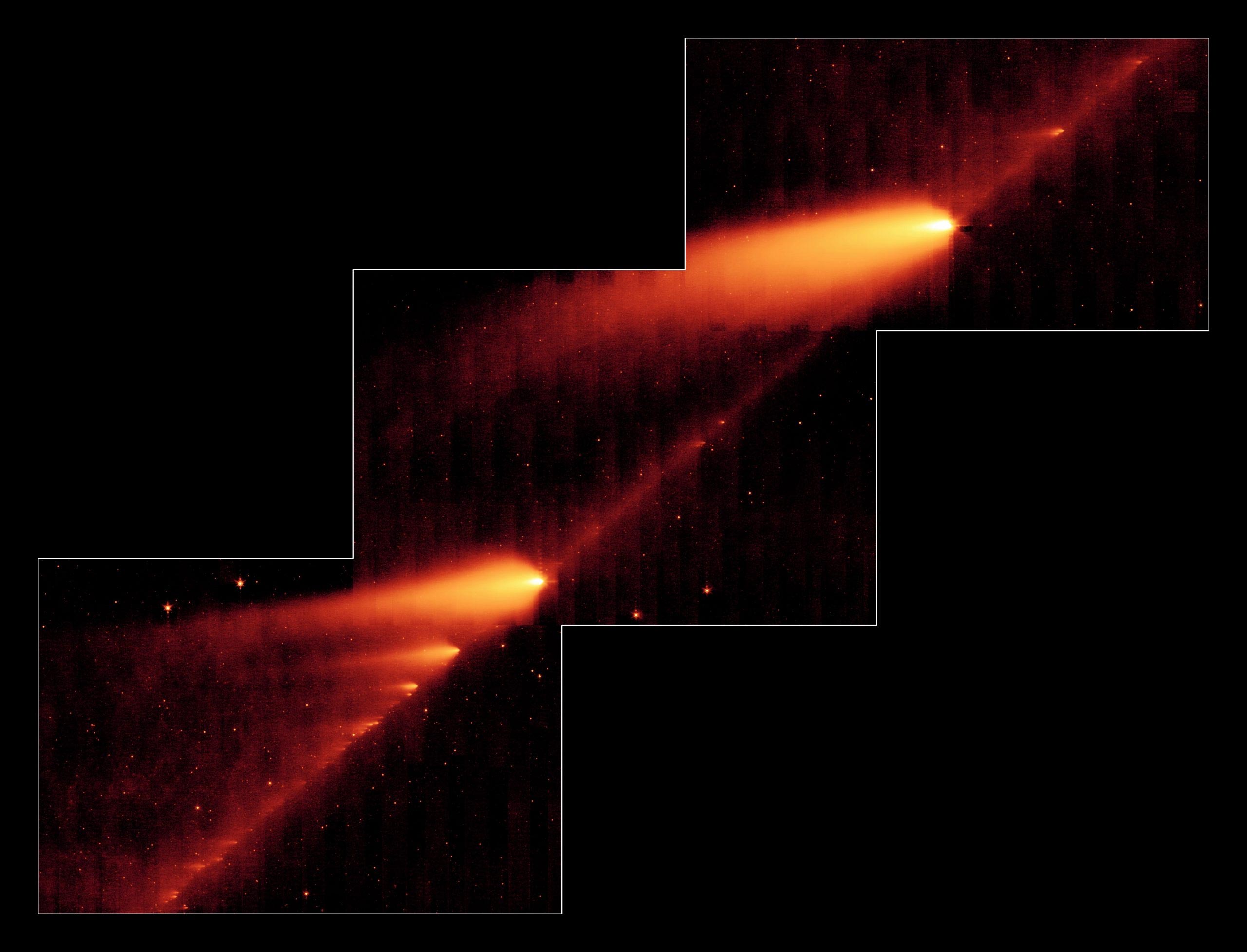
    Broken Comet 73P/Schwassman-Wachmann 3
    This infrared image from NASA’s Spitzer Space Telescope shows the broken Comet 73P/Schwassman-Wachmann 3 skimming along a trail of debris left during its multiple trips around the sun. The flame-like objects are the comet’s fragments and their tails, while the dusty comet trail is the line bridging the fragments. Credit: NASA

    Astronomers are excited about the possibility of a new meteor shower on May 30-31, the tau Herculid shower, forecast to peak on the night of May 30 and early morning of May 31.

    Back in 1930, German observers Arnold Schwassmann and Arno Arthur Wachmann discovered a comet known as 73P/Schwassmann-Wachmann, or “SW3, which orbited the Sun every 5.4 years. Being so faint, SW3 wasn’t seen again until the late 1970s, seeming pretty normal until 1995, when astronomers realized the comet had become about 600 times brighter and went from a faint smudge to being visible with the naked eye during its passage. Upon further investigation, astronomers realized SW3 had shattered into several pieces, littering its own orbital trail with debris. By the time it passed our way again in 2006, it was in nearly 70 pieces, and has continued to fragment further since then.

    If it makes it to us this year, the debris from SW3 will strike Earth’s atmosphere very slowly, traveling at just 10 miles per second – which means much fainter meteors than those belonging to the eta Aquariids. But North American stargazers are taking particular note this year because the tau Herculid radiant will be high in the night sky at the forecast peak time. Even better, the Moon is new, so there will be no moonlight to wash out the faint meteors.

    “This is going to be an all-or-nothing event. If the debris from SW3 was traveling more than 220 miles per hour when it separated from the comet, we might see a nice meteor shower. If the debris had slower ejection speeds, then nothing will make it to Earth and there will be no meteors from this comet,” said Bill Cooke, who leads NASA’s Meteoroid Environment Office at NASA’s Marshall Space Flight Center in Huntsville, Alabama.

    All the excitement from astronomers and the public has sparked a lot of information about the tau Herculids. Some has been accurate, and some has not.

    We get excited about meteor showers, too! But sometimes events like this don’t live up to expectations – it happened with the 2019 Alpha Monocerotid shower, for example. And some astronomers predict a dazzling display of tau Herculids could be “hit or miss.”

    So, we’re encouraging eager skywatchers to channel their inner scientists, and look beyond the headlines. Here are the facts:

    • On the night of May 30 into the early morning of May 31, Earth will pass through the debris trails of a broken comet called 73P/Schwassmann-Wachmann, or SW3.
    • The comet, which broke into large fragments back in 1995, won’t reach this point in its orbit until August.
    • If the fragments from were ejected with speeds greater than twice the normal speeds—fast enough to reach Earth—we might get a meteor shower.
    • Spitzer observations published in 2009 indicate that at least some fragments are moving fast enough. This is one reason why astronomers are excited.
    • If a meteor shower does occur, the tau Herculids move slowly by meteor standards – they will be faint.

    Observers in North America under clear, dark skies have the best chance of seeing a tau Herculid shower. The peak time to watch is around 1 a.m. on the East Coast or 10 p.m. on the West Coast.

    We can’t be certain what we’ll see. We can only hope it’s spectacular.

    Never miss a breakthrough: Join the SciTechDaily newsletter.
    Follow us on Google and Google News.

    Astronomy Meteors NASA Popular
    Share. Facebook Twitter Pinterest LinkedIn Email Reddit

    Related Articles

    Don’t Miss October’s Dazzling Supermoon and Twin Meteor Showers

    Don’t Miss: Lyrid Meteor Shower & Stunning “City of Stars” Light Up the Sky

    Halley’s Comet Debris Ignites Fiery Fireballs in the Orionids Meteor Shower

    Perseid Peak: Witness the Meteor Shower Spectacle Illuminating the Night Sky

    Don’t Miss: Meteor Shower Peak, Star Forge, Mars and Jupiter Converge

    Don’t Miss: Perseid Meteor Shower Spectacle Lights Up the Night Sky

    Don’t Miss: Eta Aquariid Meteor Shower, Red Giant Star Antares, and May Planets

    Don’t Miss: Hunter’s, Blood Moon and Orionid Meteor Shower

    Quadrantid Meteor Shower, Mars Rises & More January 2020 Skywatching Tips From NASA

    1 Comment

    1. The 10th Man on May 30, 2022 12:13 pm

      And if one of those pieces is the size of Manhattan? Does going a little slower help? It’ll hit like a ton of bricks either way, right?

      Reply
    Leave A Reply Cancel Reply

    • Facebook
    • Twitter
    • Pinterest
    • YouTube

    Don't Miss a Discovery

    Subscribe for the Latest in Science & Tech!

    Trending News

    The Universe Is Expanding Too Fast and Scientists Can’t Explain Why

    “Like Liquid Metal”: Scientists Create Strange Shape-Shifting Material

    Early Warning Signals of Esophageal Cancer May Be Hiding in Plain Sight

    Common Blood Pressure Drug Shows Surprising Power Against Deadly Antibiotic-Resistant Superbug

    Scientists Uncover Dangerous Connection Between Serotonin and Heart Valve Disease

    Scientists Discover a “Protector” Protein That Could Help Reverse Hair Loss

    Bone-Strengthening Discovery Could Reverse Osteoporosis

    Scientists Uncover Hidden Trigger Behind Stem Cell Aging

    Follow SciTechDaily
    • Facebook
    • Twitter
    • YouTube
    • Pinterest
    • Newsletter
    • RSS
    SciTech News
    • Biology News
    • Chemistry News
    • Earth News
    • Health News
    • Physics News
    • Science News
    • Space News
    • Technology News
    Recent Posts
    • A Common Diabetes Drug May Hold the Key to Stopping HIV From Coming Back
    • Ancient “Syphilis-Like” Disease in Vietnam Challenges Key Scientific Assumptions
    • Drinking Alcohol To Cope in Your 20s Could Damage Your Brain for Life
    • Scientists Crack Alfalfa’s Chromosome Mystery After Decades of Debate
    • Ancient Ant-Plant Alliance Collapses As Predatory Wasps Move In
    Copyright © 1998 - 2026 SciTechDaily. All Rights Reserved.
    • Science News
    • About
    • Contact
    • Editorial Board
    • Privacy Policy
    • Terms of Use

    Type above and press Enter to search. Press Esc to cancel.