

Research at McMaster University indicates that ketone supplements, intended to boost athletic performance, may actually reduce it, as evidenced by slower cycling speeds in athletes.
Think ketone supplements can help you run faster or cycle farther? Think again. New research from kinesiologists at McMaster University suggests these trendy performance boosters might do the opposite.
The study, published in the International Journal of Sport Nutrition and Exercise Metabolism, dives into the debate surrounding ketone supplements—a growing favorite among athletes looking for a competitive edge. While some earlier studies claimed performance benefits, others found no effect or even negative outcomes. The new findings tip the scale toward caution.
What Are Ketones, Anyway?
Ketones are natural compounds your body produces when breaking down fat for fuel, especially on a ketogenic diet (low in carbs, high in fat). These compounds can power your brain and muscles, and supplements aim to boost those effects without the strict diet.

“One of the main perceived benefits is that ketones may serve as an alternative fuel source during exercise or potentially alter the utilization of other major fuel such as carbohydrates and fats, and in turn enhance endurance capacity,” explains Martin Gibala, supervising author of the study and a professor in the Department of Kinesiology at McMaster University. “But our findings suggest that isn’t the case.”
Study Methodology: Simulated Race Conditions
The McMaster researchers recruited well-trained endurance athletes who cycled five or more hours per week, selecting them because their athletic performance is consistent from day to day. The experiment was conducted in a lab, but simulated race conditions, and the participants prepared as they normally would for a cycling competition.
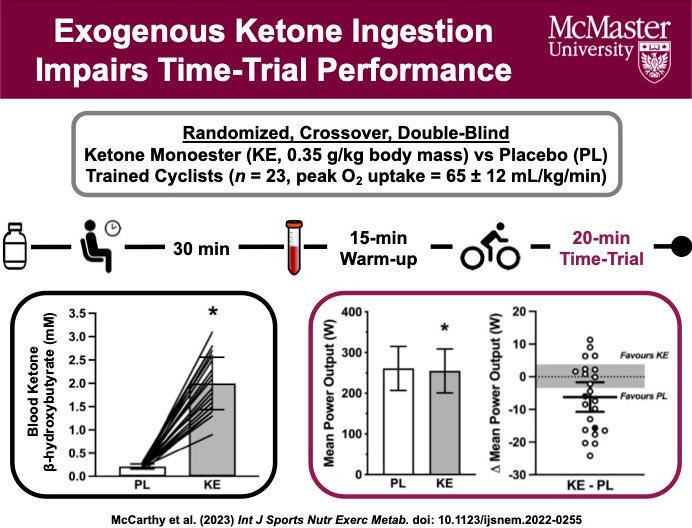
Each participant completed two trials that differed only in the drink provided before they completed a 20-minute cycling time trial that closely predicts 40-km race performance. The drinks contained either a ketone supplement or a similar-tasting placebo.
The research was structured as a double-blind study, meaning neither the researchers nor the athletes knew whether the ketone supplement or the placebo was provided.

Findings: Reduced Speed and Increased Cardiorespiratory Stress
”The main observation from this study was that the speed that the cyclists could sustain during the test was lower after drinking the ketone supplement compared to the placebo,” says Devin McCarthy, lead author of the study and graduate student in the Department of Kinesiology at McMaster.
Researchers say the findings align with their previous work, which found ketone supplements increased cardiorespiratory stress during exercise.
They are currently investigating responses to varying doses of the supplements at different exercise intensities to better understand how ketones may affect performance and the potential underlying mechanisms.
Reference: “Acute Ketone Monoester Supplementation Impairs 20-min Time-Trial Performance in Trained Cyclists: A Randomized, Crossover Trial” by Devin G. McCarthy, Jack Bone, Matthew Fong, Phillippe J.M. Pinckaers, William Bostad, Douglas L. Richards, Luc J.C. van Loon and Martin J. Gibala, 25 April 2023, International Journal of Sport Nutrition and Exercise Metabolism.
DOI: 10.1123/ijsnem.2022-0255
Never miss a breakthrough: Join the SciTechDaily newsletter.
Follow us on Google and Google News.