
Close Menu
    Facebook X (Twitter) Instagram
    SciTechDaily
    • Biology
    • Chemistry
    • Earth
    • Health
    • Physics
    • Science
    • Space
    • Technology
    Facebook X (Twitter) Pinterest YouTube RSS
    SciTechDaily
    Home»Science»Titanoboa, a Paleogene Period 40-Foot Long Snake
    Science

    Titanoboa, a Paleogene Period 40-Foot Long Snake

    By SciTechDailyMarch 21, 20121 Comment2 Mins Read
    Facebook Twitter Pinterest Telegram LinkedIn WhatsApp Email Reddit
    Share
    Facebook Twitter LinkedIn Pinterest Telegram Email Reddit
    titanoboa-cerrejon
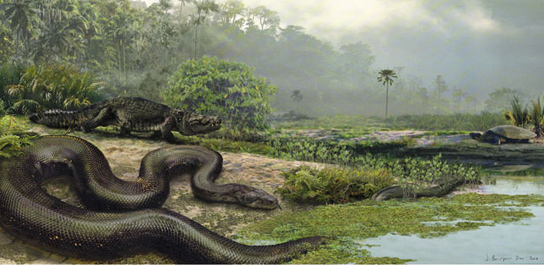
    Artist’s illustration of extraordinarily large snake Titanoboa cerrejon.

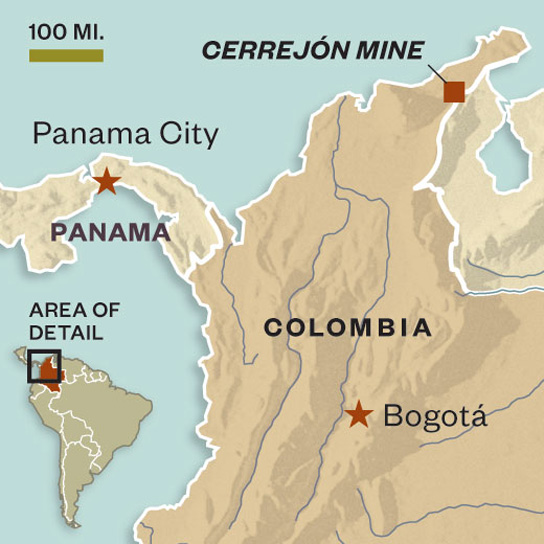
    A new fossil of an extraordinarily large snake was discovered in the lowland tropics of northern Colombia, 60 miles (96 kilometers) from the Caribbean coast in Cerrejón. Titanoboa cerrejonensis is part of the genus Titanoboa and these gigantic snakes roamed the Earth during the Paleocene epoch of the Paleogene Period, about 58 to 60 million years ago.

    Cerrejón is also one of the world’s most important fossil deposits, allowing paleontologists a unique snapshot of the geological moment, right after the Cretaceous-Tertiary extinction event, which brought an end to dinosaurs. It was an immense, swampy jungle, which was wetter, bigger, and hotter than today.
    Cerrejon-mine-colombia

    The river basin was populated by turtles twice the size of manhole covers, and crocodilians more than a dozen feet long. Titanoboa cerrejonensis was a 40-foot-long (12-meter-long) snake, weighing more than a ton. It looked like a modern-day boa constrictor, but behaved like water-dwelling anacondas. The thickest part of its body would have been as high as a human’s waist.

    Unlike most of the other Titanoboa fossils, this one included a skull. The reason why they are so rare is that snake skulls are made of delicate bones that aren’t very well fused together. Once the animal dies, the skull falls apart.
    bloch-head-classifying-fossils
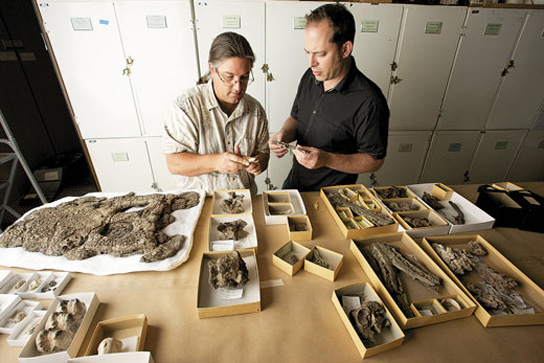
    In Gainesville, Jonathan Bloch (left) and Jason Head sort through thousands of fossils from the giant Colombian coal mine.

    Researchers used mathematical model to initially determine the size of Titanoboa. Its jaw had a quadrate, a hinge bone connecting the lower jaw to the skull, allowing the back of the lower jaw to extend behind Titanoboa‘s brain. Its diet probably consisted of crocodilians, fish, and turtles. Reptiles can grow bigger in warmer climates, allowing cold-blooded animals like Titanoboa to maintain the necessary metabolic rate to sustain their bulk.
    titanoboa-vertebra
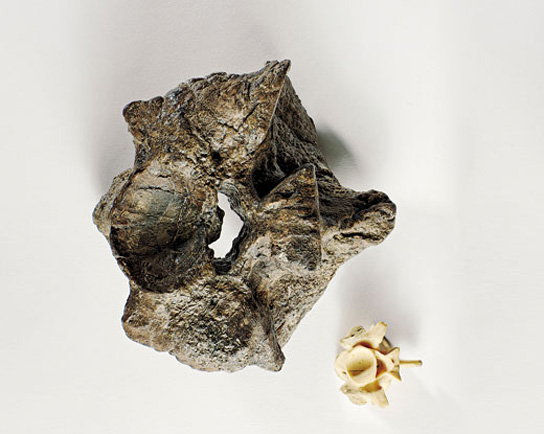
    A Titanoboa vertebra dwarfs that of a modern 17-foot anaconda.

    Never miss a breakthrough: Join the SciTechDaily newsletter.
    Follow us on Google and Google News.

    Colombia Paleobotany Paleocene Paleogene Paleontology Popular Reptile Snake
    Share. Facebook Twitter Pinterest LinkedIn Email Reddit

    Related Articles

    “Weird” Species of Ancient Snake Discovered in England

    Ancient Monster Salamander With “Power Jaws” Discovered in Tennessee

    49 Feet Long – Ancient Giant Snake Discovered in India

    Legendary Flying Reptile: Fleshing Out the Bones of Quetzalcoatlus, Earth’s Largest Flier Ever

    All Living Snakes Evolved From a Few Survivors of Asteroid That Killed the Dinosaurs

    Feathered Yutyrannus Huali Specimen Found in China, Closely Related to Tyrannosaurus Rex

    Microraptor Feathers Were Black With Iridescent Sheen

    Scientists Reconstruct Ancient Permian Ecosystem from Ash-Covered Plants

    Hundreds of Lost Fossils From the Darwin Collection Rediscovered by the British Geological Survey

    Leave A Reply Cancel Reply

    • Facebook
    • Twitter
    • Pinterest
    • YouTube

    Don't Miss a Discovery

    Subscribe for the Latest in Science & Tech!

    Trending News

    Wasp Colonies Explode Into Violence After Losing Their Queen

    Scientists Create “Living Plastic” That Self-Destructs in Just Six Days

    Your Blood May Carry a 700-Million-Year-Old Secret

    Scientists Discover Some “Zombie Cells” May Actually Help You Live Longer

    Earth May Be Seeding Venus With Life, According to New Research

    What Scientists Found Inside a 117-Year-Old Woman Reveals New Clues to Long Life

    Scientists Discover Mysterious Creature Living in the Great Salt Lake – and It Exists Nowhere Else on Earth

    It’s Alive? Surprising Discovery Changes What We Know About Fog

    Follow SciTechDaily
    • Facebook
    • Twitter
    • YouTube
    • Pinterest
    • Newsletter
    • RSS
    SciTech News
    • Biology News
    • Chemistry News
    • Earth News
    • Health News
    • Physics News
    • Science News
    • Space News
    • Technology News
    Recent Posts
    • Surprising New Study Challenges a Century-Old Theory of Habit Formation
    • Scientists Turn Seawater Into Drinking Water Without Toxic Brine
    • A Psychologist Explains Why 40% of People Are Avoiding the News
    • Scientists Discover Alzheimer’s-Linked Proteion’s Surprising Role in Making Memories Last
    • Vitamin D Drug Shows Surprising Promise Against One of the Deadliest Cancers
    Copyright © 1998 - 2026 SciTechDaily. All Rights Reserved.
    • Science News
    • About
    • Contact
    • Editorial Board
    • Privacy Policy
    • Terms of Use

    Type above and press Enter to search. Press Esc to cancel.