
Microplastic particles and fibers spiral through the Earth’s system, accumulating even in protected wilderness areas and national parks in the western US.
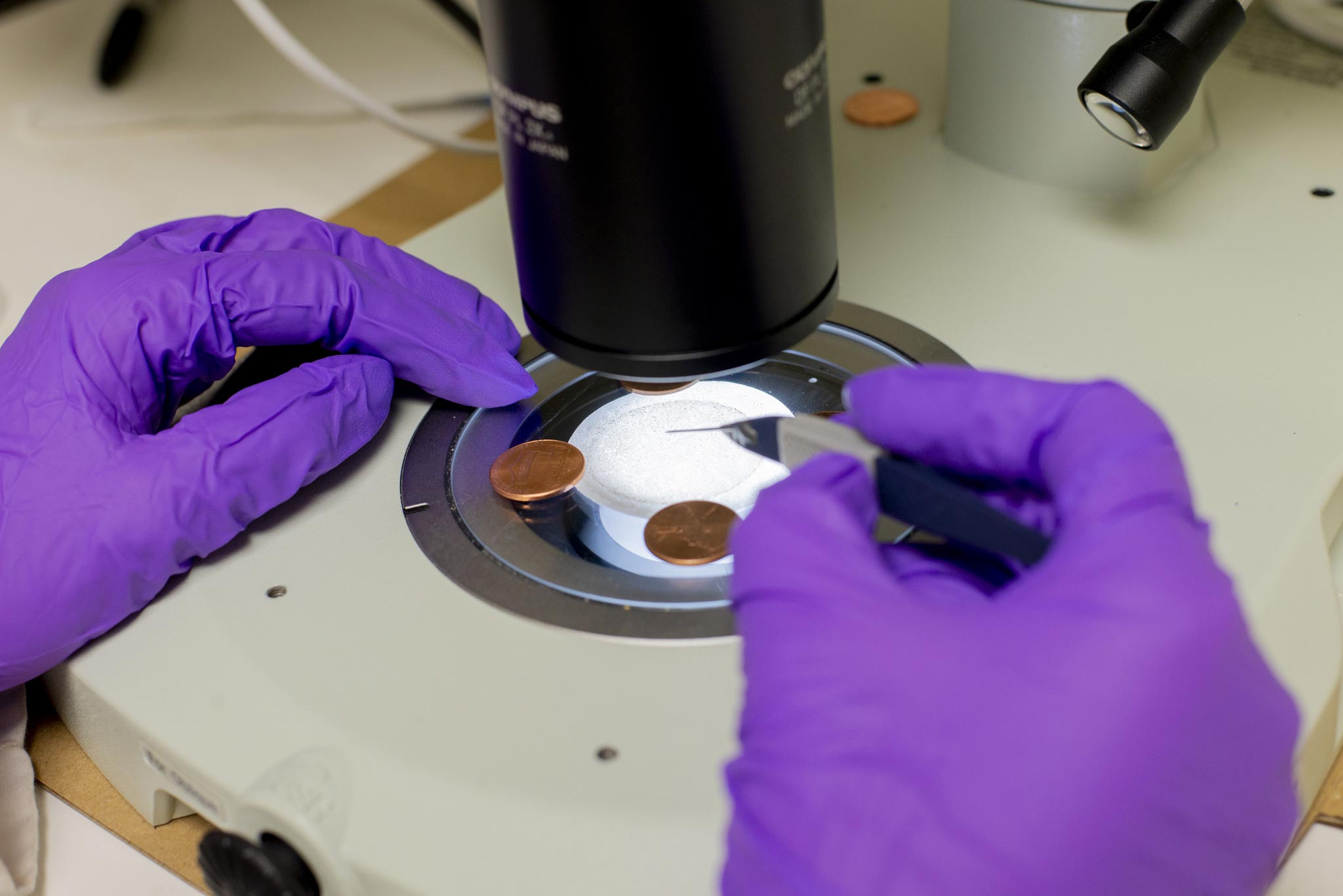
Utah State University Assistant Professor Janice Brahney and her team used high-resolution atmospheric deposition data and identified samples of microplastics and other particulates collected over 14 months in 11 national parks and wilderness areas. The researchers identified plastic and polymers’ composition to identify sources of plastic emitted into the atmosphere and track its movement and fallout. The findings are reported in the June 12 issue of Science Magazine in the article, Plastic Rain in Protected Areas of the United States.
“We were shocked at the estimated deposition rates and kept trying to figure out where our calculations went wrong,” Brahney said. “We then confirmed through 32 different particle scans that roughly 4% of the atmospheric particles analyzed from these remote locations were synthetic polymers.”
The world produced 348 million metric tons of plastic in 2017 and global production shows no sign of slowing down. In the United States, the per capita production of plastic waste is 340 grams per day. High resilience and longevity make plastics particularly useful in everyday life, but these same properties lead to progressive fragmentation instead of degradation in the environment. These “microplastics” are known to accumulate in wastewaters, rivers, and ultimately the world’s oceans — and as Brahney’s team shows, they also accumulate in the atmosphere.
“Several studies have attempted to quantify the global plastic cycle but were unaware of the atmospheric limb,” Brahney said. “Our data show the plastic cycle is reminiscent of the global water cycle, having atmospheric, oceanic, and terrestrial lifetimes.”
The study examined the source and life history of both wet (rain) and dry microplastic deposition. Cities and population centers were found to serve as the initial source of plastics associated with wet deposition, but secondary sources included the redistribution of microplastics re-entrained from soils or surface waters.
In contrast, dry deposition of plastics showed indicators of long-range transport and was associated with large-scale atmospheric patterns. This suggests that microplastics are small enough to be entrained in the atmosphere for cross-continental transport.
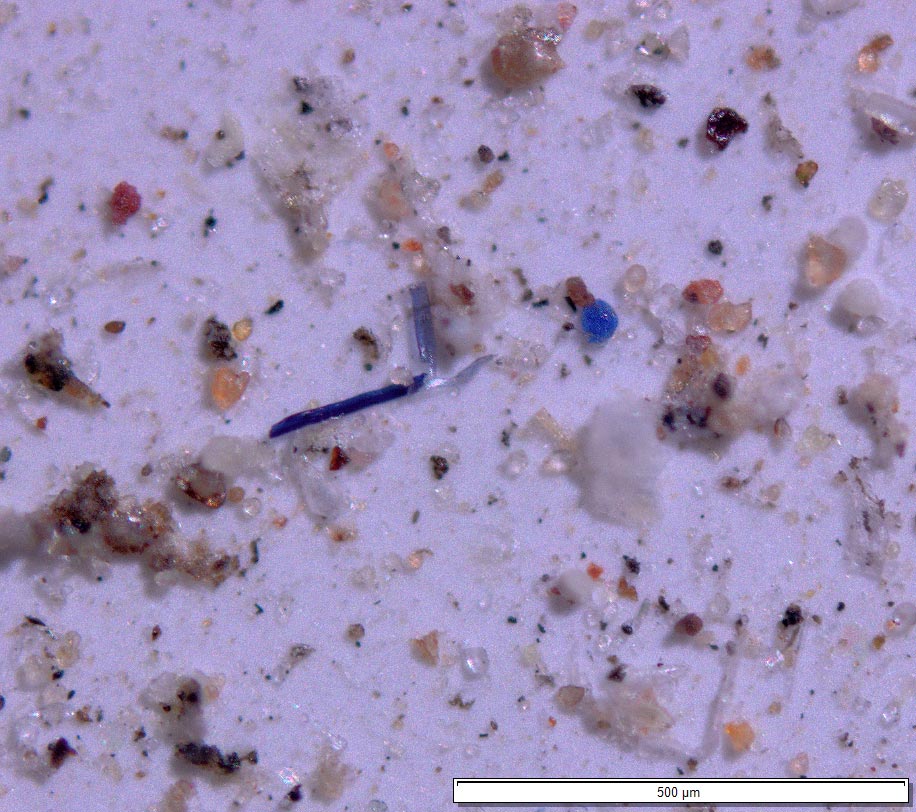
The team’s field and lab personnel used sterile sampling equipment, personal protection, and protocols to minimize particle contamination. Most of the plastics deposited in both wet and dry samples were microfibers sourced from both clothing and industrial materials. Approximately 30% of the particles were brightly colored microbeads, but not those commonly associated with personal care products, these microbeads were acrylic and likely derived from industrial paints and coatings. Other particles were fragments of larger pieces of plastic. The report notes, “This result, combined with the size distribution of identified plastics, and the relationship to global-scale climate patterns, suggest that plastic emission sources have extended well beyond our population centers and, through their longevity, spiral through the Earth system.”
Results from this study highlight the source, transport, and fate of plastics on Earth surfaces as well as the contamination of US protected environments. Examination of weekly wet and monthly dry samples from 11 sites allowed the authors to estimate that more than 1000 tons of microplastics are deposited onto protected lands in the western U.S. each year, equivalent to more than 123 million plastic water bottles. A staggering 4% of the atmospheric particulates identified collected from remote locations were plastic polymers. The paper also notes that clear and white particles were not included because they did not meet the researchers’ criteria for visual counting under magnification, “…suggesting our estimates of plastic deposition rates based on counts are conservative.”
The ubiquity of microplastics in the atmosphere has unknown consequences for organismal health but size ranges observed were well within that which accumulate in lung tissue. Moreover, the ongoing deposition of plastic in wilderness areas and national parks has the potential to influence these ecosystems from community composition to food web dynamics.
“This ubiquity of microplastics in the atmosphere and the subsequent deposition to remote terrestrial and aquatic environments raise widespread ecological and societal concerns,” Brahney said. “Identifying the key mechanisms of plastic emission to the atmosphere is a first step in developing global-scale solutions.”
Reference: “Plastic rain in protected areas of the United States” by Janice Brahney, Margaret Hallerud, Eric Heim, Maura Hahnenberger and Suja Sukumaran, 12 June 2020, Science.
DOI: 10.1126/science.aaz5819
Never miss a breakthrough: Join the SciTechDaily newsletter.
Follow us on Google and Google News.