
Close Menu
    Facebook X (Twitter) Instagram
    SciTechDaily
    • Biology
    • Chemistry
    • Earth
    • Health
    • Physics
    • Science
    • Space
    • Technology
    Facebook X (Twitter) Pinterest YouTube RSS
    SciTechDaily
    Home»Earth»NASA/NOAA Satellites Observe Surprisingly Rapid Increase in Scale and Intensity of Fires in Siberia
    Earth

    NASA/NOAA Satellites Observe Surprisingly Rapid Increase in Scale and Intensity of Fires in Siberia

    By Kasha Patel, NASA Earth ObservatoryAugust 7, 2020No Comments3 Mins Read
    Facebook Twitter Pinterest Telegram LinkedIn WhatsApp Email Reddit
    Share
    Facebook Twitter LinkedIn Pinterest Telegram Email Reddit
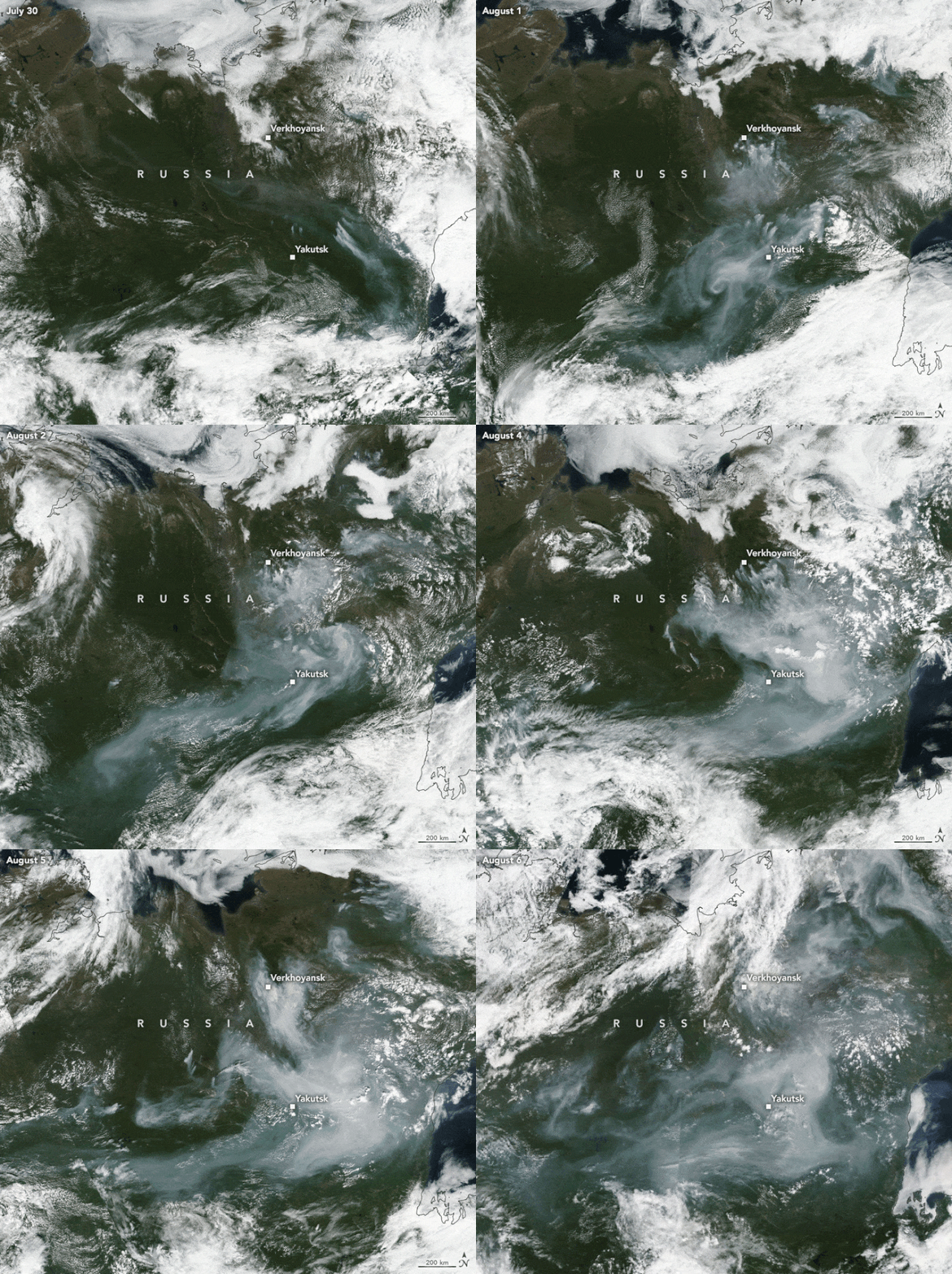
    Eastern Siberia Wildfires 2020
    July 30 – August 6, 2020

    Abnormally warm temperatures have spawned an intense fire season in eastern Siberia this summer. Satellite data show that fires have been more abundant, more widespread, and produced more carbon emissions than in recent seasons.

    The area shown in the time-lapse sequence above includes the Sakha Republic, one of the most active fire regions in Siberia this summer. The images show smoke plumes billowing from July 30 to August 6, 2020, as observed by the Visible Infrared Imaging Radiometer Suite (VIIRS) on NASA/NOAA’s Suomi NPP satellite and the Moderate Resolution Imaging Spectroradiometer (MODIS) on NASA’s Terra satellite. Strong winds occasionally carried the plumes as far as Alaska in late July. As of August 6, approximately 19 fires were burning in the province.

    “After the Arctic fires in 2019, the activity in 2020 was not so surprising through June,” said Mark Parrington, a senior scientist at the Copernicus Atmosphere Monitoring Service (CAMS) of the European Centre for Medium-Range Weather Forecasts. “What has been surprising is the rapid increase in the scale and intensity of the fires through July, largely driven by a large cluster of active fires in the northern Sakha Republic.”

    Estimates show that around half of the fires in Arctic Russia this year are burning through areas with peat soil—decomposed organic matter that is a large natural carbon source. Warm temperatures (such as the record-breaking heatwave in June) can thaw and dry frozen peatlands, making them highly flammable. Peat fires can burn longer than forest fires and release vast amounts of carbon into the atmosphere.

    Parrington noted that fires in Arctic Russia released more carbon dioxide (CO2) in June and July 2020 alone than in any complete fire season since 2003 (when data collection began). That estimate is based on data compiled by CAMS, which incorporates data from NASA’s MODIS active fire products.

    “The destruction of peat by fire is troubling for so many reasons,” said Dorothy Peteet of NASA’s Goddard Institute for Space Studies. “As the fires burn off the top layers of peat, the permafrost depth may deepen, further oxidizing the underlying peat.” Peteet and colleagues recently reported that the amount of carbon stored in northern peatlands is double the previous estimates.

    Fires in these regions are not just releasing recent surface peat carbon, but stores that have taken 15,000 years to accumulate, said Peteet. They also release methane, which is a more potent greenhouse gas than carbon dioxide.

    “If fire seasons continue to increase in severity, and possibly in seasonal extent, more peatlands will burn,” said Peteet. “This source of more carbon dioxide and methane to our atmosphere increases the greenhouse gas problem for us, making the planet even warmer.”

    NASA Earth Observatory image by Lauren Dauphin, using VIIRS data from NASA EOSDIS/LANCE and GIBS/Worldview and the Suomi National Polar-orbiting Partnership and MODIS data from NASA EOSDIS/LANCE and GIBS/Worldview.

    Never miss a breakthrough: Join the SciTechDaily newsletter.
    Follow us on Google and Google News.

    Geography NASA NASA Earth Observatory Wildfires
    Share. Facebook Twitter Pinterest LinkedIn Email Reddit

    Related Articles

    Hundreds of Wildland Fires Darken Skies Over Alaska

    Massive New Mexico Wildfire Spawns 7.5 Mile Fire Cloud

    Alisal Fire Rages Near Santa Barbara – Strong Winds Fuel Fast-Moving Fire

    Greece Fire: Large Swaths of Greece Consumed by Wildfire

    California’s Massive Dixie Fire Keeps Growing – Stunning Image Captured by Astronaut on Space Station

    A Summer of Fire-Breathing Smoke Storms: Extreme Heat, Intense Wildfires, and a “Monster pyroCb”

    Blazing Heat: Dangerous Wildfires Rage Across British Columbia

    Fires Rage in Arizona: Hot, Dry Weather Parched Vegetation and Turned the State Into a Tinderbox

    Satellite View: Fierce Fire Season Rages in Nepal

    Leave A Reply Cancel Reply

    • Facebook
    • Twitter
    • Pinterest
    • YouTube

    Don't Miss a Discovery

    Subscribe for the Latest in Science & Tech!

    Trending News

    These Toads Are Surviving a Deadly Fungus – Scientists May Finally Know Why

    These Brain Cells May Explain Why We Eventually Have To Sleep

    Tomatoes Contain an Invisible Ingredient With Surprising Effects on Liver Health

    World’s First Heat-Powered Cooling System Turns Waste Heat Into Cold

    Antarctica Gained a Record 695 Billion Tons of Ice in Just Two Years

    Don’t Miss: A Brilliant Venus and Glowing Harvest Moon Light Up the Sky

    New Twist on the Einstein Problem Reveals Unexpected Physics

    JWST Captures Stunning Evidence of How Supermassive Black Holes Feed

    Follow SciTechDaily
    • Facebook
    • Twitter
    • YouTube
    • Pinterest
    • Newsletter
    • RSS
    SciTech News
    • Biology News
    • Chemistry News
    • Earth News
    • Health News
    • Physics News
    • Science News
    • Space News
    • Technology News
    Recent Posts
    • Scientists Discover a Hidden Defect That Could Explain Why IBD Keeps Coming Back
    • Millions Take Blood Pressure Drugs, but Many May Be Missing Their Heart-Protective Benefits
    • Could Alien Life Be Conscious in Ways We Can’t Imagine?
    • Scientists Develop a Fruit Wash That Removes Pesticide Residues and Keeps Produce Fresh Longer
    • Scientists May Have Finally Explained Why Astronauts Get Constipated in Space
    Copyright © 1998 - 2026 SciTechDaily. All Rights Reserved.
    • Science News
    • About
    • Contact
    • Editorial Board
    • Privacy Policy
    • Terms of Use

    Type above and press Enter to search. Press Esc to cancel.