
Close Menu
    Facebook X (Twitter) Instagram
    SciTechDaily
    • Biology
    • Chemistry
    • Earth
    • Health
    • Physics
    • Science
    • Space
    • Technology
    Facebook X (Twitter) Pinterest YouTube RSS
    SciTechDaily
    Home»Earth»California’s Massive Dixie Fire Keeps Growing – Stunning Image Captured by Astronaut on Space Station
    Earth

    California’s Massive Dixie Fire Keeps Growing – Stunning Image Captured by Astronaut on Space Station

    By Kathryn Hansen, NASA Earth ObservatoryAugust 7, 2021No Comments3 Mins Read
    Facebook Twitter Pinterest Telegram LinkedIn WhatsApp Email Reddit
    Share
    Facebook Twitter LinkedIn Pinterest Telegram Email Reddit
    California Dixie Fire ISS Annotated
    August 4, 2021
    California Dixie Fire Annotated
    August 4, 2021

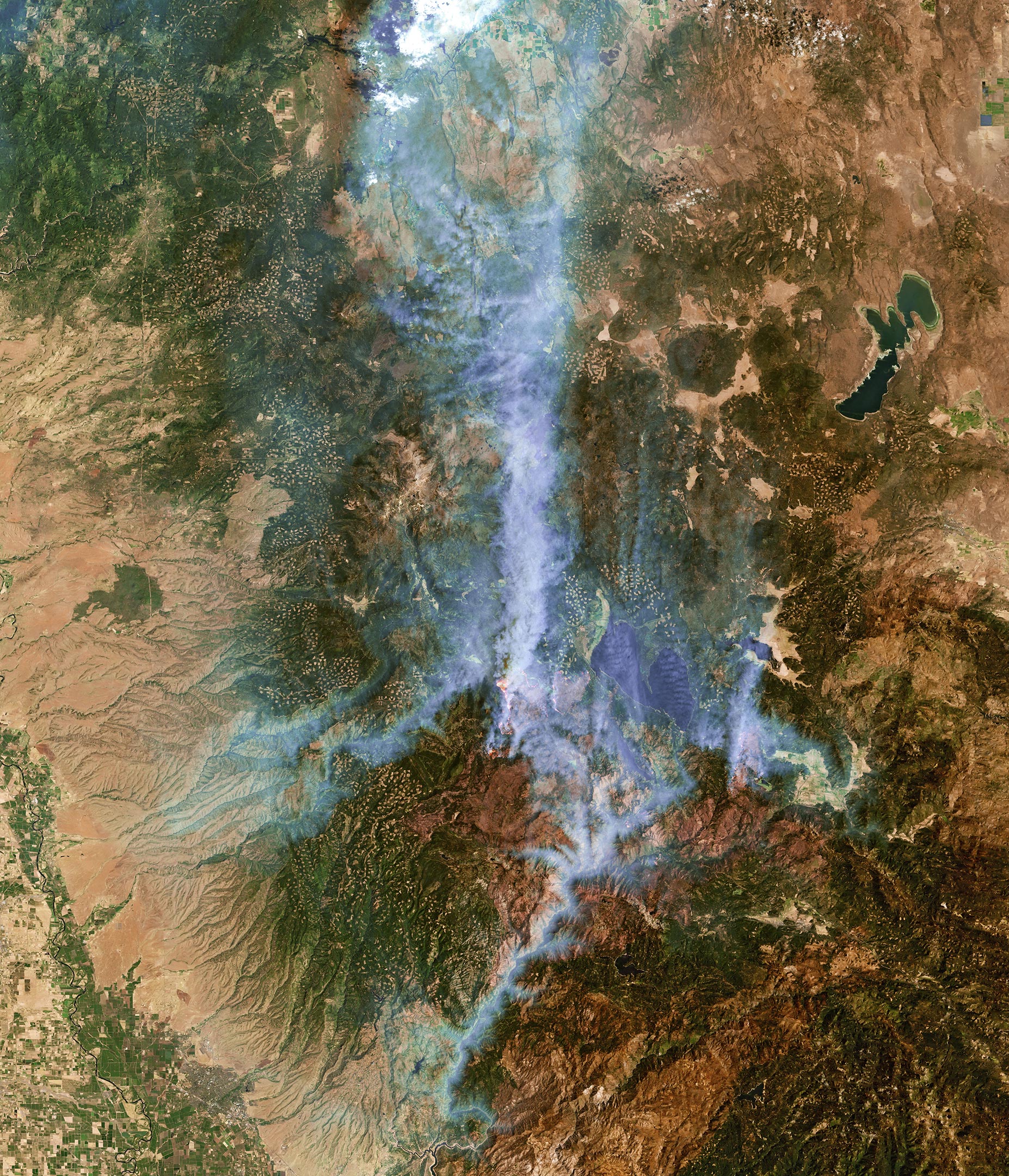
    The largest fire currently burning in the United States continues to produce enormous plumes of smoke.

    The Dixie fire in Northern California has surpassed the Bootleg fire in Oregon to become the largest fire so far this year in the United States. As of August 6, 2021, the Dixie fire had charred more than 432,000 acres (675 square miles/1,750 square kilometers).

    On August 4, 2021, an astronaut on the International Space Station shot a photo of the Dixie fire’s thick smoke plume (top). The second image, also acquired on August 4, shows the fire as observed by the Enhanced Thematic Mapper Plus (ETM+) on Landsat 7. It combines natural-color with shortwave-infrared light to cut through some of the smoke and highlight the active fire fronts. In this view, the hottest and most active parts of the fire are orange-yellow.

    With wind gusts as high as 40 miles per hour (65 kilometers per hour) that day, the fire quickly advanced across the dry mountain vegetation. It burned through the historic Gold Rush era town of Greenville.

    Notice that while most of the smoke is being carried toward the north, some smoke hangs in the valleys and canyons south of the active fire areas. Smoke, which can sink toward the ground during a temperature inversion, is especially apparent in the Feather River Canyon. Wind blowing down the canyon carried some of the smoke toward the Sacramento Valley.
    Smoke Western US August 2021
    August 6, 2021

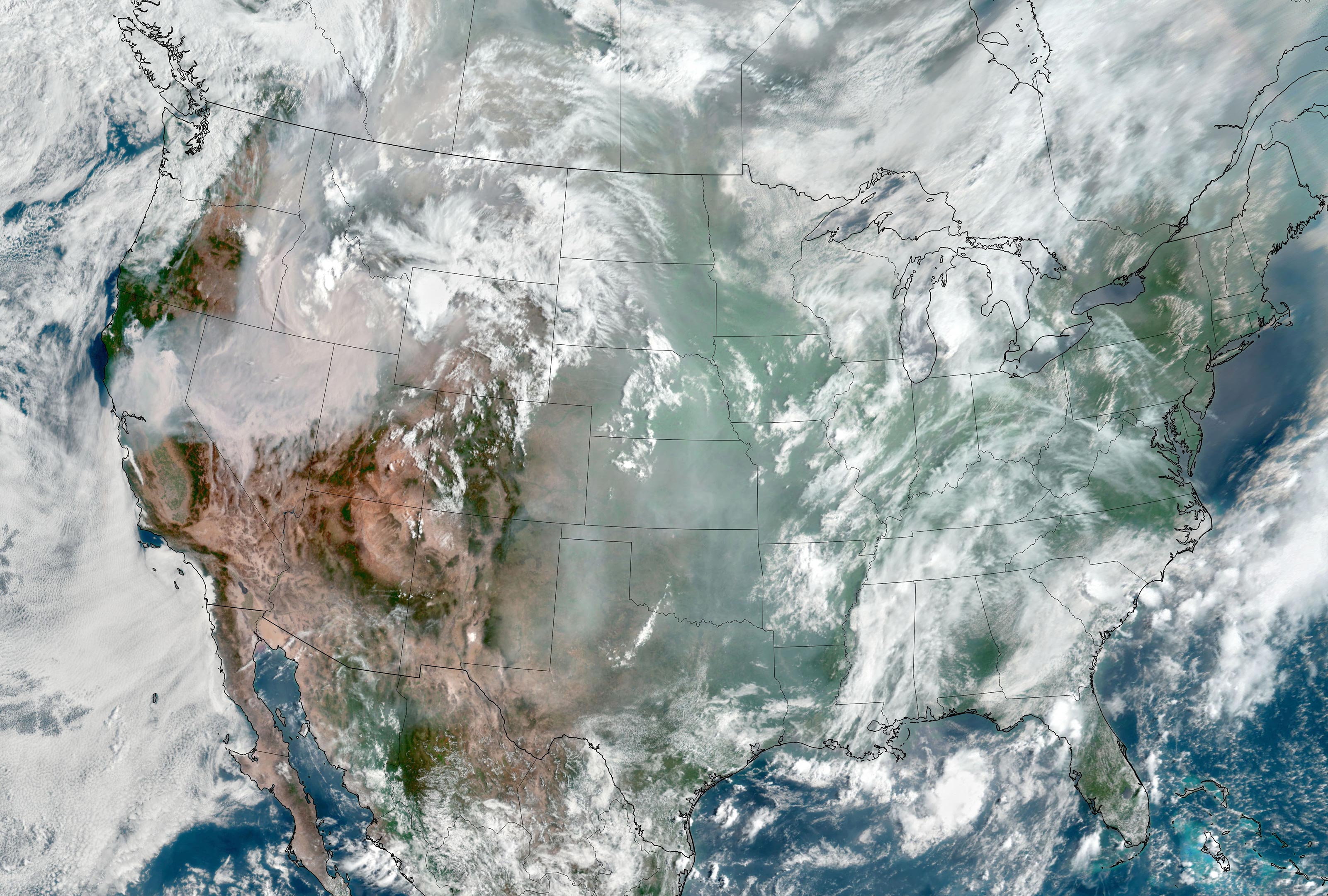
    The enormous blanket of smoke from the Dixie fire and dozens of others burning across the western U.S. is visible in this image, acquired on August 6, 2021, with the Geostationary Operational Environmental Satellite 17 (GEOS-17) (above). GOES-17 is operated by the National Oceanic and Atmospheric Administration (NOAA); NASA helps develop and launch the GOES series of satellites.

    Overnight (August 5 to August 6) the Dixie fire grew by about 70,000 acres (110 square miles/280 square kilometers) to become the third-largest fire on record in California. It is still less than half the size of the August Complex, which burned more than 1 million acres in 2020.

    NASA Earth Observatory images by Joshua Stevens, using Landsat data from the U.S. Geological Survey and GOES 17 imagery courtesy of NOAA and the National Environmental Satellite, Data, and Information Service (NESDIS). Astronaut photograph ISS065-E-220417 was acquired on August 4, 2021, with a Nikon D5 digital camera using a 116 millimeter focal length and is provided by the ISS Crew Earth Observations Facility and the Earth Science and Remote Sensing Unit, Johnson Space Center. The image was taken by a member of the Expedition 65 crew. The image has been cropped and enhanced to improve contrast, and lens artifacts have been removed. The International Space Station Program supports the laboratory as part of the ISS National Lab to help astronauts take pictures of Earth that will be of the greatest value to scientists and the public, and to make those images freely available on the Internet.

    Never miss a breakthrough: Join the SciTechDaily newsletter.
    Follow us on Google and Google News.

    Geography NASA NASA Earth Observatory Wildfires
    Share. Facebook Twitter Pinterest LinkedIn Email Reddit

    Related Articles

    Hundreds of Wildland Fires Darken Skies Over Alaska

    Massive New Mexico Wildfire Spawns 7.5 Mile Fire Cloud

    Alisal Fire Rages Near Santa Barbara – Strong Winds Fuel Fast-Moving Fire

    Greece Fire: Large Swaths of Greece Consumed by Wildfire

    A Summer of Fire-Breathing Smoke Storms: Extreme Heat, Intense Wildfires, and a “Monster pyroCb”

    Blazing Heat: Dangerous Wildfires Rage Across British Columbia

    Fires Rage in Arizona: Hot, Dry Weather Parched Vegetation and Turned the State Into a Tinderbox

    Satellite View: Fierce Fire Season Rages in Nepal

    NASA/NOAA Satellites Observe Surprisingly Rapid Increase in Scale and Intensity of Fires in Siberia

    Leave A Reply Cancel Reply

    • Facebook
    • Twitter
    • Pinterest
    • YouTube

    Don't Miss a Discovery

    Subscribe for the Latest in Science & Tech!

    Trending News

    Researchers Discover a Hidden Vitamin D Problem That Persists Year-Round

    Interstellar Comet 3I/ATLAS Reveals Strange Chemistry Beyond Our Solar System

    A Newly Found Cellular Shift May Explain Why Aging Leads to Disease

    Scientists Discover Gut Signal That Turns Off Sugar Cravings

    Scientists Discover Rogue Gene That Could Unlock New Cancer Treatments

    Constantly Tired? Scientists Say These Vitamin Deficiencies May Be Why

    A Surprising Discovery Inside Fish Could Change What We Know About the Ocean

    Scientists May Have Finally Solved the Mystery of the Strange Hum Heard Around the World

    Follow SciTechDaily
    • Facebook
    • Twitter
    • YouTube
    • Pinterest
    • Newsletter
    • RSS
    SciTech News
    • Biology News
    • Chemistry News
    • Earth News
    • Health News
    • Physics News
    • Science News
    • Space News
    • Technology News
    Recent Posts
    • The Kombucha Surprise: One Ingredient Dramatically Changes Its Chemistry and Health Potential
    • Hidden Solar Storms May Be Lighting Japan’s Skies With Massive Red Auroras
    • UCLA Scientists Uncover a “Hidden Weakness” in Some of the World’s Deadliest Cancers
    • Oak Trees Outsmart Caterpillars With a Brilliant Spring Trick
    • Scientists Discover a Hidden Disease Crisis Spreading Through Wild Snakes
    Copyright © 1998 - 2026 SciTechDaily. All Rights Reserved.
    • Science News
    • About
    • Contact
    • Editorial Board
    • Privacy Policy
    • Terms of Use

    Type above and press Enter to search. Press Esc to cancel.