
Close Menu
    Facebook X (Twitter) Instagram
    SciTechDaily
    • Biology
    • Chemistry
    • Earth
    • Health
    • Physics
    • Science
    • Space
    • Technology
    Facebook X (Twitter) Pinterest YouTube RSS
    SciTechDaily
    Home»Biology»Japanese Scientists Use Pluripotent Cells to Create Functional Liver Tissue
    Biology

    Japanese Scientists Use Pluripotent Cells to Create Functional Liver Tissue

    By SciTechDailyJune 20, 2012No Comments2 Mins Read
    Facebook Twitter Pinterest Telegram LinkedIn WhatsApp Email Reddit
    Share
    Facebook Twitter LinkedIn Pinterest Telegram Email Reddit
    stem-cells
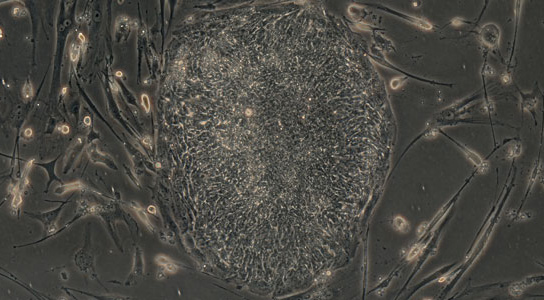
    Induced pluripotent stem cells

    Japanese scientists have been able to induce stem cells to create liver-like tissue in a dish. The new findings were reported online by the journal Nature, but the scientists have yet to publish their findings. Once the achievement is accomplished, there could be several big clinical implications. This could mean that it would be possible to coax stem cells to organize into functional organs for transplantation.

    Takanori Takebe, a stem-cell biologist at Yokohoma City University in Japan, presented his team’s research at the annual meeting of the International Society for Stem Cell Research in Yokohoma last week.
    retina-stem-cells

    The proto-liver still has a long way to go before it can be transplanted. Induced pluripotent stem cells (iPS), which were created by reprogramming human skin cells to an embryo-like state, were placed in growth plates in a specifically designed medium. After nine days, an analysis showed that these cells contained the biochemical markers of hepatocytes, maturing liver cells.

    Two more types of cells were added, endothelial and mesenchymal cells. Two days later, the cells assembled themselves into a 5mm long, three-dimensional tissue, that the researchers labeled a liver bud.
    leftover-liposuction-cells

    The tissue lacks bile ducts, but has functional blood vessels. The tissue was transplanted into a mouse, where it was able to metabolize certain drugs that mouse livers normally wouldn’t be able to. Takebe states that the success depended on the proper timing of the addition of the two other cell types. It took over a year and hundreds of trials to fine-tune the process.

    The next step would be to try and make the liver bud more like a real liver, by finding a way to include structures like bile ducts.

    Reference: “Rudimentary liver grown in vitro” by David Cyranoski, 20 June 2012, Nature.
    DOI: 10.1038/nature.2012.10848

    Never miss a breakthrough: Join the SciTechDaily newsletter.
    Follow us on Google and Google News.

    Hepatocytes In Vitro Liver Liver Bud Medicine Organ Transplant Stem Cells
    Share. Facebook Twitter Pinterest LinkedIn Email Reddit

    Related Articles

    Seasonal Color-Enhanced Images Reveal the Science Behind Stem Cells

    Researchers Identify the Stem Cells Driving a Gecko’s Ability to Regrow Its Tail

    Could Stem Cells be the Link Between Bacteria and Cancer?

    Researchers Use Human Stem Cells to Create Model of the Human Kidney Glomerulus

    New Drug Cocktail Unlocks Potential to Regrow Inner-Ear ‘Hair’ Cells

    Stem Cells Help Restore a Man’s Vision

    Medicine Nobel Prize Awarded to Researchers for Reprogramming Mature Cells to a Pluripotent State

    Stem Cells Discovered in Ovaries May Yield More Eggs

    Stem Cells Help Re-grow Healthy Heart Muscle After Heart Attack

    Leave A Reply Cancel Reply

    • Facebook
    • Twitter
    • Pinterest
    • YouTube

    Don't Miss a Discovery

    Subscribe for the Latest in Science & Tech!

    Trending News

    1.4-Million-Year-Old Footprints Reveal a Giant Human Relative

    Astronomers May Have Found the First Moon Beyond Our Solar System

    Underwater Cameras Expose the Secret Lives of Whale Sharks

    Why Dreaming Leaves the Brain Running Low on Energy

    CERN Experiments Detect Signs of the Universe’s Primordial Matter

    Study Finds a Surprising Link Between Gut Microbes and Aging

    Frequent Cannabis Users Wake Up With More “Stress Hormone”

    Scientists Reveal Hidden DNA Traces in the Shroud of Turin

    Follow SciTechDaily
    • Facebook
    • Twitter
    • YouTube
    • Pinterest
    • Newsletter
    • RSS
    SciTech News
    • Biology News
    • Chemistry News
    • Earth News
    • Health News
    • Physics News
    • Science News
    • Space News
    • Technology News
    Recent Posts
    • World’s First Photonic Time Crystal Can Reshape Light in Trillionths of a Second
    • Meteorite That Smashed Through a New Jersey Roof Hid an Ancient Chemical Secret
    • Astronomers Find Ancient Black Holes Shining With the Power of a Trillion Suns
    • These “Good” Immune Cells Could Hold the Key to Spinal Cord Regeneration
    • New Research Questions Decades of Low-Fat Dairy Advice
    Copyright © 1998 - 2026 SciTechDaily. All Rights Reserved.
    • Science News
    • About
    • Contact
    • Editorial Board
    • Privacy Policy
    • Terms of Use

    Type above and press Enter to search. Press Esc to cancel.