
Close Menu
    Facebook X (Twitter) Instagram
    SciTechDaily
    • Biology
    • Chemistry
    • Earth
    • Health
    • Physics
    • Science
    • Space
    • Technology
    Facebook X (Twitter) Pinterest YouTube RSS
    SciTechDaily
    Home»Biology»Researchers Identify the Stem Cells Driving a Gecko’s Ability to Regrow Its Tail
    Biology

    Researchers Identify the Stem Cells Driving a Gecko’s Ability to Regrow Its Tail

    By University of GuelphNovember 3, 20171 Comment3 Mins Read
    Facebook Twitter Pinterest Telegram LinkedIn WhatsApp Email Reddit
    Share
    Facebook Twitter LinkedIn Pinterest Telegram Email Reddit
    New Study Identifies Cells Driving Gecko’s Ability to Regrow Its Tail
    Guelph University scientist identifies gecko stem cells that may aid spinal cord treatment in humans.

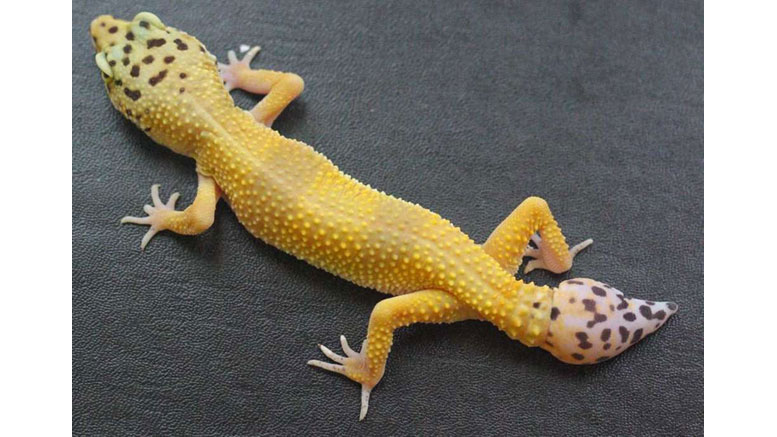
    A scientist at the University of Guelph has discovered the type of stem cell that is behind the gecko’s ability to regrow its tail, a finding that has implications for spinal cord treatment in humans.

    Many lizards can detach a portion of their tail to avoid a predator and then regenerate a new one. Unlike in mammals, the lizard tail includes part of the spinal cord.

    Professor Matthew Vickaryous found that the spinal cord in the tail contained a large number of stem cells and proteins known to support stem cell growth.

    “We knew the gecko’s spinal cord could regenerate, but we didn’t know which cells were playing a key role,” said Vickaryous, lead author of the study recently published in the Journal of Comparative Neurology. “Humans are notoriously bad at dealing with spinal cord injuries, so I’m hoping we can use what we learn from geckos to coax human spinal cord injuries into repairing themselves.”

    Geckos are able to regrow a new tail within 30 days – faster than any other type of lizard. In the wild, they detach their tails when grabbed by a predator. The severed tail continues to wiggle, distracting the predator long enough for the reptile to escape.

    In the lab, Vickaryous simulates this by pinching the gecko’s tail, causing the tail to drop. Once detached, the site of the tail loss begins to repair itself, eventually leading to new tissue formation and a new spinal cord. For this study, the biomedical sciences professor, along with Ph.D. student Emily Gilbert, investigated what happens at the cellular level before and after detachment.

    They discovered that the spinal cord houses a special type of stem cell known as the radial glia. These stem cells are normally fairly quiet.

    “But when the tail comes off, everything temporarily changes,” he said. “The cells make different proteins and begin proliferating more in response to the injury. Ultimately, they make a brand new spinal cord. Once the injury is healed and the spinal cord is restored, the cells return to a resting state.”

    Humans, on the other hand, respond to a spinal cord injury by making scar tissue rather than new tissue, he added. The scar tissue seals the wound quickly, but sealing the injury prevents regeneration.

    “It’s a quick fix, but in the long term it’s a problem.” “This may play a role in why we have a limited ability to repair our spinal cords. We are missing the key cell types required.”

    This study is part of a series of investigations into the regenerative abilities of the gecko’s central nervous system. The next step is to examine how the gecko is able to make new brain cells, said Vickaryous.

    “Geckos are able to regenerate many tissues throughout their bodies, making them ideal models for studying wound healing and tissue redevelopment. We can learn a lot from them.”

    Reference: “Neural stem/progenitor cells are activated during tail regeneration in the leopard gecko (Eublepharis macularius)” by E.A.B. Gilbert and M.K. Vickaryous, 4 October 2017, Journal of Comparative Neurology.
    DOI: 10.1002/cne.24335

    Never miss a breakthrough: Join the SciTechDaily newsletter.
    Follow us on Google and Google News.

    Animals Cell Biology Medicine Neurology Stem Cells University of Guelph
    Share. Facebook Twitter Pinterest LinkedIn Email Reddit

    Related Articles

    Scientists Discover How Microenvironments Regulate Stem Cell Development

    New Genetic Study Links Stem Cell Mutations to Hydrocephalus

    Mesenchymal Stem Cell-Derived Exosomes Aid Spinal Cord Recovery

    Researchers Culture First Lab-Grown Skin Tissue With Hair Follicles

    Seasonal Color-Enhanced Images Reveal the Science Behind Stem Cells

    Researchers Show Distinct Muscle Subsets That Orchestrate Tissue Regeneration

    Researchers Use Human Stem Cells to Create Model of the Human Kidney Glomerulus

    Researchers Use Stem Cells from Teeth to Grow Brain-Like Cells

    Study Shows Stem Cell Injections Improve Spinal Injuries in Rats

    1 Comment

    1. diy on June 19, 2019 6:10 am

      Right here is the perfect site for everyone who would like to find out about this topic.
      You understand a whole lot its almost hard to argue with you (not that
      I really would want to…HaHa). You certainly put a new spin on a subject that’s been written about for ages.
      Excellent stuff, just excellent!

      Reply
    Leave A Reply Cancel Reply

    • Facebook
    • Twitter
    • Pinterest
    • YouTube

    Don't Miss a Discovery

    Subscribe for the Latest in Science & Tech!

    Trending News

    One of the Universe’s Largest Stars May Be Getting Ready To Explode

    Scientists Discover Enzyme That Could Supercharge Ozempic-Like Weight Loss Drugs

    Popular Sweetener Linked to DNA Damage – “It’s Something You Should Not Be Eating”

    Ancient “Rock” Microbes May Reveal How Complex Life Began

    Researchers Capture Quantum Interference in One of Nature’s Rarest Atoms

    “A Plague Is Upon Us”: The Mass Death That Changed an Ancient City Forever

    Scientists Discover Game-Changing New Way To Treat High Cholesterol

    This Small Change to Your Exercise Routine Could Be the Secret to Living Longer

    Follow SciTechDaily
    • Facebook
    • Twitter
    • YouTube
    • Pinterest
    • Newsletter
    • RSS
    SciTech News
    • Biology News
    • Chemistry News
    • Earth News
    • Health News
    • Physics News
    • Science News
    • Space News
    • Technology News
    Recent Posts
    • Scientists Prove There Are Just Six Degrees of Separation in a Social Network
    • Bee Bacteria Could Fix a Major Flaw in Plant-Based Milk
    • Scientists Discover a Surprising Way To Make Bread Healthier and More Nutritious
    • Natural Compounds Boost Bone Implant Success While Killing Bacteria and Cancer Cells
    • After 60 Years, Scientists Uncover Unexpected Brain Effects of Popular Diabetes Drug Metformin
    Copyright © 1998 - 2026 SciTechDaily. All Rights Reserved.
    • Science News
    • About
    • Contact
    • Editorial Board
    • Privacy Policy
    • Terms of Use

    Type above and press Enter to search. Press Esc to cancel.