
Close Menu
    Facebook X (Twitter) Instagram
    SciTechDaily
    • Biology
    • Chemistry
    • Earth
    • Health
    • Physics
    • Science
    • Space
    • Technology
    Facebook X (Twitter) Pinterest YouTube RSS
    SciTechDaily
    Home»Biology»Researchers Use Stem Cells from Teeth to Grow Brain-Like Cells
    Biology

    Researchers Use Stem Cells from Teeth to Grow Brain-Like Cells

    By University of AdelaideMay 1, 20142 Comments3 Mins Read
    Facebook Twitter Pinterest Telegram LinkedIn WhatsApp Email Reddit
    Share
    Facebook Twitter LinkedIn Pinterest Telegram Email Reddit
    Researchers Use Stem Cells from Teeth to Make Brain Like Cells
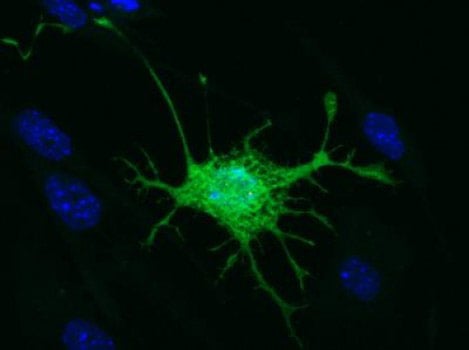
    This is the distinct neuronal-like appearance of a mouse-derived dental pulp stem cell following the induction process. Credit: Dr. Kylie Ellis, University of Adelaide.

    New research from the University of Adelaide shows that stem cells from teeth can develop and form complex networks of brain-like cells.

    University of Adelaide researchers have discovered that stem cells taken from teeth can grow to resemble brain cells, suggesting they could one day be used in the brain as a therapy for stroke.

    In the University’s Center for Stem Cell Research, laboratory studies have shown that stem cells from teeth can develop and form complex networks of brain-like cells. Although these cells haven’t developed into fully fledged neurons, researchers believe it’s just a matter of time and the right conditions for it to happen.

    “Stem cells from teeth have great potential to grow into new brain or nerve cells, and this could potentially assist with treatments of brain disorders, such as stroke,” says Dr Kylie Ellis, Commercial Development Manager with the University’s commercial arm, Adelaide Research & Innovation (ARI).

    Dr Ellis conducted this research as part of her Physiology PhD studies at the University, before making the step into commercialization. The results of her work have been published in the journal Stem Cell Research & Therapy.

    “The reality is, treatment options available to the thousands of stroke patients every year are limited,” Dr Ellis says. “The primary drug treatment available must be administered within hours of a stroke and many people don’t have access within that time frame, because they often can’t seek help for some time after the attack.
    Researchers Make Brain Like Cells from Teeth Stem Cells
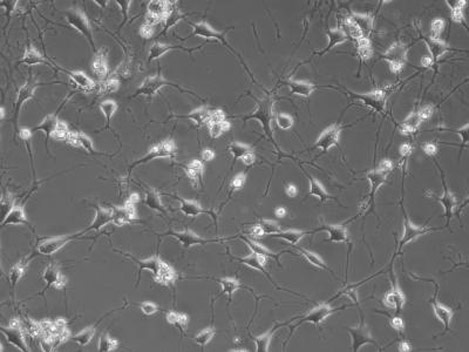
    Brain-like cells are shown forming complex networks. These cells are derived from mouse dental pulp stem cells. Credit: Dr. Kylie Ellis, University of Adelaide.

    “Ultimately, we want to be able to use a patient’s own stem cells for tailor-made brain therapy that doesn’t have the host rejection issues commonly associated with cell-based therapies. Another advantage is that dental pulp stem cell therapy may provide a treatment option available months or even years after the stroke has occurred,” she says.

    Dr Ellis and her colleagues, Professors Simon Koblar, David O’Carroll, and Stan Gronthos, have been working on a laboratory-based model for actual treatment in humans. As part of this research, Dr. Ellis found that stem cells derived from teeth developed into cells that closely resembled neurons.

    “We can do this by providing an environment for the cells that is as close to a normal brain environment as possible, so that instead of becoming cells for teeth they become brain cells,” Dr Ellis says.

    “What we developed wasn’t identical to normal neurons, but the new cells shared very similar properties to neurons. They also formed complex networks and communicated through simple electrical activity, like you might see between cells in the developing brain.”

    This work with dental pulp stem cells opens up the potential for modeling many more common brain disorders in the laboratory, which could help in developing new treatments and techniques for patients.

    Reference: “Neurogenic potential of dental pulp stem cells isolated from murine incisors” by Kylie M Ellis, David C O’Carroll, Martin D Lewis, Grigori Y Rychkov and Simon A Koblar, 27 February 2014, Stem Cell Research & Therapy.
    DOI: 10.1186/scrt419


    Never miss a breakthrough: Join the SciTechDaily newsletter.
    Follow us on Google and Google News.

    Adelaide University Cell Biology Neurology Neuroscience Physiology Stem Cells
    Share. Facebook Twitter Pinterest LinkedIn Email Reddit

    Related Articles

    Human Cells Enhance Synaptic Plasticity and Learning in Adult Mice

    Transplanted Neural Cells From a Monkey’s Skin Develop Into Mature Brain Cells

    Stem Cell Biologists Turn One Form of Neuron Into Another

    Using Urine to Make Brain Cells

    Stem Cells in Hippocampus React by “Listen in” on Nearby Neurons

    Imbalance Between Neuronal Excitation and Inhibition May Account for Seizure Susceptibility in Angelman Syndrome

    Researchers Develop Gene Therapy, Promotes Remyelination in a Mouse Model of MS

    Researchers Use Human Neurons to Investigate Parkinson’s Disease

    Scientists Create Brain Cells from Skin Cells

    2 Comments

    1. 14029406 on May 3, 2014 11:34 am

      Would regrowing damaged brain tissue rebuild the pathways destroyed because if the don’t then the treatment will be ineffectual because the person would have to relearn what was destroyed

      Reply
    2. Flawless Beauty And Splendyr on June 10, 2014 4:32 am

      Everything is very open with a clear explanation of the challenges.
      It was really informative. Your site is very useful.
      Thanks for sharing!

      Reply
    Leave A Reply Cancel Reply

    • Facebook
    • Twitter
    • Pinterest
    • YouTube

    Don't Miss a Discovery

    Subscribe for the Latest in Science & Tech!

    Trending News

    Scientists Uncover Potential Brain Risks of Popular Fish Oil Supplements

    Scientists Discover a Surprising Way To Make Bread Healthier and More Nutritious

    After 60 Years, Scientists Uncover Unexpected Brain Effects of Popular Diabetes Drug Metformin

    New Research Uncovers Hidden Side Effects of Popular Weight-Loss Drugs

    Scientists Rethink Extreme Warming After Surprising Ocean Discovery

    Landmark Study Links Never Marrying to Significantly Higher Cancer Risk

    Researchers Discover Unknown Beetle Species Just Steps From Their Lab

    Largest-Ever Study Finds Medicinal Cannabis Ineffective for Anxiety, Depression, PTSD

    Follow SciTechDaily
    • Facebook
    • Twitter
    • YouTube
    • Pinterest
    • Newsletter
    • RSS
    SciTech News
    • Biology News
    • Chemistry News
    • Earth News
    • Health News
    • Physics News
    • Science News
    • Space News
    • Technology News
    Recent Posts
    • Researchers Uncover Source of Strange Deformation in Earth’s Largest Continental Rift
    • Scientists Solve Mystery of Where the Colorado River Vanished Millions of Years Ago
    • Not Just Alzheimer’s: Scientists Uncover Clues to a Second, Overlooked Disorder
    • Scientists Uncover Dangerous Connection Between Serotonin and Heart Valve Disease
    • Scientists Discover a “Protector” Protein That Could Help Reverse Hair Loss
    Copyright © 1998 - 2026 SciTechDaily. All Rights Reserved.
    • Science News
    • About
    • Contact
    • Editorial Board
    • Privacy Policy
    • Terms of Use

    Type above and press Enter to search. Press Esc to cancel.