
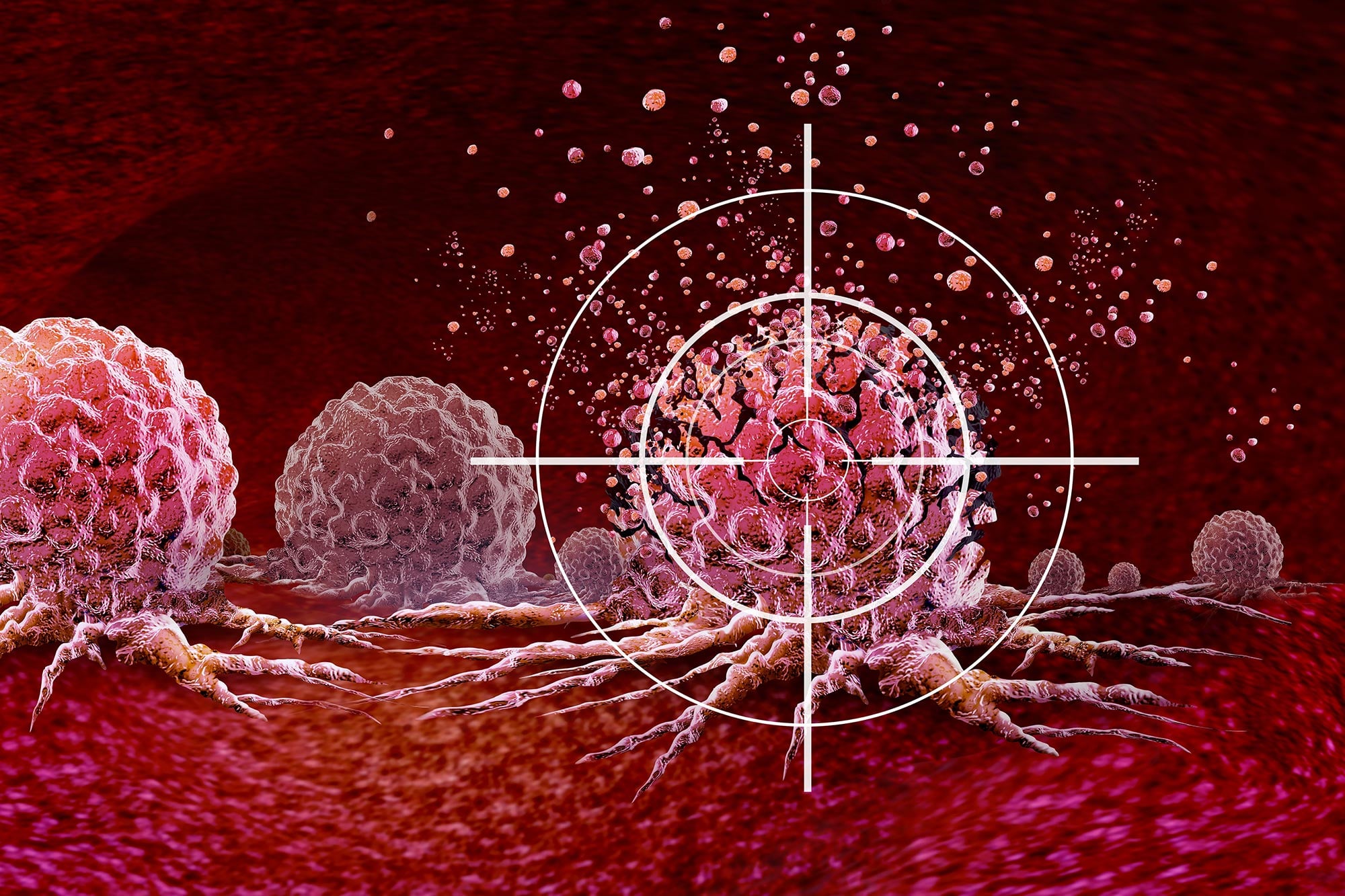
A new study reveals a previously overlooked weakness in certain cancer cells that could help researchers refine targeted treatments and reduce harmful side effects.
Cancer cells that have lost one safeguard against DNA damage can become dependent on another, an enzyme called Wee1. Drugs that block Wee1 aim to exploit that weakness, but serious side effects are disrupting clinical trials and threatening their adoption in the clinic.
One of the cell’s main safeguards is the tumor-suppressor protein p53, which can halt the cell cycle when DNA damage is detected. In around half of all cancers, p53 is inactive, allowing damaged cells to continue growing. Wee1 provides a second line of defense, acting as a backup brake that prevents cells with damaged DNA from entering cell division. Cancers with mutated p53 rely on this remaining safeguard, making Wee1 an attractive drug target.
Blocking Wee1 may stall healthy cells
A study published in Nature has now revealed that Wee1 also helps healthy cells begin copying their DNA, much earlier in the cell cycle. Researchers from the MRC Laboratory of Medical Sciences (LMS), the University of Oxford, and UCL found that this role involves a protein degradation complex, a group of proteins that breaks down molecules needed for DNA replication. Wee1 helps switch off the complex so replication can begin. Without Wee1, the complex remains active, delaying or preventing cells from progressing through the cell cycle.
“We think what’s happening in patients is that when they’re being treated with these Wee1 inhibitors, it’s stopping their normal fast proliferating cells, like you get in the colon and the blood system, from starting to replicate,” says Alexis, head of the Cell Cycle Control group at the LMS. “And so those cells are stuck, unable to generate new cells, and that could be causing some of the toxic side effects.”
Cell experiments challenge the Wee1 model
The discovery grew out of an effort to test the established understanding of Wee1’s activity early in the cell cycle. The team built a mathematical model based on the scientific literature to predict what would happen when the enzyme was inhibited.
“Wee1 has been very intensely studied in the later stages of the cell cycle, where targeting its activity for cancer treatment makes sense,” says Alexis. “However, the side effects of Wee1 inhibitors in patients were hard to explain based on these functions so we started to wonder if this Wee1 enzyme had some other function that we hadn’t appreciated that could explain these. We wanted to look earlier in the cell cycle to see if there was something we had missed.”
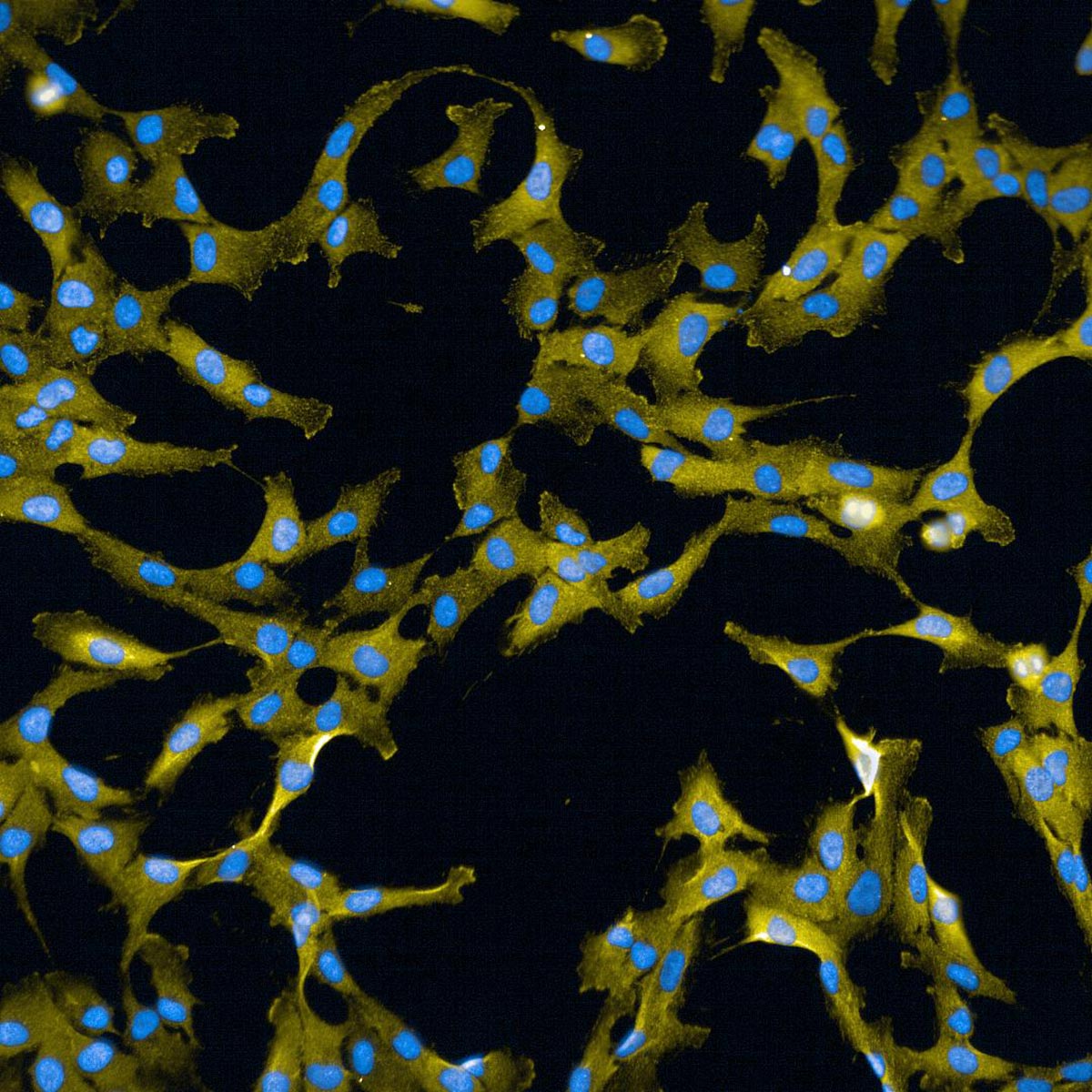
The researchers then tested the model’s predictions in healthy and cancerous cells. Alexis says, “We quickly found out that the model we had based on the literature on Wee1 was wrong because that was not what we saw in cells. What had been missed was an early function of Wee1 that people hadn’t looked at.”
Matching Wee1 inhibitors to vulnerable cancers
If the side effects are linked to Wee1’s role in controlling the protein degradation complex, the findings could help identify patients most likely to benefit from treatment. The researchers suggest that cancers with reduced activity of this complex may be particularly susceptible to Wee1 inhibitors. That could create a therapeutic window in which lower doses kill cancer cells while limiting damage to healthy cells and reducing side effects.
“We’re also starting to think about if there are different ways we could inhibit Wee1 that get round this early cell cycle function,” says Alexis, “though how this might be achieved is a work in progress.”
The researchers now want to test the work’s predictions further in preclinical models and in patients currently enrolled in Wee1 inhibitor clinical trials. Those tests could help determine whether the newly identified function explains the toxic effects and how that understanding might guide safer treatment.
“Now we’ve uncovered this new function for Wee1, are there other functions that we haven’t appreciated? What else is it doing that we have not seen since we’ve not looked at the right stage?” asks Alexis.
Reference: “WEE1 opposes APC/CCDH1 activity to promote S phase entry” by Luc-Alban Vuillemenot, Lucas G. Morales, Calin-Mihai Dragoi, Betheney R. Pennycook, Edward Harris, Liuyang C. Lin, William A. Weston, Jade-Ellen Brown, Emma Graham, Leelou Moulin, Ivan Andrew, Georgia Roumelioti, Alex Montoya, Laurence Game, George R. Young, Keshava K. Datta, Pavel Shliaha, Béla Novák, Hiroyuki Yamano and Alexis R. Barr, 21 October 2026, Nature.
DOI: 10.1038/s41586-026-11188-x
This study was funded by the Medical Research Council and Cancer Research UK.
Never miss a breakthrough: Join the SciTechDaily newsletter.
Follow us on Google and Google News.