
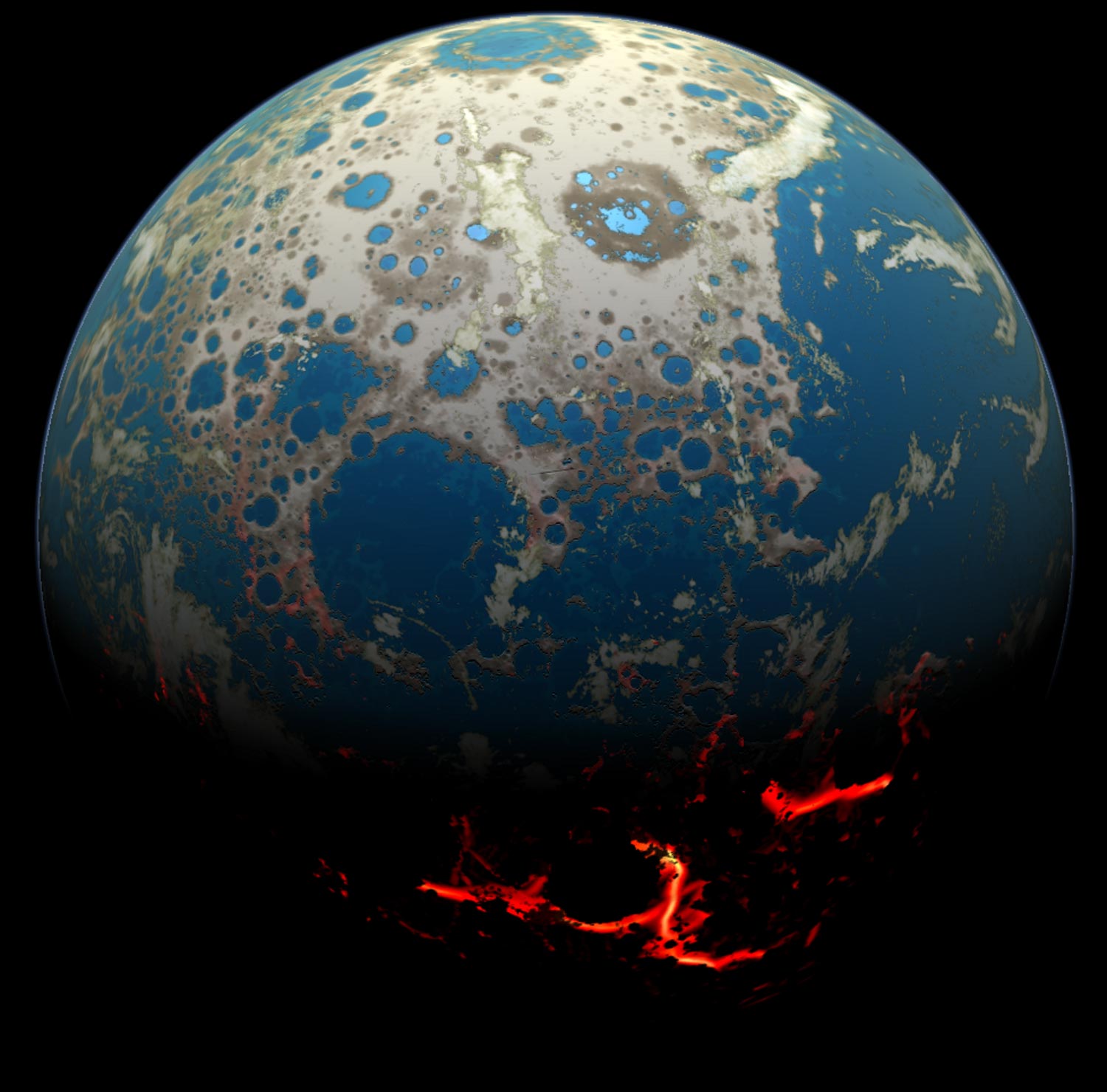
Using ancient barite deposits, scientists discovered that Earth’s first land emerged 3.7 billion years ago, significantly earlier than previously believed.
The first emergence and persistence of continental crust on Earth during the Archaean (4 billion to 2.5 billion years ago) has important implications for plate tectonics, ocean chemistry, and biological evolution, and it happened about half a billion years earlier than previously thought, according to new research being presented at the EGU General Assembly 2021.
Once land becomes established through dynamic processes like plate tectonics, it begins to weather and add crucial minerals and nutrients to the ocean. A record of these nutrients is preserved in the ancient rock record. Previous research used strontium isotopes in marine carbonates, but these rocks are usually scarce or altered in rocks older than 3 billion years.
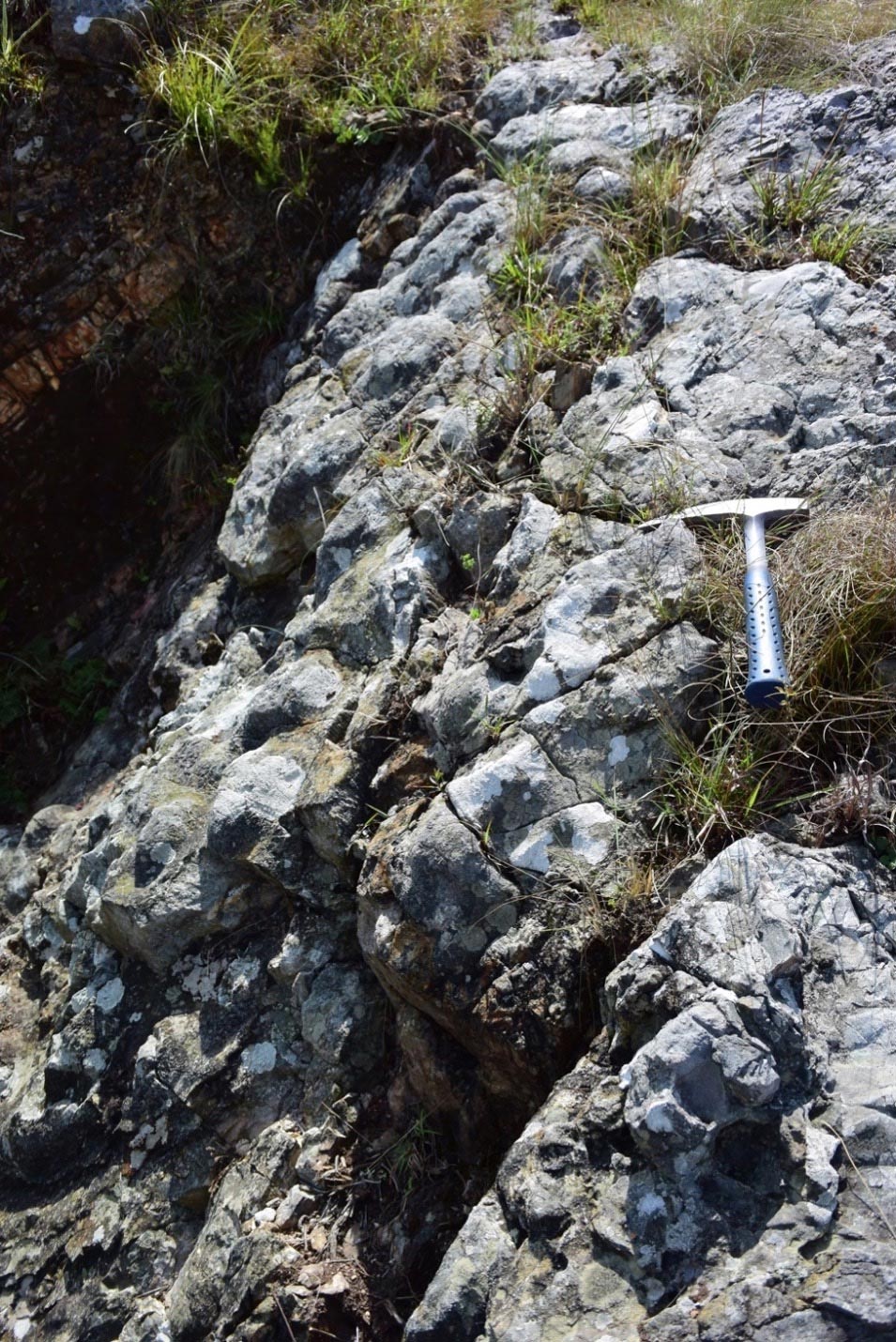
Now, researchers are presenting a new approach to trace the first emergence of old rocks using a different mineral: “barite.”
Barite: A Time Capsule of Early Ocean Chemistry
Barite forms from a combination of sulfate coming from ocean water mixing with barium from hydrothermal vents. Barite holds a robust record of ocean chemistry within its structure, useful for reconstructing ancient environments. “The composition of the piece of barite we pick up in the field now that has been on Earth for three and a half billion years, is exactly the same as it was when it actually precipitated,” says Desiree Roerdink, a geochemist at the University of Bergen, Norway, and team leader of the new research. “So in essence, it is really a great recorder to look at processes on the early Earth.”
Roerdink and her team tested six different deposits on three different continents, ranging from about 3.2 billion to 3.5 billion years old. They calculated the ratio of strontium isotopes in the barite, and from there, inferred the time when the weathered continental rock made its way to the ocean and incorporated itself into the barite. Based on the data captured in the barite, they found that weathering started about 3.7 billion years ago — about 500 million years earlier than previously thought.
New Timeline Shifts Our Understanding of Life’s Origins
“That is a huge time period,” Roerdink says. “It essentially has implications for the way that we think about how life evolved.” She added that scientists usually think about life starting in the deep sea, hydrothermal settings, but the biosphere is complex. “We don’t really know if it is possible that life could have developed at the same time on land,” she noted, adding “but then that land has to be there.”
Lastly, the emergence of land says something about plate tectonics and the early emergence of a geodynamic Earth. “To get land, you need processes operating to form that continental crust, and form a crust that is chemically different from the oceanic crust,” Roerdink says.
Reference: “The emergence of subaerial crust and onset of weathering 3.7 billion years ago” by Desiree Roerdink, Yuval Ronen, Harald Strauss and Paul Mason, 25 April 2021, EGU General Assembly 2021.
DOI: 10.5194/egusphere-egu21-4701
Never miss a breakthrough: Join the SciTechDaily newsletter.
Follow us on Google and Google News.
1 Comment
All the elements in both the oceans and on the mainland came from the protoplanetary nebula disk around time sun. The elements formed their rings according to their weight and the heavier ones ended up inboard closest to the sun. Layer by layer over the millions of years, even billions 7-24’s the earth formed. From the inter rings which were uranium to form the core, then layers of the next heavy elements as a radiation shield to protect the plant and animal life that would come later. Then a layer of lead, then the thick layer of iron that makes up the outer core, then the mantle then the crust. Each layer had it’s own crust which were the lighter elements that were over the disk of protoplanetary nebula. The earth grew from a small ball of uranium to the size it is today. To see it all illustrated and in detail, click here …. https://www.seed-0f-the-universe.com