
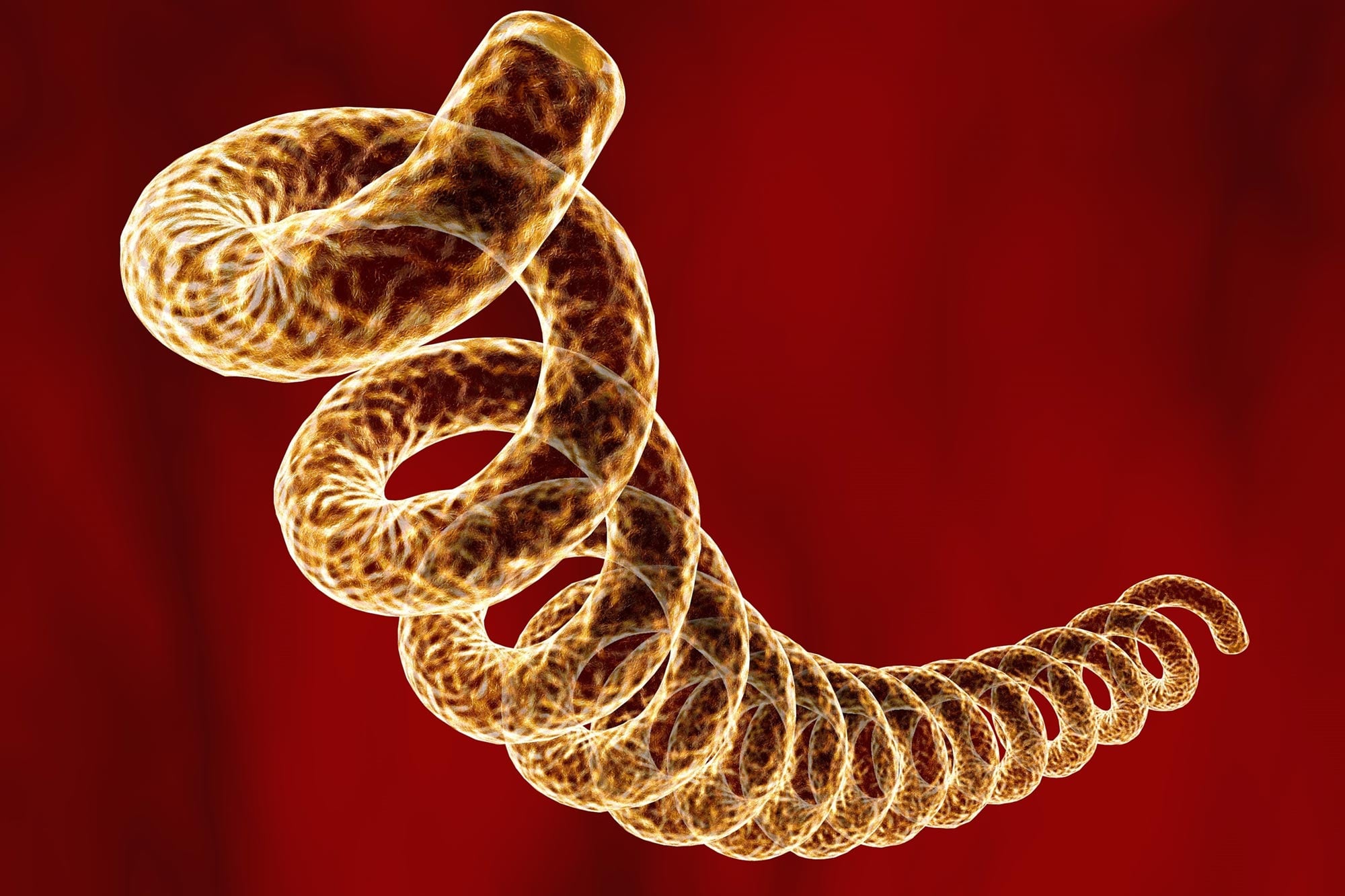
Scientists have uncovered the oldest known genome of the bacterium responsible for syphilis, revealing a previously unknown lineage that existed thousands of years ago in the Americas.
A newly reconstructed genome from the bacterium responsible for syphilis, Treponema pallidum, is providing new clues about the long history of treponemal diseases in the Americas.
The research is based on a 5,500-year-old specimen discovered in Colombia. The results indicate that the origins of syphilis were not tied to the rise of agriculture or the crowded living conditions that often accelerate the spread of infectious diseases. Instead, the pathogen appears to have emerged within the environmental and social settings typical of hunter-gatherer communities.
“Reframing syphilis, alongside other infectious diseases, as products of both localized and highly specific evolutionary, ecological, and biosocial conditions and globalization may represent critical steps toward reducing stigma and improving public health,” write Molly Zuckerman and Lydia Ball in a related perspective.
Treponemal Diseases and the Debate Over Syphilis Origins
Treponemal diseases, including syphilis, yaws, bejel, and pinta, have affected human populations in many parts of the world for thousands of years. Even so, scientists still know relatively little about when these diseases first appeared globally, how they spread, or how the bacteria responsible for them evolved over time.
One long-standing debate focuses on where syphilis originated and how it spread worldwide. The disease is caused by the bacterium T. pallidum. Some researchers believe syphilis began in the Americas and was carried to the Eastern Hemisphere after Europeans arrived in the late 15th century.
Others argue that members of the Treponema group already existed in Europe before transatlantic contact occurred. Investigating these competing ideas has been difficult. Skeletal signs of treponemal disease are uncommon and often open to interpretation. In addition, extracting ancient bacterial DNA from archaeological remains remains technically challenging.
A 5,500-Year-Old Genome From Colombia
David Bozzi and colleagues report the recovery of a 5,500-year-old Treponema genome from human hunter-gatherer remains dating to the Middle Holocene in Colombia. This discovery pushes the known genetic history of the pathogen back by about 3,000 years.
The researchers conducted a phylogenetic analysis of the genome, which they labeled TE1-3. Their results show that it represents a previously unidentified lineage of T. pallidum. This branch separated from the evolutionary tree before any of the known modern subspecies developed.
Although TE1-3 clearly belongs to the T. pallidum species, it shows substantial genetic differences compared with present-day strains. The team also determined that the genome contains the same key genetic features linked to virulence in modern T. pallidum.
Insights Into Early Virulence and Human Societies
The findings also indicate that T. pallidum existed in the Americas before agriculture became widespread. This suggests that the bacterium did not arise because of dense populations or farming-related lifestyle changes that are often associated with the emergence of infectious diseases.
Instead, the TE1-3 lineage appears to be connected to the ecological and social patterns of hunter-gatherer groups. These communities were highly mobile, interacted within relatively small social networks, and likely experienced frequent contact with wild animals.
According to Bozzi et al., these results broaden the historical and ecological context for studying treponemal diseases. The research expands the time frame and social conditions considered when investigating how these infections developed and spread around the world.
Reference: “A 5500-year-old Treponema pallidum genome from Sabana de Bogotá, Colombia” by Davide Bozzi, Nasreen Z. Broomandkhoshbacht, Miguel Delgado, Jane E. Buikstra, Carlos Eduardo G. Amorim, Kalina Kassadjikova, Melissa Pratt Estrada, Gilbert Greub, Nicolas Rascovan, David Šmajs, Lars Fehren-Schmitz, Anna-Sapfo Malaspinas and Elizabeth A. Nelson, 22 January 2026, Science.
DOI: 10.1126/science.adw3020
Never miss a breakthrough: Join the SciTechDaily newsletter.
Follow us on Google and Google News.
10 Comments
thanks for this
I enjoyed reading this. Thank you
I believe there is a parasite that I s airborne and it travels through our bodies…are brain too and that’s why people have memory loss it eats you from the inside out…the government are aware of it but they don’t want us to know this..
Started oil of oregano and black seed oil today. I have been suspecting that something was cleaved into a protein capsid that delivered the COVID virus, typically virus doesn’t have protein based capsid.
I much enjoyed your articles thank you for further educating me. Much appreciated. Lisa G of ABQ. NM
I wish articles like this one would have a key take away box at the beginning. Im interested but I get lost in the jargon.
It did.
I much enjoyed your articles thank you for further educating me. Much appreciated. Lisa G of ABQ. NM
People need to be more cleaner…wash their hands and bath every day…and there should be a fine for the people who aren’t trying to be clean and they are the ones spreading diseases.
Keep clean and cover that thang up before inserting, anywhere