
An Airborne Chemical Sends a Distinctive Biological Signal
Broccoli, along with many other plants and microorganisms, release gases to aid in the removal of toxins. These gases, according to scientists, might provide strong evidence that there is life on other planets.
These gases are created when organisms combine an undesirable chemical element with three hydrogen atoms and a carbon atom. This process, known as methylation, may convert potential toxins into gases that float away into the atmosphere safely. These gases would be suggestive of life someplace on the planet if they were found in the atmosphere of another planet using telescopes.
“Methylation is so widespread on Earth, we expect life anywhere else to perform it,” said Michaela Leung, a University of California, Riverside (UCR) planetary scientist. “Most cells have mechanisms for expelling harmful substances.”
Methyl Bromide as a Key Biosignature
Methyl bromide, one methylated gas, offers a number of benefits over other gases that are often targeted in the hunt for extraterrestrial life. Leung conducted a study that examined and quantified these benefits, which was recently published in the Astrophysical Journal. For example, methyl bromide remains in the atmosphere for a shorter time than traditional biosignature gases.
CA Water Quality Monitoring Council
“If you find it, the odds are good it was made not so long ago — and that whatever made it is still producing it,” Leung said.
Another benefit is that methyl bromide is more likely to have been produced by something living than a gas like methane, which may be produced by microbes. However, it could also be a byproduct of a volcanic eruption or other geologic processes.
“There are limited ways to create this gas through non-biological means, so it is more indicative of life if you find it,” Leung said.
In addition, methyl bromide absorbs light near a “cousin” biosignature, methyl chloride, which makes both of them, and the presence of life, easier to find.
Methyl Bromide’s Unique Detectability Around M Dwarfs
Though methyl bromide is extremely common on Earth, it is not easily detectable in our atmosphere because of the intensity of our sun’s UV light. Ultraviolet radiation starts chemical reactions that break up water molecules in the atmosphere, splitting them into products that destroy the gas.
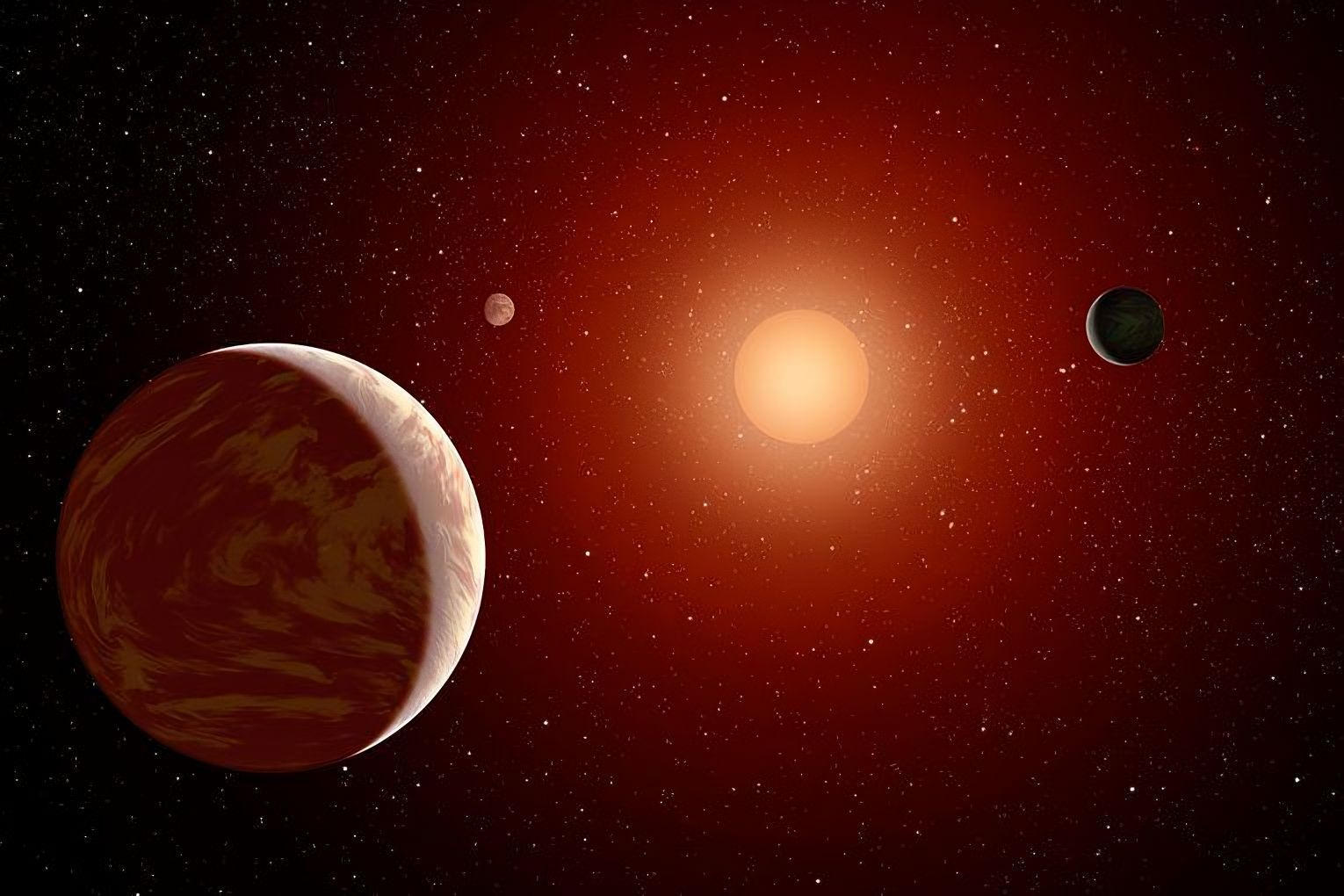
However, the study determined methyl bromide would be more easily detectable around an M dwarf star than it is in this solar system or ones like it. M dwarfs are smaller and cooler than our sun, and they produce less of the type of UV radiation that leads to the breakup of water.
“An M dwarf host star increases the concentration and detectability of methyl bromide by four orders of magnitude compared to the sun,” Leung said.
This is a benefit for astronomers because M dwarfs are more than 10 times as common than stars like our sun and will be the first targets in upcoming searches for life on exoplanets.
For these reasons, researchers are optimistic that astrobiologists will begin to consider methyl bromide in future missions, and in their planning for the capabilities of telescopes set to launch in the coming decades.
Though the James Webb Space Telescope isn’t particularly optimized to detect Earth-like planetary atmospheres around other stars, some extremely large ground-based telescopes coming online at the end of the decade will be. And they will be better suited to analyze the composition of those planets’ atmospheres.
Expanding the Search Beyond Methyl Bromide
The UCR research team is set to investigate the potential for other methylated gases to serve as targets in the search for extraterrestrial life since this group of gases is especially closely associated with life and only life.
“We believe methyl bromide is one of many gases commonly made by organisms on Earth that may provide compelling evidence of life from afar,” said Eddie Schwieterman, UCR astrobiologist, study co-author, and leader of Leung’s research group. “This one is just the tip of the iceberg.”
Reference: “Alternative Methylated Biosignatures. I. Methyl Bromide, a Capstone Biosignature” by Michaela Leung, Edward W. Schwieterman, Mary N. Parenteau and Thomas J. Fauchez, 10 October 2022, The Astrophysical Journal.
DOI: 10.3847/1538-4357/ac8799
Never miss a breakthrough: Join the SciTechDaily newsletter.
Follow us on Google and Google News.
1 Comment
I suppose those planets would have a hole in their ozone layer as well.