
An Evolutionary Biologist’s Team Has Found a New Type of Speciation
The evolution of a new species by hybridization of two previously described species with no change in chromosomal number is very unusual in the animal world. So far, only a few empirically acknowledged cases of this spontaneous mode of evolution (from one generation to the next) known as homoploid hybridization exist.
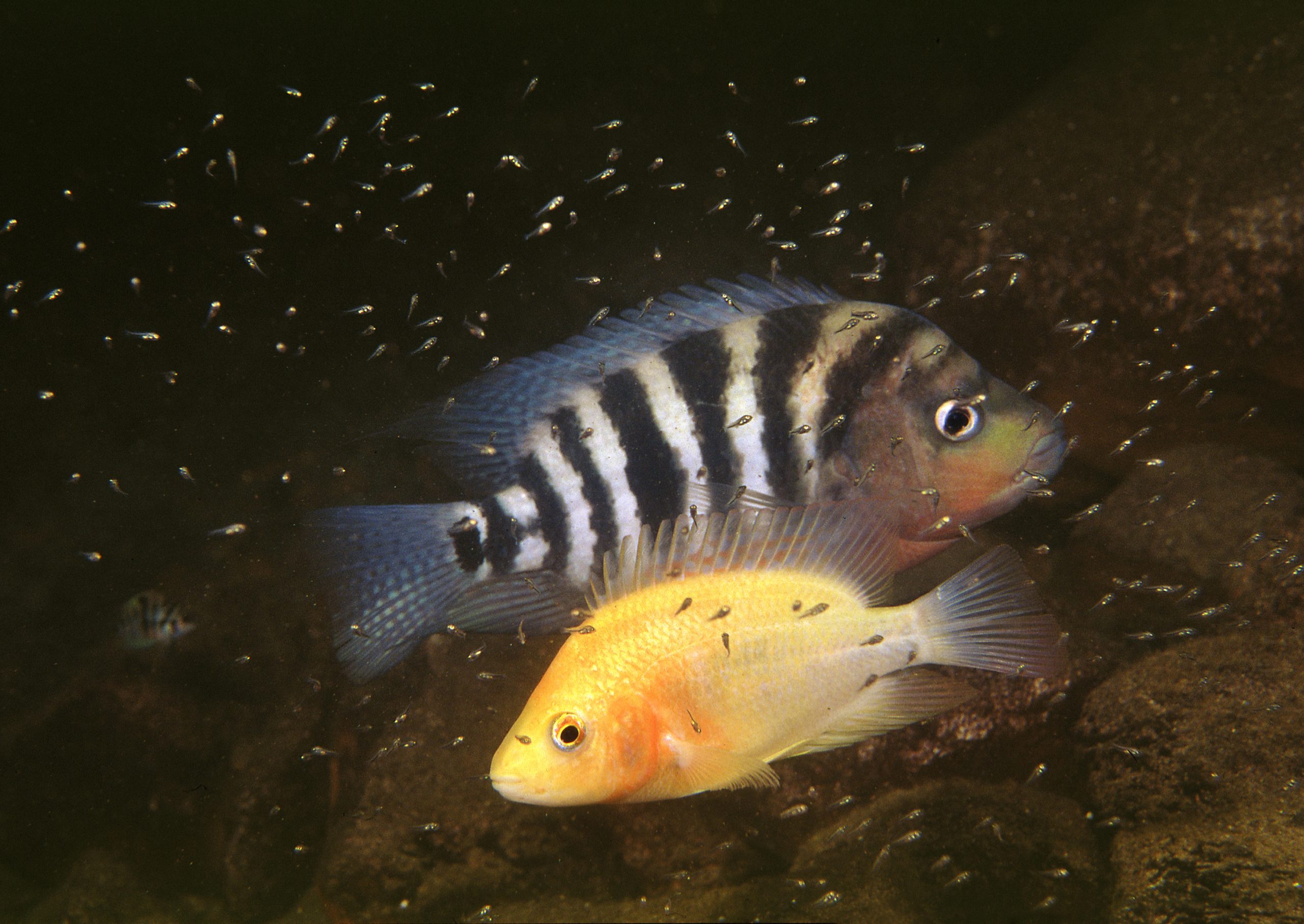
A study led by Axel Meyer, Professor of Zoology and Evolutionary Biology at the University of Konstanz, has successfully demonstrated the emergence of a new hybrid species in cichlid fishes. This is likely the first instance of this genetic speciation method in vertebrates. The researchers reveal that a new hybrid species has emerged from the cichlid A. sagittae and A. xiloaensis in the crater lake Xiloá in Nicaragua using whole genome sequencing of more than 120 individuals as well as a number of other techniques.
Their findings were recently published in the journal Nature Communications.
The study team discovered fish in the crater lake Xiloá back in 2018 that resembled hybrids of the two cichlid species. Furthermore, genetic testing revealed that these fish’s genomes had elements of both species, depending on the marker.
“We can now sequence the complete genomes of the fishes and look much more closely at how the genome of the hybrids is composed. In fact, it was possible to identify on the chromosome which part of the hybrid originated from A. sagittae and which from A. xiloaensis” says Axel Meyer.
The Majority of Fishes Reproduce Among Themselves
The study team was also able to discover that the majority of individuals of the new species reproduced solely among themselves due to the detail of the markings, indicating that it is indeed a new species. It is also plausible that hybrids developed as a result of a “mistake” in mate selection, which would explain why their offspring could prove infertile or hybrid animals that mate with one of the two parent species again (“backcrossing”).
The new, very young species, emerging within a few hundred generations, is not directly intermediate between the two parent species, A. sagittae and A. xiloaensis, neither morphologically, physiologically, nor ecologically. Instead, the hybrids show aspects of a transgressive phenotype with traits not found in either parent species. As a result, they occupy a different ecological niche than their two parent species, allowing them to coexist in the lake.
Ecological Consequences From the Physique
The fishes differ from their ancestors in the shape of their caudal root – the part of the body where the tail fin attaches. “Possibly that is why they are better swimmers. You find this type of body proportion often in fish that can accelerate very quickly”, Meyer explains. This allows the hybrids to roam different feeding grounds than the other four species in lake Xiloá, including both parental species, of which one is an elongated species living in open water, while the other has a deeper-bodied shape and lives close to the shore.
With stable isotope analysis of the animals, the researchers were able to show that the prey of the new species consists of other fish, crabs, and shrimp – prey that is already very high on the food chain. Probably the individuals of the new species are the most successful predators of the lake.
Unique Ecological Niche
The new hybrid species occupies a unique ecological niche, which is very important in a small ecosystem like Lake Xiloá, whose diameter is only a little more than one kilometer. “The prerequisite for individual species coexisting for long periods of time in such a limited habitat is that they are no competition for each other”, says Axel Meyer. Especially since the new speciation does not occur over a large geographic distance, but under sympatric conditions within the same small habitat as that of the original species.
Genome sequencing, morphometrics, stable isotope analysis – with this combination of different data sets, the researchers were able to understand how the new species has evolved. In a new study, the researchers examine how often errors occur when hybrid fishes are given the choice of reproducing with each other or with individuals of their parent species.
Finally, the question is: How is mate choice controlled genetically?
Reference: “Early stages of sympatric homoploid hybrid speciation in crater lake cichlid fishes” by Melisa Olave, Alexander Nater, Andreas F. Kautt and Axel Meyer, 6 October 2022, Nature Communications.
DOI: 10.1038/s41467-022-33319-4
Never miss a breakthrough: Join the SciTechDaily newsletter.
Follow us on Google and Google News.
6 Comments
Have they ruled out that the newly discovered thing might be caused by human manipulation….. I mean how many altered things are out there as they did trail and error over and over….
🙏.for nice articles.
hi. i can not read for when you zoom to read. the page not move to left and right. please adjust it.
Furry wolf boys and catgirls when?
It still remains a fish. How do you explain it turning into a reptile? Evolutionary scientists are wasting their time. They should find a real job
Blaze, that’s exactly what I was thinking! How can we know if human influence has or hasn’t effected these fish? And if if has, how do we figure out what that effect was, and how and why it altered the fish? Ugh. It’s a confound that threatens the internal validity of the study/research, especially because they didn’t even consider that as a variable to include in their research and the results of the research. I’m pretty surprised it was overlooked.