
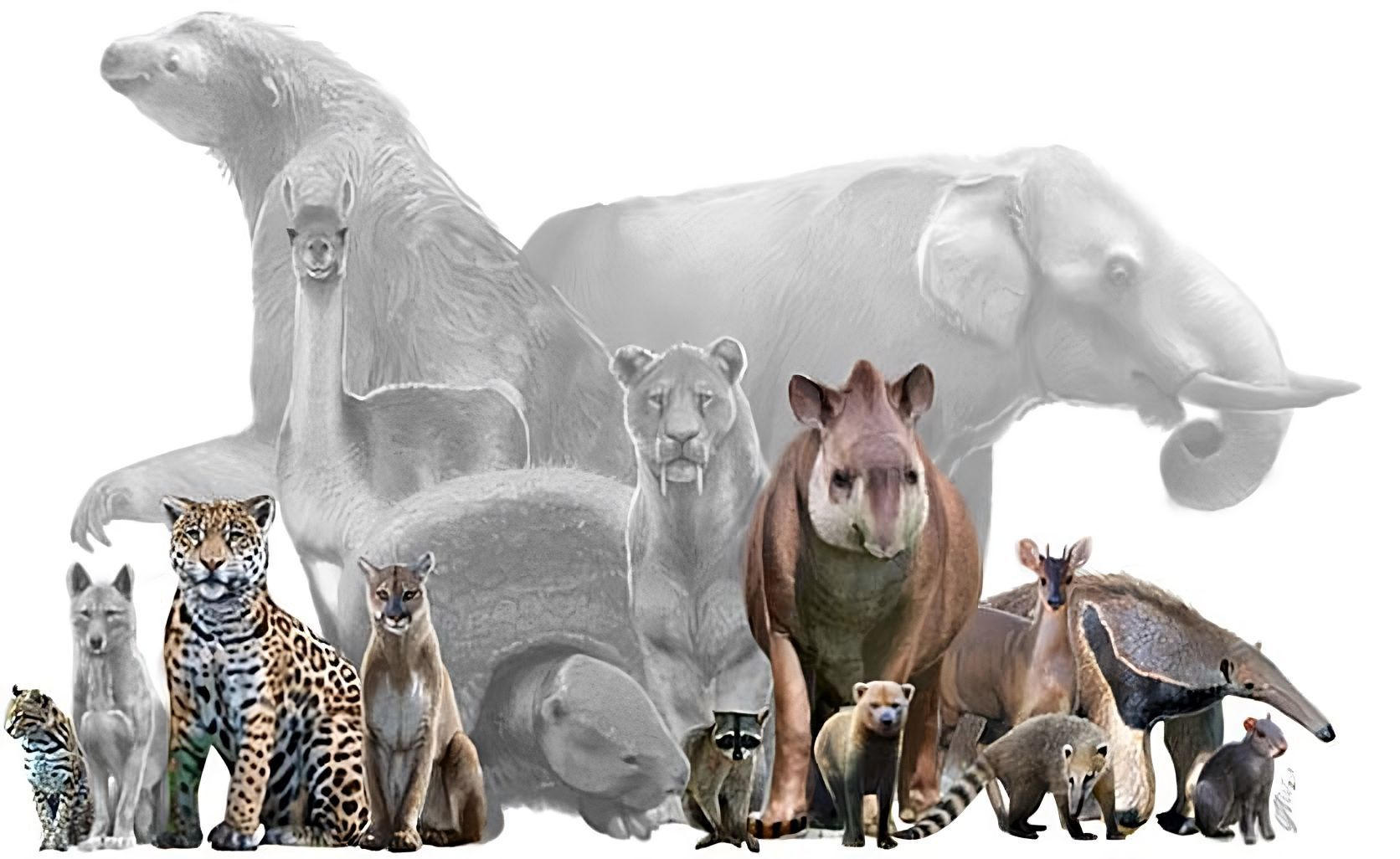
The Scale of the Biodiversity Crisis Is Shown by Recreating 130,000 Years of Mammal Food Webs
A recent study, published in the journal Science, provides the clearest picture yet of the long-term effects of land mammal declines on food webs.
It’s not a pretty sight.
“While about 6% of land mammals have gone extinct in that time, we estimate that more than 50% of mammal food web links have disappeared,” said ecologist Evan Fricke, lead author of the study. “And the mammals most likely to decline, both in the past and now, are key for mammal food web complexity.”
The Importance of Food Web Complexity
A food web is comprised of all the connections between predators and their prey in a given region. Complex food webs are essential for managing populations in a manner that allows more species to coexist, hence promoting the biodiversity and stability of ecosystems. But animal losses may diminish this complexity, thereby reducing the resilience of an ecosystem.

Although declines of mammals are a well-documented aspect of the biodiversity crisis, with many animals either extinct or surviving in a small portion of their historic geographic ranges, the extent to which these losses have impacted the world’s food webs has remained unclear.
To understand what has been lost from food webs linking land mammals, Fricke led a team of scientists from the United States, Denmark, the United Kingdom, and Spain in using the latest techniques from machine learning to determine “who ate who” from 130,000 years ago to today. Fricke conducted the research during a faculty fellowship at Rice University and is currently a research scientist at the Massachusetts Institute of Technology.
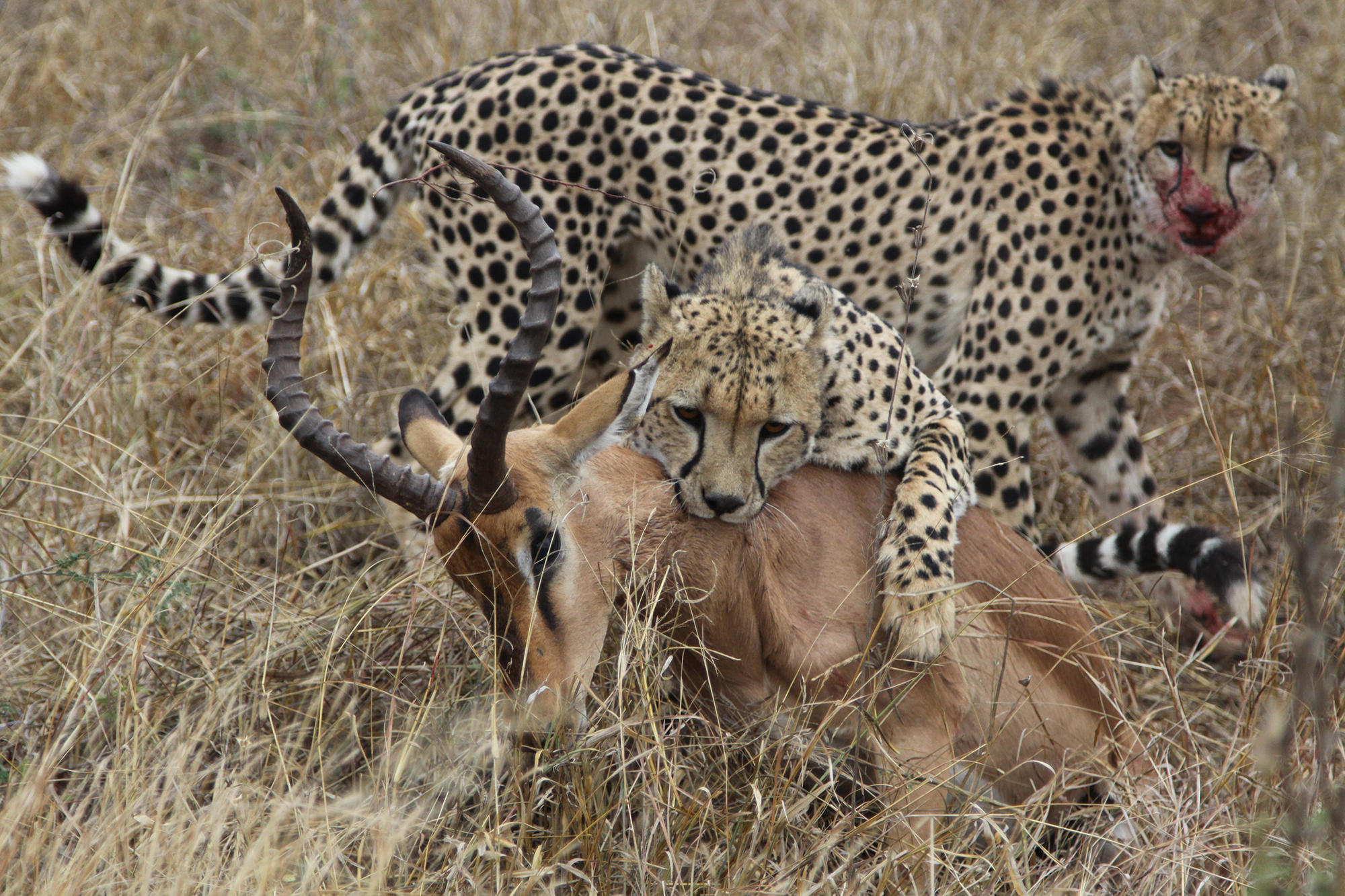
Using data from modern observations of predator-prey interactions, Fricke and colleagues trained their machine learning system to determine how species characteristics impacted the probability that one species would prey on another. Once trained, the model could predict predator-prey interactions between species pairings that have not been seen directly.
“This approach can tell us who eats whom today with 90% accuracy,” said Rice ecologist Lydia Beaudrot, the study’s senior author. “That is better than previous approaches have been able to do, and it enabled us to model predator-prey interactions for extinct species.”
The research offers an unprecedented global view into the food web that linked ice age mammals, Fricke said, as well as what food webs would look like today if saber-toothed cats, giant ground sloths, marsupial lions, and wooly rhinos still roamed alongside surviving mammals.
“Although fossils can tell us where and when certain species lived, this modeling gives us a richer picture of how those species interacted with each other,” Beaudrot said.
Extinctions and the Slow-Motion Collapse of Food Webs
By charting changes in food webs over time, the analysis revealed that food webs worldwide are collapsing because of animal declines.
“The modeling showed that land mammal food webs have degraded much more than would be expected if random species had gone extinct,” Fricke said. “Rather than resilience under extinction pressure, these results show a slow-motion food web collapse caused by selective loss of species with central food web roles.”
Potential for Restoration through Species Recovery
The study also showed all is not lost. While extinctions caused about half of the reported food web declines, the rest stemmed from contractions in the geographic ranges of existing species.
“Restoring those species to their historic ranges holds great potential to reverse these declines,” Fricke said.
He said efforts to recover native predator or prey species, such as the reintroduction of lynx in Colorado, European bison in Romania, and fishers in Washington state, are important for restoring food web complexity.
“When an animal disappears from an ecosystem, its loss reverberates across the web of connections that link all species in that ecosystem,” Fricke said. “Our work presents new tools for measuring what’s been lost, what more we stand to lose if endangered species go extinct and the ecological complexity we can restore through species recovery.”
Reference: “Collapse of terrestrial mammal food webs since the Late Pleistocene” by Evan C. Fricke, Chia Hsieh, Owen Middleton, Daniel Gorczynski, Caroline D. Cappello, Oscar Sanisidro, John Rowan, Jens-Christian Svenning and Lydia Beaudrot, 25 August 2022, Science.
DOI: 10.1126/science.abn4012
The study was funded by Rice University, the Villum Fonden, and the Independent Research Fund Denmark.
Never miss a breakthrough: Join the SciTechDaily newsletter.
Follow us on Google and Google News.
1 Comment
What can every day people do to help?