
Close Menu
    Facebook X (Twitter) Instagram
    SciTechDaily
    • Biology
    • Chemistry
    • Earth
    • Health
    • Physics
    • Science
    • Space
    • Technology
    Facebook X (Twitter) Pinterest YouTube RSS
    SciTechDaily
    Home»Earth»A Cirrus Sign of Tornadoes – An Early Clue of Destructive Weather
    Earth

    A Cirrus Sign of Tornadoes – An Early Clue of Destructive Weather

    By Adam Voiland, NASA Earth ObservatoryJuly 5, 20211 Comment2 Mins Read
    Facebook Twitter Pinterest Telegram LinkedIn WhatsApp Email Reddit
    Share
    Facebook Twitter LinkedIn Pinterest Telegram Email Reddit
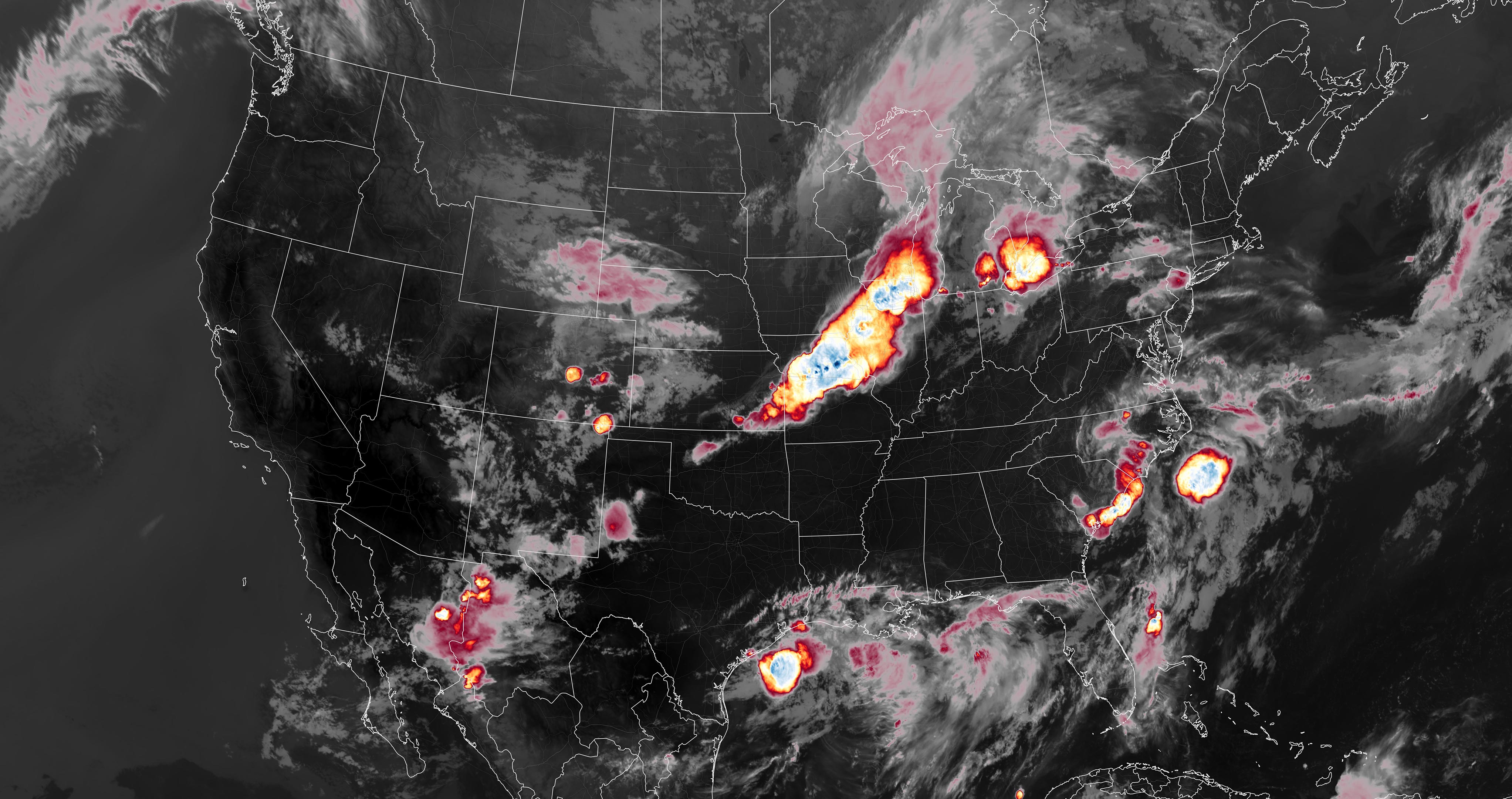
    Brightness Temperature US June 2021 Annotated
    June 16, 2021.
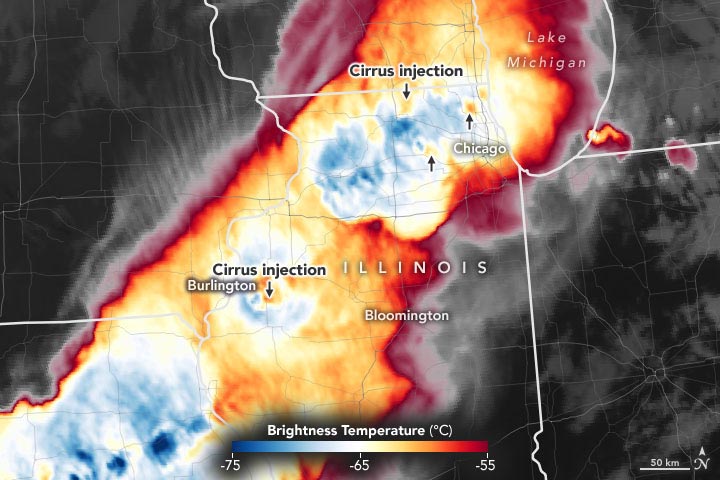
    Cirrus Injection Illinois
    June 16, 2021. Detail.

    Severe thunderstorms can draw plumes of cirrus clouds into the stratosphere, a sign that tornadoes, large hail, or damaging winds may be coming soon.

    After a group of tornadoes emerged from a squall line on June 20, 2021, and one touched down in the Chicago suburb of Naperville, the effects on the ground were obvious. The EF-3 tornado had 140-mile-per-hour (225 kph) winds that toppled thousands of trees, injured 11 people, and cut electricity to tens of thousands. The tornado damaged at least 230 houses, including one that collapsed.

    From a satellite perspective, the dynamics of the storm system were more subtle, but they offered at least one early clue that the squall line had a good chance of unloading destructive weather. The cloud temperature data above, from the Advanced Baseline Imager (ABI) on the GOES-R satellite, was collected about 45 minutes before the tornado touched down. Warmer air is red and cooler air is blue.

    “Notice the plumes of warm air downwind of updrafts—the cold overshooting cloud tops,” said Kristopher Bedka of NASA’s Langley Research Center. “Those are what we call ‘above-anvil cirrus plumes’ (AACPs)—cirrus clouds that were injected into the stratosphere.”

    Most thunderstorms can grow up to the tropopause, the boundary between the troposphere and the stratosphere. When strong storms reach the tropopause, their tops flatten out, giving them an anvil-like appearance. Above-anvil cirrus plumes form when especially intense updrafts puncture the tropopause and airflow draws cirrus cloud tops into the stratosphere. Cirrus plumes are typically warmer than underlying anvil clouds because the air in the stratosphere increases with altitude.

    “Detecting an AACP isn’t a guarantee that you’ll get a tornado or other severe weather like we saw with the Naperville event, but our analysis of more than 400 of these events observed by either GOES-14 or GOES-16 showed about three-quarters of the time these cirrus plumes appeared 10 minutes or more before the most severe weather hits,” said Bedka. “Cirrus plumes routinely occur atop the world’s most intense storms, and tracking them can provide valuable lead time that saves lives and property.”

    NASA Earth Observatory images by Joshua Stevens, using GOES 16 imagery courtesy of NOAA and the National Environmental Satellite, Data, and Information Service (NESDIS).

    Never miss a breakthrough: Join the SciTechDaily newsletter.
    Follow us on Google and Google News.

    NASA NASA Earth Observatory Tornadoes Weather
    Share. Facebook Twitter Pinterest LinkedIn Email Reddit

    Related Articles

    Satellite Imagery Shows 16 Mile Line of Destruction From EF-3 Tornado Ripping Through Gaylord

    Tornado Damage: Nighttime Satellite Images Detail Kentucky Blackout

    “Godzilla” Dust Cloud Described As “Amazing” by NASA Astronaut Aboard Space Station

    Satellite Maps Shows Signs of Drought in European Groundwater

    Meteorologists Shocked as Heat and Fire Scorches Siberia

    Unusual “Volcano Track” Clouds Investigated

    After Two Years of Drought Ends, Southeastern Australia Turns Green

    “Wedge Failure” Landslide in Alaska

    Muddy Flooding After Catastrophic Dam Failures in Michigan Seen From Space

    1 Comment

    1. Storm Watcher on July 5, 2021 3:54 pm

      Storm chasers and watchers have known of this phenomenon for decades now. You can actually see this from the ground if the storm is far enough away for you to see the top of the ‘anvil.’ I suppose I am happy that it should be tracked more in the future, but I am concerned that it hasn’t already been tracked.

      Reply
    Leave A Reply Cancel Reply

    • Facebook
    • Twitter
    • Pinterest
    • YouTube

    Don't Miss a Discovery

    Subscribe for the Latest in Science & Tech!

    Trending News

    One of the Universe’s Largest Stars May Be Getting Ready To Explode

    Scientists Discover Enzyme That Could Supercharge Ozempic-Like Weight Loss Drugs

    Popular Sweetener Linked to DNA Damage – “It’s Something You Should Not Be Eating”

    Ancient “Rock” Microbes May Reveal How Complex Life Began

    Researchers Capture Quantum Interference in One of Nature’s Rarest Atoms

    “A Plague Is Upon Us”: The Mass Death That Changed an Ancient City Forever

    Scientists Discover Game-Changing New Way To Treat High Cholesterol

    This Small Change to Your Exercise Routine Could Be the Secret to Living Longer

    Follow SciTechDaily
    • Facebook
    • Twitter
    • YouTube
    • Pinterest
    • Newsletter
    • RSS
    SciTech News
    • Biology News
    • Chemistry News
    • Earth News
    • Health News
    • Physics News
    • Science News
    • Space News
    • Technology News
    Recent Posts
    • Scientists Rethink Extreme Warming After Surprising Ocean Discovery
    • The Surprising Role of Asteroids in the Origin of Life
    • Scientists Raise Concerns Over Newly Recognized Pollutant Found Everywhere in the Air
    • New Study Challenges 40-Year Puzzle About Childhood Body Fat
    • 20-Year Study Finds Daily Multivitamins Don’t Extend Lifespan
    Copyright © 1998 - 2026 SciTechDaily. All Rights Reserved.
    • Science News
    • About
    • Contact
    • Editorial Board
    • Privacy Policy
    • Terms of Use

    Type above and press Enter to search. Press Esc to cancel.