
Close Menu
    Facebook X (Twitter) Instagram
    SciTechDaily
    • Biology
    • Chemistry
    • Earth
    • Health
    • Physics
    • Science
    • Space
    • Technology
    Facebook X (Twitter) Pinterest YouTube RSS
    SciTechDaily
    Home»Earth»“Wedge Failure” Landslide in Alaska
    Earth

    “Wedge Failure” Landslide in Alaska

    By Adam Voiland, NASA Earth ObservatoryMay 31, 2020No Comments2 Mins Read
    Facebook Twitter Pinterest Telegram LinkedIn WhatsApp Email Reddit
    Share
    Facebook Twitter LinkedIn Pinterest Telegram Email Reddit
    Yudi Peak Annotated
    (Click image for full view.) Yudi Peak, Alaska on May 6, 2020. Before the landslide.

    After a cold winter, a shift in weather patterns has unleashed a blast of early summer heat across Alaska. On May 9, 2020, temperatures hit 69°F (21°C) in Anchorage, just one degree shy of the record.

    For a state with plenty of mountains, glaciers, and permafrost, spring and summer heat can bring more than just greening leaves and pollen in the air. It can also thaw soils in ways that encourage landslides.
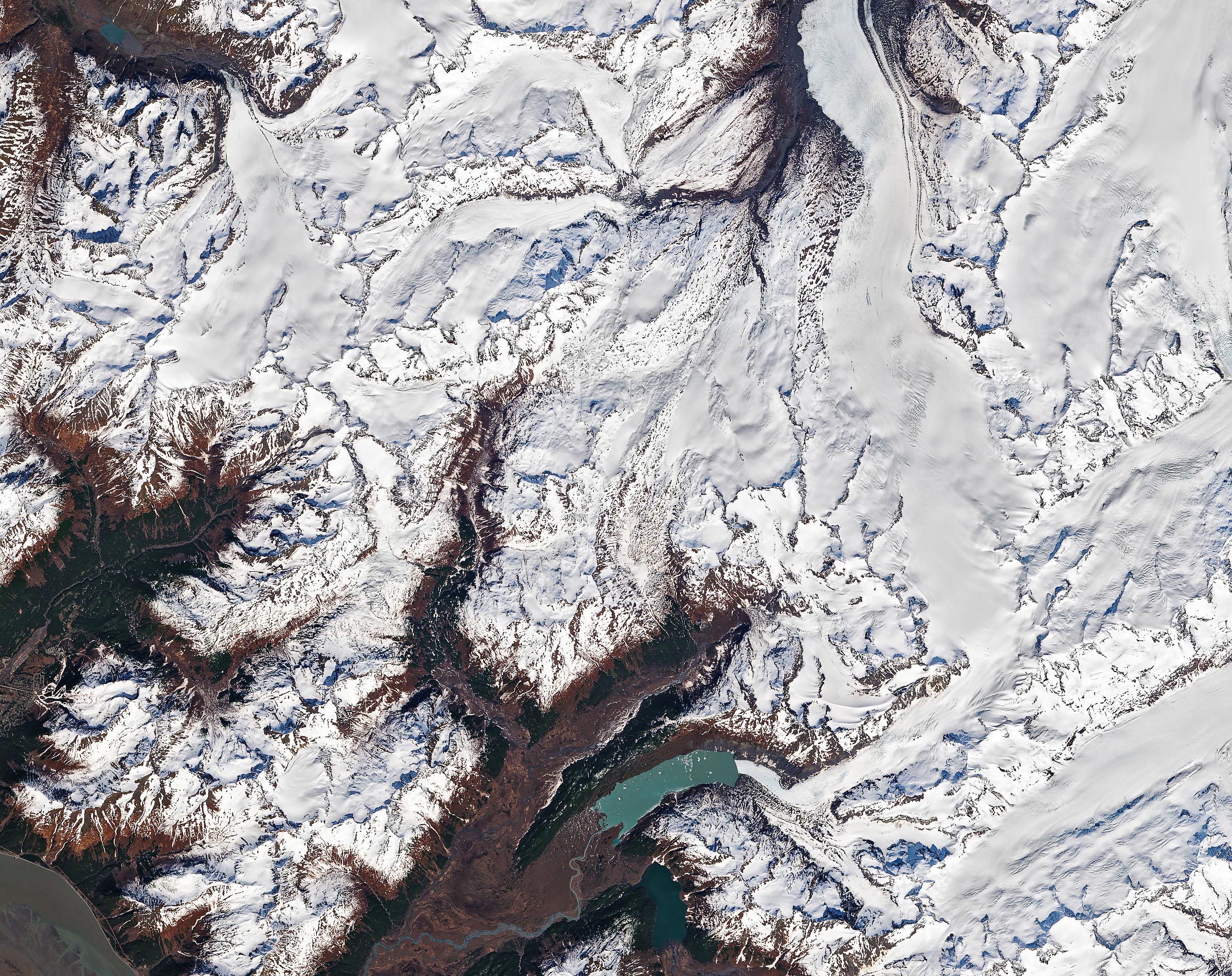
    Yudi Peak Landslide Annotated
    (Click image for full view.) Yudi Peak, Alaska on May 13, 2020. After the landslide.

    That was likely what happened on Yudi Peak, a mountain near Anchorage, in May 2020. In the early days of the month, a “wedge failure”—a type of landslide that occurs along multiple planes—sent rocky debris sliding down the snow-topped mountain, according to University of Sheffield landslide watcher Dave Petley. Starting from an elevation of 1430 meters (4,690 feet), debris slid across roughly 2 kilometers (1 mile) before halting at an elevation of 1110 meters.

    On May 13, 2020, the Operational Land Imager (OLI) on Landsat 8 captured this image of the trail of landslide debris. For a closer view, Alpine Air Alaska has posted aerial photographs and a video.

    “It is well established that Alaska sees large landslides in the spring, and that their increasing size and frequency is driven by global heating,” Petley wrote.

    NASA Earth Observatory images by Joshua Stevens, using Landsat data from the U.S. Geological Survey.

    Never miss a breakthrough: Join the SciTechDaily newsletter.
    Follow us on Google and Google News.

    Alaska Geology NASA NASA Earth Observatory Weather
    Share. Facebook Twitter Pinterest LinkedIn Email Reddit

    Related Articles

    Incredible Rare Peek at Patagonia in Winter

    “Godzilla” Dust Cloud Described As “Amazing” by NASA Astronaut Aboard Space Station

    Satellite Maps Shows Signs of Drought in European Groundwater

    Meteorologists Shocked as Heat and Fire Scorches Siberia

    Unusual “Volcano Track” Clouds Investigated

    After Two Years of Drought Ends, Southeastern Australia Turns Green

    Muddy Flooding After Catastrophic Dam Failures in Michigan Seen From Space

    NASA Scientists Collect Moon-Like Rocks From Site in Montana

    Shocking Disappearance of Ecuador’s Tallest Waterfall

    Leave A Reply Cancel Reply

    • Facebook
    • Twitter
    • Pinterest
    • YouTube

    Don't Miss a Discovery

    Subscribe for the Latest in Science & Tech!

    Trending News

    New Pill Lowers Stubborn Blood Pressure and Protects the Kidneys

    Humans May Have Hidden Regenerative Powers, New Study Suggests

    Scientists Just Solved the Mystery of Why Crabs Walk Sideways

    Doctors Are Surprised by What This Vaccine Is Doing to the Heart

    This Popular Supplement May Boost Your Brain, Not Just Your Muscles

    Scientists Say This Simple Supplement May Actually Reverse Heart Disease

    Warming Oceans Could Trigger a Dangerous Methane Surge

    This Simple Movement Could Be Secretly Cleaning Your Brain

    Follow SciTechDaily
    • Facebook
    • Twitter
    • YouTube
    • Pinterest
    • Newsletter
    • RSS
    SciTech News
    • Biology News
    • Chemistry News
    • Earth News
    • Health News
    • Physics News
    • Science News
    • Space News
    • Technology News
    Recent Posts
    • Scientists Discover Cheap Material That Kills Deadly Superbugs
    • This Magnetic Field Trick Creates Entirely New Forms of Matter
    • Astronomers Stunned by Ancient Galaxy With No Spin
    • Physicists May Be on the Verge of Discovering “New Physics” at CERN
    • AI Learns To Work Backward and Reveal Hidden Forces in Nature
    Copyright © 1998 - 2026 SciTechDaily. All Rights Reserved.
    • Science News
    • About
    • Contact
    • Editorial Board
    • Privacy Policy
    • Terms of Use

    Type above and press Enter to search. Press Esc to cancel.