

Scientists have discovered that breast cancer can disturb the brain’s daily stress hormone rhythms early in disease development.
“The brain is an exquisite sensor of what’s going on in your body,” says Cold Spring Harbor Laboratory Assistant Professor Jeremy Borniger. “But it requires balance. Neurons need to be active or inactive at the right times. If that rhythm goes out of sync even a little bit, it can change the function of the entire brain.”
Researchers in Borniger’s lab have shown that breast cancer alters the normal daily pattern of stress hormone release in mice. The hormone involved is corticosterone, which plays a central role in the rodent stress response. In people, the comparable hormone is cortisol.
Under healthy conditions, these hormones follow a predictable cycle, rising and falling over the course of the day. In mice with breast cancer, however, the researchers found that tumors dampen this natural pattern, leading to a flattened hormone profile that is associated with poorer quality of life and higher rates of death.
Stress, Sleep, and the Body’s Internal Clock
When daily biological rhythms are disturbed, the effects can extend well beyond hormone levels. In humans, disrupted rhythms have been linked to stress-related problems such as insomnia and anxiety, both of which are frequently reported by people with cancer.
Maintaining stable stress hormone levels depends on a tightly regulated feedback system known as the HPA axis. This system connects the hypothalamus (H), pituitary gland (P), and adrenal glands (A), which constantly communicate to keep the body’s internal timing on track and preserve regular daily rhythms.
Borniger was surprised to find that in mice, breast cancer can disrupt those rhythms before tumors take hold: “Even before the tumors were palpable, we see about a 40 or 50% blunting of this corticosterone rhythm,” he said. “We could see that happening within three days of inducing the cancer, which was very interesting.”
Resetting the Brain’s Rhythm to Fight Tumors
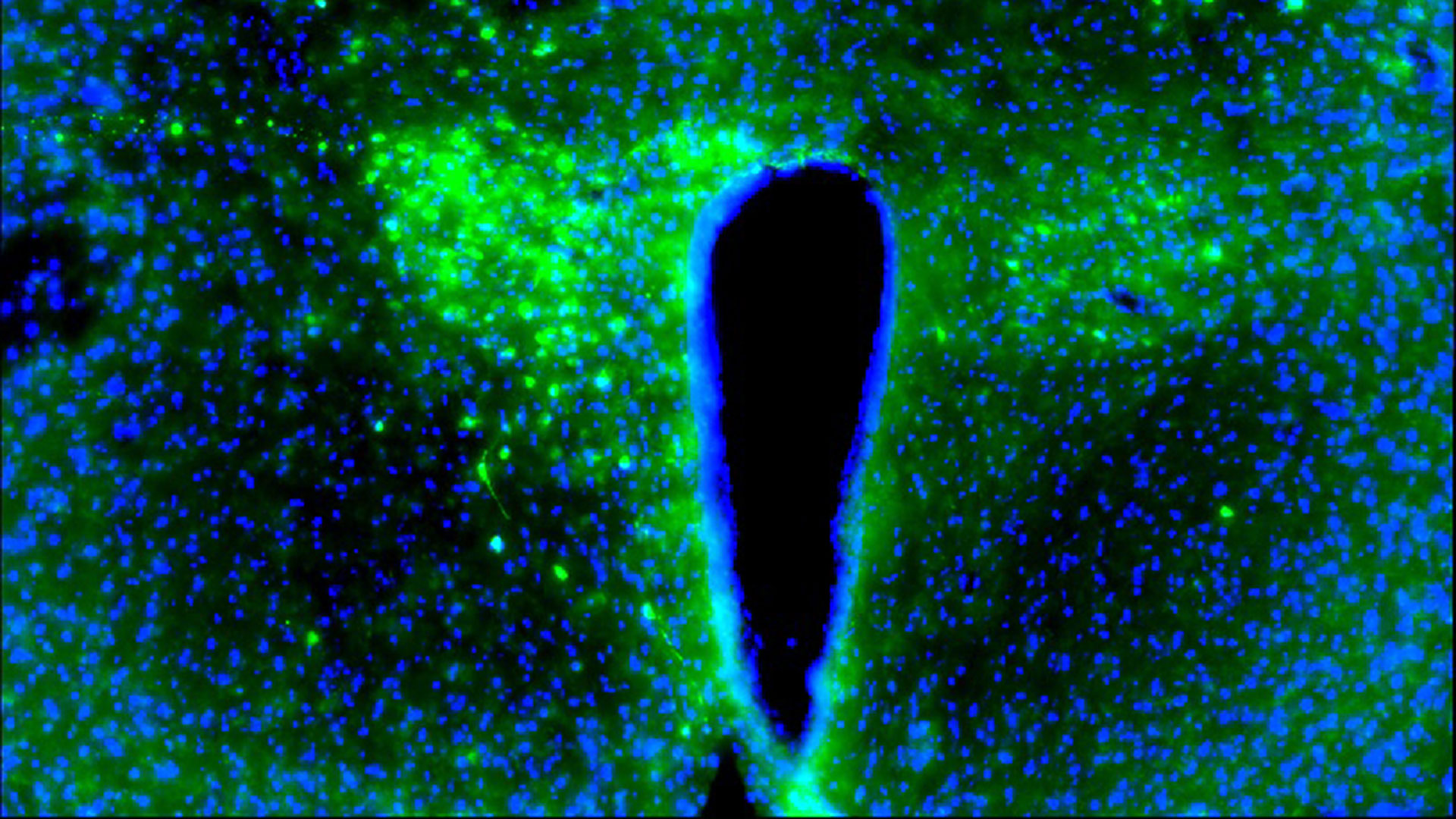
When the team looked at the hypothalamus, they saw that key neurons were locked into a hyperactive, yet low-output state. Once the team stimulated these neurons to mimic the mouse’s normal day-night cycle, regular stress hormone rhythms restarted. The adjustment pushed anti-cancer immune cells into breast tumors, causing them to shrink significantly. Borniger explains:
“Enforcing this rhythm at the right time of day increased the immune system’s ability to kill the cancer—which is very strange, and we’re still trying to figure out exactly how that works. The interesting thing is if we do the same stimulation at the wrong time of day, it no longer has this effect. So, you really need to have this rhythm at the right time to have this anti-cancer effect.”
The team is now investigating exactly how tumors disrupt the body’s healthy rhythms. Borniger hopes their work may one day help bolster existing therapies.
“What’s really cool is that we didn’t treat the mice with anti-cancer drugs,” he says. “We’re focused on making sure the patient is physiologically as healthy as possible. That itself fights the cancer. This might one day help boost the effectiveness of existing treatment strategies and significantly reduce the toxicity of many of these therapies.”
Reference: “Aberrant hypothalamic neuronal activity blunts glucocorticoid diurnal rhythms in murine breast cancer” by Adrian M. Gomez, Yue Wu, Chao Zhang, Leah Boyd, Tse-Luen Wee, Joseph Gewolb, Corina Amor, Lucas Cheadle and Jeremy C. Borniger, 15 December 2025, Neuron.
DOI: 10.1016/j.neuron.2025.11.019
Funding: NIH/National Institutes of Health, NIH/National Cancer Institute, American Association for Cancer Research, U.S. Department of Defense, NIH/National Institute on Aging, Brain and Behavior Research Foundation, Howard Hughes Medical Institute, Rita Allen Foundation, McKnight Foundation, Simons Foundation, Esther A. and Joseph Klingenstein Fund
Never miss a breakthrough: Join the SciTechDaily newsletter.
Follow us on Google and Google News.