
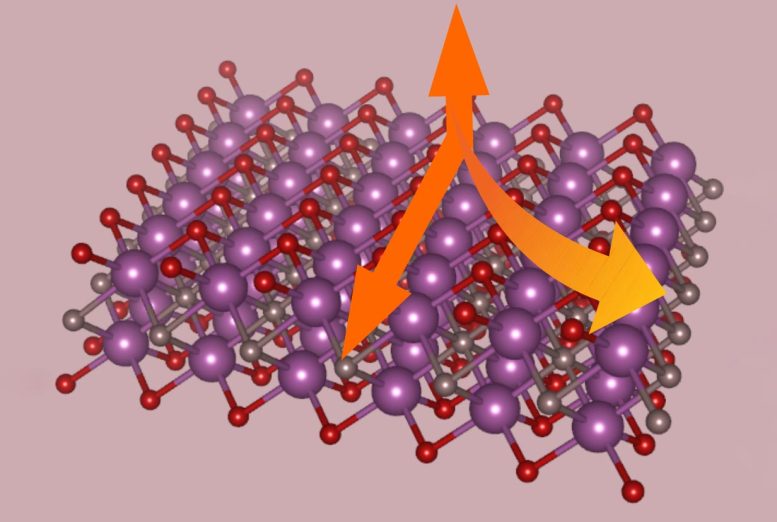
Researchers developed an analysis model using magnetic transport characteristics of molecules attached to the surface of MXene. The establishment of a property prediction and classification system is expected to be utilized to produce uniform-quality MXene.
Developed in 2011, MXene is a two-dimensional nanomaterial with alternating metal and carbon layers, which has high electrical conductivity and can be combined with various metal compounds, making it a material that can be utilized in various industries such as semiconductors, electronic devices, and sensors.
To properly utilize MXene, it is important to know the type and amount of molecules covered on the surface. If the molecules covered on the surface are fluorine, the electrical conductivity decreases, and the efficiency of electromagnetic wave shielding decreases. However, since MXene is only 1 nm (nanometer — billionth of a meter) thick, it takes several days to analyze the molecules on the surface even with a high-performance electron microscope, so mass production has been impossible until now.
Breakthrough in Analyzing MXene Surface
The research team led by Seung-Cheol Lee, director of the Indo-Korea Science and Technology Center (IKST) at the Korea Institute of Science and Technology (KIST), has developed a method to predict the distribution of molecules on the surface using the magnetoresistance property of MXene. By utilizing this method, it is possible to measure the molecular distribution of MXene with a simple measurement, enabling quality control in the production process, which is expected to open the way to mass production that was not possible until now.
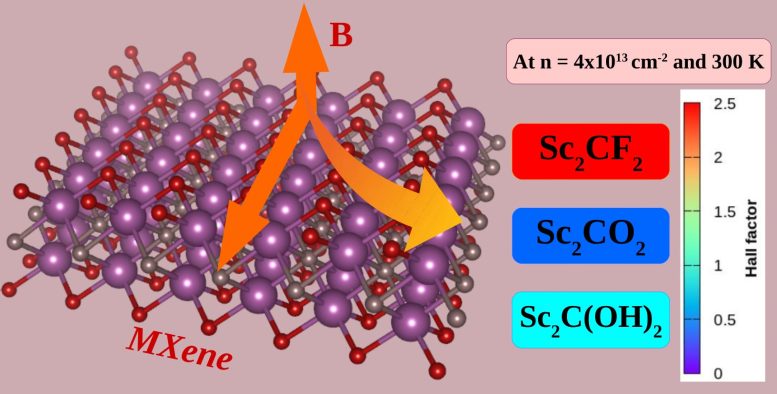
The research team developed a two-dimensional material property prediction program based on the idea that electrical conductivity or magnetic properties change depending on the molecules attached to the surface. As a result, they calculated the magnetic transport properties of MXene and succeeded in analyzing the type and amount of molecules adsorbed on the surface of MXene at atmospheric pressure and room temperature without any additional devices.
The Hall Scattering Factor and Applications
By analyzing the surface of the MXene with the developed property prediction program, it was predicted that the Hall scattering factor, which affects magnetic transport, changes dramatically depending on the type of surface molecules. The Hall Scattering Factor is a physical constant that describes the charge-carrying properties of semiconductor materials, and the team found that even when the same MXene was prepared, the Hall Scattering Factor had a value of 2.49, the highest for fluorine, 0.5 for oxygen, and 1 for hydroxide, allowing them to analyze the distribution of the molecules.
The Hall scattering coefficient has different applications based on the value of 1. If the value is lower than 1, it can be applied to high-performance transistors, high-frequency generators, high-efficiency sensors, and photodetectors, and if the value is higher than 1, it can be applied to thermoelectric materials and magnetic sensors. Considering that the size of the MXene is a few nanometers or less, the size of the applicable device and the amount of power required can be dramatically reduced.
Conclusion and Future Prospects
“Unlike previous studies that focused on the production and properties of pure MXene, this study is significant in that it provides a new method for surface molecular analysis to easily classify manufactured MXene,” said Seung-Cheol Lee, director of IKST. “By combining this result with experimental studies, we expect to be able to control the production process of MXene, which will be used to mass produce MXene with uniform quality.”
Reference: “Can magnetotransport properties provide insight into the functional groups in semiconducting MXenes?” by Namitha Anna Koshi, Anup Kumar Mandia, Bhaskaran Muralidharan, Seung-Cheol Lee and Satadeep Bhattacharjee, 14 April 2023, Nanoscale.
DOI: 10.1039/D2NR06409J
IKST was established in 2010 and conducts research in the areas of theory, source code, and software for computational science. In particular, source code is a programming language that implements algorithms that can be modeled and simulated, and is considered original research in the field of computational science, and the center conducts collaborative research with Indian universities and research institutes such as IIT Bombay to develop source code.
Never miss a breakthrough: Join the SciTechDaily newsletter.
Follow us on Google and Google News.
1 Comment
What a stupid article. All the researchers are from India and one from KIST, but the article gives an impression that the research is carried out in Korea.