

For decades, scientists were baffled by why thorny skates in the North Atlantic came in two distinct sizes. Despite extensive research, no genetic explanation was found, until now.
A team discovered that a genetic inversion was the key to this mystery, thanks to an unexpected pivot during COVID-19 restrictions. This breakthrough could help conservationists understand why thorny skates continue to decline, even after years of fishing bans. Climate change may be exacerbating the problem, and scientists now have a new direction for preserving this struggling species.
A Marine Mystery: The Thorny Skate’s Size Discrepancy
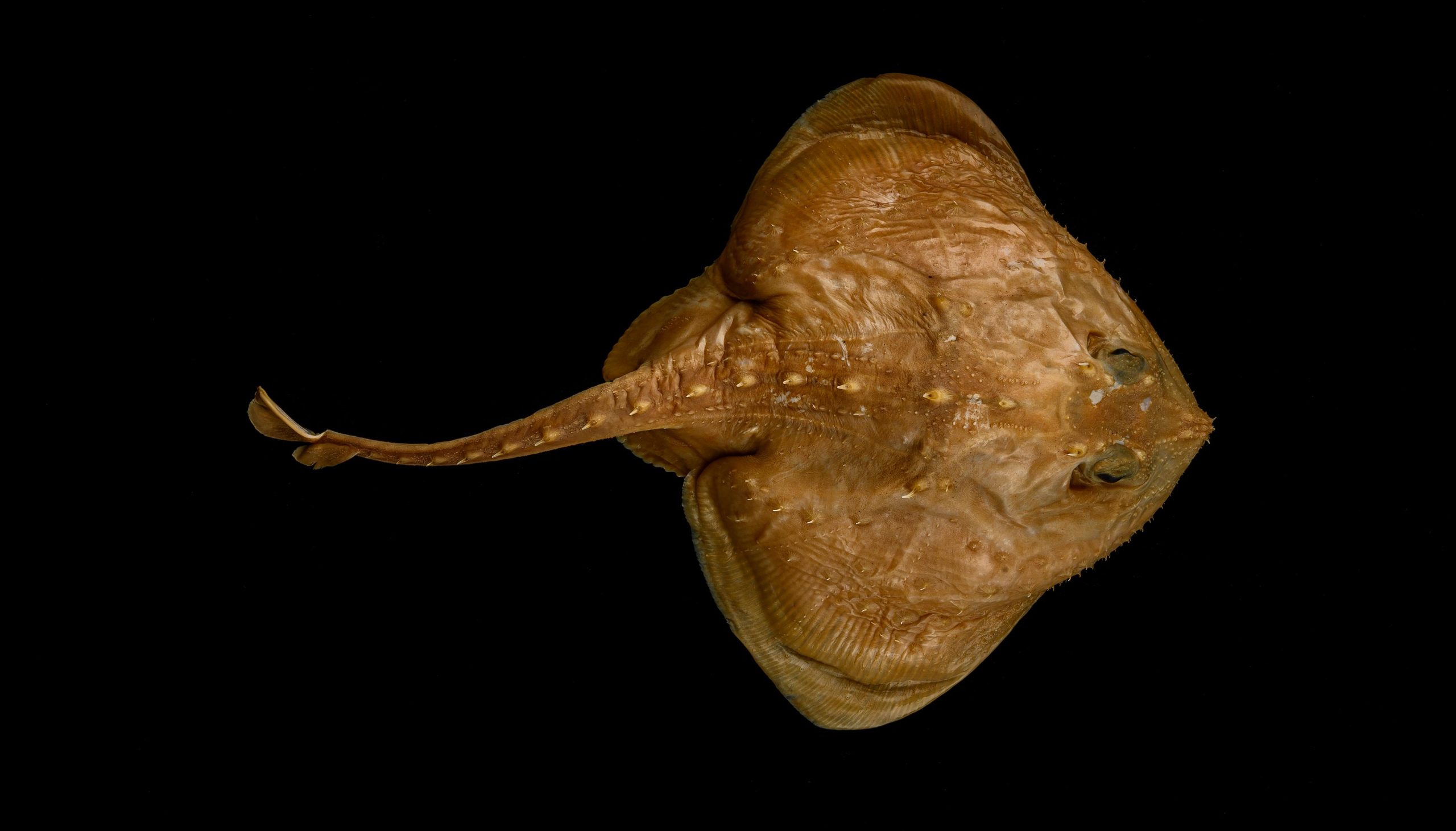
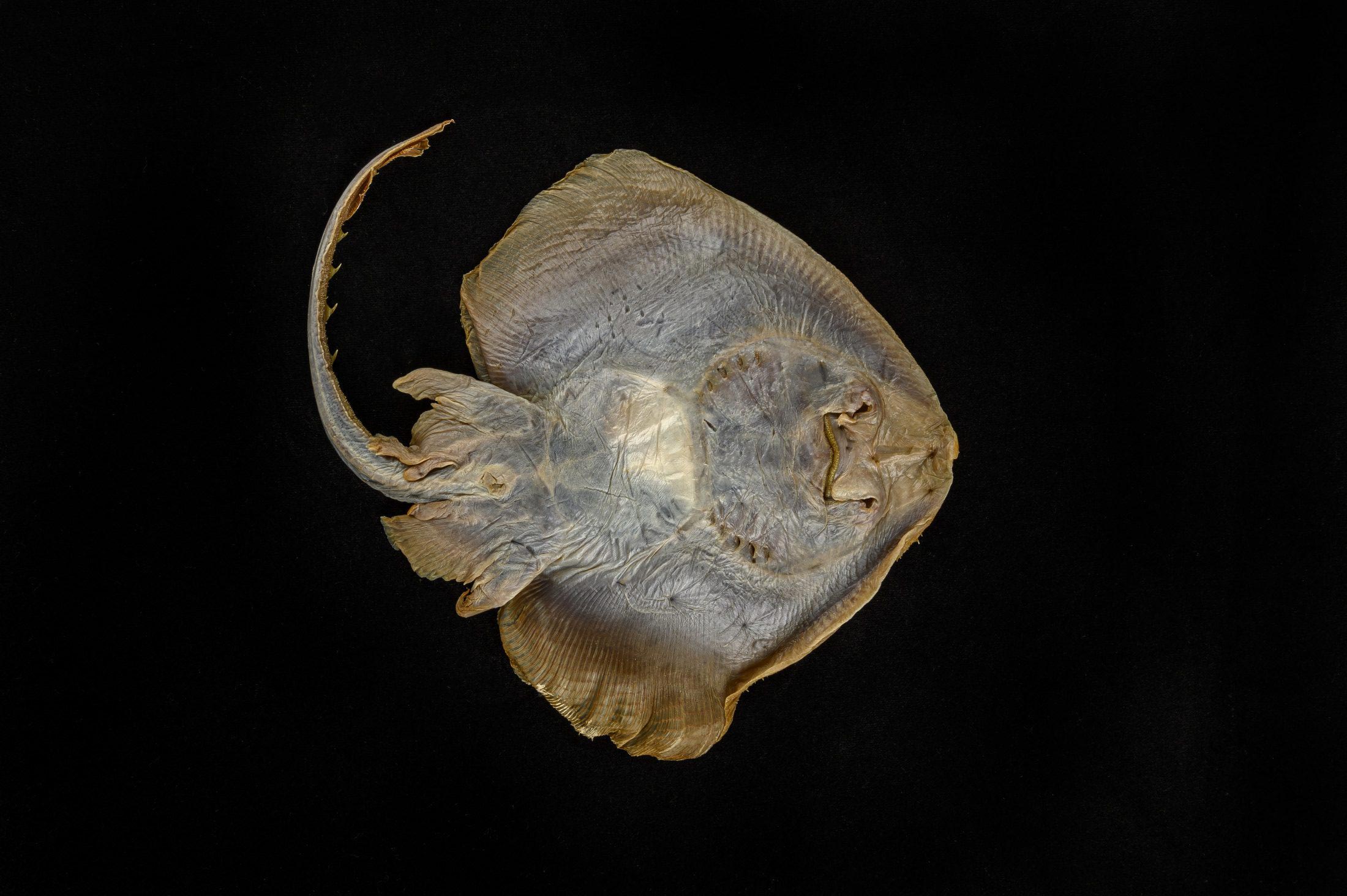
Back in 2002, when Jeff Kneebone was a college student, he found himself investigating a marine mystery that had puzzled scientists for decades. It involved the thorny skate, a species found in the North Atlantic. In some parts of its range, individuals appeared in two distinctly different sizes, regardless of whether they were male or female, and no one could explain why. At the time, Kneebone didn’t have the answer either.
Now, more than 20 years later, Kneebone and a team of researchers from the Florida Museum of Natural History say they’ve finally solved the puzzle—and unexpectedly, the breakthrough was made possible because of the COVID-19 pandemic.
Decades of Decline: The Thorny Skate’s Struggles
Scientists have known about the unusual size differences in thorny skates for nearly a century, but the issue gained urgency in the 1970s when populations began to decline sharply. Overfishing was believed to be the main culprit, and in response, the U.S. imposed a fishing ban in 2003 to protect both the thorny skate and the similarly struggling barndoor skate.
“The barndoor skate rebounded to the point where they’re now allowed to be harvested again, but for whatever reason, the thorny skate has remained low, despite 20 years of protection,” said Kneebone, who currently works as a senior scientist at the Anderson Cabot Center for Ocean Life at the New England Aquarium.
According to survey data collected by the National Oceanic and Atmospheric Administration, thorny skates have declined by 80% to 95% in some areas, particularly the Gulf of Maine, and they’re also languishing in low numbers in Canadian waters off the Scotian Shelf.
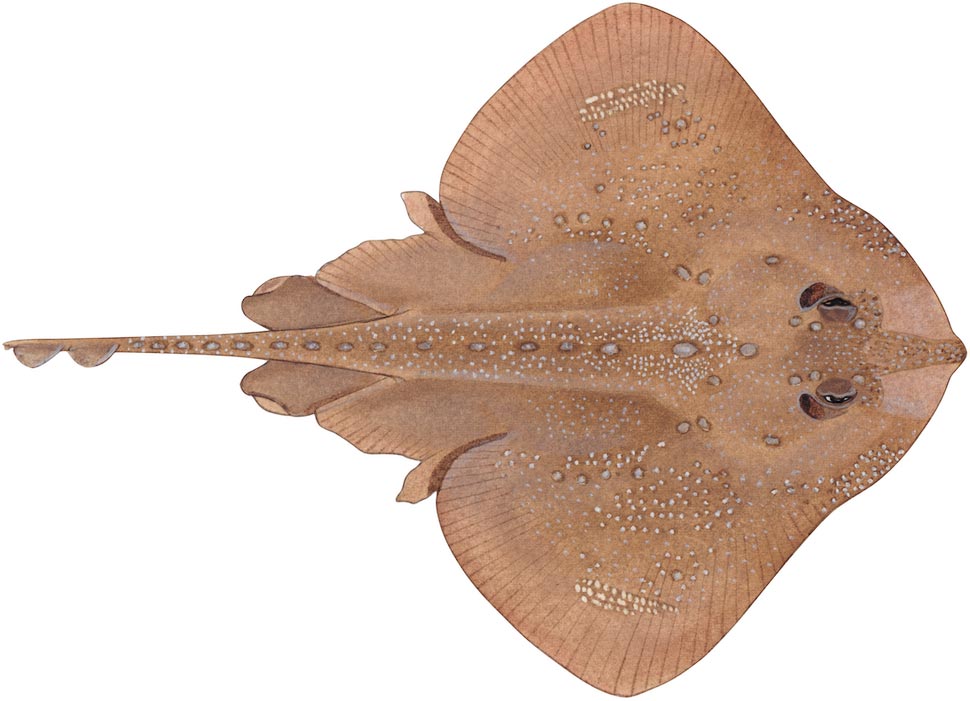
Thorny skates have a large distribution. They can be found from South Carolina up to the Arctic Circle and east through Scotland, Norway and Russia. In the Arctic and European part of their range, thorny skates come in just one size. It’s only along the coast of North America that small and large varieties coexist.
Genetic Investigation: Cracking the Code
“No one could understand what the deal was with these skates,” said study co-author Gavin Naylor, director of the Florida Program for Shark Research at the Florida Museum of Natural History. Scientists had tried studying thorny skate DNA to see if there were any differences between the large and small sizes, but they came up empty-handed. “The big forms are twice the size, and it takes them 11 years to reach adulthood. The small forms are mature by the time they’re six years old. There’s got to be genetic differences.”
Naylor thought he might be able to crack the code.
The idea was simple. Previous studies had tried to answer the question by analyzing a few short DNA sequences taken from a small number of thorny skates. It was a good strategy, Naylor reasoned, but fell short because researchers hadn’t yet processed nearly enough DNA. Instead, what was needed was a gene capture approach: a labor-intensive method that allows researchers to collect DNA sequence data from thousands of sequences throughout an organism’s genome, the term used to describe DNA stored in the nuclei of cells. Most importantly, they’d do this for hundreds of thorny skates, which would provide them ample data to scour.
He put the word out to the scientific community, and people sent the team more than 600 tissue samples collected across much of the Northern Hemisphere, and he made the costly preparations to get the lab work underway, with funding from the Lenfest Foundation and the National Science Foundation.
COVID-19 and a Change of Plans
Then the COVID-19 pandemic hit, and the subsequent restrictions that were put in place made it impossible to conduct extensive, in-person lab work, putting the project on indefinite hiatus.
One of Naylor’s postdoctoral researchers at the time, Shannon Corrigan, pulled together a salvage mission. If they couldn’t collect gene capture DNA from hundreds of thorny skates, they could sequence the entire genome of four or five individuals. This would drastically cut down on the amount of in-person work that needed to be done.
A Last-Minute Breakthrough: The Gene Inversion
It was a risky plan. There was only a small chance they would find what they were looking for by sequencing genomes, and they only had enough funding to do one or the other.
It was a Hail Mary, Naylor said, but one that paid off. Had they used the original gene capture idea, “we would have missed it entirely.”
As it was, they only nearly missed it. The study’s first author, Pierre Lesturgie, was tasked with analyzing the genome — all 2.5 billion base pairs of it — once it had been sequenced. As he was combing through the data, something strange caught his eye.
A Key Discovery Almost Missed
“There was a large region on chromosome two that we thought was weird. Since it was behaving in a way we didn’t understand, we considered removing it from the analysis,” Lesturgie said. He thought it might be an aberration or potentially an error introduced during the sequencing process, and worried it would reduce the accuracy of their results. He was about to trash it when Naylor mentioned it looked like the sort of thing you’d get from a gene inversion, a natural process in which a sequence of DNA is flipped in the wrong direction.
Most organisms, including humans, have at least a few inversions in their genomes, so they’re not uncommon, but they seldom result in observable differences between individuals. But because it was all the researchers had to go on, they checked to see if the inverted sequence was present in both large and small thorny skates. It wasn’t. Only large thorny skates had the mirrored stretch of DNA. They’d need to do more work to confirm it, but they’d found their answer. Cue the popping bottles of champagne and celebratory good cheer.
Moving Forward: Conservation and Next Steps
Figuring out what caused the size difference is only the first step, Kneebone said. Now researchers can make headway on developing a conservation plan. The next step will involve good old-fashioned observation. Before the discovery of the gene inversion, it was difficult — and in some cases impossible — to distinguish between the large and small types.
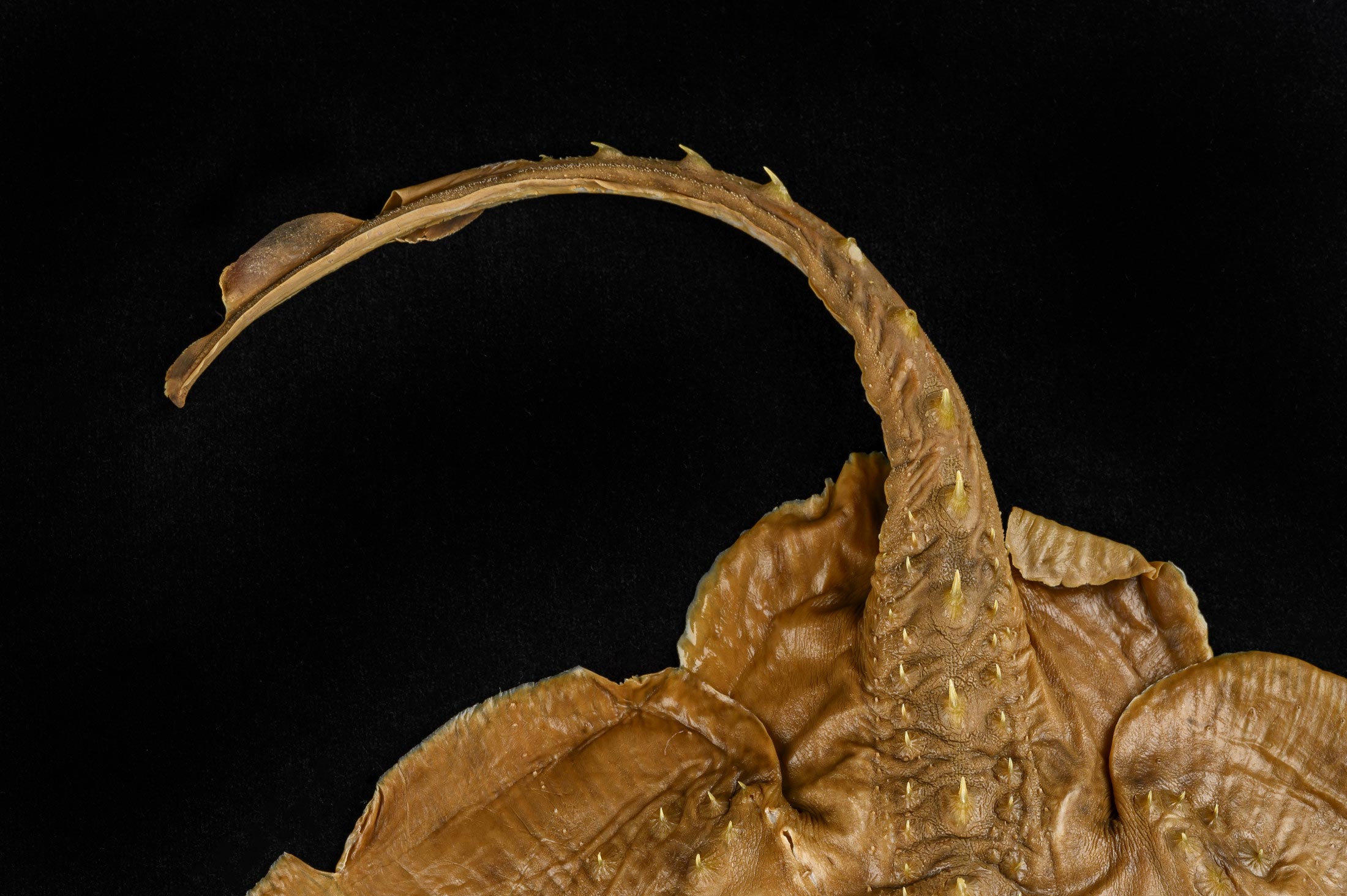
“We could identify the large males and females, because they’re bigger than anything else,” Naylor said. At maturity, both large and small males develop long, trailing claspers on either side of their tale, giving them the overall appearance of a kite with streamers. “So when you’ve got a small male with large claspers, we know it’s an adult. But we can’t do anything with the small females, because we don’t know whether they’re just babies on their way to getting big.”
This limitation has hampered research on the species, Kneebone said. “The big question has always been, what do the life histories of the two morphs look like? Currently, they’re not discriminated in the stock assessment, so a thorny skate is a thorny skate is a thorny skate.”
The final step will be figuring out why thorny skates are continuing to decline in parts of their range. Fortunately, scientists already have a few good leads. Current evidence suggests it’s harder for the two sizes to interbreed in places where they’re declining than it is in others. It’s possible this natural and partial barrier to reproduction cold be exacerbated by climate change.
Climate Change and the Future of Thorny Skates
Thorny skates are having the most trouble in the Gulf of Maine, where sea surface temperatures have increased faster than 99% of the world’s oceans over the last several years. This has had all sorts of unpleasant effects, like the collapse of cod fisheries in the region.
Whether climate change is partially responsible for the plight of the thorny skate and, if so, why it has an undue negative influence on this single species compared with other skates that live in the same area, remains to be seen. To determine that, Kneebone said they’ll need more data.
“We’re trying to use the best available science to make decisions about how to best manage and sustain populations.”
The authors published their study in the journal Nature Communications.
Reference: “Short-term evolutionary implications of an introgressed size-determining supergene in a vulnerable population” by Pierre Lesturgie, John S. S. Denton, Lei Yang, Shannon Corrigan, Jeff Kneebone, Romuald Laso-Jadart, Arve Lynghammar, Olivier Fedrigo, Stefano Mona and Gavin J. P. Naylor, 27 January 2025, Nature Communications.
DOI: 10.1038/s41467-025-56126-z
The study was funded in part by the Pew Charitable Trusts.
John Denton of the American Museum of Natural History, Lei Yang and Shannon Corrigan of the Florida Museum of Natural History, Romuald Laso-Jadart and Stefano Mona of the Muséum National d’Histoire Naturelle, Arve Lynghammar of the Arctic University of Norway and Olivier Fedrigo of Colossal Biosciences are also co-authors of the study.
Never miss a breakthrough: Join the SciTechDaily newsletter.
Follow us on Google and Google News.