
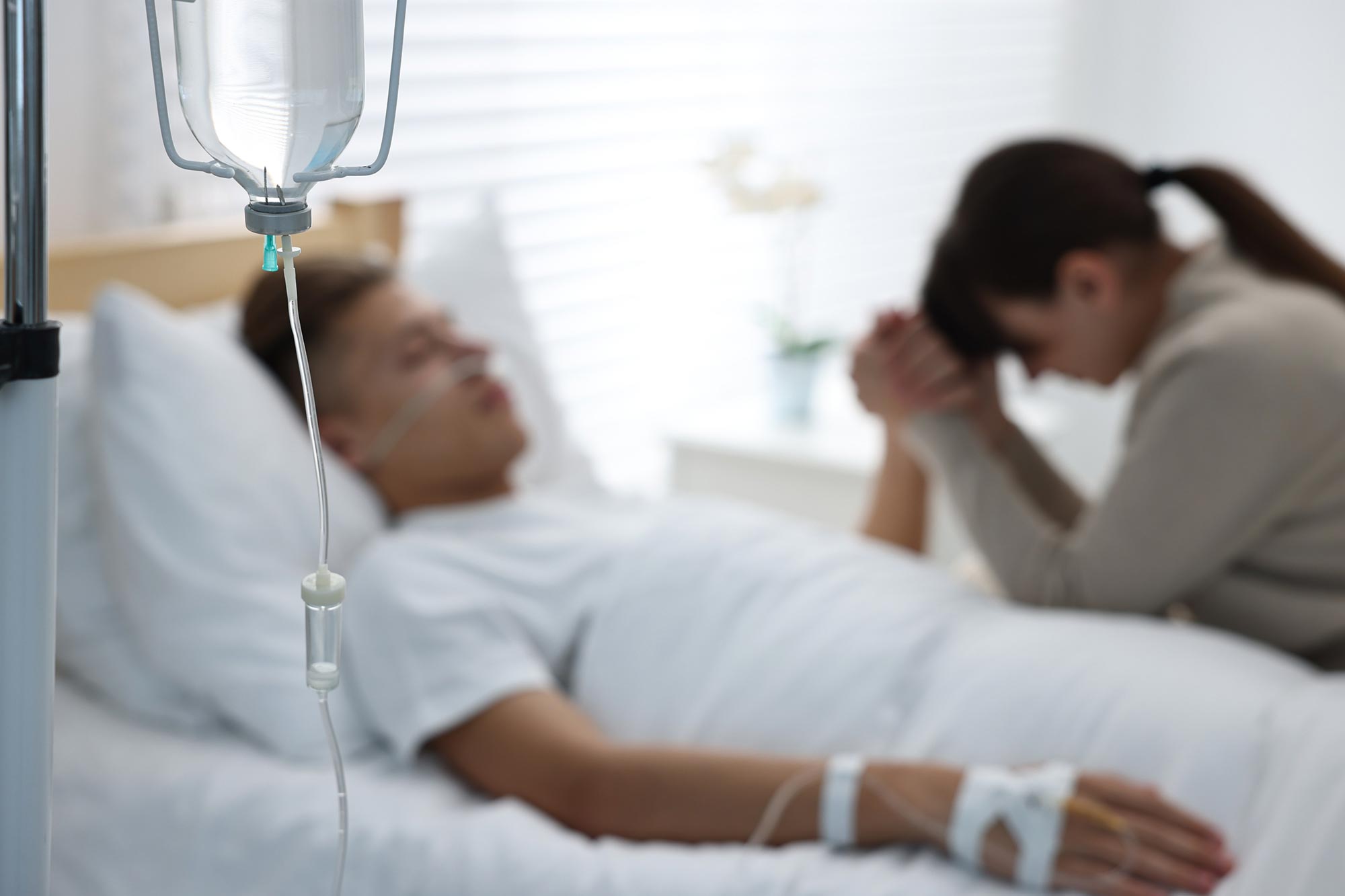
Scientists have found that brain-injury patients with hidden consciousness may show signs of recovery through their sleep patterns.
Sleep spindles — brief bursts of brain activity — are linked to higher chances of regaining consciousness and independence. This discovery could change how doctors predict recovery and potentially improve patient care by enhancing sleep conditions in hospitals.
Hidden Consciousness in Unresponsive Patients
Over the past decade, research has shown that up to a quarter of unresponsive patients with recent brain injuries may have some level of hidden consciousness — awareness that goes undetected by both their families and doctors.
Now, new research from Columbia University and NewYork-Presbyterian may help doctors identify these patients and predict who is most likely to recover. By analyzing brain waves associated with normal sleep patterns, scientists hope to uncover hidden signs of consciousness and long-term recovery potential.
The Challenge of Predicting Recovery
“We’re at an exciting crossroad in neurocritical care where we know that many patients appear to be unconscious, but some are recovering without our knowledge. We’re starting to lift the lid a little bit and find some signs of recovery as it’s happening,” says Jan Claassen, associate professor of neurology at Columbia University Vagelos College of Physicians and Surgeons, who led the study.
“Families of my patients ask me all the time, will my mother wake up? How is my mother going to look in three, six, or 12 months? Very often we cannot guide them very precisely, and it’s crucial that we improve our predictions to guide their decision making.”
Sleep and Consciousness
Claassen, who is also chief of critical care and hospitalist neurology at NewYork-Presbyterian/Columbia University Irving Medical Center, has previously developed sophisticated techniques to identify patients with hidden consciousness by analyzing a patient’s EEG recordings as they are presented with a command in the neurocritical care unit. The techniques detect EEG brain wave activity indicating that the patient can hear and understand their physicians’ instructions (to open and close their hand, for example) even though the patients do not physically respond.
But the techniques can be difficult to implement and can yield false-negative results.
Claassen decided to focus on sleep, as brain circuits that are fundamental for consciousness, including cognitive motor dissociation, are also critical to control sleep.
“I’m always thinking about how my work can be best implemented and used in the real world, and looking at sleep made sense practically and scientifically,” Claassen says. “Sleep brain waves are easy to record and do not require intervention from the care team.”
Sleep Spindles Predict Recovery
In the new study, the researchers looked through EEG recordings of overnight brain activity in 226 comatose patients who also underwent the more complex testing for cognitive motor dissociation.
“The electrical activity during sleep looks relatively chaotic, and then occasionally in some patients, these very organized, fast frequencies appear,” Claassen says.
These bursts—called sleep spindles—often preceded the detection of cognitive motor dissociation with the more complex method, the return of consciousness, and long-term recovery.
“Spindles happen normally during sleep and they’re showing some level of organization in the brain, suggesting circuits between the thalamus and cortex needed for consciousness are intact.”
About one-third of patients had well-defined sleep spindles, including about half of patients with cognitive motor dissociation.
Encouraging Findings for Recovery
Patients with sleep spindles and cognitive motor dissociation were more likely to recover consciousness and functional independence. Among those with sleep spindles and cognitive motor dissociation, 76% of patients showed evidence of consciousness by the time they were discharged from the hospital. A year later, 41% of these patients had recovered neurological function, with either minor deficits or a moderate disability, and were able to care for themselves during the day. Only 29% of patients with neither sleep spindles nor cognitive motor dissociation showed signs of consciousness by the time they were discharged and just 7% regained neurological function a year later.
Even though these findings don’t prove that inducing sleep spindles would translate to better outcomes, they raise the possibility that improving a patient’s sleep—possibly by changing their environment—may promote their recovery. “If you think about the ICU environment, it is rather disruptive for a good night’s sleep. There is noise everywhere, alarms going off, clinicians touching them, 24/7. This is all for a good reason, but it’s hard to sleep in that environment,” Claassen says.
Moving Toward Clinical Practice
Claassen cautions that the findings only apply to patients with recent injuries, not those with long-term disorders of consciousness. For most patients in the current study, normal sleep spindles appeared within days of the initial injury.
And the predictors were not perfect: 19 of 139 patients who did not show sleep spindles or signs of cognitive motor dissociation did recover consciousness. Other data will likely be needed to make more accurate predictions.
“I see these spindles as a way to direct more sophisticated testing to the patients most likely to benefit,” Claassen says. “The techniques are not ready for use in clinical practice yet, but this is something that we’re actively working on right now.”
Reference: “Sleep spindles as a predictor of cognitive motor dissociation and recovery of consciousness after acute brain injury” by Elizabeth E. Carroll, Qi Shen, Vedant Kansara, Nicole Casson, Andrew Michalak, Itamar Niesvizky-Kogan, Jaehyung Lim, Amy Postelnik, Matthew J. Viereck, Satoshi Egawa, Joshua Kahan, Jerina C. Carmona, Lucie Kruger, You Lim Song, Angela Velazquez, Catherine A. Schevon, E. Sander Connolly, Shivani Ghoshal, Sachin Agarwal, David Roh, Soojin Park, Paul Kent and Jan Claassen, 3 March 2025, Nature Medicine.
DOI: 10.1038/s41591-025-03578-x
Jan Claassen, MD, is also medical director of the neurological intensive care unit at NewYork-Presbyterian/Columbia University Irving Medical Center.
Authors (all from Columbia and NewYork-Presbyterian): Elizabeth E Carroll, Qi Shen, Vedant Kansara, Nicole Casseon, Andrew Michalak, Itamar Niesvizky-Kogan, Jaehyung Lim, Amy Postelnik, Matthew J Viereck, Satoshi Egawa, Joshua Kahan, Jerina C Carmona, Lucy Kruger, You Lim Song, Angela Velazquez, Catherine A Schevon, Sander Connolly, Shivani Ghoshal, Sachin Agarwal, David Roh, Soojin Park, Paul Kent, and Jan Claassen.
The study was supported by grants from the National Institutes of Health (R01NS106104, R01LM011826, and UL1TR001873).
Never miss a breakthrough: Join the SciTechDaily newsletter.
Follow us on Google and Google News.
1 Comment
I tried to start. Seems easy to start.
But, there is one thing to remind everybody. Make sure you have a secure phone.!!