

A study offers new insight into how insulin-producing cells could become more resilient to stress as diabetes progresses.
Before proteins can work inside a cell, they must twist and fold into precise three-dimensional forms. As prediabetes advances toward diabetes, that careful process can break down, allowing defective proteins to accumulate and place insulin-producing cells under increasing stress.
Researchers at Sanford Burnham Prebys Medical Discovery Institute and the University of Michigan traced how these cells fold proinsulin, the molecule used to make insulin, and what happens when the system loses balance. Their findings, published in the Proceedings of the National Academy of Sciences, suggest that strengthening this protein-folding machinery could help protect insulin-producing cells from damage.
Misfolded proinsulin strains beta cells
Pancreatic beta cells monitor blood glucose and release more insulin when sugar levels rise. As diabetes develops, however, these cells gradually struggle to produce enough insulin to meet the body’s needs.
Previous research connected this decline to the incorrect folding of proinsulin. Misfolded proinsulin is known to accumulate during diabetes and stress pancreatic beta cells, but the other proteins involved in managing the process and their relationships remained unclear.
“We knew that the system for preventing proinsulin misfolding depended on a chaperone protein called binding immunoglobulin protein and a number of cochaperones,” said Randal J. Kaufman, PhD, a professor in the Center for Metabolic and Liver Diseases at Sanford Burnham Prebys and senior and corresponding author of the study.

“Our goal was to examine how these partner proteins coordinate proinsulin folding and remove any misfolded mistakes, as these steps are essential for the health of insulin-producing cells.”
A molecular tag reveals BiP’s partners
To investigate how binding immunoglobulin protein (BiP) interacts with other molecules, the researchers genetically modified mice so that BiP in their beta cells carried an added peptide, which is a short chain of amino acids. The addition consisted of three copies of an eight-amino-acid sequence known as a 3xFLAG-tag, giving the researchers a molecular marker that made BiP easier to locate and isolate.
One partner proves essential
The experiments identified a key role for p58IPK, one of the cochaperone proteins that works with BiP. Removing p58IPK genetically from two cell lines caused more misfolded proinsulin to accumulate. Mice engineered without p58IPK also produced less proinsulin and insulin in their beta cells.
The researchers then restored p58IPK in one of the modified cell lines. Its return improved the cells’ ability to fold proinsulin, move it through the cell, and prevent defective copies from building up. However, p58IPK could not replace BiP as the main regulator of proinsulin folding because those improvements did not occur when BiP was missing.
The next question was whether increasing BiP could compensate for the loss of p58IPK. Cells with extra BiP but no p58IPK showed only limited improvements in proinsulin folding and transport out of the cell. When both proteins were present at normal levels, those processes improved much more substantially.
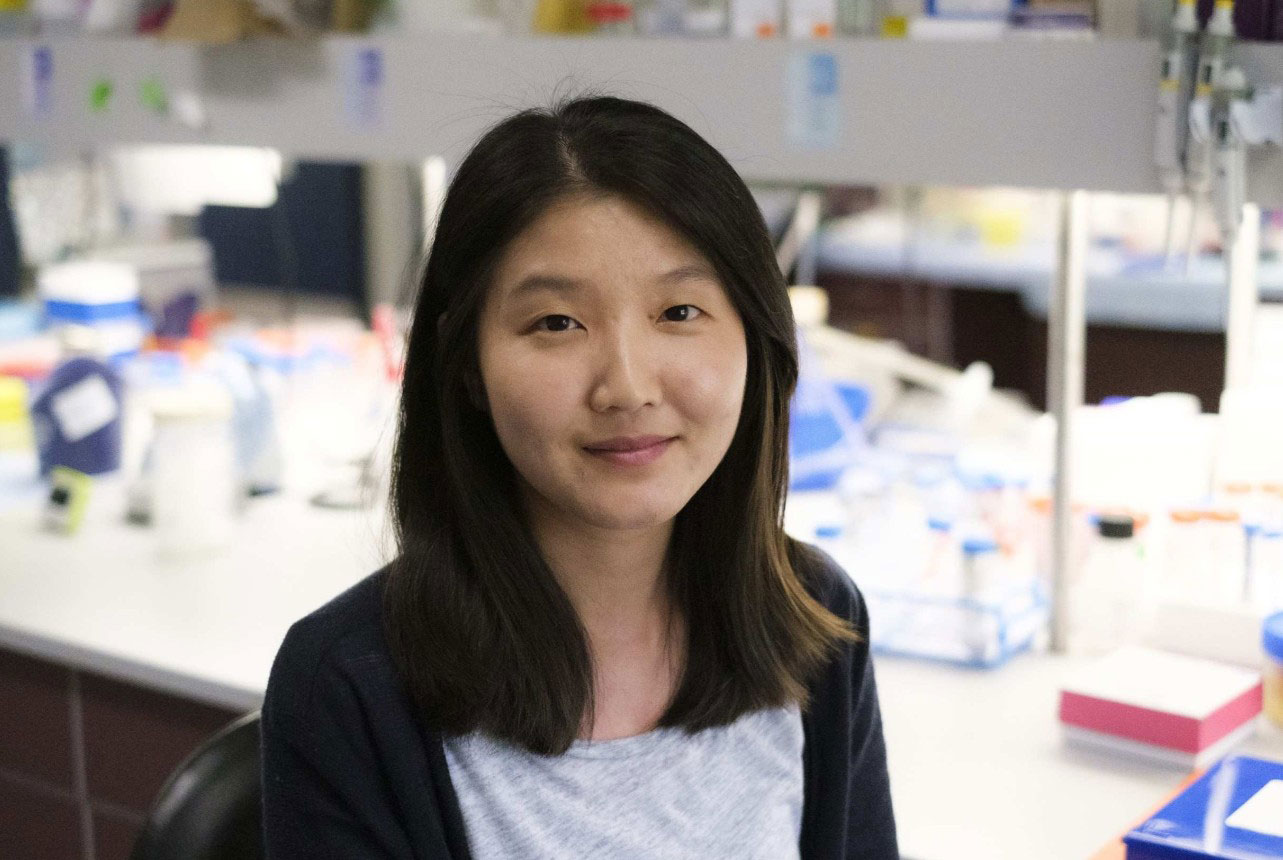
Sanford Burnham Prebys
“Like a single tennis player trying to play a doubles match, we found that BiP cannot just go it alone in maintaining the proper folding of proinsulin,” said Insook Jang, PhD, a staff scientist in the Kaufman lab and lead author of the manuscript.
The investigators also identified additional partner proteins involved in folding and transporting proinsulin and in recognizing defective versions. More research will be needed to determine how each one contributes to insulin production and the progression of diabetes.
“Our studies highlight that proinsulin folding is vulnerable to many of the same cellular stresses that cause beta cell failure in type 2 diabetes,” said Kaufman.
Current treatments miss protein folding
Most available diabetes medications do not target this underlying protein-folding problem. Instead, they generally control symptoms by increasing insulin secretion or helping tissues remove more sugar from the blood. No current therapy is designed to improve proinsulin folding and preserve the health and function of beta cells.
“If we can learn how to influence the coordinated activity of BiP as a key regulator of proinsulin folding, we may find a promising treatment strategy for intervening early to prevent or reduce damage to insulin-producing cells,” said Kaufman.
Reference: “Coordinated expression and assembly of BiP, p58IPK, and ER chaperone complexes maximize proinsulin folding in pancreatic β cells” by Insook Jang, Alec Duffey, Pamela Itkin-Ansari, Peter Arvan and Randal J. Kaufman, 1 June 2026, Proceedings of the National Academy of Sciences.
DOI: 10.1073/pnas.2533617123
The study was supported by the National Institutes of Health, National Institute of Diabetes and Digestive and Kidney Diseases, National Cancer Institute and Breakthrough T1D (formerly JDRF).
Never miss a breakthrough: Join the SciTechDaily newsletter.
Follow us on Google and Google News.