
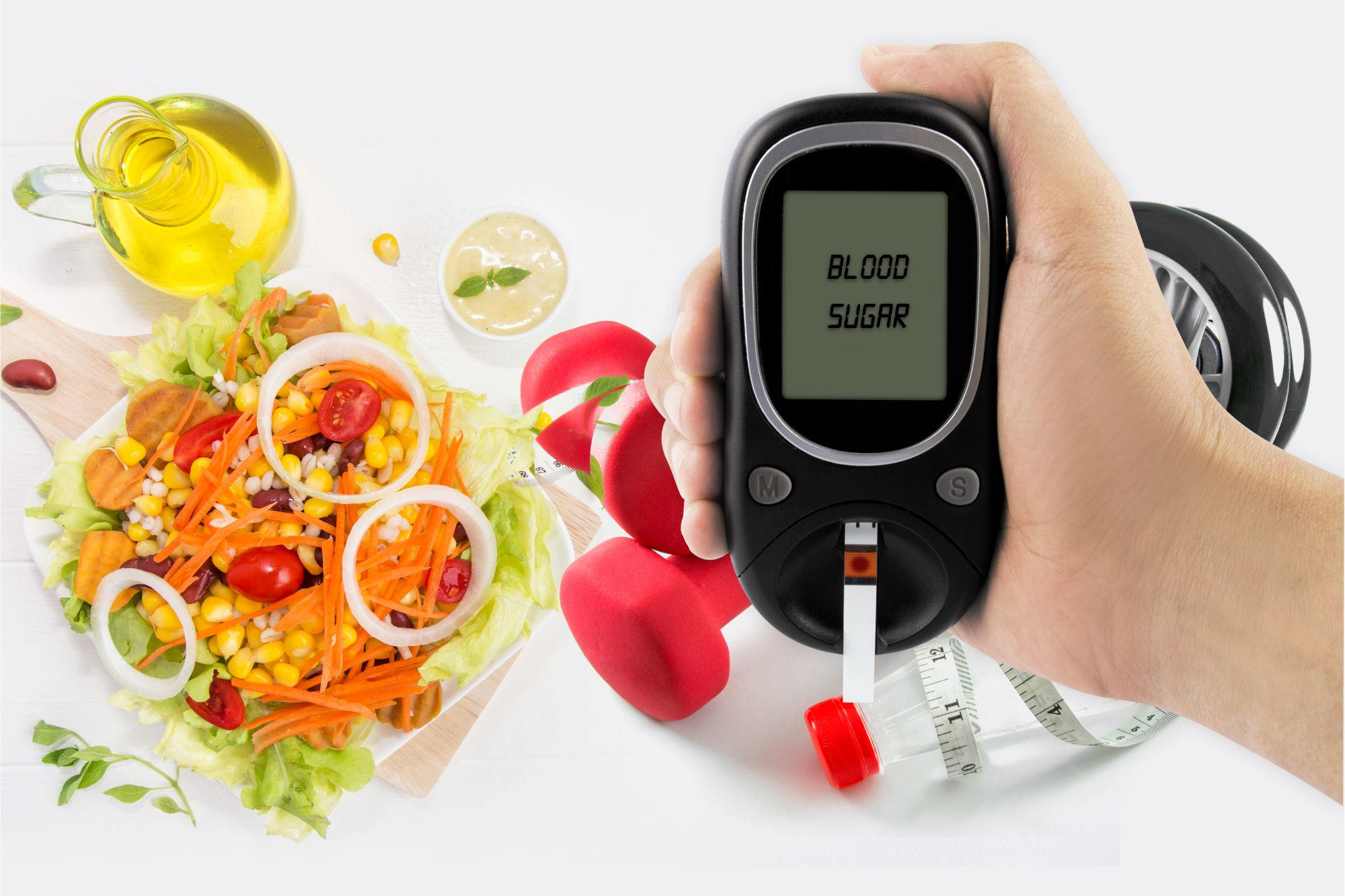
The research challenges the idea that an insulin surge after eating is harmful.
Researchers at Sinai Health have discovered important insights into the link between post-meal insulin levels and long-term cardiac and metabolic well-being. This study challenges the prevailing belief that an insulin spike after eating is a bad thing.
On the contrary – it could be an indicator of good health to come.
Led by Dr. Ravi Retnakaran, Clinician-Scientist at the Lunenfeld-Tanenbaum Research Institute, part of Sinai Health, the study set out to explore how insulin levels after meals impact cardiometabolic health. While past research has yielded conflicting results, suggesting both harmful and beneficial effects, this new study aimed to provide a clearer picture over an extended period of time.
The team reported their findings in the online journal eClinicalMedicine, published by the Lancet group.
Understanding Insulin’s Role
Normally, insulin levels rise after eating to help manage blood sugar. However, the concern is whether a rapid increase in insulin after a meal could spell bad health. Some believe the insulin surge, especially after eating carbs, promotes weight gain and contributes to insulin resistance. This occurs when the body’s cells don’t respond well to insulin, making it harder to control blood sugar levels and increasing the risk of type 2 diabetes.
“The suggestion has been made by some people that those insulin peaks have deleterious effects by promoting weight gain,” said Dr. Retnakaran, who is also Endocrinologist at the Leadership Sinai Centre for Diabetes at Mount Sinai Hospital where he holds the Boehringer Ingelheim Chair in Beta-cell Preservation, Function and Regeneration. He is also a Professor at the University of Toronto’s Temerty Faculty of Medicine.
“Sometimes I see patients in the clinic who have adopted this notion, maybe from the internet or what they’re reading, that they can’t have their insulin level go too high,” he said.
The science is just not conclusive enough to support this notion. Most studies on this topic were either conducted over a short period of time or were based on insulin measurements in isolation that are inadequate and can be misleading, said Dr. Retnakaran.
Methodology and Participants
His team sought to address this problem by looking at cardiometabolic implications of insulin response over the long term, and in a way that accounts for baseline blood sugar levels. The latter point is key because each person has an individual insulin response that varies depending on how much sugar is in the blood.
The study followed new mothers because the insulin resistance that occurs during pregnancy makes it possible to determine their future risk of type 2 diabetes. 306 participants were recruited during pregnancy, between 2003 and 2014, and underwent comprehensive cardiometabolic testing, including glucose challenge tests, at one, three, and five years after giving birth. The glucose challenge test measures glucose and insulin levels at varying time points after a person has had a sugary drink containing 75 grams of glucose and following a period of fasting.
Implications and Future Directions
While commonly used in medical practice, the interpretation of insulin levels from the test can be misleading if one does not account for baseline blood sugar. “It’s not just about insulin levels; it’s about understanding them in relation to glucose,” Dr. Retnakaran said, pointing out that this is where many past interpretations fell short. A better measurement is the corrected insulin response (CIR) that accounts for baseline blood glucose levels, and which is slowly gaining prominence in the field, he said.
The study revealed some surprising trends. As the corrected insulin response increased, there was a noticeable worsening in waist circumference, HDL (good cholesterol) levels, inflammation, and insulin resistance, if one did not consider accompanying factors. However, these seemingly negative trends were accompanied by better beta-cell function. Beta cells produce insulin, and their ability to do so is closely associated with diabetes risk – the better the beta cell function, the lower the risk.
“Our findings do not support the carbohydrate-insulin model of obesity,” said Dr. Retnakaran. “We observed that a robust post-challenge insulin secretory response—once adjusted for glucose levels—is only associated with the beneficial metabolic effects”.
“Not only does a robust post-challenge insulin secretory response not indicate adverse cardiometabolic health, but rather it predicts favorable metabolic function in the years to come.”
In the long run, higher corrected insulin response levels were linked with better beta-cell function and lower glucose levels, without correlating with BMI, waist size, lipids, inflammation, or insulin sensitivity or resistance. Most importantly, women who had the highest CIR had a significantly reduced risk of developing pre-diabetes or diabetes in the future.
“This research challenges the notion that high post-meal insulin levels are inherently bad and is an important step forward in our understanding of the complex roles insulin plays in regulation of metabolism,” said Anne-Claude Gingras, Director of LTRI and Vice-President of Research at Sinai Health.
Dr. Retnakaran hopes their findings will reshape how medical professionals and the public view insulin’s role in metabolism and weight management.
“There are practitioners who subscribe to this notion of higher insulin levels being a bad thing, and sometimes are making recommendations to patients to limit their insulin fluctuations after the meal. But it’s not that simple,” he said.
Reference: “Future cardiometabolic implications of insulin hypersecretion in response to oral glucose: a prospective cohort study” by Ravi Retnakaran, Jiajie Pu, Anthony J. Hanley, Philip W. Connelly, Mathew Sermer and Bernard Zinman, 13 December 2023, eClinicalMedicine.
DOI: 10.1016/j.eclinm.2023.102363
The study was funded by the Canadian Institutes of Health Research.
Never miss a breakthrough: Join the SciTechDaily newsletter.
Follow us on Google and Google News.
2 Comments
The goal shouldn’t be there to have only glucose response corrected but how much insulin is required fir that goal,
Lesser the better.
So intermittent fasting with keto diet is best otherwise can remove all processed carbs like sugar and flours.
Diet within short period of 4 to 8 hours and fasting of 16 to 20 hours would be ideal.
If possible only two meals or if required three. No snacking, no Junk food.
Good day. Dr Ravi Retnakaran. I have a down syndrome bay who has been diagnosed with type 1 diabetes. She is 1 year 5 months old. I would like to communicate with you about her condition. Please advise if you will grant me permission to do so. Thank you kindly.