
Close Menu
    Facebook X (Twitter) Instagram
    SciTechDaily
    • Biology
    • Chemistry
    • Earth
    • Health
    • Physics
    • Science
    • Space
    • Technology
    Facebook X (Twitter) Pinterest YouTube RSS
    SciTechDaily
    Home»Space»A Jupiter-Like Rogue Planet Wanders Alone in the Dark of Space
    Space

    A Jupiter-Like Rogue Planet Wanders Alone in the Dark of Space

    By NASAFebruary 8, 202211 Comments2 Mins Read
    Facebook Twitter Pinterest Telegram LinkedIn WhatsApp Email Reddit
    Share
    Facebook Twitter LinkedIn Pinterest Telegram Email Reddit
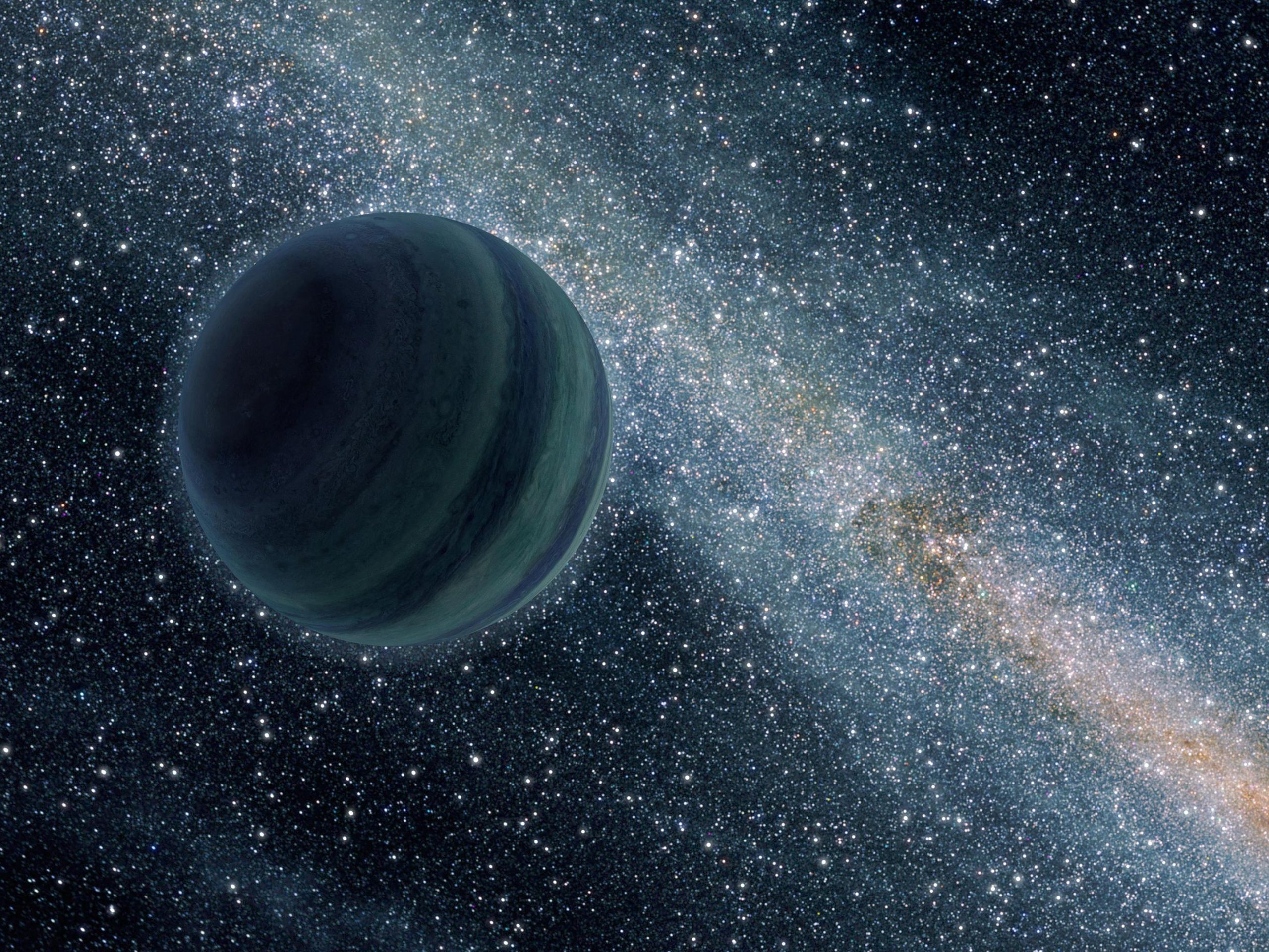
    Jupiter-Like Rogue Planet
    This artist’s conception illustrates a Jupiter-like planet alone in the dark of space, floating freely without a parent star. Credit: NASA/JPL-Caltech

    Though many exoplanets are known, rogue planets remain elusive, suggesting they’re more common than currently detected.

    This artist’s conception illustrates a Jupiter-like planet alone in the dark of space, floating freely without a parent star.

    Thousands of planets have been discovered by exoplanet hunters, the majority of which circle close to their host stars, but only a small number of alien worlds have been found to drift aimlessly across the galaxy as so-called rogue planets, unattached to any star. Many astronomers think that these planets are more prevalent than we realize, but that current methods for detecting planets haven’t been effective enough to locate them.

    A planet survey, called the Microlensing Observations in Astrophysics (MOA), scanned the central bulge of our Milky Way galaxy from 2006 to 2007. It used a 5.9-foot (1.8-meter) telescope at Mount John University Observatory in New Zealand, and a technique called gravitational microlensing. In this method, a planet-sized body is identified indirectly as it just happens to pass in front of a more distant star, causing the star to brighten. The effect is like a cosmic funhouse mirror, or magnifying lens – light from the background star is warped and amplified, becoming brighter.

    Using the latest technology, NASA’s Nancy Grace Roman Space Telescope will conduct a survey to discover many more exoplanets using powerful techniques available to a wide-field telescope.

    Never miss a breakthrough: Join the SciTechDaily newsletter.
    Follow us on Google and Google News.

    Astronomy Exoplanet NASA
    Share. Facebook Twitter Pinterest LinkedIn Email Reddit

    Related Articles

    A Century-Old Cosmic Mystery Solved – Four Hidden Planets Found Near Earth

    Red Dwarf Fury: How Wolf 359’s Radiation May Fry Alien Atmospheres

    NASA Spots a Star and Planet Racing at 1.2 Million MPH – A Record-Breaking Discovery

    X-Ray Flares Turn Alien Worlds Into Cosmic Battlefields

    NASA’s Pandora Set To Unveil the Secrets of Alien Atmospheres

    Astronomers Unveil the Mysterious 350,000-Mile Tail of Exoplanet WASP-69 b

    How a Warped Disk Exposed a Hidden Baby Planet

    In the “Hot Neptune Desert,” a Rare Planet Offers Clues to Cosmic Mysteries

    Uncovering New Worlds With Amateur Planet-Chasers – Join the Hunt for Alien Worlds From Home

    11 Comments

    1. tommy2 tone on February 9, 2022 7:24 pm

      Awesome stuff.

      Reply
    2. Thomas Fair on February 10, 2022 3:50 am

      Planet x

      Reply
    3. Adel Antado on February 11, 2022 9:08 am

      Is it a planet without a star?

      Reply
    4. Mike O'Neill on February 11, 2022 9:18 am

      Yes.

      “…a Jupiter-like planet alone in the dark of space, floating freely without a parent star.”

      Reply
    5. Robert Madison on February 11, 2022 6:01 pm

      Click bait. No actual planet was discovered.

      Reply
    6. Spireman on February 12, 2022 5:52 am

      These planets are not “freely floating”. They just orbit the centre of the galaxy rather than a star.

      Reply
    7. Rob on February 12, 2022 7:26 pm

      Not all who wander are lost.

      Reply
    8. Jonathan on February 14, 2022 8:30 am

      Cool and awesome stuff

      Reply
    9. aboctok on February 14, 2022 10:29 am

      Click-bait indeed. Channel continues to deteriorate.

      Reply
    10. Jerry on February 14, 2022 11:22 am

      If this free floating planet enters a stellar nebula and accreitation occurs, it will become a future star.

      Reply
    11. Anshuman Swain on February 15, 2022 6:16 am

      Fascinating

      Reply
    Leave A Reply Cancel Reply

    • Facebook
    • Twitter
    • Pinterest
    • YouTube

    Don't Miss a Discovery

    Subscribe for the Latest in Science & Tech!

    Trending News

    Millions of People Have Osteopenia Without Realizing It – Here’s What You Need To Know

    Researchers Discover Boosting a Single Protein Helps the Brain Fight Alzheimer’s

    World-First Study Reveals Human Hearts Can Regenerate After a Heart Attack

    Why Your Dreams Feel So Real Sometimes and So Strange Other Times

    This Simple Home Device May Boost Brain Power in Adults Over 40

    Enormous Prehistoric Insects Puzzle Scientists

    Scientists Develop Bioengineered Chewing Gum That Could Help Fight Oral Cancer

    After 37 Years, the World’s Longest-Running Soil Warming Experiment Uncovers a Startling Climate Secret

    Follow SciTechDaily
    • Facebook
    • Twitter
    • YouTube
    • Pinterest
    • Newsletter
    • RSS
    SciTech News
    • Biology News
    • Chemistry News
    • Earth News
    • Health News
    • Physics News
    • Science News
    • Space News
    • Technology News
    Recent Posts
    • Researchers Identify the Most Common Recessive Neurodevelopmental Disorder Ever Discovered
    • This Is What Makes You Irresistible to Mosquitoes
    • Shockingly Powerful Giant Octopuses Ruled the Seas 100 Million Years Ago
    • After 100 Years, Scientists Uncover Hidden Rule Governing Cosmic Rays
    • The Milky Way Has a Hidden Edge and Scientists Finally Mapped It
    Copyright © 1998 - 2026 SciTechDaily. All Rights Reserved.
    • Science News
    • About
    • Contact
    • Editorial Board
    • Privacy Policy
    • Terms of Use

    Type above and press Enter to search. Press Esc to cancel.